




Antique Tekke Chuval
An antique tekke chuval is a tribal storage bag face woven by Central Asian nomads for domestic use and dowries.
Antique Tekke Chuval
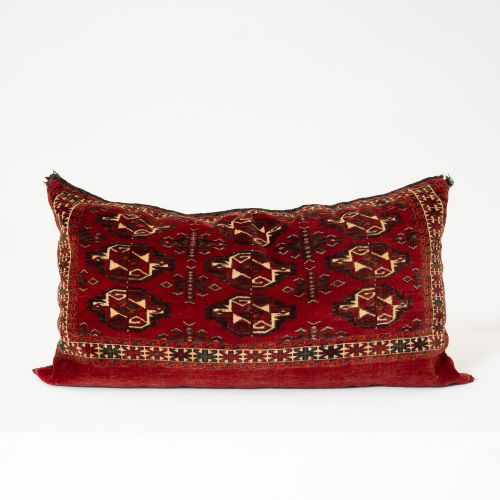
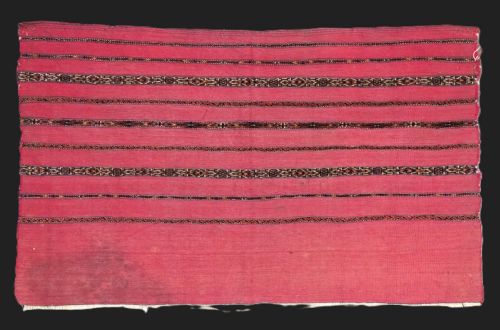
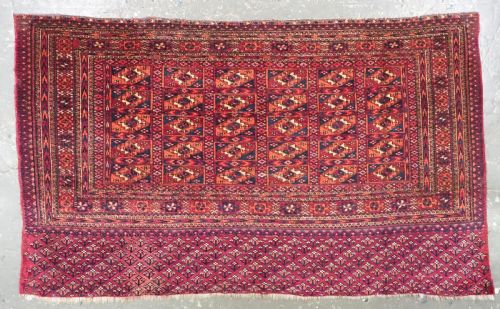
An antique tekke chuval represents a large nomadic storage bag woven by Turkmen tribes in Central Asia during the nineteenth and early twentieth centuries. These textiles served primarily as functional bedding bags within traditional yurt dwellings, though many survive today as individual bag faces or complete pieces retaining their plain weave backs.
The selection ranges from mid nineteenth century examples down to early twentieth century cushions, showing distinct tribal formats such as the red kizil and white ak varieties. Buyers encounter numerous variations incorporating primary guls, secondary motifs, and hanging loops designed for domestic utility.
What Varies in Quality
The standard of an antique tekke chuval depends upon the tightness of the weave and the precision of the geometric layout. Examples with extremely fine knotting and complete original backs command greater attention from collectors than fragment pieces.
Colour saturation and the clarity of secondary motifs such as turreted guls or aina designs influence the visual impact. The presence of scarce formats, such as cochineal field hues or silk and cotton highlights, elevates individual textiles within the category.
Materials across the inventory consist entirely of wool, cotton, and natural dyes, occasionally accented with silk highlights on select nineteenth-century pieces.
The Antique Tekke Chuval Glossary
- Chuval
- A large tent storage bag produced by Turkmen nomads for holding household goods and bedding. These items formed an essential part of a traditional tribal dowry.
- Gul
- A primary medallion motif repeated in rows across Turkmen carpets and bag faces. These tribal emblems often identify the specific clan or sub-tribe of the weaver.
- Ak Chuval
- A white ground variant of the traditional storage bag, typically featuring distinctive light panels. These pieces are less common than their red counterparts.
- Kizil
- The red ground colour variety characteristic of many Turkmen tribal weavings. This term describes the dominant madder-dyed field tone.
- Torba
- A smaller storage bag format used within the nomadic tent for miscellaneous household items. They share similar design vocabulary with the larger chuval.
Antique Tekke Chuval: Frequently Asked Questions
What was a chuval used for?
These large bags served as practical containers for storing bedding, clothing, and domestic belongings inside traditional Central Asian tents. Nomads hung them against the lattice walls of the dwelling for everyday organisation.
Over time, families also assembled these textiles as part of a bride's dowry. Today, collectors typically display them as wall hangings or preserve them as flat textile panels.
Are complete bags common compared to bag faces?
Many surviving examples exist only as bag faces because the original plain weave backs wore out or were removed during past use. Surviving pieces that retain their complete original backs are less common.
Complete examples offer insight into the original three-dimensional function of the storage sack. Both complete bags and trimmed faces remain popular among textile collectors.
What are Salor guls on a Tekke piece?
Salor guls refer to specific medallion designs incorporated into Tekke weavings, often reflecting stylistic borrowing or historical inter-tribal relations. These motifs typically appear as large octagonal shapes repeated across the field.
Seeing Salor patterns on a Tekke structure demonstrates the fluid design traditions among nineteenth-century Turkmen groups. Collectors look closely at these variant guls to determine the specific workshop origin.