


Turkmen Gul Rug
A turkmen gul rug displays the geometric medallion motifs of Central Asian tribal weavers, prized for rich madder palettes and intricate symbolic geometry.
Turkmen Gul Rug
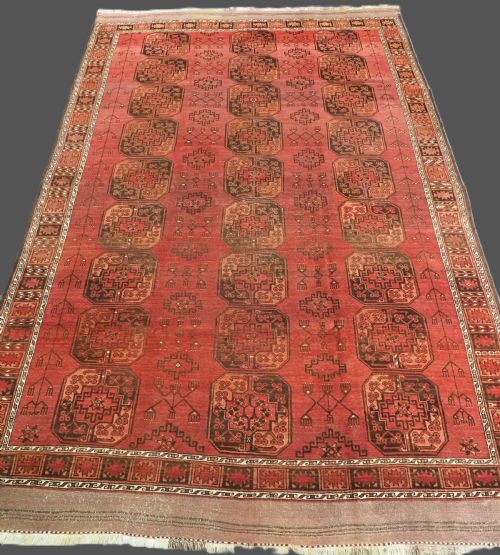
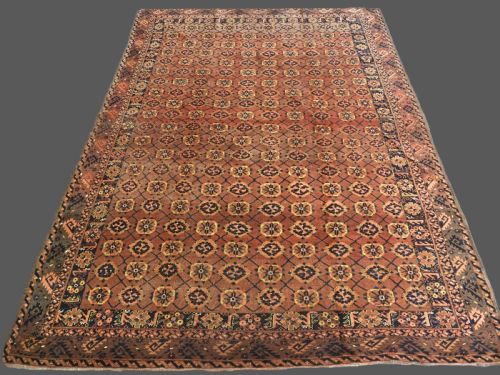
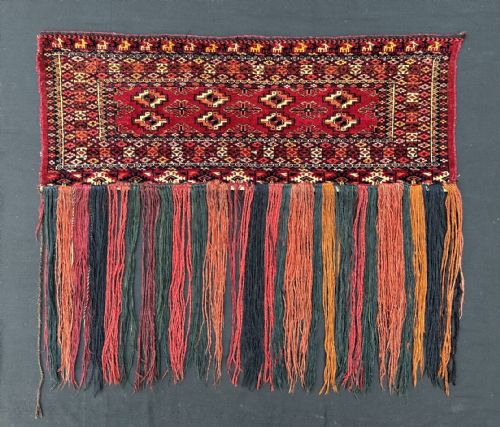
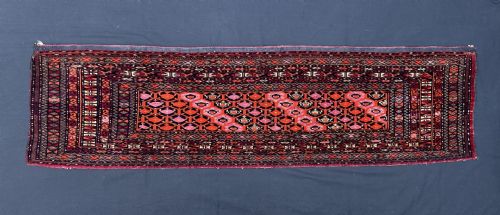
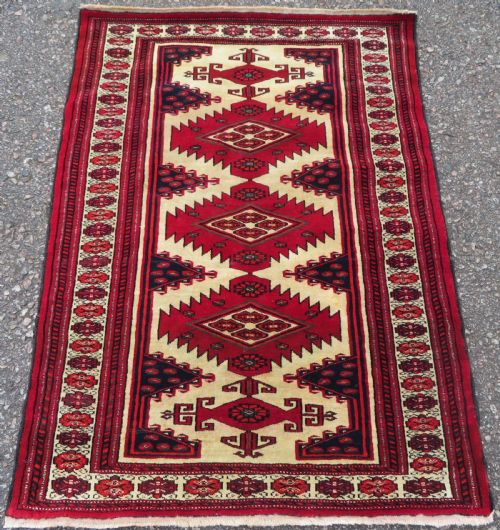
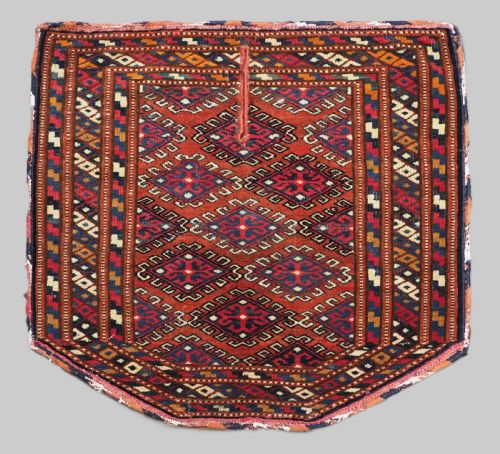
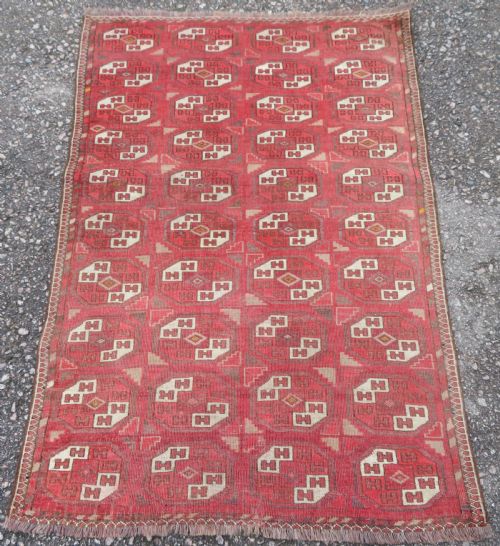
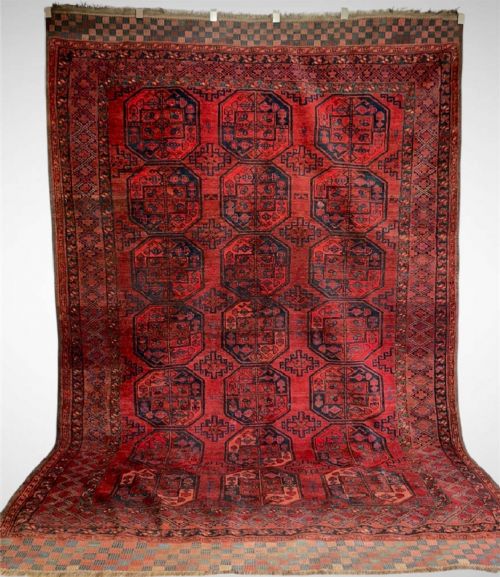
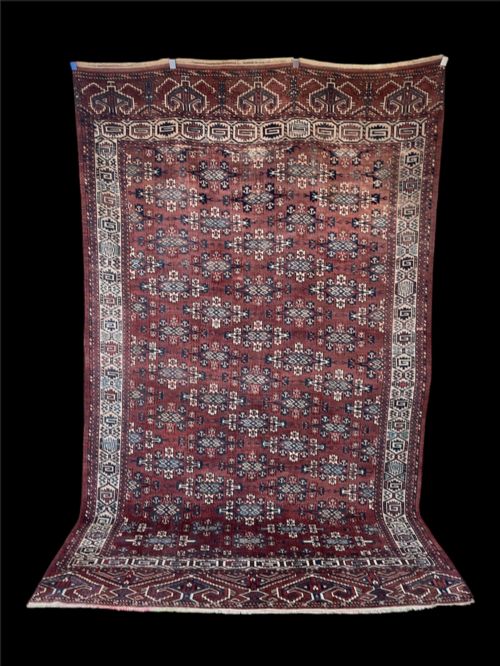
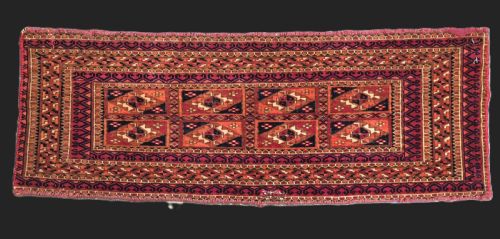
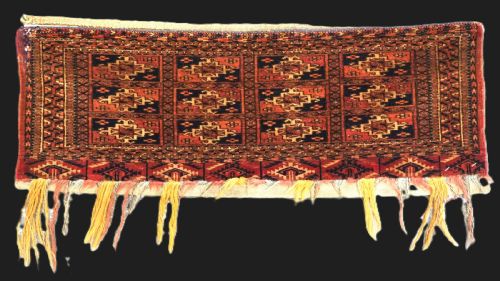
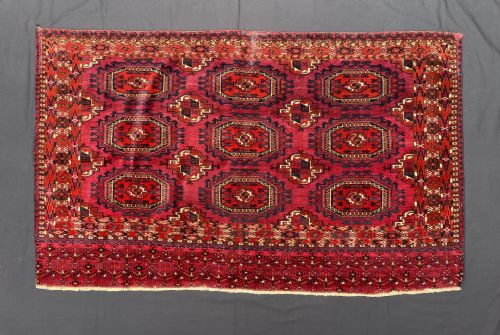
A turkmen gul rug originates from the tribal weaving traditions of Central Asia, created by groups such as the Tekke, Ersari, Yomut, and Saryq tribes. These pieces range from large main carpets and tent doorway hangings to smaller utility bags known as torbas and chuvals.
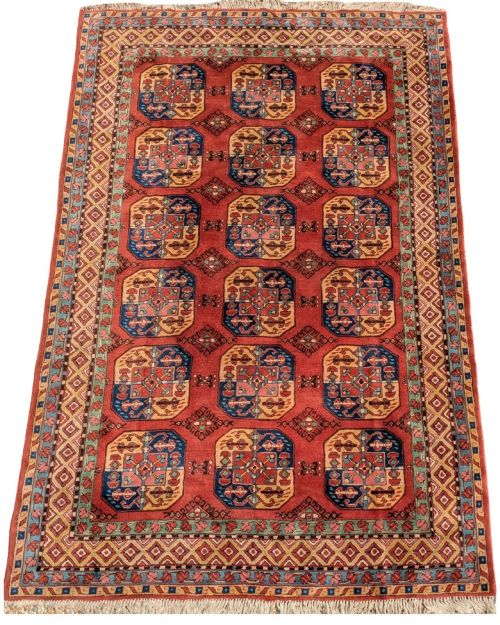
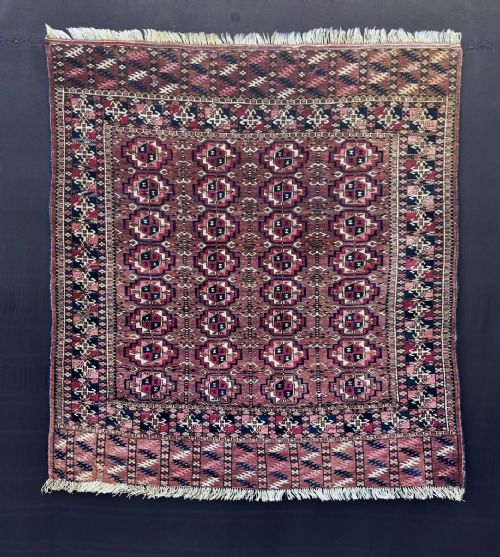
The primary visual identifier is the gul, an octagonal or medallion motif that denoted specific tribal lineages and sub-groups. Buyers encounter diverse formats including wedding dowry pieces, saddle covers, and long runner carpets dating from the nineteenth and early twentieth centuries.
How They Were Made
Weavers constructed these textiles using hand-spun wool foundations and pile, occasionally incorporating cotton or silk highlights for contrast. Natural dyes provided the deep reds, madder tones, and cochineal accents that define the palette.
Nomadic and village workshops utilised sturdy wool and goat hair for structural integrity, often finishing the pieces with plain weave backs on utilitarian bags and hanging loops for tent placement.
Turkmen Gul Rug Retail Price Guide 2026
Typical asking prices for turkmen gul rug among the pieces listed under this phrase on Sellingantiques today, from the lower quarter to the upper quarter. They describe what is for sale here now, not the wider market.
Many antique torbas still retain their original plain weave backs and hanging loops, ready for immediate mounting after a century on the steppes.
What Varies in Quality
Knot density and structural fineness separate standard utility weaving from exceptional dowry pieces. A tightly packed, velvety pile allows intricate details of the gul motifs to remain crisp and well-drawn.
The depth and saturation of natural dye work dictate visual success, with rich cochineal and varied madder shades creating luminous surfaces that inferior chemical dyes fail to replicate.
The Turkmen Gul Rug Glossary
- Gul
- The repeated octagonal medallion motif central to Turkmen design, serving as a tribal crest or identifier. Each tribe adapted the geometry to distinguish their specific weaving lineage.
- Torba
- A small wall-hanging storage bag produced by tribal weavers for domestic utility or dowry furnishings. These frequently display primary guls in miniature formats.
- Chuval
- A large tent bag utilised for household storage, often featuring multiple rows of major tribal guls. They were woven flat-backed for functional efficiency.
- Kap
- A general term for a cover or bag used within nomadic tent dwellings. These items protected belongings from dust and moisture on the steppes.
- Cochineal
- A natural insect-derived red dye yielding vivid crimson and magenta hues found in superior nineteenth-century examples. It produces an unmistakable richness under natural light.
Turkmen Gul Rug: Frequently Asked Questions
What is a gul?
A gul is the distinct octagonal medallion repeated across these tribal textiles, representing specific tribal lineages and family groups.
Weavers arranged these geometric emblems in precise grids to display heritage and clan identity.
How do I identify tribal origins?
Tribal attribution relies on the specific drawing of the gul, secondary ornament motifs, and the characteristic palette of the wool.
For instance, Tekke weavers favoured precise octagonal guls, while Ersari pieces often showcased larger, more relaxed medallion designs.
Are these rugs made with natural dyes?
Nineteenth-century examples predominantly rely on natural madder, indigo, and insect dyes to achieve deep red and brown tones.
These colourants age gracefully, developing soft patinas across the wool pile over decades of light exposure.