






Traditional Red Rug
A traditional red rug anchors a room with rich warmth, offering enduring tribal and village character through centuries-old dye palettes.
Traditional Red Rug
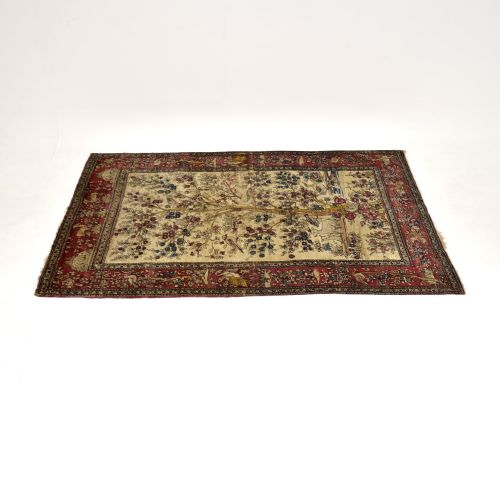
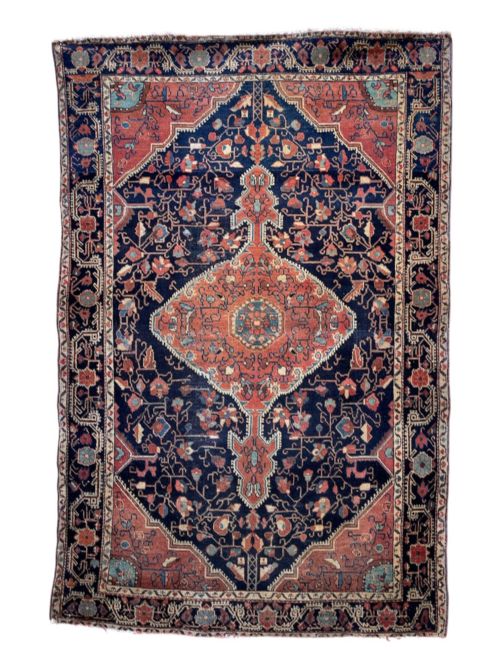
A traditional red rug encompasses hand-knotted and flatwoven floor coverings originating from Turkmen, Afghan, Persian, Caucasian, and Anatolian workshops and villages. These pieces span production dates from the mid-nineteenth century through the early twentieth century, including examples from 1850, 1880, 1890, 1900, 1920, and 1930.
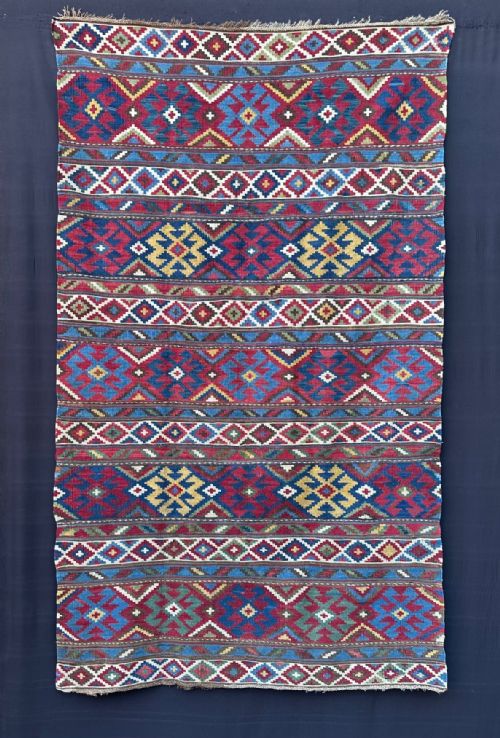
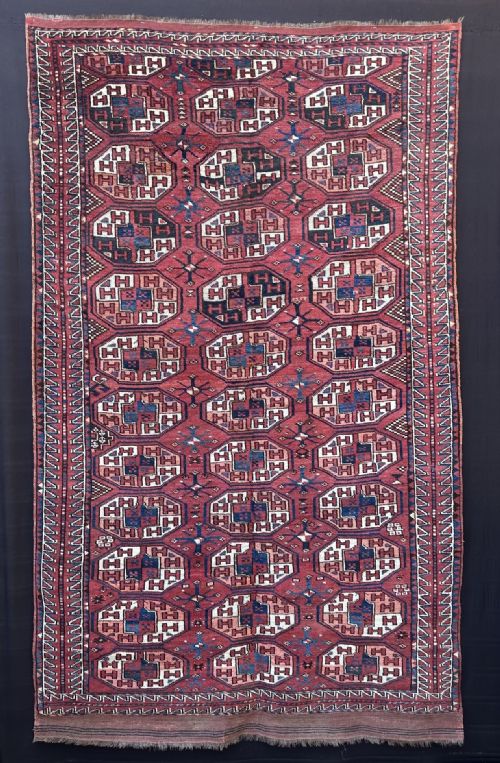
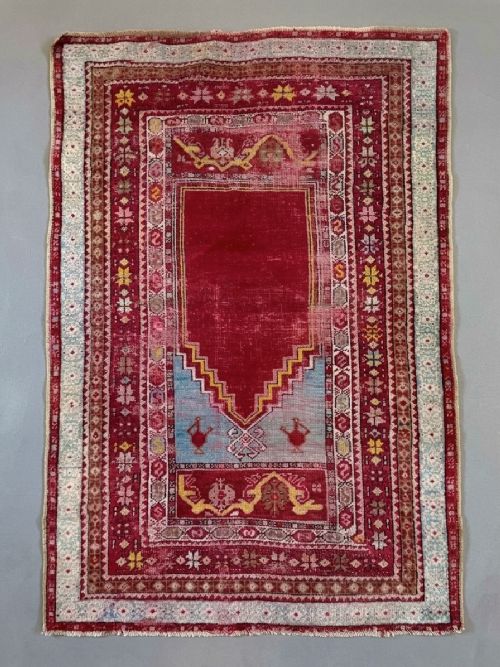
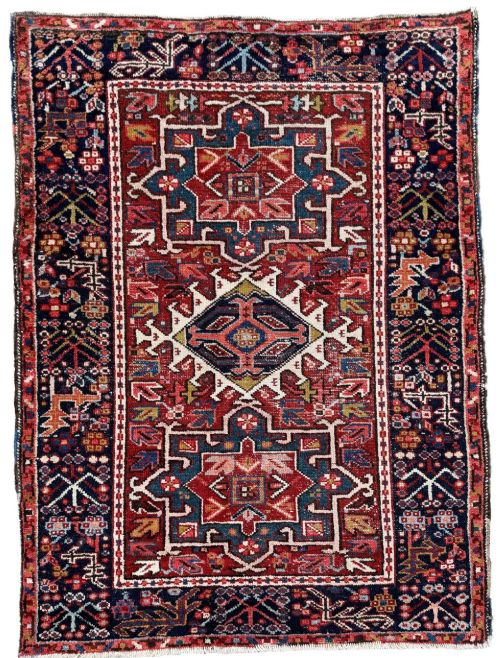
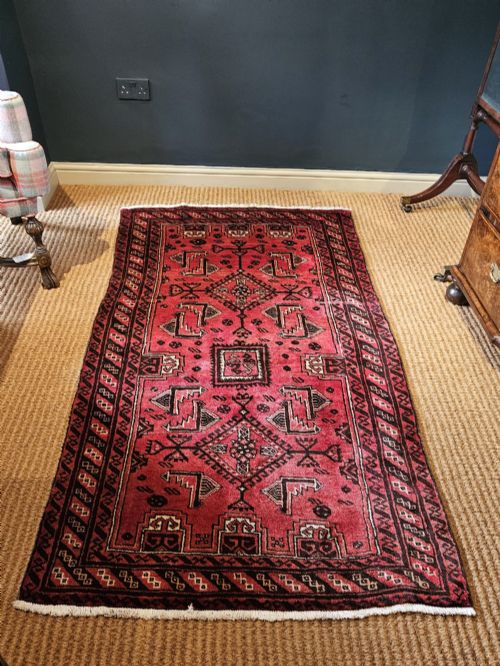
The most common formats met on this page are village carpets, area rugs, and dowry pieces bearing tribal motifs such as triple medallions, cloud bands, and blossom patterns. Red grounds dominate these textiles, ranging from deep rich tones to soft rose and pastel colour variations.
Makers include nomadic and village weavers working within established regional traditions like Ersari, Tekke, Kazak, Hamadan, Isparta, and Sarkoy. Buyers choose these rugs to introduce authentic historical texture and deep crimson hues into domestic spaces.
How they were made
These textiles utilise natural materials, specifically wool for the pile and foundation structures, supplemented by cotton in selected regional weaves. Weavers construct them using traditional hand-knotting techniques or embroidered flatweave methods as seen in kilim runners.
The pile employs soft, glossy wool fibres designed to handle wear while retaining flexibility across large carpet formats and smaller area rugs. Dyes create the signature red grounds alongside contrasting ivory borders and secondary hues.
Traditional Red Rug Retail Price Guide 2026
Typical asking prices for traditional red rug among the pieces listed under this phrase on Sellingantiques today, from the lower quarter to the upper quarter. They describe what is for sale here now, not the wider market.
Tekke dowry rugs were woven with intimate care by brides-to-be, carrying personal hopes straight onto the chilly tent floor.
What varies in quality
Quality separates along the depth and lustre of the wool, where soft glossy fibre yields a superior handle and richer ageing process. The fineness of the weave and precision of tribal motifs also dictate the standard of the piece.
Preservation of the original pile depth and structural integrity distinguishes better-surviving rugs from heavily distressed examples. The complexity of regional designs, from simple village patterns to intricate Kazak medallions, influences the overall stature of the textile.
The Traditional Red Rug Glossary
- Kazak
- A designation for rugs originating from the Caucasus region, known for bold geometric medallions and saturated primary colours. These pieces often display striking tribal iconography.
- Kilim
- A flatwoven rug or runner produced without a pile, utilising an embroidered weave technique common in Turkish village production. They offer a lighter floor covering alternative.
- Ersari
- A Turkmen tribal subgroup whose carpets display deep red grounds and traditional octagonal gul motifs. Their nineteenth and early twentieth-century works are notably substantial.
- Medallion
- A central decorative motif placed in the field of a rug, frequently rendered in triple sequence on Caucasian and Turkish examples. It organises the geometric layout of the piece.
Traditional Red Rug: Frequently Asked Questions
How do I style a red rug?
Pair the textile with neutral wooden floors and understated furniture to let the rich crimson ground dominate the space. The historical motifs complement both traditional interiors and modern minimalist settings.
Ensure the scale of the area rug matches the room dimensions, placing it centrally beneath seating arrangements or dining tables.
Are these rugs durable?
The historic wool construction provides robust resilience for everyday household traffic. Hard-wearing village rugs withstand regular footfall while maintaining their structural integrity.
Routine care involves gentle sweeping or specialist cleaning suited to antique textiles to preserve the natural fibres.
What is an Ersari carpet?
An Ersari carpet originates from Turkmen tribal weavers, distinguished by deep rich red colourways and soft glossy wool. These pieces date back through the nineteenth and early twentieth centuries.
They serve as prominent decorative anchors due to their generous proportions and traditional field patterns.
How do I identify a Kazak rug?
Kazak rugs feature bold geometric structures, most notably the characteristic triple medallion layout seen in Caucasian weaving traditions. The palette relies on strong red grounds paired with contrasting borders.
These visually striking pieces reflect nineteenth-century village aesthetics from the Caucasian region.