
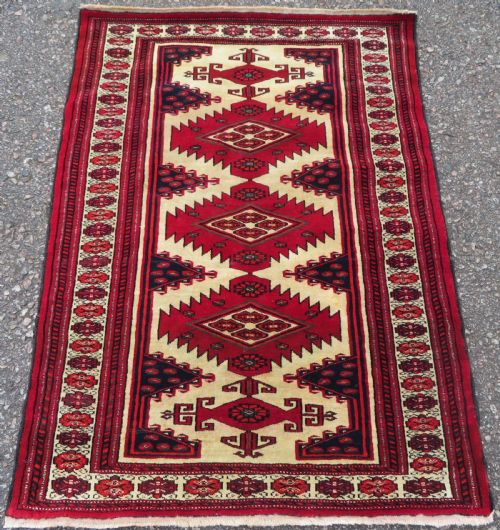


Kizil Ayak Rug
These kizil ayak rug examples are tribal and village floor coverings made in wool, offering collectors distinctive motifs and rich historical character.
Kizil Ayak Rug
A kizil ayak rug is a tribal or village weaving created by Turkmen and Afghan makers, appearing in forms such as prayer rugs, small rugs, trappings, and chuval faces. These pieces carry traditional designs reflecting nomadic heritage and village craftsmanship.
Buyers encountering this search phrase will most frequently find prayer rugs featuring rams horn mihrabs or mosque designs alongside chuval faces. The selection spans the nineteenth and early twentieth centuries, capturing a period of traditional textile production.
Origins trace primarily to Afghan and Turkmen weavers, with specific pieces classified under Turkmen Tribal or Afghan / Turkmen styles. The range encompasses both full-sized floor coverings and smaller format items like childs mosque prayer rugs and bag faces.
How they were made
Every piece in this category is constructed from wool, utilised for both the foundational structure and the surface pile. This material yields a soft texture and durable finish suited to daily use.
Weavers constructed these textiles by hand, knotting wool yarns onto a sturdy wool foundation. Natural dyes provided the deep colour palette characteristic of these tribal and village weavings.
Kizil Ayak Rug Retail Price Guide 2026
Typical asking prices for kizil ayak rug among the pieces listed under this phrase on Sellingantiques today, from the lower quarter to the upper quarter. They describe what is for sale here now, not the wider market.
Among the smaller formats, collectors find chuval faces and childs mosque prayer rugs designed in surprisingly sweet proportions.
What varies in quality
Quality in these textiles depends on the fineness of the wool and the precision of the knotting. Softer wool piles and tighter construction distinguish the more accomplished weaving from standard village work.
Design complexity and layout execution also separate examples. Pieces featuring unusual mosque layouts, intricate rams horn mihrabs, or scarce elem designs represent the more ambitious end of the weaving tradition.
The Kizil Ayak Rug Glossary
- Kizil ayak
- A tribal subgroup of the Turkmen people known for distinct weaving traditions. Their textiles often incorporate specific gul patterns and prayer arches.
- Mihrab
- The prayer niche depicted in rugs, often taking the form of an arch that points toward Mecca. In these pieces, it frequently incorporates rams horn motifs.
- Chuval
- A large storage bag face produced by Turkmen tribes. These square or rectangular panels display repeated gul motifs and detailed lower elem panels.
- Gul
- A medallion or primary motif used in Turkmen carpet design. Each tribal group utilised distinct repeating gul geometries to signal identity.
Kizil Ayak Rug: Frequently Asked Questions
What is a kizil ayak rug?
A kizil ayak rug is a handmade wool textile produced by Turkmen and Afghan weavers. These pieces range from tribal prayer rugs to small village trappings.
They display traditional motifs such as rams horn mihrabs and multiple gul patterns. Each piece reflects the specific heritage of nomadic and village makers.
How were prayer rugs used?
Prayer rugs served a devotional function for individuals kneeling in daily prayer. The architectural mihrab design directed the user toward Mecca.
Beyond religious use, these textiles formed an essential part of domestic life in tribal tents and village homes. They provided warmth and visual order to living spaces.
How do I date these rugs?
Dating relies on examining structural characteristics, wool quality, and design attributes. Pieces in the record generally span the nineteenth and early twentieth centuries.
Early examples often feature softer wool and specific village structures. Comparing knot density and palette helps place an item within its production era.
How should I live with one?
Living with these rugs involves placing them in low-traffic areas to preserve the wool pile. Regular gentle cleaning maintains the integrity of the natural fibres.
Allowing the textile to rest on a proper underlay prevents slipping and reduces wear. Their rich colours complement both traditional and modern interiors.