

Vintage Turkmen Rug
A vintage turkmen rug brings rich tribal character and deep saturated colour into a room.
Vintage Turkmen Rug
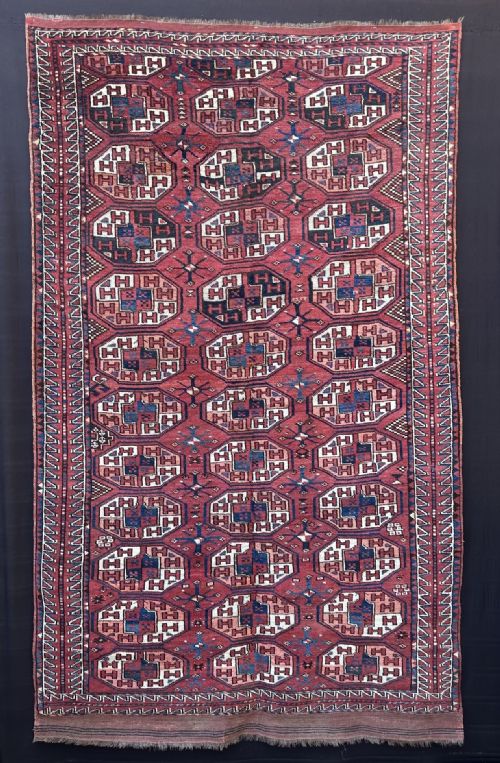
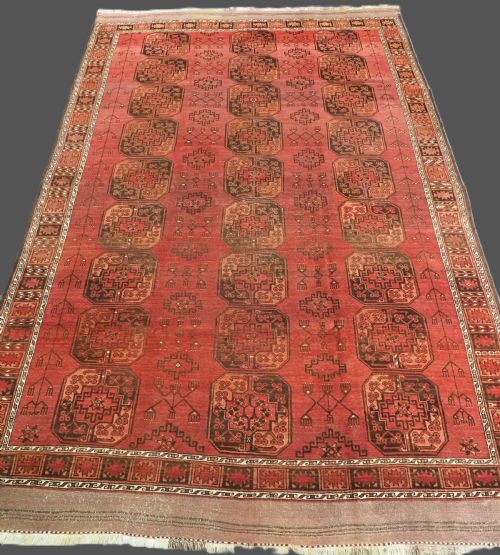
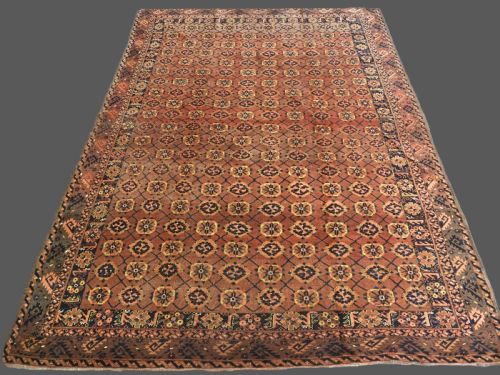
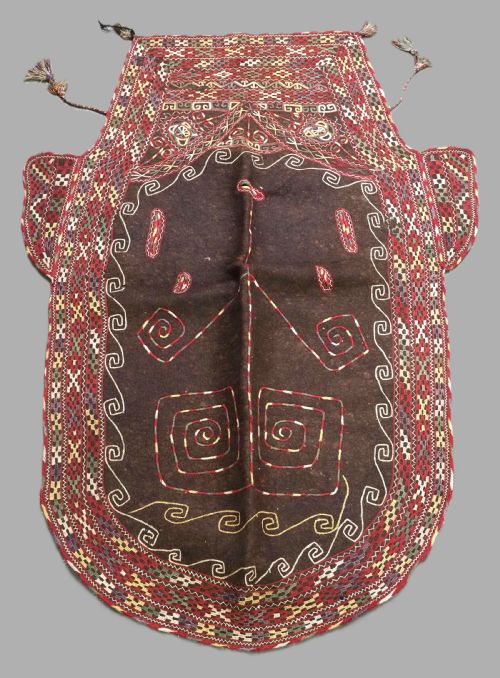
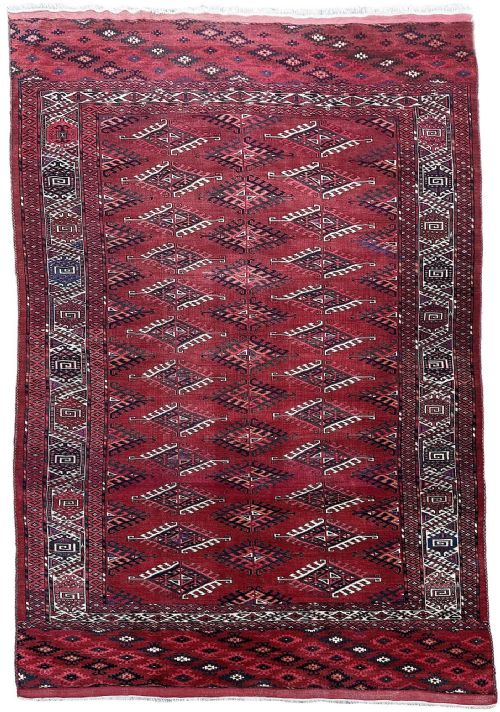
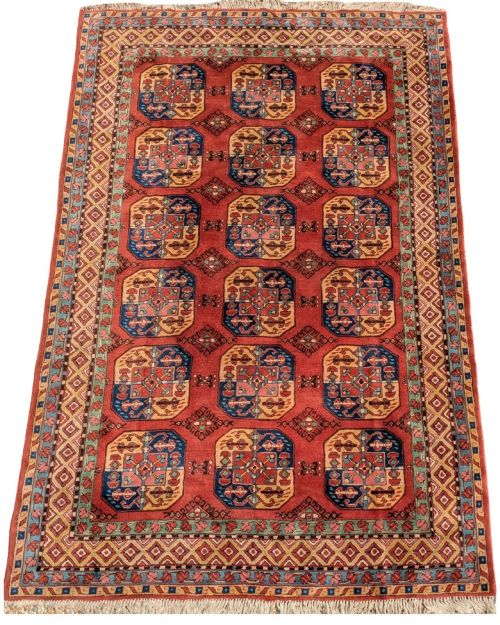
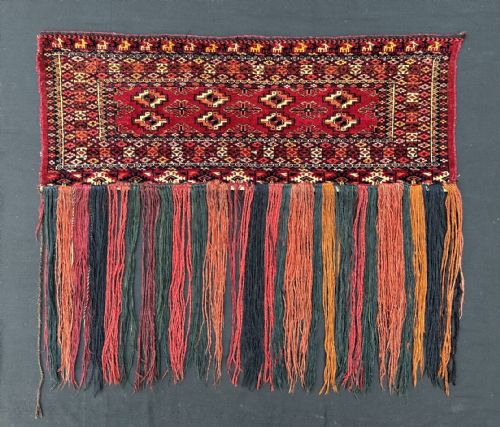
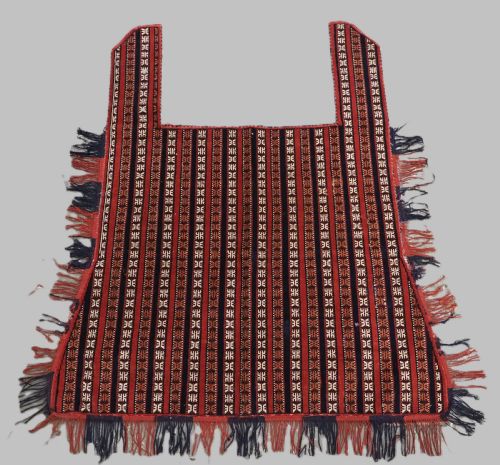
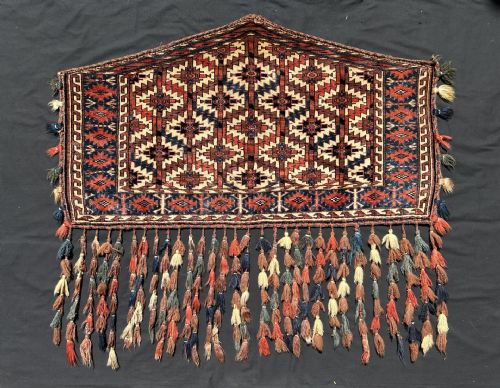
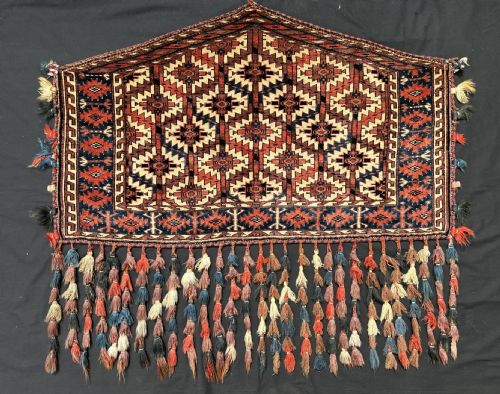
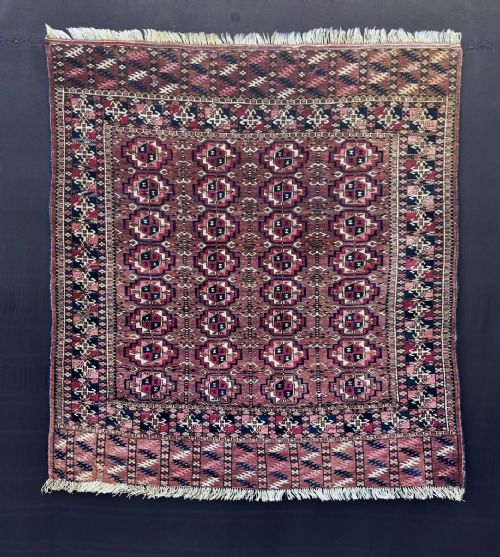
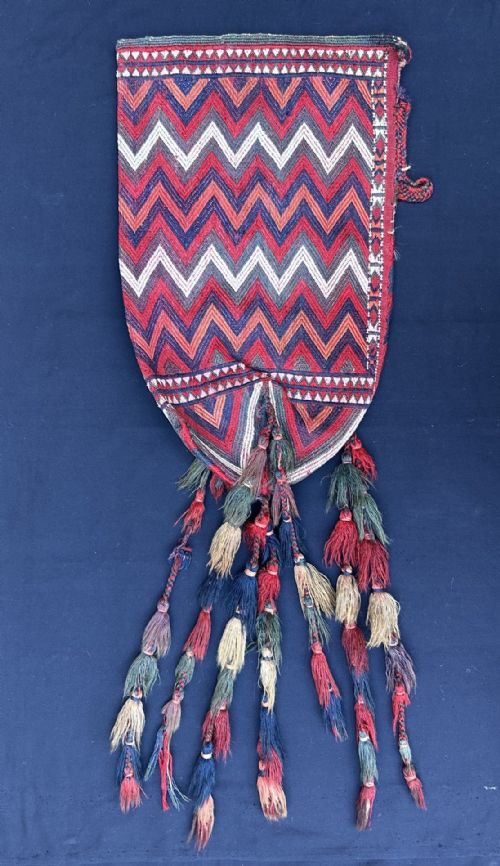
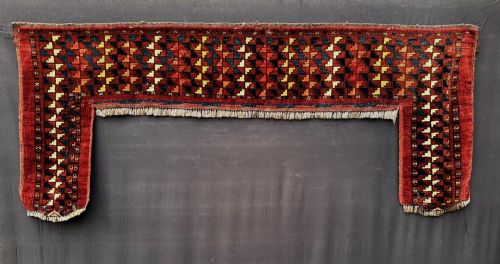
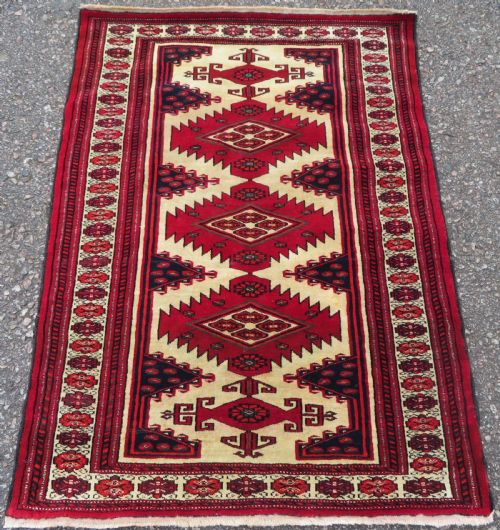
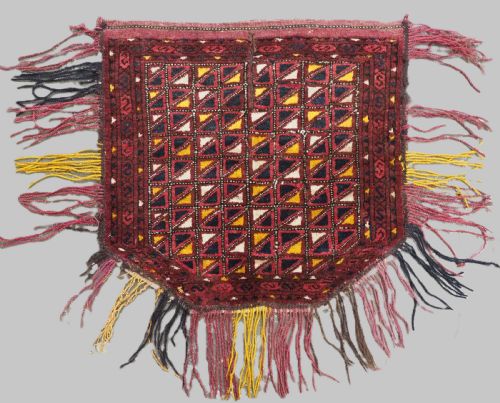
When you search for a vintage turkmen rug, you encounter tribal weaving traditions originating from Central Asia, created primarily as main carpets, dowry rugs, and prayer rugs. The pieces available span from the mid nineteenth century through the early twentieth century, showing distinct regional tribal identities such as Tekke, Ersari, and Kizil Ayak. These textiles function effectively as area rugs and runners, anchoring a space with centuries-old design vocabulary.
The most common examples you meet on this page belong to the Tekke tradition, often featuring traditional gul designs and dip khali formats. Ersari main carpets also appear, alongside Kizil Ayak prayer rugs displaying rams horn mihrab motifs. These variations represent the diverse nomadic and village workshops of the region during the Victorian and Edwardian eras.
How they were made
Every vintage turkmen rug is constructed using wool, utilising natural dyes to achieve deep reds, browns, and secondary palette accents. The pile and foundation rely entirely on animal fibres spun and knotted by hand within tribal communities.
Weavers employed traditional knotting techniques passed down through generations, securing geometric motifs and repeating gul patterns into the structure. The reliance on natural dyes ensures the colour softens gracefully over decades of use.
Vintage Turkmen Rug Retail Price Guide 2026
Typical asking prices for vintage turkmen rug among the pieces listed under this phrase on Sellingantiques today, from the lower quarter to the upper quarter. They describe what is for sale here now, not the wider market.
Listings span four distinct decades from eighteen sixty to nineteen ten, executed entirely in wool using natural dyes.
What varies in quality
Quality in these textiles rests upon the precision of the knotting, the depth and vibrancy of the natural dyes, and the integrity of the wool foundation. Finer knot density allows for sharper definition within complex geometric gul patterns.
The distinction between standard examples and superior pieces lies in the purity of the colour palette and the preservation of the original format. Examples retaining strong structural integrity alongside genuine age command greater appreciation among collectors.
Ersari·Tekke·Kizil Ayak
The Vintage Turkmen Rug Glossary
- Gul
- A repeating octagonal medallion motif central to Turkmen weaving traditions. Each tribe utilised distinct variations of this primary design element.
- Mihrab
- A niche design found in prayer rugs, often shaped like a rams horn in specific Kizil Ayak examples. This architectural form points toward Mecca.
- Main Carpet
- A large format rug produced for domestic tribal use or ceremonies rather than smaller utilitarian purposes. These pieces display elaborate border systems and multiple rows of guls.
- Dip Khali
- A specific term for a traditional pile rug format within the Turkmen weaving repertoire. These pieces exhibit characteristic field arrangements and coloration.
Vintage Turkmen Rug: Frequently Asked Questions
How old are these rugs?
The pieces available span from the mid nineteenth century to the early twentieth century, specifically covering periods from eighteen sixty through nineteen twenty.
This dating relies on stylistic evidence, structural analysis, and the traditional dye methods employed during those decades.
Where did they originate?
These textiles originate from Central Asia, created by tribal groups including the Tekke, Ersari, and Kizil Ayak communities.
Each tribe maintained distinct weaving centres and design traditions that separate their work from other regional rugs.
How do I use a prayer rug?
Kizil Ayak prayer rugs feature a distinct mihrab design, originally intended for ritual placement and personal devotion.
In modern interiors, these smaller formats work effectively as wall hangings, accent pieces in low-traffic areas, or small floor rugs.
What is a main carpet?
Main carpets are the large-scale formats produced by Turkmen tribes for primary domestic use within the tent or home.
These substantial textiles feature expansive fields of guls and complex multi-layered borders designed to be viewed from all angles.