
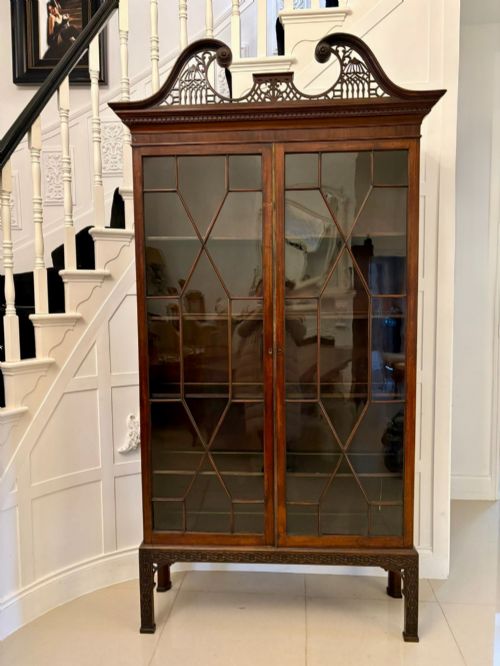
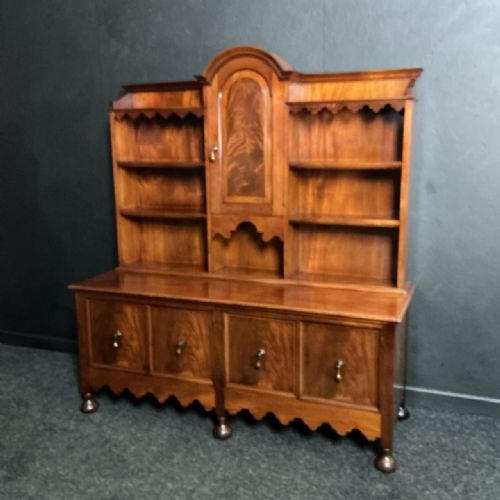
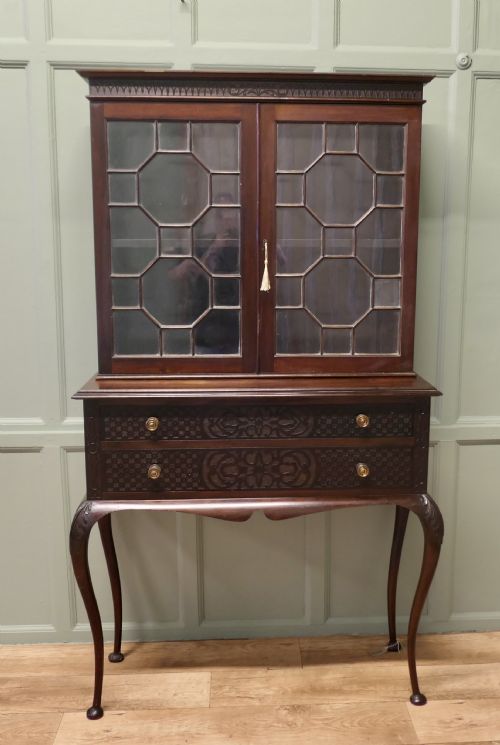
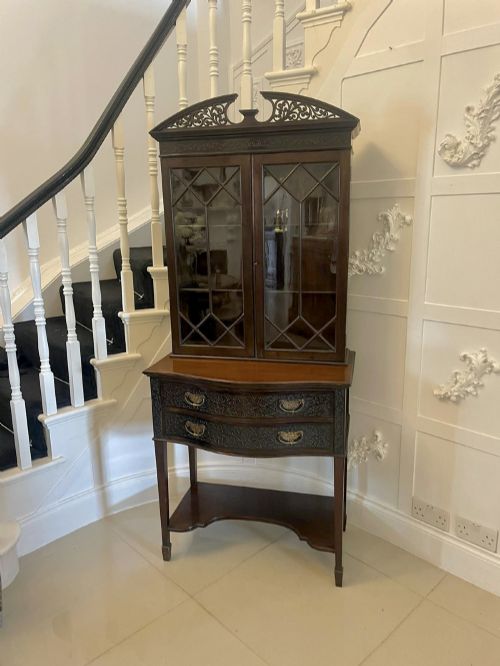

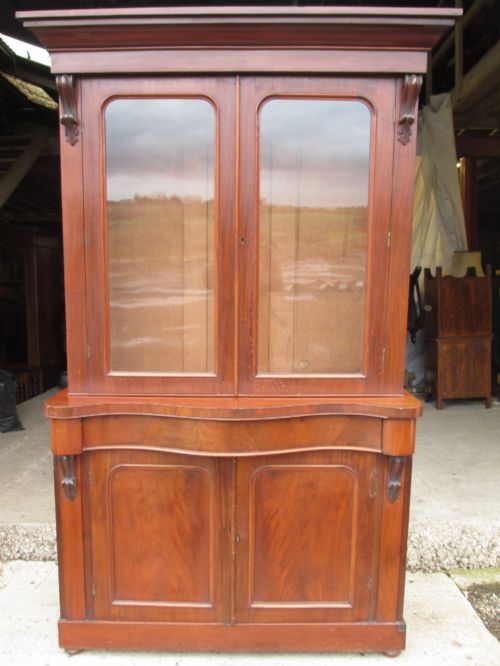
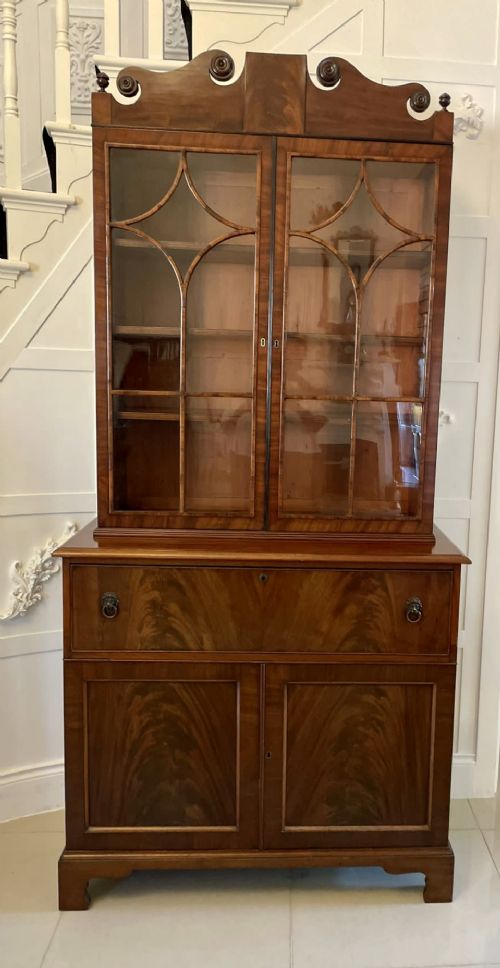
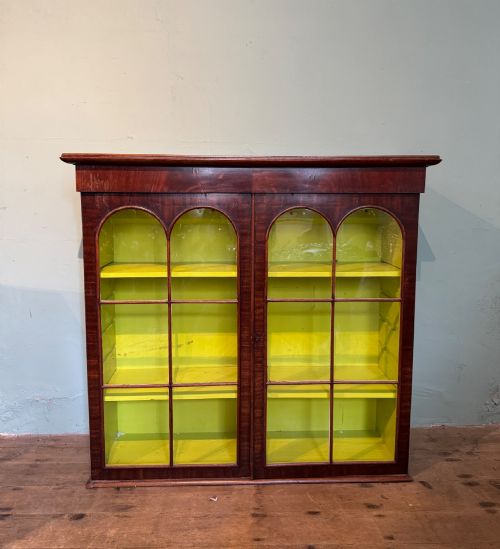
Dark Mahogany Display Cabinet
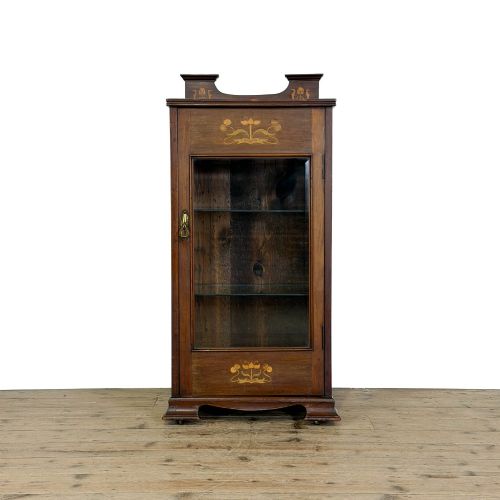
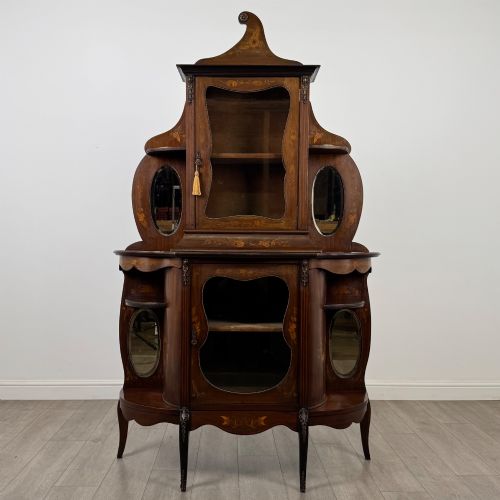
A dark mahogany display cabinet brings deep timber grain and clear glass together to showcase prized possessions.
Dark Mahogany Display Cabinet
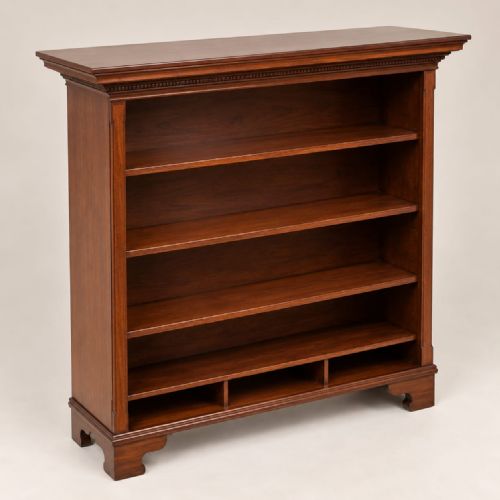
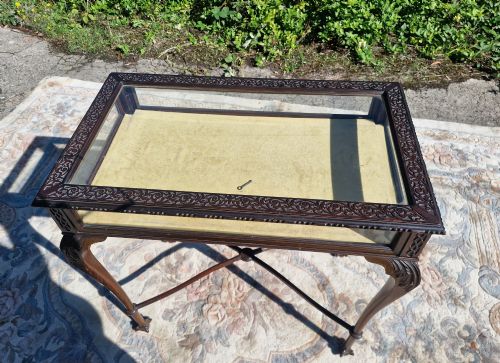
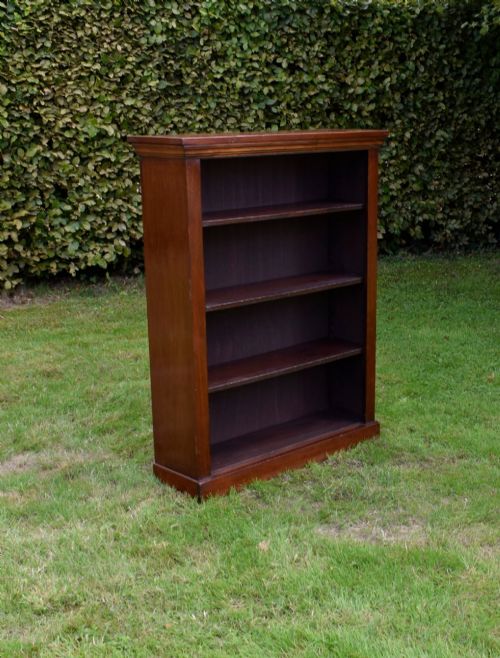
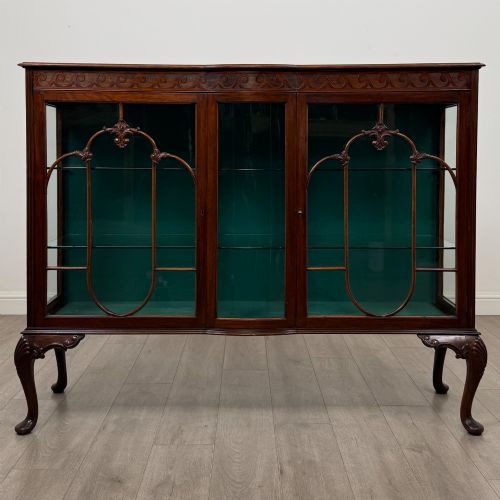
When searching for a dark mahogany display cabinet, buyers encounter substantial pieces designed to protect and exhibit books, china, and curated collections. These furnishings combine timber framing with glazed doors, vitrine tops, or open shelving configurations.
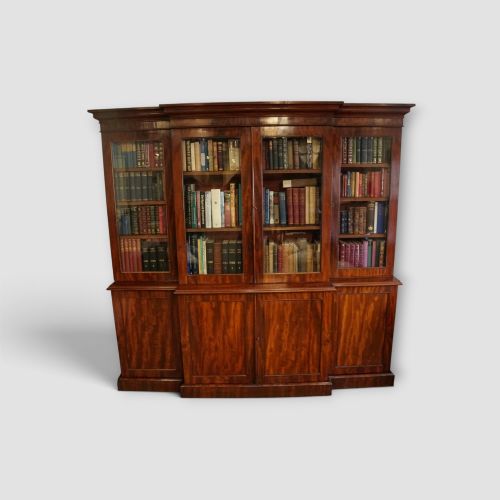
The selections available range widely in form and origin, spanning tall breakfront bookcases, corner cabinets, and smaller table formats. Victorian and Edwardian examples appear frequently alongside Georgian and Regency iterations.
Many of these items function simultaneously as storage and display units, utilising fitted interiors, glazed panels, and lower cupboards to balance utility with visual presentation.
How they were made
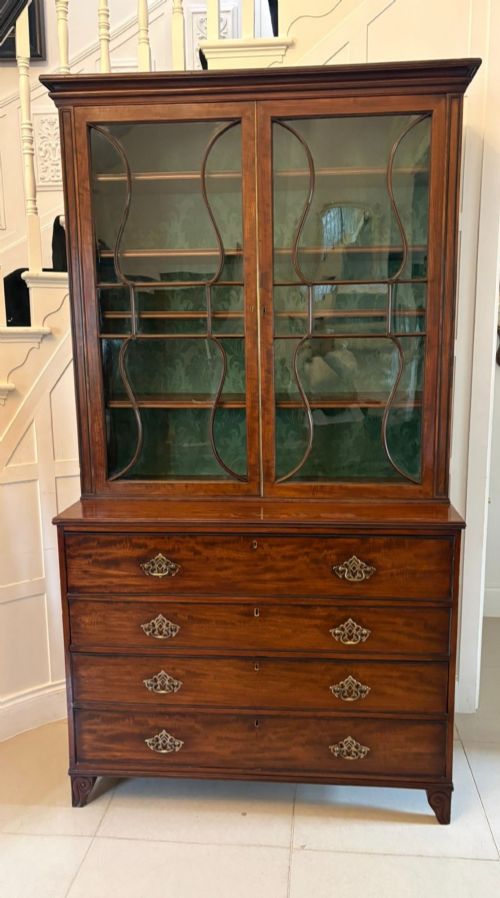
Cabinet makers utilised solid mahogany and flame mahogany veneer over secondary timbers such as oak, applying careful polishing to accentuate the rich grain. Glass panels are fitted into wooden doors, frequently secured with astragal glazing bars.
Brass hardware, mirrored backs, and fabric linings appear across various pieces to complement the dark wood. Carved details, inlay work, and shaped feet complete the construction of these cabinets.
Dark Mahogany Display Cabinet Retail Price Guide 2026
Typical asking prices for dark mahogany display cabinet among the pieces listed under this phrase on Sellingantiques today, from the lower quarter to the upper quarter. They describe what is for sale here now, not the wider market.
Listings feature mahogany, glass, brass, fabric, oak, and mirror materials across Victorian, Edwardian, Georgian, and Regency periods.
What varies in quality
The degree of refinement in the timber figure and veneer selection marks the distinction between standard examples and finer works. Figured and flame mahogany displays striking grain patterns that elevate the visual presence of the cabinet.
Execution of carved details, such as ball and claw feet or astragal glazing bars, demonstrates the skill of the original workshop. Interior elements like fitted secretary drawers, upholstered backs, and heavy brass fittings further separate exceptional pieces from simpler utilitarian versions.
Jas Shoolbred
The Dark Mahogany Display Cabinet Glossary
- Astragal
- Glazing bars that divide a glass window into smaller panes within a cabinet door. These slender wooden strips form geometric patterns across the front of the bookcase.
- Vitrine
- A glass-sided cabinet or display table designed for showing delicate objects and curiosities. This French term typically applies to pieces with extensive glazing.
- Secretaire
- A cabinet incorporating a pull-down writing drawer fitted with small compartments and pigeonholes. This dual-purpose form merges desk space with library storage.
- Breakfront
- A large piece of furniture where the central section projects forward from the flanking wings. This architectural arrangement creates depth and visual rhythm in large bookcases.
- Flame mahogany
- A veneer cut from the fork of the mahogany tree to produce a swirling, flame-like grain pattern. Cabinet makers reserved this highly decorative timber for prominent surfaces.
Dark Mahogany Display Cabinet: Frequently Asked Questions
Where should I place a dark mahogany display cabinet?
These cabinets suit drawing rooms, studies, and formal dining spaces where their dark timber tones complement traditional interiors. Position them away from direct sunlight to protect the polished wood surfaces and any interior fabric linings.
Ensure adequate floor space for doors to swing open fully, particularly with larger breakfront or double-door library bookcases.
How do I care for the mahogany and glass?
Dust the timber regularly with a soft, dry cloth and apply a quality beeswax periodically to nourish the mahogany grain. Avoid silicone-based polishes that can build up and dull the finish over time.
Clean the glass panels with a mild glass cleaner applied to a cloth rather than sprayed directly, preventing moisture from seeping into the wooden glazing bars.
How do I identify a Victorian piece from an Edwardian one?
Victorian cabinets generally display heavier proportions, darker finishes, and robust carvings reflecting nineteenth-century tastes. Pieces from this era often utilise dense figured mahogany and substantial brass hardware.
Edwardian examples tend toward lighter construction, sometimes incorporating Sheraton or Chippendale revival styles with more delicate inlay work and tapered legs.