



Cold Painted Bronze Dog
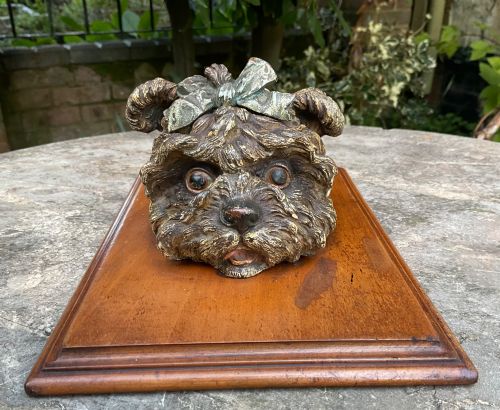
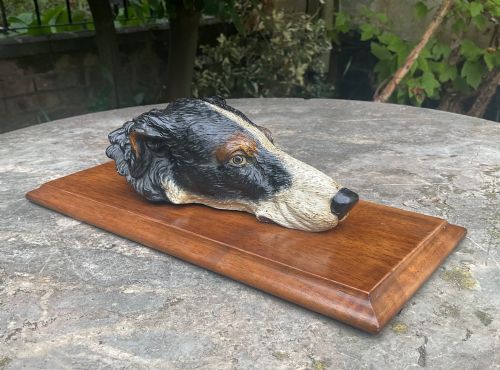
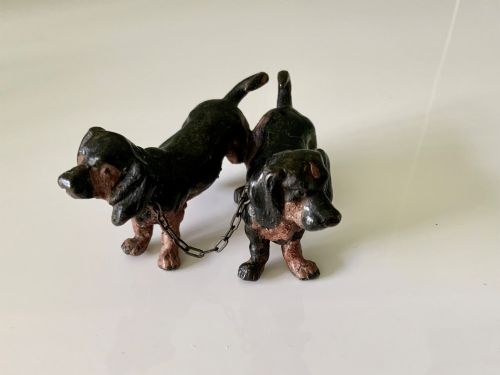
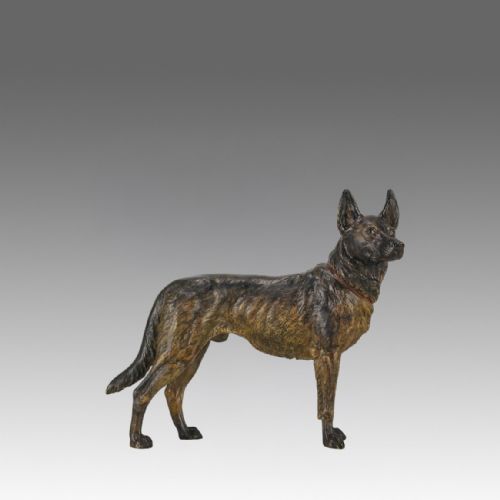
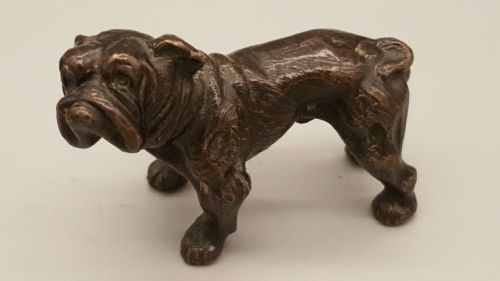
These cold painted bronze dog figures combine realistic animal bronze casting with vivid polychrome enamel surfaces.
Cold Painted Bronze Dog
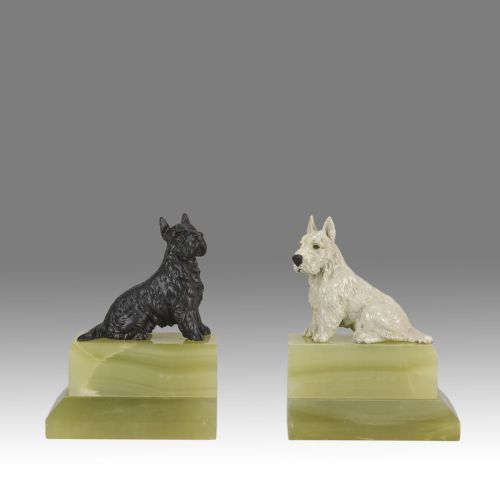
A cold painted bronze dog brings together small-scale metal sculpture and functional desk items like inkwells, bookends, and letter clips from the late nineteenth and early twentieth centuries. You find pugs, bulldogs, terriers, and dachshunds modelled in realistic or whimsical poses, often originating from Vienna workshops.
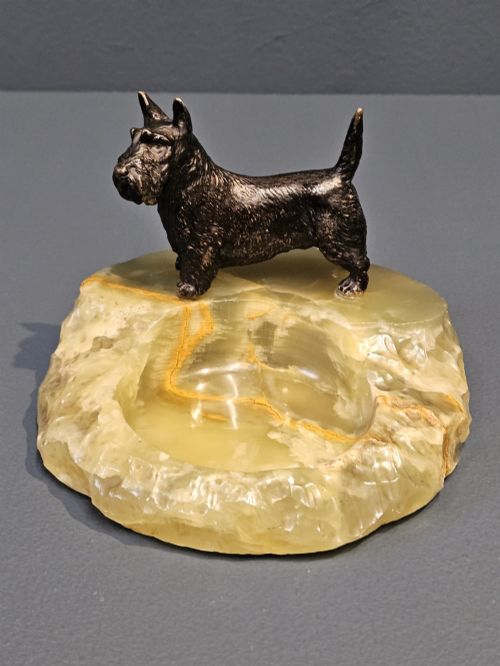
The objects span varied utilitarian forms including ashtrays, match strikes, pen nib wipes, and car mascots alongside cabinet figures and figural groups mounted on marble or onyx bases. Most examples date from the 1900 period through to the 1930s Art Deco era, reflecting both Victorian animalier traditions and later modernist designs.
Materials and technique
Craftsmen cast bronze into detailed animal figures before applying layers of cold enamel paint by hand without subsequent kiln firing. This low-temperature technique allowed for intricate polychrome details on the fur, eyes, and collars of each dog.
Many sculptures incorporate mounting bases made from marble or onyx, while functional pieces integrate metal hardware such as clips, glass inkwells, or trays directly into the bronze designs.
Cold Painted Bronze Dog Retail Price Guide 2026
Typical asking prices for cold painted bronze dog among the pieces listed under this phrase on Sellingantiques today, from the lower quarter to the upper quarter. They describe what is for sale here now, not the wider market.
Listings feature utilitarian forms like inkwells, bookends, letter clips, and match strikes alongside standalone animal figurines.
Judgments of quality
The presence of maker marks, foundry stamps, or registration numbers such as Geschützt adds distinction to a figure, as does the complexity of the object, moving from a simple figurine to a multi-use desk accessory or figural group.
Franz Bergman·Franz Xaver Bergmann·Stephan Buchinger·Jules Moigniez·Carl Kauba
The Cold Painted Bronze Dog Glossary
- Cold-painted
- A decorating method where enamel paint is applied to a metal object without firing it in a kiln. This finish is delicate and prone to chipping if handled roughly.
- Vienna bronze
- Small, highly detailed bronze sculptures produced in Austrian foundries during the late nineteenth and early twentieth centuries. These pieces often depict animals or human figures in humorous situations.
- Animalier
- A nineteenth-century artistic style focused on the realistic depiction of animals. Sculptors in this tradition studied animal anatomy closely.
- Vide poche
- A small tray or dish intended for emptying pockets of small items like coins and keys. In bronze pieces, these often feature a dog figure resting beside the dish.
- Vesta
- A small pocket box or desk stand used for holding matches. They frequently incorporate dog sculptures into their functional lids or mounts.
Cold Painted Bronze Dog: Frequently Asked Questions
What is a cold painted bronze dog?
It is a small metal sculpture of a canine cast in bronze and hand-decorated with cold enamel paint. These figurines capture various breeds in lifelike or humorous poses.
Many examples function as practical desk accessories such as inkwells, match strikes, and paper clips. They gained immense popularity in Austria during the late nineteenth and early twentieth centuries.
Are these pieces marked with signatures?
Some pieces feature foundry marks, Bergman vase symbols, or stamped numbers like Geschützt on the underside or base. Many smaller items, however, remain unmarked.
The absence of a signature does not diminish the quality of the casting or the originality of the piece.
What dog breeds appear most often?
Pugs and bulldogs appear frequently among the surviving sculptures, often posed in humorous or charming human scenarios. Terriers, dachshunds, Alsatians, and hunting hounds also feature regularly in the inventory.
These breeds reflect the popularity of specific pets during the Victorian and Edwardian periods.