



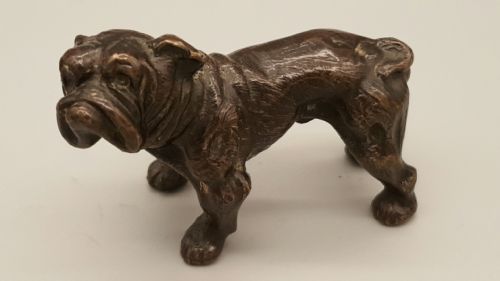
Bronze Dog Figurine
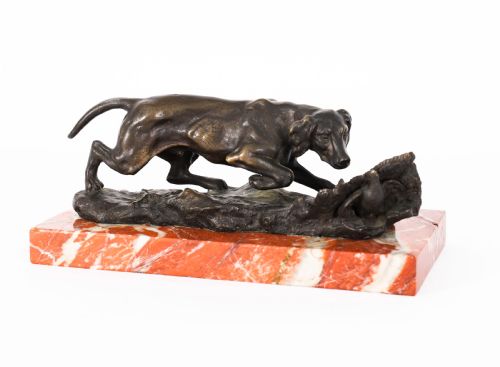
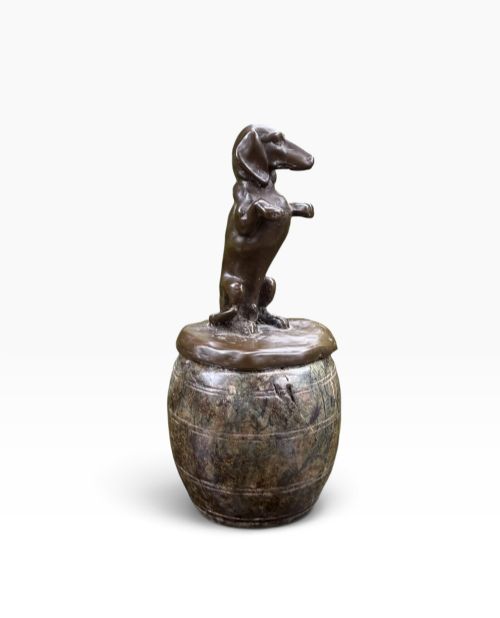
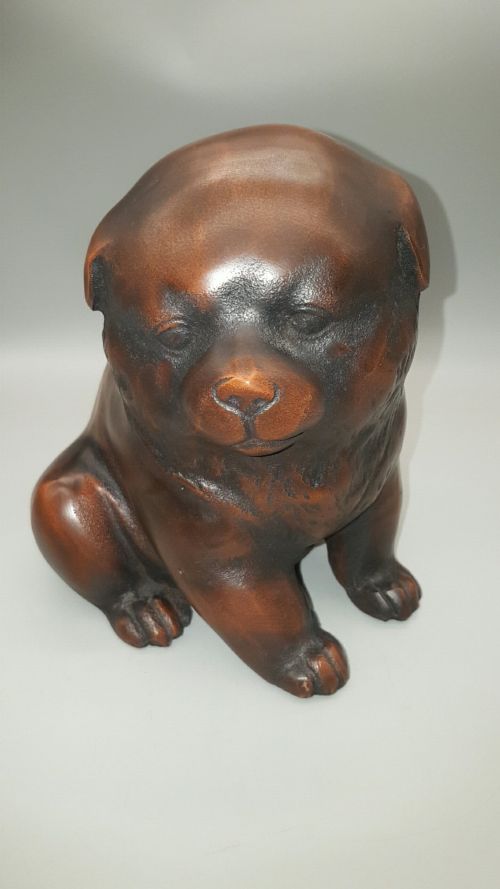
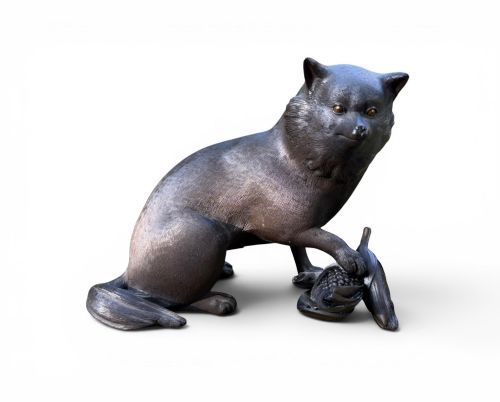
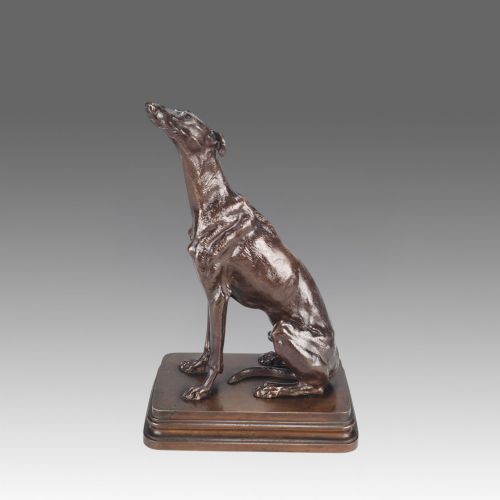
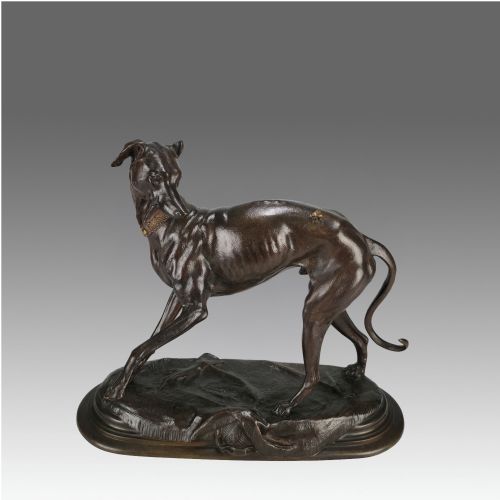
A bronze dog figurine brings character and heft to a desk, capturing the distinct posture of a terrier or bulldog in heavy metal.
Identifying the bronze dog figurine
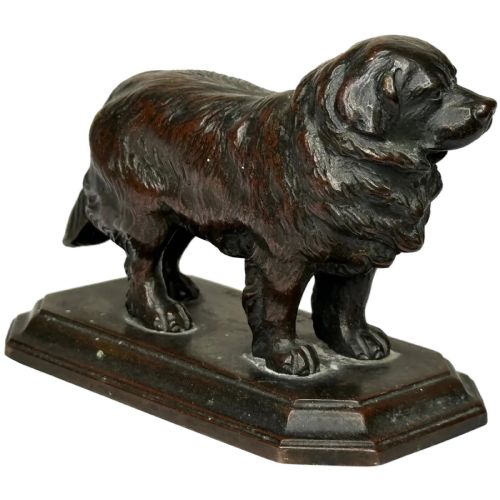
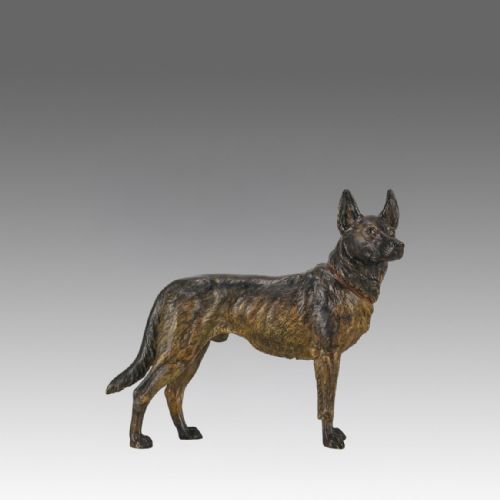
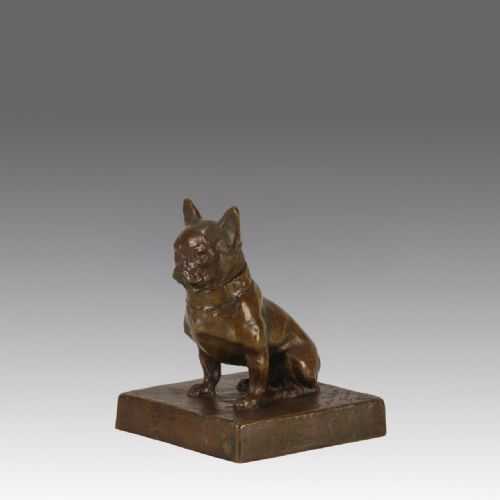
A bronze dog figurine spans compact nineteenth-century animalier studies through to early twentieth-century Austrian and Japanese output. These small sculptures capture breeds like the Scottish Terrier, German Shepherd, Newfoundland and bulldog.
Making and finishing the metal
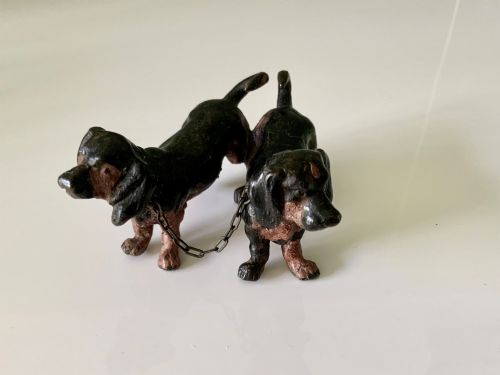
Foundries cast these pieces in bronze, often finishing the surface with dark patinas or vibrant cold-painted enamel. Cold painting involves applying pigment directly onto the cast and cured metal surface rather than firing it in a kiln.
Japanese okimono and European animalier figures rely on precise metal casting to render fur, muscle and expression at a miniature scale. Artisans build realistic textures directly into the bronze before applying any surface colour or patina.
Retail Price Guide 2026
Typical UK retail prices for bronze dog figurine, calculated from the Sellingantiques database of over a million retail prices indexed since 2003. This retail price guide relies exclusively on Sellingantiques data; no external sources or auction records are used, so the figures do not describe the wider market.
One late nineteenth-century Austrian bronze humorously captures a dog in the very act of cocking its leg.
Distinguishing quality across the range
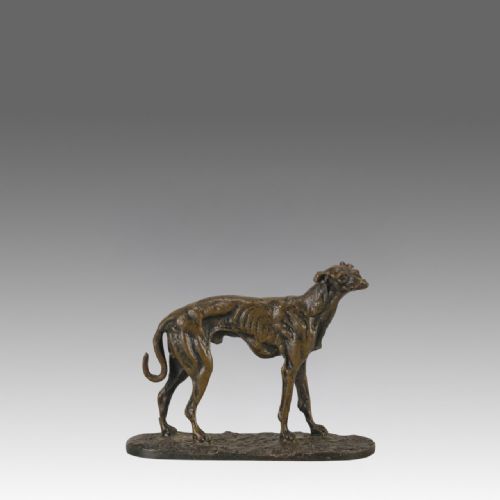
Quality rests upon the crispness of the casting and the fidelity of the breed representation. Superior pieces display finely detailed fur and anatomically convincing musculature rather than soft or blurred contours.
The preservation of original cold-painted enamel or rich patination defines the better examples. Where the polychrome finish remains intact without extensive flaking, the artistic intent endures clearly.
Louis Riche·Stephan Buchinger
The Bronze Dog Figurine Glossary
- Animalier
- A nineteenth-century artistic movement dedicated to the realistic portrayal of animals. Sculptors in this tradition focused closely on animal anatomy and movement.
- Cold Painted Bronze
- A bronze object decorated with unfired paint or enamel applied over the metal surface. This technique gained widespread popularity in Austrian workshops around nineteen hundred.
- Okimono
- A Japanese term for a decorative statue or ornament intended for display in a domestic interior. These pieces are typically small in scale and highly detailed.
- Patina
- A thin layer that naturally or artificially forms on the surface of bronze through oxidation and age. Artists often chemically induce patination to achieve deep brown or green tones.
Frequently Asked Questions
What is an animalier bronze?
An animalier bronze is a nineteenth-century sculpture focused specifically on realistic animal subjects. These pieces capture beasts and pets in naturalistic poses with careful attention to anatomy.
Artists in this movement observed creatures in motion to create lively and convincing miniature sculptures.
Where were these dog figurines made?
These figurines originate primarily from European workshops, particularly in Austria, alongside Japanese studios producing okimono. Austrian makers specialised in vibrant cold-painted enamel finishes.
Japanese artisans focused on traditional bronze casting techniques to render domestic animals and puppies with lifelike charm.
How do I date a bronze dog?
Dating relies on stylistic clues, foundry marks, the type of patina and the specific treatment of the metal surface. Pieces from the nineteenth century often display classical animalier realism.
Early twentieth-century works, particularly Austrian ones, frequently employ bright cold-painted enamel or whimsical subjects like the Scottish Terrier and bulldog.