


Art Deco Desk Tidy
An art deco desk tidy brings order and modernist geometry to a workspace, combining practical storage with striking twentieth-century materials.
Art Deco Desk Tidy
An art deco desk tidy organises correspondence, writing implements, and small desk accessories within a structured tray or stand. These items range from simple pen trays to fitted inkstands complete with original glass pots.
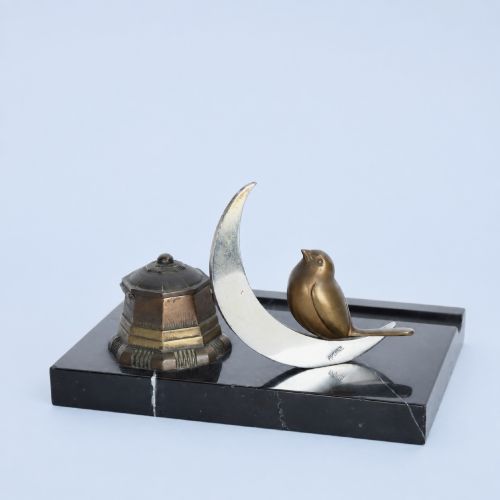
The versions most commonly met on this page date from the nineteen-thirties, favouring geometric lines and contrasting natural minerals. They often incorporate animal figures cast in bronze or carved from stone.
Makers utilised various desk accessories, including stamp wetters, letter racks, and string balls, alongside traditional inkwells. Pieces span from the Edwardian era through the nineteen-twenties and nineteen-thirties, reflecting shifting tastes in office design.
How they were made
Craftsmen combined heavy natural stones such as black marble, green onyx, and Brazilian onyx to form solid heavy bases for these inkstands and pen trays. Metals including brass, sterling silver, and cold-painted bronze were applied for animal figures and mounts.
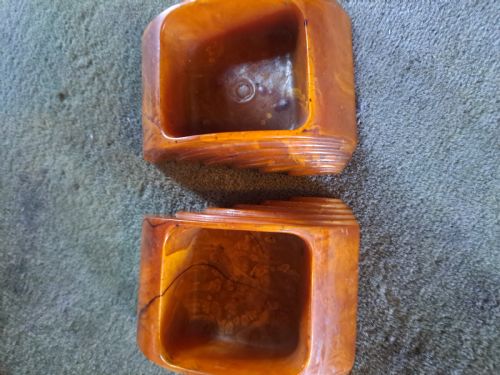
Synthetic materials appeared alongside traditional timber and stone, notably early plastics like amber bakelite and catalin. Artisans also employed fine woods such as Karelian birch and macassar ebony, often pairing them with inlaid lapis or pink guilloche enamel.
Listings span periods from nineteen hundred through nineteen thirty, incorporating materials from traditional bronze and marble to early synthetic bakelite.
What varies in quality
The hierarchy of these pieces depends upon the harmony of the materials and the refinement of the metal castings. Heavier stone bases with crisp bronze animal figures or hallmarked silver mounts sit at the upper end of the scale.
Simpler turned wood or plain stone trays represent the more utilitarian side of the market. The presence of original fitted components, such as matching glass ink pots and intact stamp wetters, elevates the integrity of a desk tidy.
Asprey Of London·Zimmermann
The Art Deco Desk Tidy Glossary
- Bakelite
- An early form of synthetic phenol formaldehyde resin developed in the early twentieth century. It appears in rich amber tones on desk accessories from the period.
- Catalin
- A cast phenolic resin known for its bright colours and translucent qualities. It was frequently utilised for decorative desk items during the nineteen-thirties.
- Guilloche enamel
- Decorative metalwork covered with translucent enamel over an engine-turned pattern. Pink guilloche enamel is found on sterling silver letter racks.
- Inkstand
- A fitted tray holding inkwells, pen rests, and sanders for writing desks. Edwardian and art deco examples often feature heavy stone or marble bases.
- Stamp wetter
- A small desktop device used for moistening adhesive postage stamps. They are typically cast in bakelite or metal as part of a desk tidy set.
Art Deco Desk Tidy: Frequently Asked Questions
What is an art deco desk tidy?
An art deco desk tidy is a decorative desktop tray or stand designed to hold pens, letters, and writing materials. These items coordinate the clutter of a writing desk using the geometric styles of the interwar period.
They combine functional compartments with sculptural elements, often featuring cast bronze animals mounted on marble or onyx bases.
How were inkstands used?
Inkstands provided a secure central station for wet ink writing before the widespread adoption of fountain pens and ballpoints. They held glass ink pots alongside pen trays and blotters.
Desk users dipped their nibs directly into the ink pots positioned within the stone or metal tidy.
What materials should I expect to find?
These desk accessories employ a mix of natural stone, metals, and early plastics. Common materials include black marble, green onyx, brass, sterling silver, and cold-painted bronze.
Some examples also feature exotic timbers like macassar ebony and Karelian birch, alongside synthetic catalin and bakelite.
How do I date a desk tidy?
Dating relies on stylistic markers and the presence of specific period materials. Pieces featuring heavy black marble, bronze wildlife, and amber bakelite typically originate from the nineteen-twenties and nineteen-thirties.
Earlier Edwardian items tend to feature inlaid stones and more traditional joinery without modernist geometric forms.