




Cobalt Blue Decorative Plates
Cobalt blue decorative plates bring deep rich colour to a room through centuries of porcelain and earthenware traditions.
Cobalt Blue Decorative Plates
Cobalt blue decorative plates span multiple centuries and origins, bringing together European porcelain, Japanese Imari, and Delft earthenware. Buyers searching for cobalt blue decorative plates encounter everything from large chargers to intimate cabinet plates designed for display.
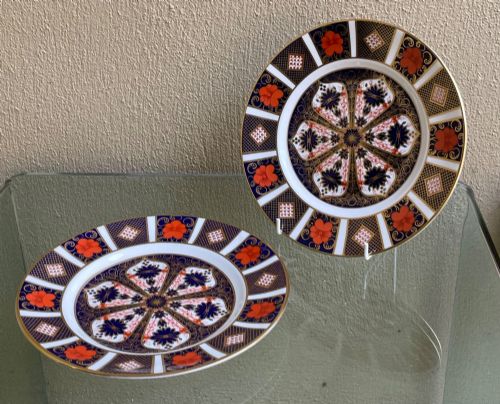
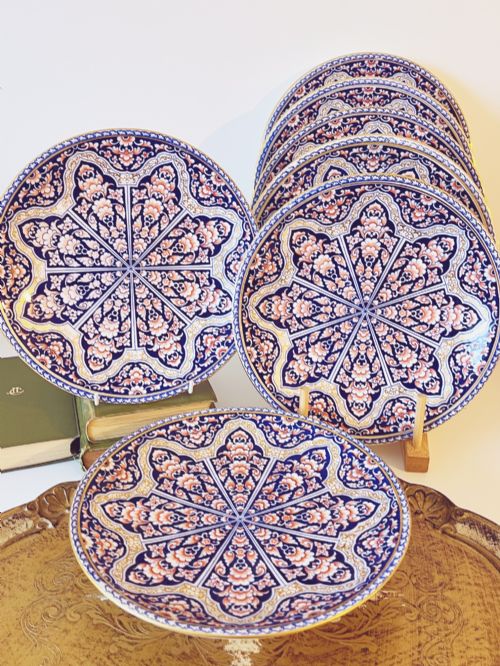
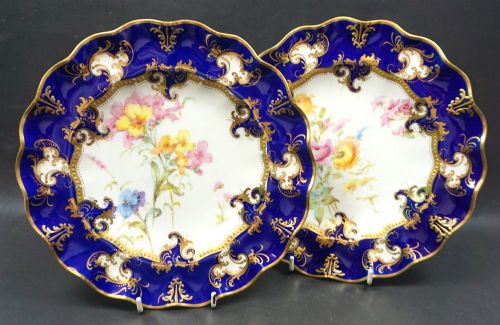
The selection on this page leans heavily toward Japanese Imari wares from the late nineteenth century alongside English bone china and porcelain from the Victorian period onward. Large chargers and scalloped plates dominate the forms, offering strong cobalt tones contrasted with iron red and gilding.
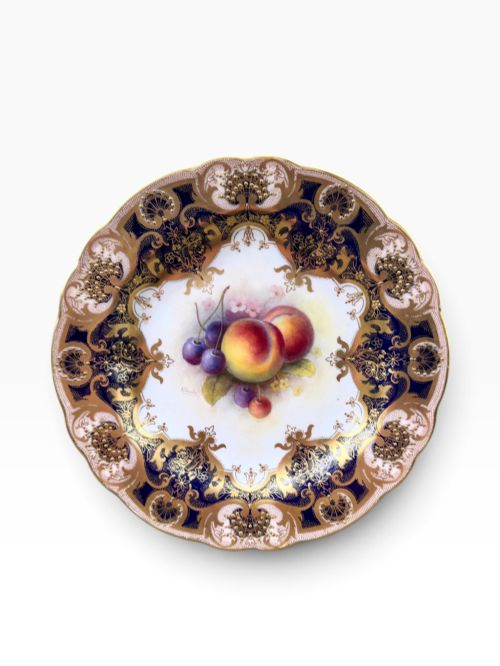
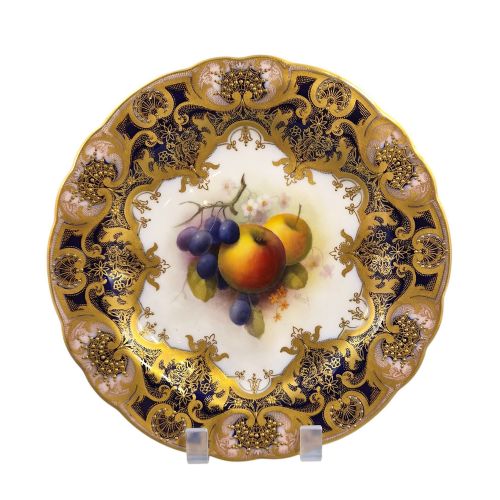
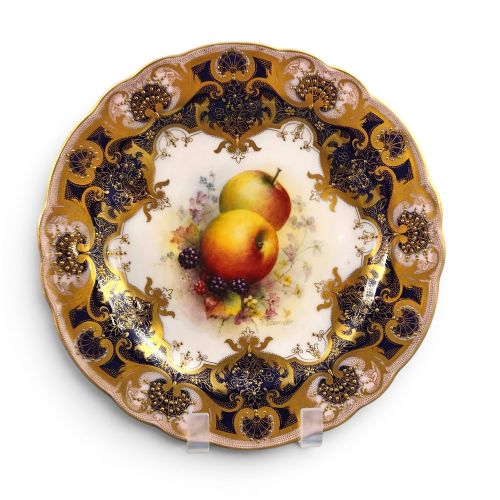
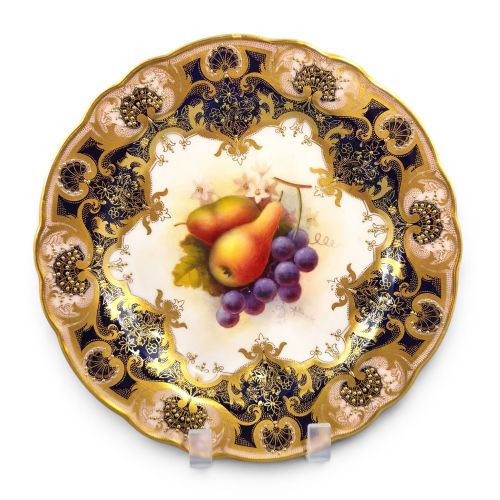
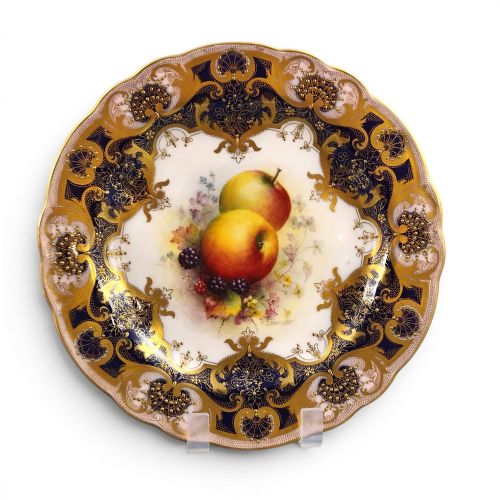
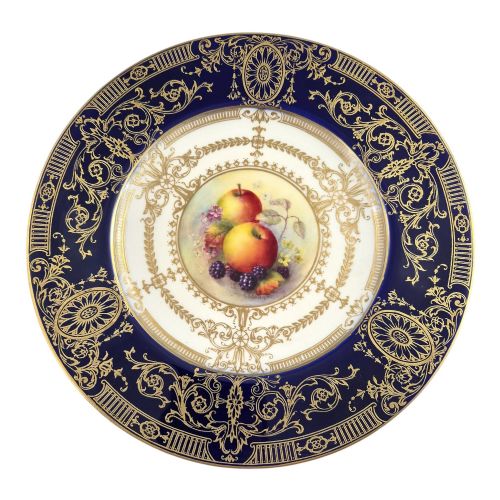
Continental traditions also appear through Dutch and Moorish style Delft faience, alongside hand painted fruit plates from English factories. Each piece fulfils a decorative function, whether mounted on a wall or displayed on a cabinet shelf.
Materials and Technique
Makers utilised porcelain, bone china, ironstone, and earthenware as the primary ceramic bodies for these wares. Cobalt oxide pigment provided the stable underglaze blue colour that could withstand high firing temperatures without losing its depth.
Gold leaf and gilding were frequently applied over the glaze or added in low temperature secondary firings to highlight borders and motifs. Enamel colours, particularly iron red and green, complemented the cobalt blue on Japanese Imari and European copies alike.
Painting techniques combined freehand brushwork with transfer printing, especially on Victorian transferware chargers. Hand painted fruit studies by factory artists represented a later, highly detailed approach to surface decoration on porcelain.
Listings feature porcelain, earthenware, and ironstone from the eighteenth century through the 1970s.
Judging Quality
Quality rests upon the crispness of the cobalt painting and the control shown in the kiln firing. Finer examples display sharp brushwork without blurring in the glaze, whereas lesser pieces suffer from muddy colours or runny pigment.
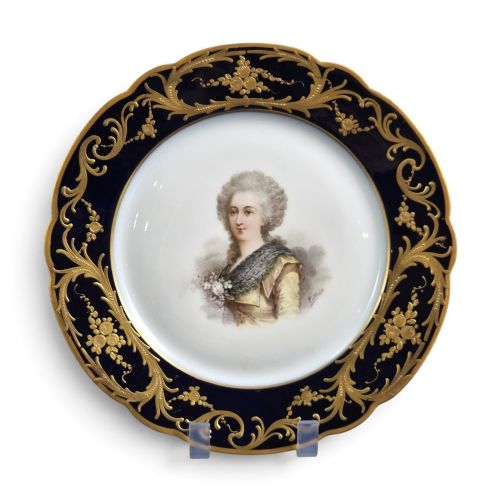
The application of gilding and enamel highlights distinguishes standard production from exceptional studio output. Hand painted cabinet plates by named artists demonstrate superior draughtsmanship and tonal variation across the painted surface.
Form and potting weight also determine the distinction between ordinary domestic wares and superior display pieces. Scalloped edges, heavy throwing, and intricate moulding require higher technical skill during shaping and drying.
Royal Crown Derby·Royal Worcester·Doulton Lambeth·John Davenport of Longport·Darte Brothers
The Cobalt Blue Decorative Plates Glossary
- Imari
- A style of Japanese porcelain featuring a palette of cobalt blue, iron red, and gold. It was widely exported to Europe and subsequently copied by Western potteries.
- Charger
- A large decorative plate or dish intended for display on a wall or sideboard rather than for practical table service.
- Cabinet Plate
- A fine porcelain plate created primarily for display in a glass fronted cabinet or on a mantelpiece.
- Delft
- Tin glazed earthenware originating in the Netherlands, known for its opaque white surface and blue painted decoration.
- Transferware
- Pottery decorated by applying a printed design from an engraved copper plate onto the ceramic surface before glazing.
Cobalt Blue Decorative Plates: Frequently Asked Questions
How were decorative plates displayed in the past?
Large chargers and plates were traditionally hung on walls using wire plate hangers or displayed upright on sideboards and dressers. Wealthy households utilised specialised cabinet furniture to showcase fine porcelain collections safely.
Today, modern display stands and plate rails allow these pieces to be integrated into interiors much as they were originally intended.
What is the difference between Imari and blue and white?
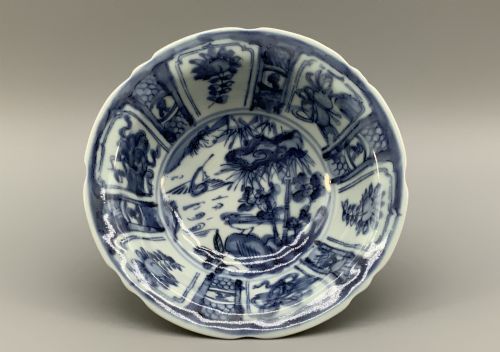
While both use cobalt blue pigment under the glaze, traditional blue and white porcelain relies solely on shades of blue against a white ground. Imari wares introduce contrasting iron red enamel and gold leaf into the design scheme.
This polychrome addition creates a richer, more ornate visual texture typical of Japanese export porcelain and its European imitations.
Can these antique plates still be used for dining?
Most antique decorative plates and chargers are intended for display rather than daily food service. Over decades of use, cutlery can scratch the glaze and wear away delicate surface gilding.
Additionally, older glazes on certain earthenwares may not meet modern food safety standards for acid resistance.
How do I identify a Victorian cabinet plate?
Victorian cabinet plates often feature rich hand painted central motifs, such as fruit or portraits, surrounded by elaborate gilt borders. Factory date marks and pattern numbers stamped or painted on the reverse help confirm the period of production.
The weight and brilliance of the porcelain or bone china also point toward the high manufacturing standards of the late nineteenth century.