





Asian Porcelain Display Plates
These asian porcelain display plates bring centuries of kiln artistry to a wall or cabinet, spanning Japanese Imari and Chinese export traditions.
Asian Porcelain Display Plates
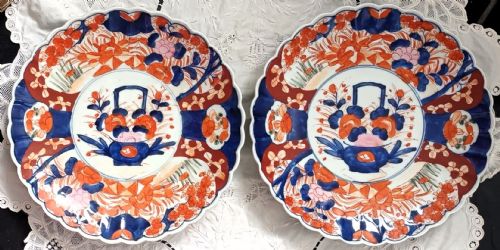
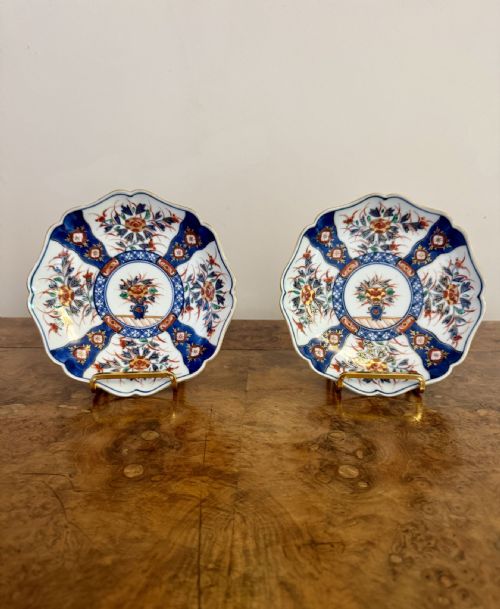
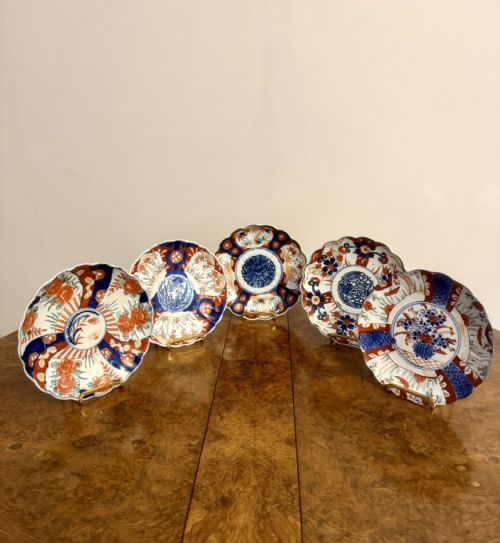
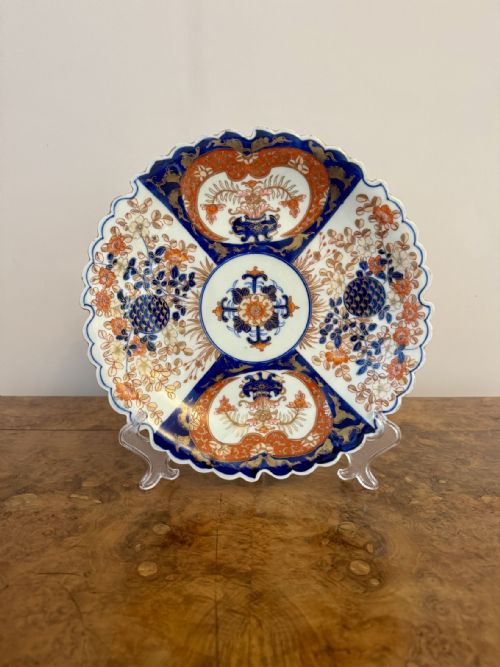
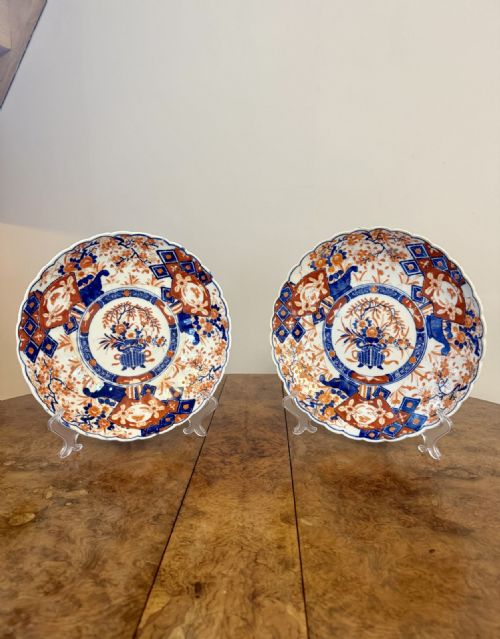
When you search for asian porcelain display plates, you encounter chargers, platters and dishes fashioned in Japanese and Chinese kilns. The selection here leans heavily towards Japanese Imari pieces from around nineteen hundred, alongside earlier Edo and Meiji period examples.
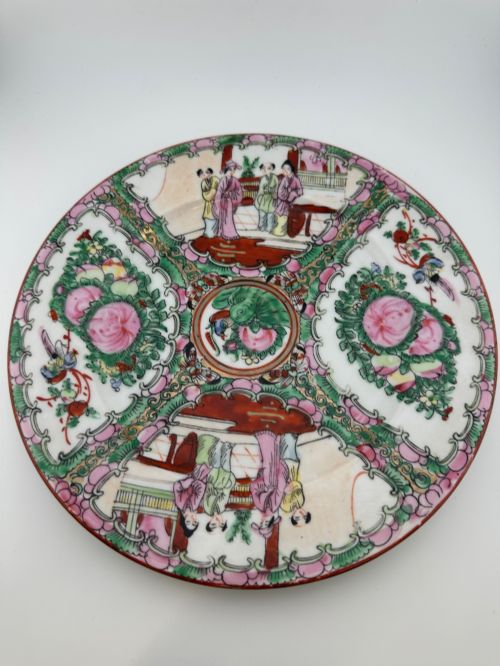
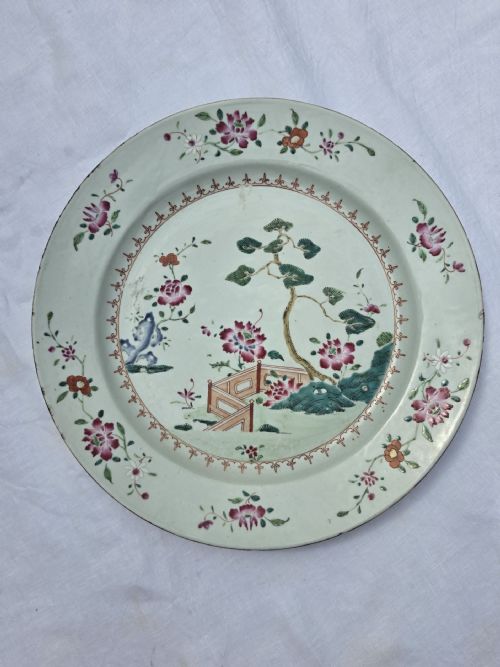
Forms vary from standard circular plates to scalloped edges, fan shapes, square formats and large decorative chargers. Chinese export pieces also appear, including Famille Rose plates dating back to the eighteenth century alongside Longquan celadon dishes.
Buyers meet pairs, sets of five and individual grand chargers measuring up to seventy-three centimetres across. These objects served primarily for display and presentation rather than everyday dining, a purpose reflected in their scale and intricate ornamentation.
Materials and Technique
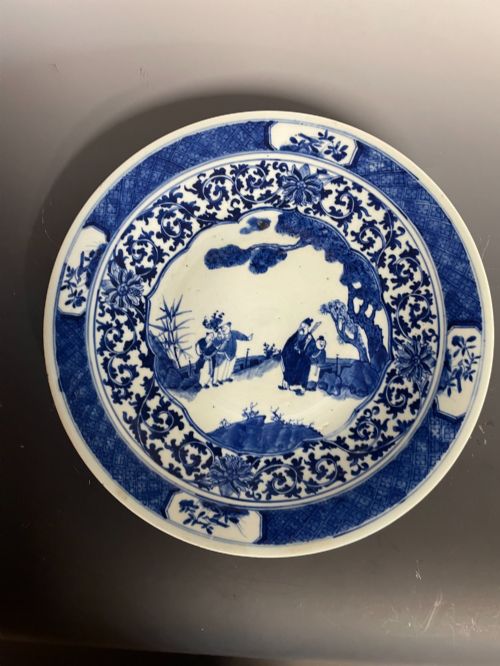
Potters shaped fine ceramic and porcelain before applying cobalt underglaze pigments to achieve deep blue tones beneath a transparent protective glaze. Artisans then added overglaze enamels in iron red, green and other hues, often finishing the surface with meticulous gold leaf and gilt detailing.
Moulded floral scrolls appear on early celadon wares, while many later Japanese and Chinese plates feature hand-painted compositions depicting exotic birds, figures and traditional motifs. Kiln workers fired these ceramic bodies at high temperatures to fuse the mineral glazes permanently to the porcelain substrate.
The inventory includes massive chargers spanning up to seventy-three centimetres alongside delicate fan-shaped dishes.
Assessing Quality
Differentiation at the top of the range rests on the precision of the hand-painted brushwork and the complexity of the figural or avian compositions. Pieces carrying signatures from renowned workshops or makers demonstrate superior artistic execution compared to standard commercial output.
The richness of the cobalt underglaze, the vibrancy of the enamel palette and the generous application of gold leaf define the visual impact of a charger. Preservation of the painted surface and the crispness of moulded edges further distinguish exceptional specimens from more routine items.
Koshida·Meizan
The Asian Porcelain Display Plates Glossary
- Charger
- A large ornamental plate or platter designed for display rather than service. These substantial vessels often measure over thirty centimetres in diameter.
- Imari
- A style of Japanese porcelain featuring a distinctive palette of cobalt blue and iron red, frequently accented with gilt. Production centred on the town of Arita for export through the port of Imari.
- Famille Rose
- A major palette of Chinese ceramic glazes introduced in the eighteenth century, distinguished by opaque pink or rose enamel colours. This style dominated export porcelain during the Qing dynasty.
- Celadon
- A term for ceramics denoting both a green glaze and the ware itself, originating in China. Longquan kilns produced notable examples with moulded floral scroll decorations.
- Meiji Period
- An era in Japanese history spanning from eighteen sixty-eight to nineteen twelve, marked by intense artistic production for international markets. Pieces from this period often display elaborate hand-painted decoration.
Asian Porcelain Display Plates: Frequently Asked Questions
What is an Imari plate?
An Imari plate is a Japanese porcelain piece decorated in cobalt blue, iron red and gilt. These items were produced in large numbers during the Meiji period and earlier.
Potters exported them widely to Europe and Britain, where households displayed them on walls and cabinets for their vibrant colour schemes.
How do I hang a heavy charger?
Large chargers require robust, coated wire spring hangers that distribute the weight evenly around the rim. Ensure the wall fixing secures firmly into masonry or a stud.
Display them away from direct sunlight and heavy foot traffic to protect the delicate enamel and gilt surfaces from accidental knocks.
Are these plates for dining?
These pieces function primarily as decorative objects rather than tableware. Their historical use centred on formal presentation and display in reception rooms.
Using antique porcelain chargers for food or washing them in modern dishwashers risks damaging the overglaze enamels and gold leaf decorations.
How do I date a Chinese plate?
Dating relies on examining the characteristics of the porcelain body, the composition of the glaze and the style of the painted motifs. Famille Rose pieces often connect to the eighteenth-century Qing dynasty.
Examining the foot ring, base markings and wear patterns provides further clues regarding the century of manufacture.