





Scalloped Imari Porcelain Plates
Scalloped imari porcelain plates bring together vibrant cobalt underglaze, enamel, and gold leaf on distinctive shaped edges for striking decorative display.
Scalloped Imari Porcelain Plates
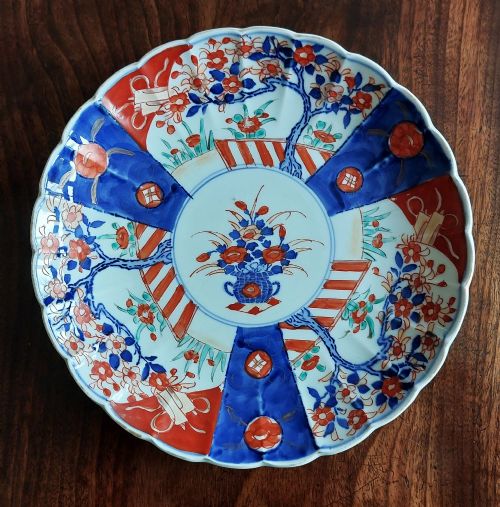
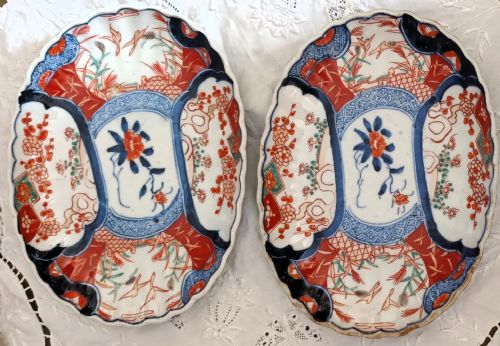
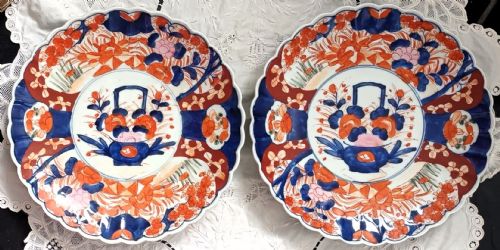
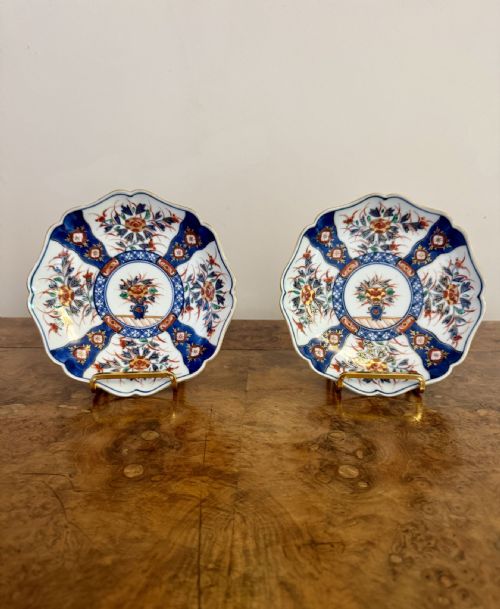
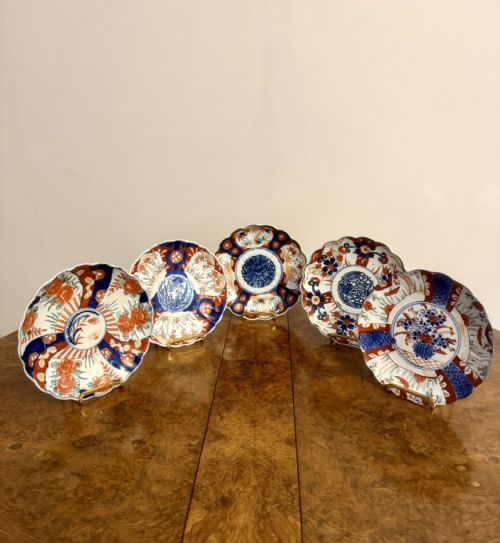
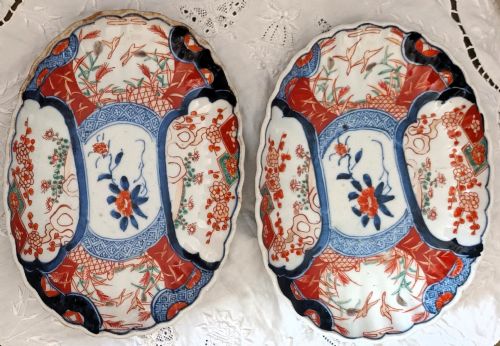
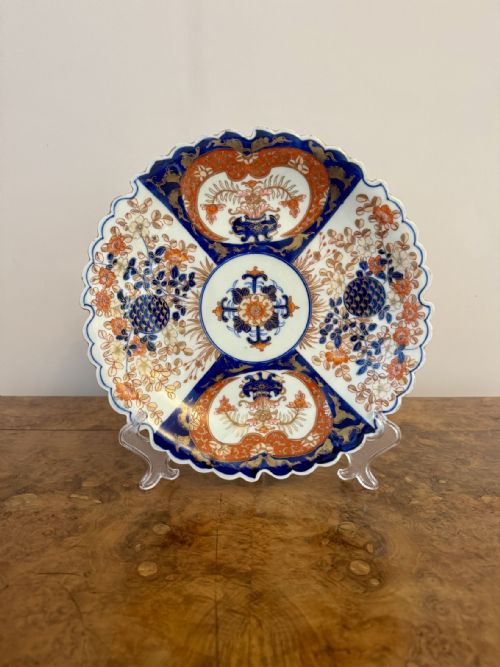
When you search for scalloped imari porcelain plates, you encounter decorative ceramics originating predominantly from Japanese Meiji period workshops and 19th-century production. These pieces take the form of plates, chargers, and dishes featuring characteristic wavy or shaped edges.
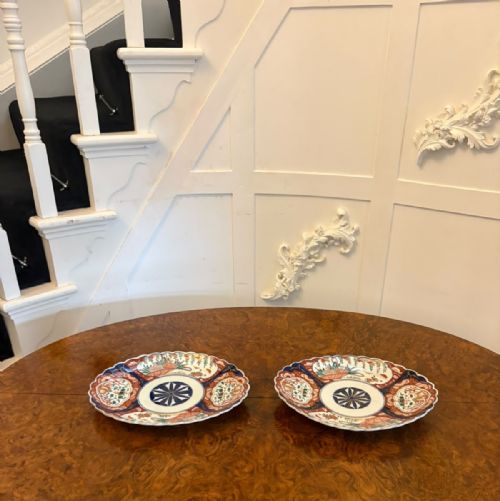
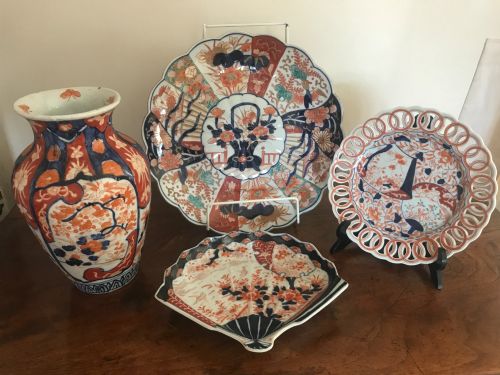
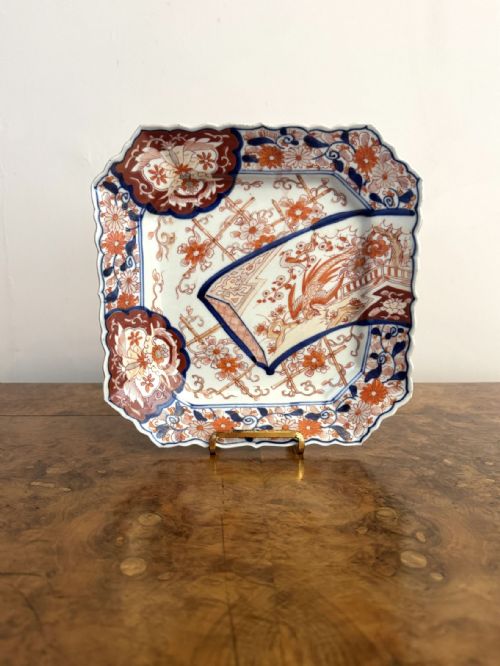
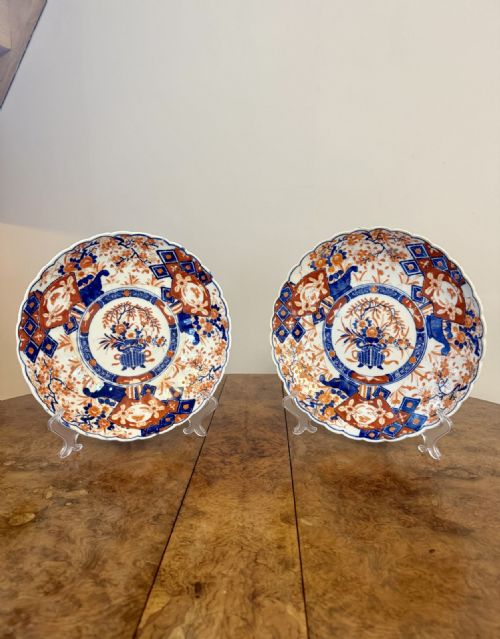
The selections span from individual square and shell-shaped plates to large matching pairs and sets of six. Japanese Arita production and English interpretations such as Staffordshire and Derby examples appear across the 18th century, Victorian era, and early 20th century.
Buyers meet these objects as decorative display dishes, wall plates, and chargers depicting floral and bird designs, alongside figural scenes including the Seven Lucky Gods. The common thread remains the distinct palette and moulded or scalloped contours of the porcelain body.
Materials and Techniques
The creation of these ceramics relies on hard paste porcelain bodies shaped with lobed or scalloped borders. Potters formed standard rounds as well as hexagonal, square, and oval variations before firing.
Decoration combines cobalt underglaze blue with rich overglaze enamel colours such as iron red. Artisans added gilt, gilding, and gold leaf accents to highlight specific motifs across the painted surface.
Listings feature porcelain bodies decorated with cobalt underglaze, overglaze enamel, and gold leaf, spanning the 18th century to the early 20th century.
Assessing Quality and Execution
The distinction between standard items and finer examples rests upon the precision of the hand-painted floral and bird designs. Crisp application of cobalt underglaze paired with well-preserved overglaze enamel and gold leaf indicates superior execution.
Form also dictates standing, with unusual shapes like hexagonal or shell-moulded edges commanding attention alongside large chargers depicting complex figural narratives like the Seven Lucky Gods.
The Scalloped Imari Porcelain Plates Glossary
- Imari
- A style of Japanese porcelain decorated in underglaze blue, iron red, and gold, originating in the town of Arita. This aesthetic influenced various European factories during the 18th and 19th centuries.
- Meiji Period
- The era in Japanese history spanning from 1868 to 1912, characterised by prolific ceramic export production. Pieces from this time often feature detailed hand-painted natural and mythological motifs.
- Charger
- A large decorative plate intended for display on a wall or sideboard rather than for dining. These substantial pieces frequently measure over twelve inches in diameter.
- Cobalt Underglaze
- A blue pigment applied to the raw porcelain body before glazing and firing, yielding a durable colour beneath the shiny surface. It forms the dark foundational lines in traditional palette designs.
- Overglaze Enamel
- Coloured glass powders painted onto already fired and glazed porcelain, then fixed with a second, lower-temperature firing. This technique allows for bright reds, greens, and yellows to sit above the glaze.
- Gilt
- A thin layer of gold applied to the porcelain surface to accentuate borders and decorative patterns. It adds a reflective quality when caught in the light.
Scalloped Imari Porcelain Plates: Frequently Asked Questions
How were these plates used?
These pieces served primarily for decorative display on walls, sideboards, and tables rather than everyday dining. Their bold colours and heavy gilding made them centrepieces in period rooms.
Larger chargers and sets were often mounted or arranged on dresser shelves to showcase wealth and taste during the Victorian and Meiji eras.
How do I date Japanese imari pieces?
Dating relies on stylistic clues, potting techniques, and historical context rather than strict numerical markers. Meiji period items often display dense, vibrant overglaze enamels and meticulous hand-painted details.
Earlier pieces show variations in the cobalt tone and porcelain weight, reflecting the evolution of Arita kilns across the 19th century.
Can these plates be hung on walls?
Many of these plates and chargers were made with display in mind, featuring substantial diameters and decorative surfaces suited for upright viewing. Modern wire hangers must be fitted with care to support the weight safely.
Ensuring the hanger grips the rim securely without applying undue pressure preserves the porcelain body.
What is the difference between Japanese and English imari?
Japanese imari originates from Arita and employs distinct porcelain bodies with specific cobalt and iron red mineral signatures. English interpretations, such as those from Derby or Staffordshire, adapt the palette onto European clay bodies.
While both share the characteristic blue, red, and gold scheme, the potting style and paste reveal the geographic origin upon close inspection.
Are pairs and sets harder to find?
Matching pairs and larger sets of six survive less frequently than individual plates due to breakage and dispersal over the centuries. Finding unified collections requires patience across marketplace listings.
Complete sets maintain a stronger visual presence when displayed together on a wall or cabinet.