




Red Cobalt Porcelain Dishes
These red cobalt porcelain dishes bring together the striking palette of Imari style ceramics and traditional Japanese and English forms.
Red Cobalt Porcelain Dishes
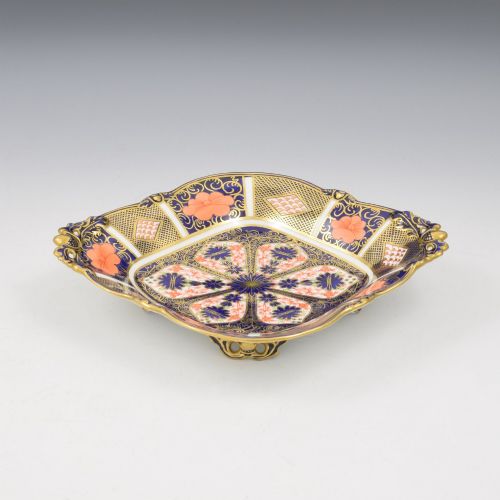
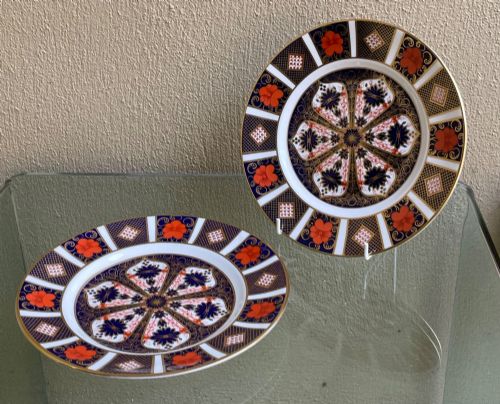
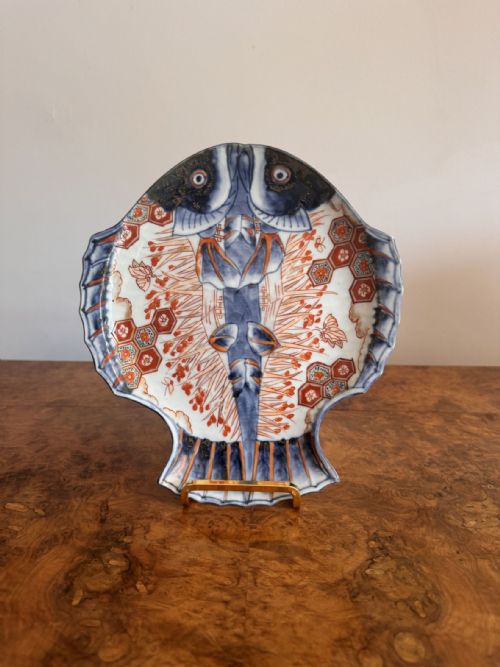
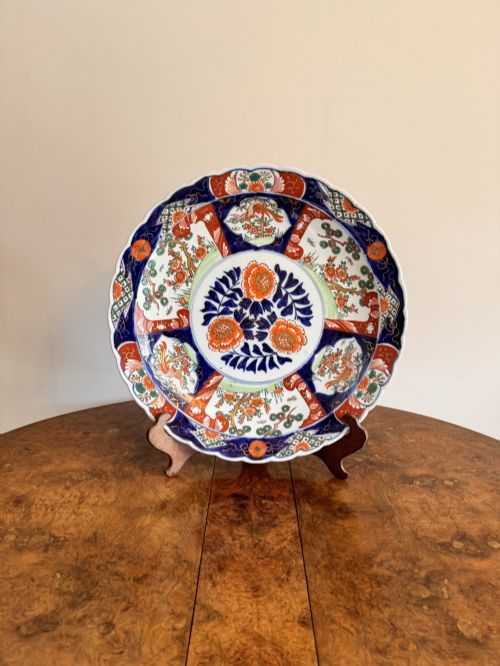
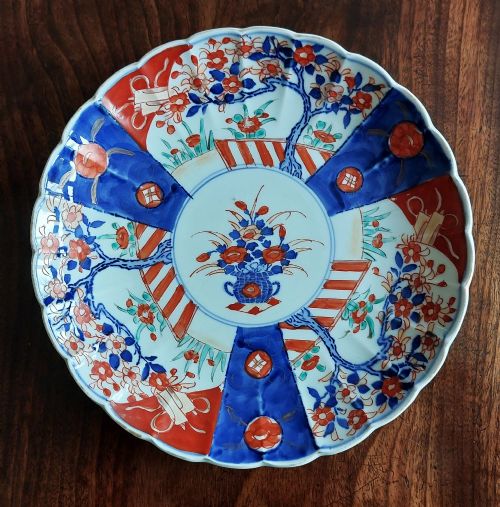
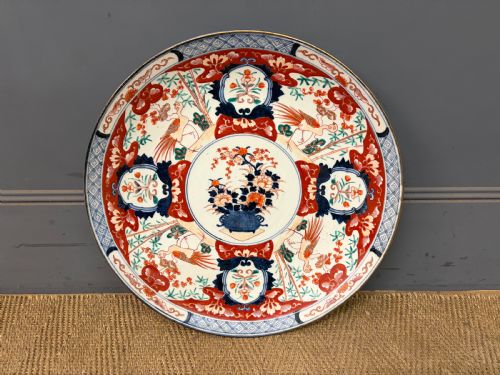
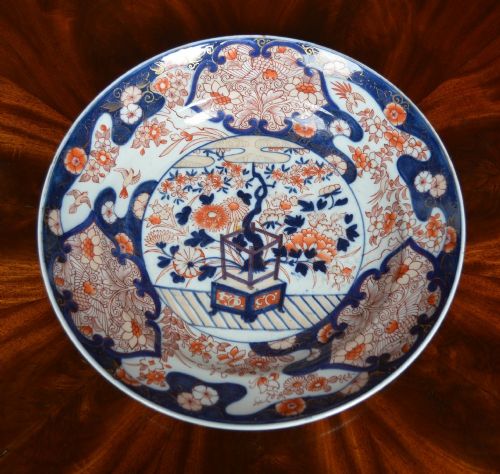
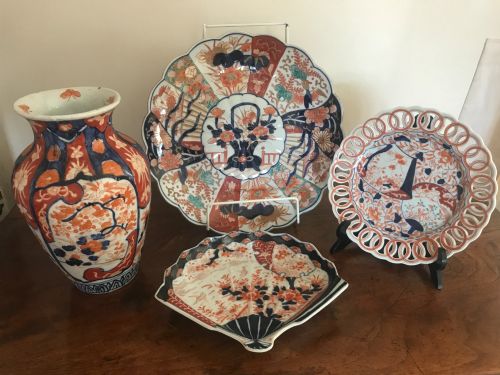
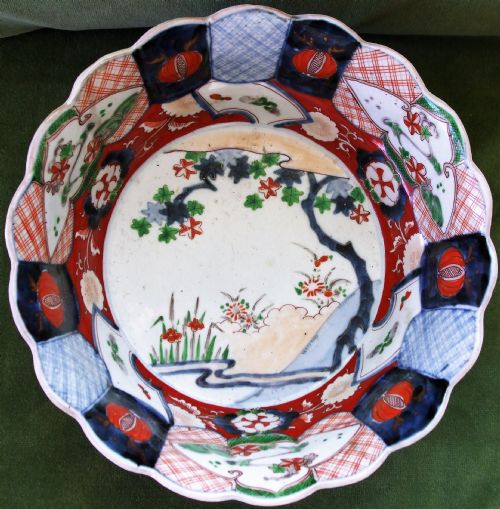
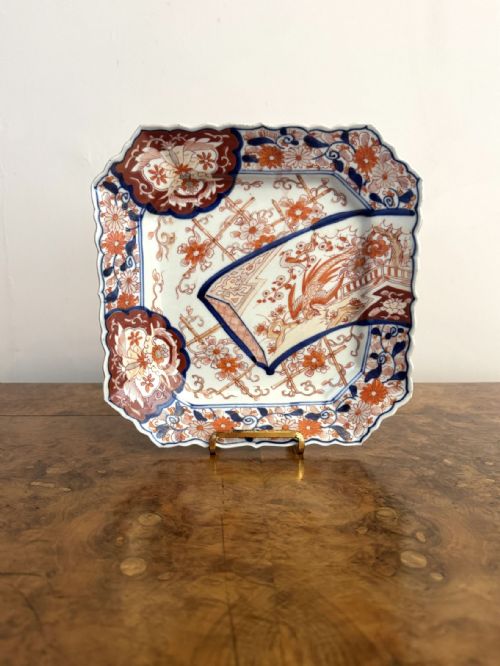
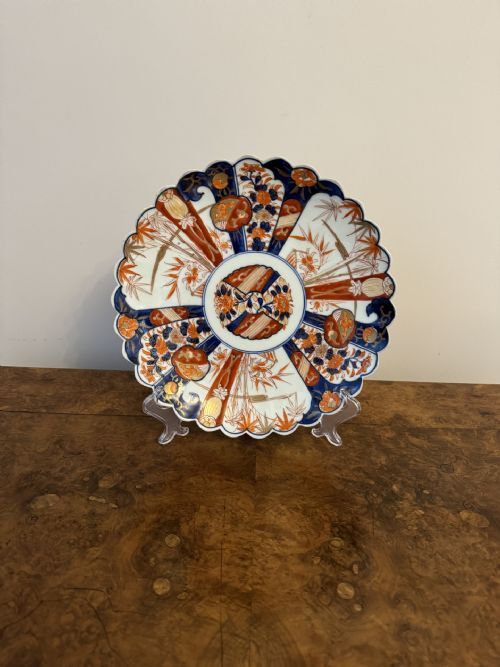
When you search for red cobalt porcelain dishes, you meet a selection dominated by Japanese Imari wares alongside English interpretations from the nineteenth and early twentieth centuries. These objects span decorative plates, chargers, bowls, and serving trays shaped with scalloped, hexagonal, or fish-like edges.
The material record on this page relies heavily on porcelain, bone china, and ironstone, decorated in distinct blue and red pigments often accented with gilt or gold leaf. Pieces range from the Meiji and Edo periods to later English productions, showing both traditional display chargers and functional footed comports.
How they were made
The physical build of these items depends upon ceramic bodies finished with cobalt underglaze, enamel, and glaze applications. Artisans fused rich blue underglaze painting with overglaze red enamel and gold leaf accents to create the characteristic high-contrast palette.
Forming methods varied from standard circular vessels to intricate scalloped edges, square shapes, and moulded fish forms requiring skilled handling of porcelain and bone china before firing.
Listings span the nineteenth and twentieth centuries, featuring porcelain, bone china, and ironstone decorated with cobalt underglaze and gold leaf.
What varies in quality
Quality rests in the crispness of the cobalt underglaze and the precision of the enamel and gold leaf detailing across the porcelain surface. Superior examples demonstrate careful control during firing and painting, resulting in clean lines and harmonious integration of the Imari palette.
The complexity of the vessel shape also dictates distinction, moving from standard circular plates to ambitious hexagonal bowls, square plates, and scalloped chargers depicting detailed motifs such as the Seven Lucky Gods.
Royal Crown Derby
The Red Cobalt Porcelain Dishes Glossary
- Imari style
- A decorative scheme originating in Japan that typically employs a palette of cobalt blue, iron red, and gold. This style heavily influences the porcelain and ironstone pieces found in these listings.
- Meiji Period
- The era in Japanese history spanning from 1868 to 1912, associated with many of the antique chargers and plates recorded here. Pieces from this time often display intricate bird and deity motifs.
- Cobalt Underglaze
- A blue pigment applied to ceramic pieces before glazing and firing, capable of withstanding high temperatures. It provides the deep blue foundation characteristic of these dishes.
- Ironstone China
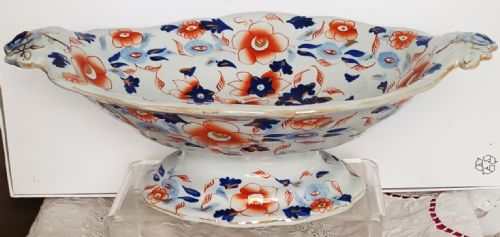
- A durable type of ceramic developed in nineteenth century England as a robust alternative to porcelain. English makers utilised this material for footed comports in the Japan pattern.
- Comport
- A raised serving dish or pedestal bowl used for presentation at the table. Antique examples in these listings often combine ironstone bodies with traditional Imari decoration.
Red Cobalt Porcelain Dishes: Frequently Asked Questions
What is Imari style porcelain?
Imari style porcelain refers to wares decorated in a distinct palette combining cobalt blue underglaze with iron red enamel and gold leaf. The tradition originates from Japanese production and heavily influences nineteenth century English ceramics.
These pieces rely on high-contrast visual schemes featuring floral, avian, or figural motifs across plates, bowls, and large display chargers.
How do I date these dishes?
Dating relies on identifying material types, stylistic traits, and period markers such as the Meiji era or nineteenth century production methods. Japanese pieces often reflect Edo or Meiji workmanship, while English equivalents utilise ironstone china.
Examine the base, glaze texture, and pigment application to understand the manufacturing era of each specific bowl or plate.
Were these dishes meant for display?
Many large chargers and scalloped plates were produced primarily for decorative display rather than daily dining use. Their intricate enamel and gold leaf detailing suited them for formal rooms.
Smaller bowls and serving trays nevertheless saw practical use at the table alongside purely ornamental wall plates.
How do I care for antique porcelain?
Antique porcelain and bone china require gentle handling and hand washing in lukewarm water with mild soap. Avoid abrasive sponges or harsh chemicals that could damage the delicate enamel and gold leaf.
Display vessels on stable surfaces away from direct sunlight and sudden temperature shifts to preserve the glaze and pigments.