


Nineteenth Century Imari Plates
Nineteenth century imari plates bring bold palette patterns and traditional forms together, offering decorative appeal for collectors of antique ceramics.
Nineteenth Century Imari Plates
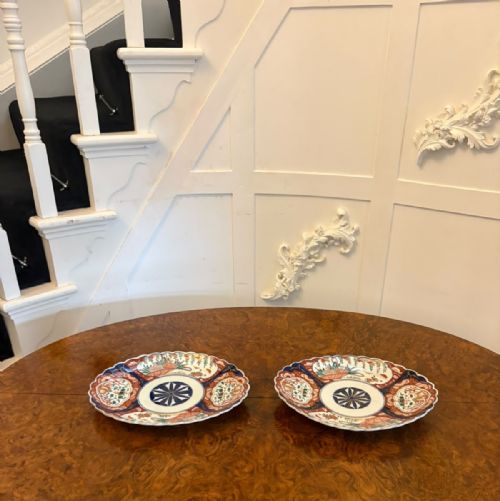
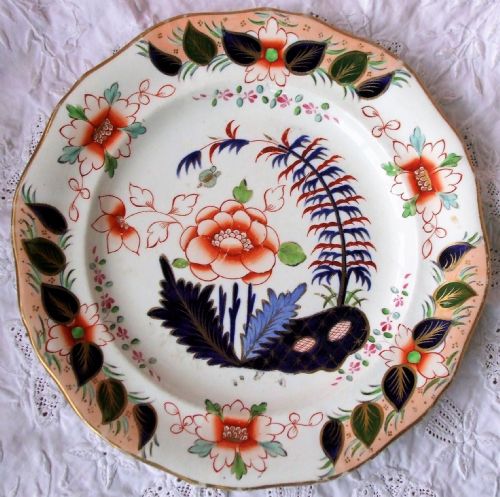
When you search for nineteenth century imari plates, you encounter a distinct cross-cultural dialogue between Japanese export ceramics and English ironstone adaptations. The selection on this page ranges from Japanese Meiji and Edo period porcelain chargers to English interpretations by makers such as Mason's and John Davenport.
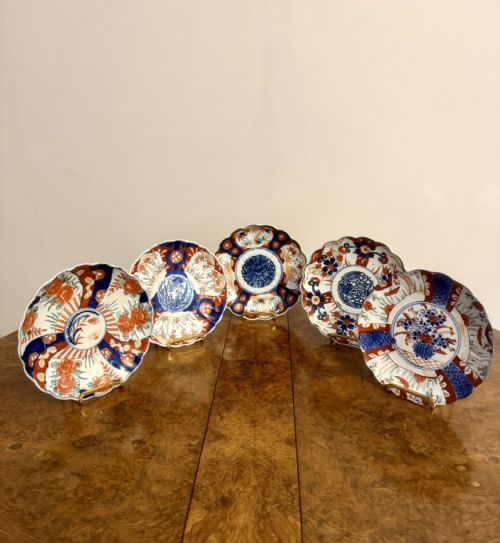
These items primarily function as decorative plates, chargers, serving dishes, and platters rather than everyday tableware. You will frequently find larger charger plates alongside sets of smaller dinnerware, often distinguished by scalloped rims or oval shapes.
Originating across the nineteenth century, including Victorian, Georgian, and Regency eras, these pieces reflect both East Asian hand-painted traditions and domestic ceramic manufacturing. The grouping includes pairs, single large chargers, and matched collections.
How they were made
The physical construction relies heavily on porcelain and ironstone bodies, painted with enamel colours and finished with gold leaf or gilding. Japanese examples utilise traditional hand-painted techniques on porcelain, whilst English counterparts employ durable ironstone ceramic substrates.
Surface decoration combines intricate underglaze blue with overglaze enamels in red and gold gilt accents. Glazes provide a protective, glossy finish that binds the complex motifs across chargers, platters, and dinner service dishes.
Listings feature materials spanning porcelain, ironstone, enamel, and gold leaf across nineteenth century production.
What varies in quality
Quality separates along the precision of the hand-painted enamel work and the preservation of the gold leaf details across the surface. Finer examples display crisp delineation in the multi-coloured patterns and clean porcelain or ironstone bodies.
The execution of form, such as uniform scalloped rims on large chargers and consistency within matched sets of serving dishes, indicates the skill of the original workshop. Greater complexity in the decorative scheme and stability of the glaze contribute to the distinction between standard production and superior pieces.
John Davenport of Longport·Masons Patent Ironstone China
The Nineteenth Century Imari Plates Glossary
- Imari
- A style of Japanese export porcelain characterised by a palette of underglaze blue, iron red, and gilt highlights. The design influences later English ironstone adaptations.
- Charger
- A large decorative plate used historically for service or display rather than individual dining. These substantial pieces often feature prominent rims and elaborate painted schemes.
- Ironstone
- A heavy, durable type of ceramic patented in the nineteenth century as a robust alternative to porcelain. English potteries utilised this material for patterned dinnerware and platters.
- Meiji Period
- The era in Japanese history spanning from 1868 to 1912, noted for export porcelain production. Pieces from this time frequently appear alongside earlier Edo period items.
- Gilding
- The application of gold leaf or gold paint to ceramic surfaces to accent motifs. This technique defines the high-contrast decorative appeal of imari patterns.
Nineteenth Century Imari Plates: Frequently Asked Questions
What is an imari plate?
An imari plate is a ceramic piece decorated in the traditional style featuring underglaze blue, iron red, and gold. These designs originated in Japan and were subsequently copied by English potteries.
They serve primarily as decorative wall or table display items due to their striking visual contrast and historic craftsmanship.
How do I date these plates?
Dating relies on identifying the material, such as Japanese porcelain versus English ironstone, alongside stylistic markers from the Georgian, Regency, Victorian, or Meiji periods.
Maker marks on the underside of English ironstone pieces provide specific manufacturing eras, whilst Japanese export items often correspond to nineteenth century dynastic periods.
Can I use them for dining?
While these items originated as serving dishes, chargers, and dinnerware, their age and delicate enamel or gold leaf decoration make them better suited for display.
Using them for daily dining risks wearing the hand-painted pigments and gilding accumulated over the nineteenth century.
How do I display chargers?
Large chargers and platters fit securely in sturdy plate stands on mantelpieces, sideboards, or inside glass-fronted cabinets. Wall mounting requires specialist brackets designed to support the weight of heavy porcelain or ironstone safely.
Grouping pairs or sets creates a strong visual focal point in traditional or eclectic interiors.