

Cobalt Blue China Dish
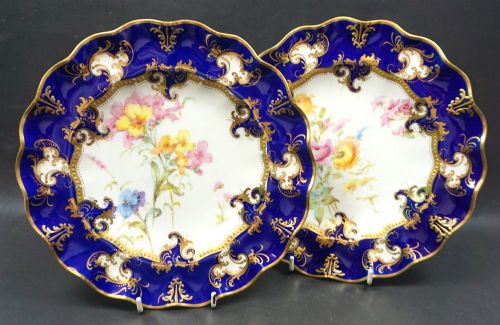
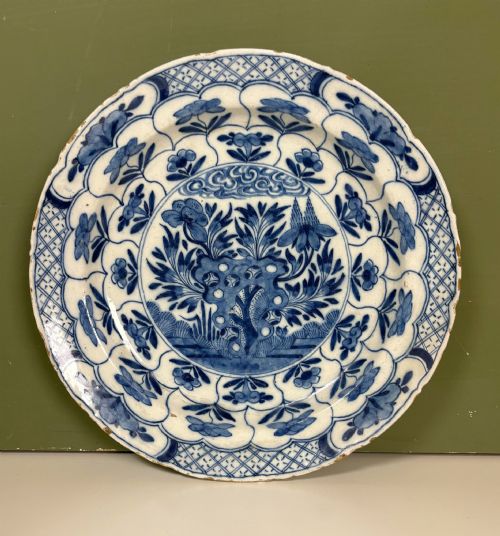
A cobalt blue china dish brings deep indigo and cobalt pigments to serving dishes, platters, and cabinet plates.
Cobalt Blue China Dish
A cobalt blue china dish spans utilitarian serving vessels and decorative display plates originating from eighteenth-century households through to twentieth-century factories.
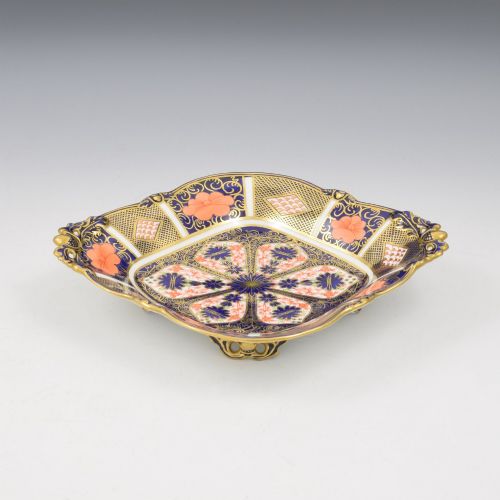
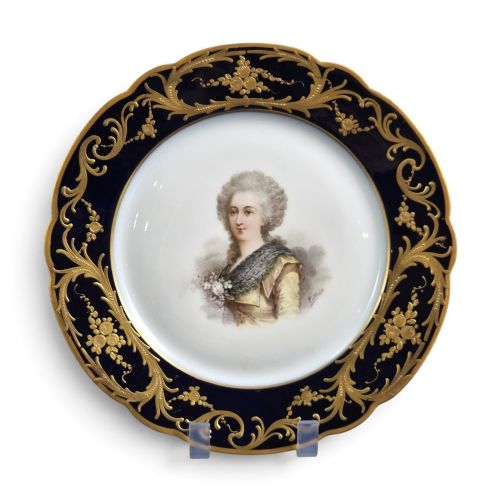
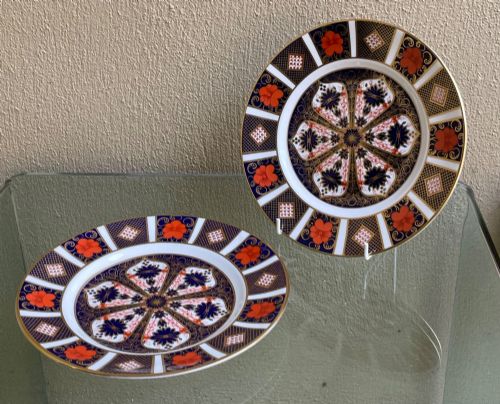
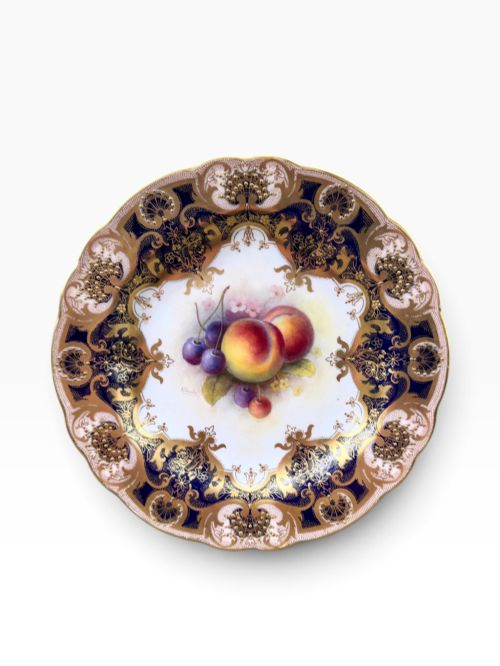
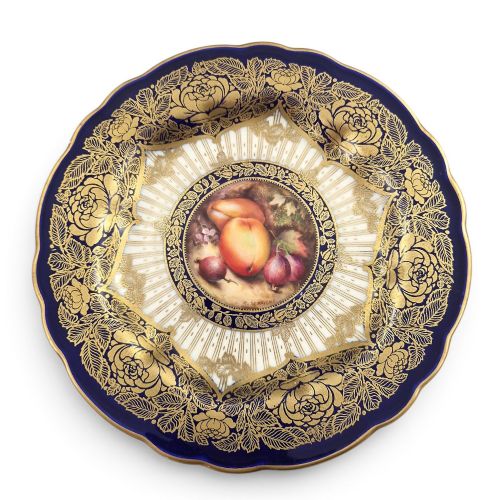
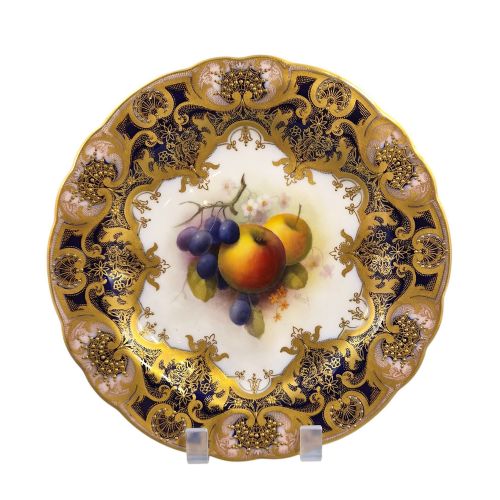
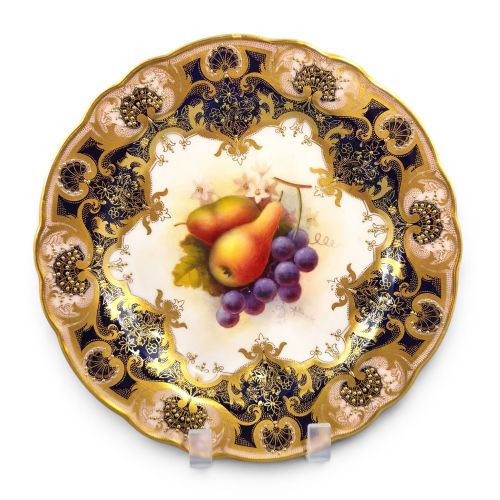
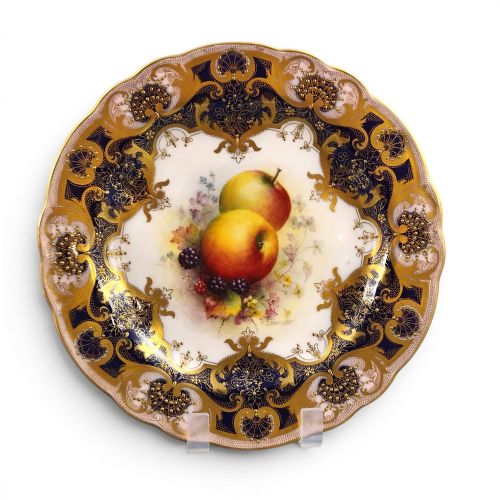
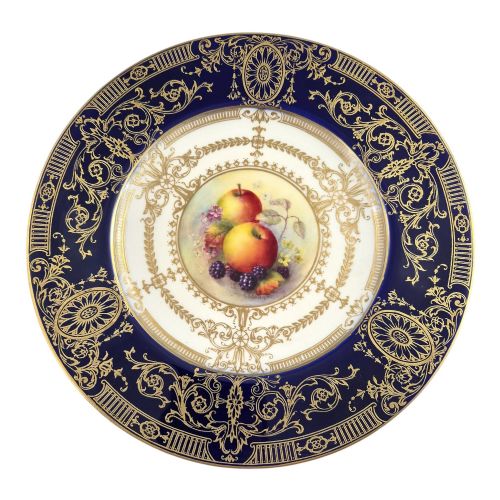
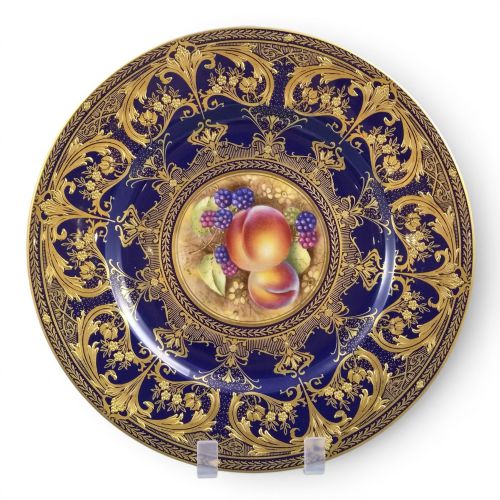
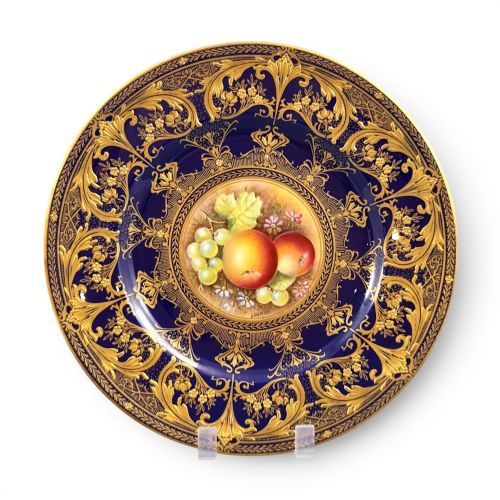
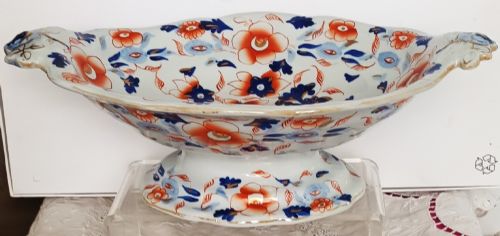
The selections here most frequently include nineteenth-century ironstone comports, Japanese Imari porcelain plates, and twentieth-century cabinet plates painted with fruit.
Forms range from deep saucers and scalloped bowls to large tureens and platters intended for formal dining.
Materials and Techniques
Ceramic bodies combine porcelain, bone china, ironstone, and earthenware, shaped manually or pressed in moulds before firing.
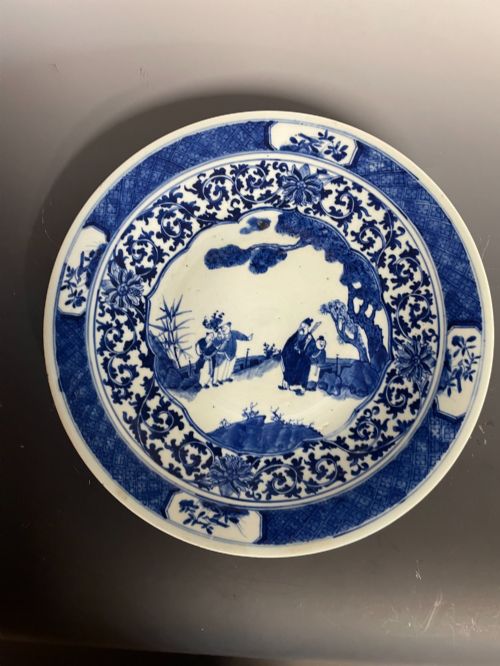
Cobalt oxide pigment is applied beneath or over the glaze to produce the characteristic deep blue coloration during high-temperature kiln firings.
Gilt accents, gold leaf, and enamel details are frequently added in subsequent low-temperature firings to highlight borders and motifs.
Jabberwocky patterns and Victorian zebra designs prove that nineteenth-century dinner tables had a delightfully wild imagination.
Assessing Quality
Execution of the painted motif distinguishes workshop output, separating swift transfer printing from precise hand-painted botanical or fruit studies by named artists.
Weight, body density, and crispness of moulding separate durable ironstone and fine porcelain from softer earthenware bodies.
Integration of rich gilding and stable glaze surfaces indicates higher production standards.
Royal Crown Derby·Royal Worcester·Mason's Ironstone·John Davenport·Coalport Porcelain·Mintons
The Cobalt Blue China Dish Glossary
- Ironstone
- A durable heavy earthenware ceramic patented in the nineteenth century to imitate Chinese porcelain. It withstands frequent domestic use.
- Imari
- A Japanese export style characterised by underglaze cobalt blue and iron red, frequently supplemented with gold. European factories later adopted this palette.
- Comport
- A raised serving dish or pedestal bowl used for fruit or sweetmeats during formal nineteenth-century dessert courses.
- Cabinet plate
- A decorative ceramic plate intended for display in a cabinet rather than functional dining use. They often feature detailed hand-painted scenes.
- Chinoiserie
- European decorative style reflecting imaginative interpretations of Chinese artistic traditions. It appears frequently on eighteenth and nineteenth-century ceramics.
Cobalt Blue China Dish: Frequently Asked Questions
What is a cobalt blue china dish used for?
These pieces function as serving vessels for meat, vegetables, and desserts, or as decorative cabinet plates displayed on walls and in display cases.
Heavier ironstone pieces suit everyday dining tables, whilst delicate porcelain cabinet plates serve primarily decorative purposes.
How do I care for antique china?
Wash porcelain and ironstone by hand using mild detergent and warm water, avoiding abrasive scouring pads that scratch the glaze.
Keep pieces with gold leaf or enamel decoration away from dishwashers and microwaves to preserve the metallic surfaces.
What is ironstone china?
Ironstone is a dense, durable type of earthenware developed in the nineteenth century as a robust alternative to imported Chinese porcelain.
It provides a sturdy body well-suited to heavy meat platters, tureens, and footed comports subject to regular kitchen use.