




Reticulated Gilt Ceramic Dish
A reticulated gilt ceramic dish brings pierced openwork and gold embellishment to a table or cabinet, uniting decorative form with skilled ceramic production.
Reticulated Gilt Ceramic Dish
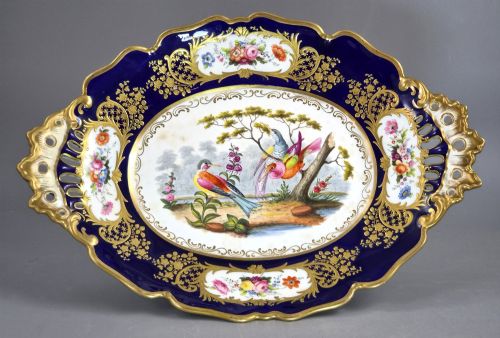
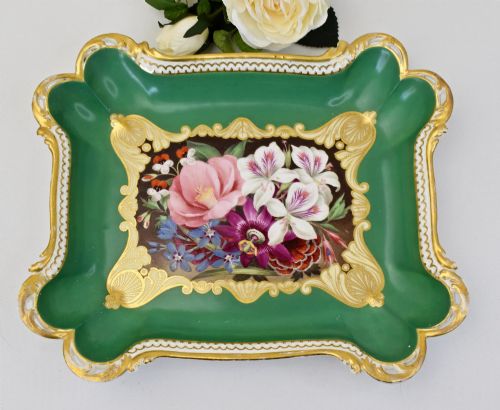
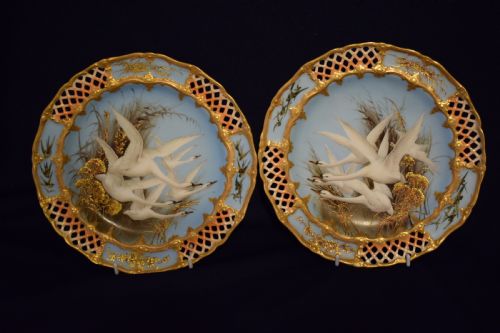
A reticulated gilt ceramic dish encompasses cabinet plates, centrepieces, sweetmeat dishes, and decorative trays featuring pierced openwork alongside gold leaf or gilt decoration. These pieces emerge across periods ranging from the eighteenth century through the Victorian, Edwardian, and nineteenth-century eras, reflecting diverse European and Asian ceramic traditions. Buyers encounter forms designed for display and serving, often incorporating intricate pierced borders.
The selection on this page demonstrates styles spanning Rococo Revival, Neoclassical, Aesthetic Movement, and Chinese Export. Makers and manufacturers utilise hard-paste porcelain and cobalt glaze alongside enamel and gilding to achieve detailed finishes. Collectors find both cabinet plates intended for wall or shelf display and larger centrepieces or baskets suited to grand tables.
Materials and Techniques
The construction of these items relies upon hard-paste porcelain fired at high temperatures to create a durable base body capable of supporting intricate openwork cutting. Craftsmen shape reticulated patterns by piercing the wet clay body prior to glazing and firing. Cobalt glaze provides deep blue underglaze decoration on selected pieces before the application of secondary enamel colours.
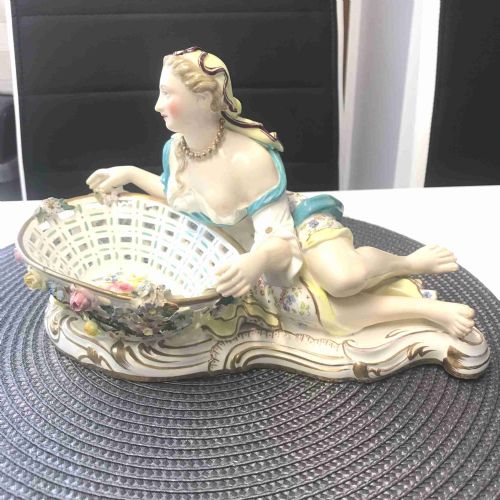
Gold leaf and liquid gilding are applied to raised moulded sections, rims, and pierced borders, then fired or burnished to a metallic shine. Hand-painted pictorial scenes, birds, and floral motifs are layered over or under the glaze depending on the workshop tradition. Applied elements such as roses and putti are modelled separately and luted onto the main ceramic body before firing.
Victorian dining tables relied on porcelain cherubs clinging stubbornly to openwork fruit baskets to keep the dried figs from rolling away.
Factors of Quality
Quality in a reticulated gilt ceramic dish rests upon the crispness of the pierced openwork and the precision of the hand-painted detailing. Superior examples exhibit clean, sharp edges within the reticulation without glaze clogging, alongside finely rendered figural or avian subjects painted by recognised artists. The thickness of the porcelain body and the refinement of applied three-dimensional elements like putti or floral garlands distinguish finer studio output from standard commercial production.
The preservation of the gilding and enamel work heavily influences the standing of a piece. Finer items retain burnished gold leaf with minimal rubbing, whereas lower tiers show significant loss to surface metallic layers. The integration between the pierced lattice framework and the solid painted centre panels demonstrates the technical skill involved in avoiding warping during the kiln firing process.
Coalport·Meissen·Worcester·Royal Vienna·Schierholz·Royal Worcester
The Reticulated Gilt Ceramic Dish Glossary
- Reticulated
- Pierced or net-like openwork cut into the ceramic body to form decorative borders or lattice patterns. This technique requires considerable skill to prevent distortion during high-temperature firing.
- Gilt
- A thin application of gold leaf or gold powder used to decorate the surfaces and rims of ceramic objects. It provides a metallic sheen that contrasts with white porcelain and painted enamels.
- Sweetmeat dish
- A small vessel historically used for serving sweets, confectioneries, or nuts during formal dining courses. These often feature shaped rims and delicate handles or pierced walls.
- Hard-paste porcelain
- A dense, vitrified ceramic composition made from kaolin and petuntse fired at high temperatures. It produces a ringing tone when struck and resists scratching.
- Centrepiece
- A large decorative vessel or tiered stand placed in the middle of a dining table for display. They frequently incorporate figural supports, bowls, and pierced baskets.
Reticulated Gilt Ceramic Dish: Frequently Asked Questions
What is a reticulated gilt ceramic dish?
A reticulated gilt ceramic dish is a decorative plate, bowl, or tray featuring pierced openwork and gold leaf embellishment. These items range from cabinet plates to sweetmeat baskets across multiple European and export traditions.
Craftsmen produced them primarily for visual display in drawing rooms and dining spaces during the eighteenth, nineteenth, and early twentieth centuries.
How were pierced ceramic dishes used?
These dishes served both functional and decorative roles in historic domestic settings, often holding sweetmeats, fruit, or small delicacies during formal meals. Centrepieces and baskets occupied prominent positions on dining tables as ornamental focal points.
Many examples were also designed specifically for wall hanging or display in glazed cabinets alongside other porcelain.
How do I identify the period of a piece?
Dating relies upon stylistic indicators such as Rococo Revival curves, Neoclassical symmetry, or Edwardian pastel palettes, alongside factory marks. Cobalt blue underglaze marks and impressed numbers often point to specific kilns and decades of production.
The complexity of the hand-painting and the style of the gilding also help align pieces with Victorian or eighteenth-century manufacturing standards.
How should I care for antique porcelain?
Antique porcelain requires gentle hand washing in lukewarm water using mild soap, avoiding abrasive sponges that can damage delicate gilding. Enamel decorations and gold leaf are sensitive to harsh chemical detergents and ultrasonic cleaning machines.
Display environments should remain stable in temperature and humidity to protect applied elements and fragile openwork from accidental stress.