


Cobalt and Gilt Tray
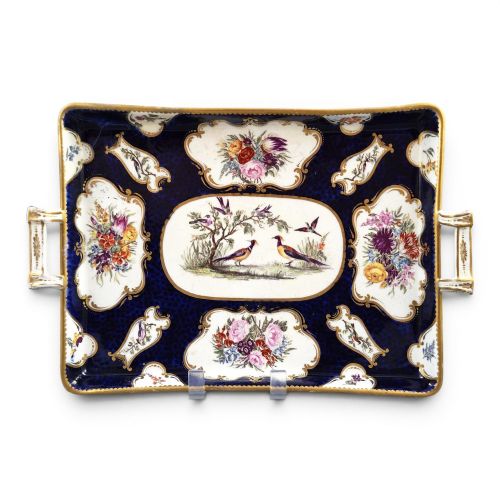
A cobalt and gilt tray brings deep blue porcelain and rich metallic shine together to catch the eye on any side table.
Cobalt and Gilt Tray
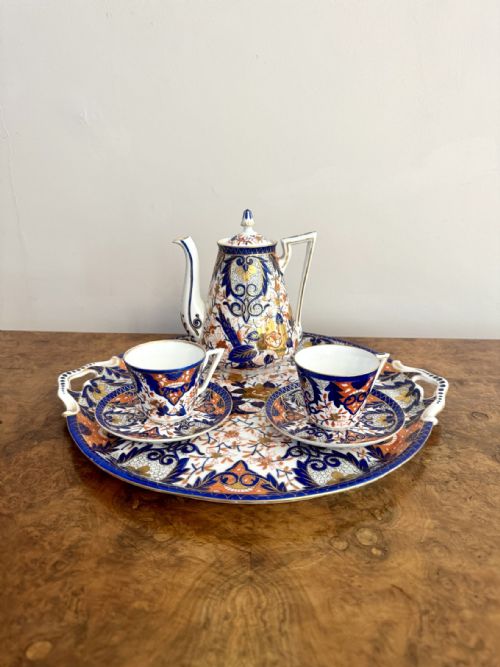
When you search for a cobalt and gilt tray, you enter a world of rich dark blue porcelain brought to life by gleaming gold leaf and enamel highlights. These pieces range from functional serving dishes and platters to decorative trays, inkstands, and matched coffee sets.
The versions you meet most often on this page date from the Victorian and Edwardian eras, alongside pieces from the Regency period and the wider nineteenth century. English factories like Royal Crown Derby, Coalport, Minton, Spode, and Royal Worcester sit alongside French Sevres pieces.
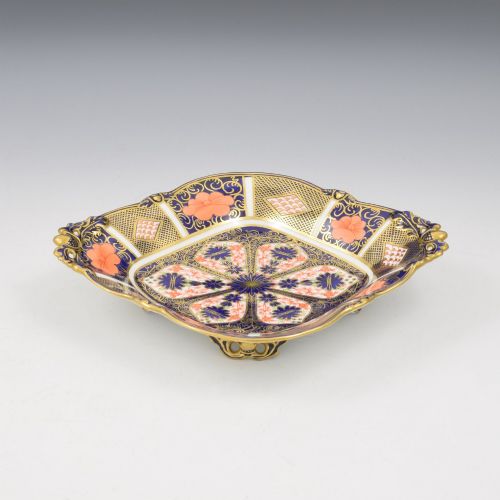
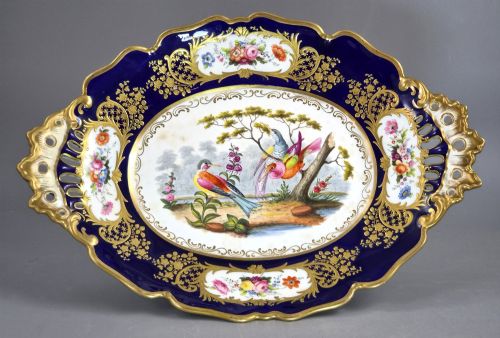
Forms vary from oval dishes and fan shaped plates to pierced serving dishes and larger platters. The decorative traditions span English Imari, Rococo Revival, and French Neoclassical styles, often featuring exotic birds or hand-painted fruit.
How they were made
Makers utilised porcelain and bone china as the primary body, applying a deep cobalt glaze to create the characteristic dark blue background. Artisans then added gold leaf, gilding, and enamel work by hand to build the rich surface patterns.
Firing techniques required immense skill to ensure the deep blue glaze and the metallic gold adhered correctly without running or dulling. Many pieces required multiple kiln firings to set the cobalt underglaze before the delicate overglaze gilding and enamels were applied.
Some nineteenth century artisans painted tiny exotic birds with such fine brushwork that each feather required its own microscopic stroke of gold.
What varies in quality
The depth and consistency of the cobalt glaze set the foundation for a piece, alongside the precision and weight of the gold leaf applied across the surface. Hand-painted details, such as exotic birds or fruit signed by named artists, elevate certain pieces significantly.
The crispness of moulded forms, especially on pierced trays and Rococo Revival scrolling, indicates the care taken during production. Pieces bearing recognisable factory marks or attributed to notable traditions hold a distinct position in the range.
Royal Crown Derby·Coalport·Minton·Spode·Royal Worcester
The Cobalt and Gilt Tray Glossary
- Cobalt Glaze
- A deep blue ceramic colourant applied under the glaze to create rich, durable dark backgrounds on porcelain. It provides the striking contrast needed for subsequent gilding.
- Gilding
- The application of gold leaf or gold paint to the surface of porcelain. This technique highlights rims, handles, and intricate motifs.
- Bone China
- A type of porcelain containing bone ash, known for its high strength, chip resistance, and warm white translucency. English factories utilised this material extensively throughout the nineteenth century.
- Imari Style
- A decorative scheme originating in Japan and adopted by European factories, featuring cobalt blue, iron red, and abundant gold. Pieces in this tradition display dense, patterned panels.
- Inkstand
- A desk tray fitted with inkwells and pen holders, executed in fine porcelain with matching cobalt and gilt decoration. These items served functional roles in period writing rooms.
Cobalt and Gilt Tray: Frequently Asked Questions
What is a cobalt and gilt tray?
A cobalt and gilt tray is a ceramic serving or decorative dish defined by its deep blue glaze and metallic gold ornamentation. These pieces were produced by major European porcelain factories during the eighteenth, nineteenth, and early twentieth centuries.
They function as centrepieces, decorative dishes, or serving ware, bringing colour and metallic contrast to period interiors.
How do I date a piece?
Dating relies on factory marks stamped or painted on the underside, stylistic cues like Regency neoclassical lines or Victorian Rococo curves, and the specific composition of the porcelain body.
Comparing pattern numbers, such as those from Royal Crown Derby or Spode, helps narrow the production window to specific decades of the nineteenth century.
Were these trays used daily?
Many trays formed part of larger coffee sets or desk inkstands intended for regular drawing room use, while others served strictly as decorative display dishes.
Heavier gilding and delicate pierced porcelain suggest pieces kept for special occasions or formal presentation rather than heavy dining service.
How do English and French pieces differ?
English pieces often draw on Imari patterns and local botanical traditions, utilising sturdy bone china bodies developed by factories like Spode and Minton. French Sevres porcelain leans towards neoclassical forms, hand-painted exotic birds, and fine enamel work.
Both traditions mastered the combination of deep cobalt blue and rich gold leaf, though their painted motifs reflect their respective regional aesthetics.