

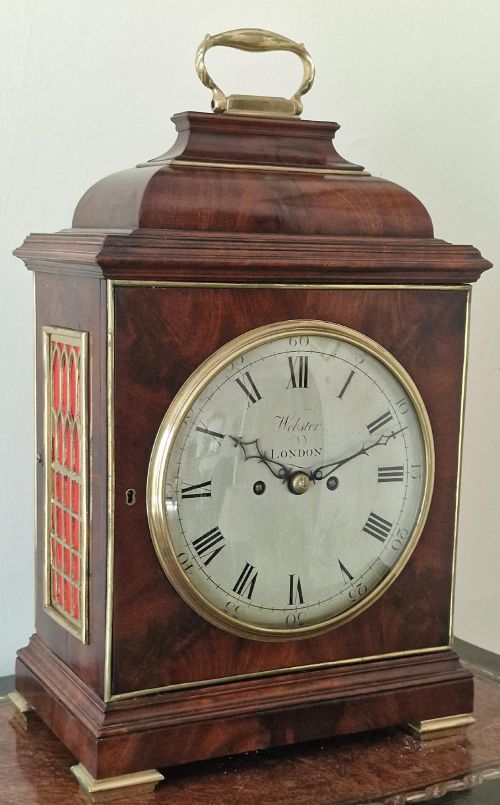
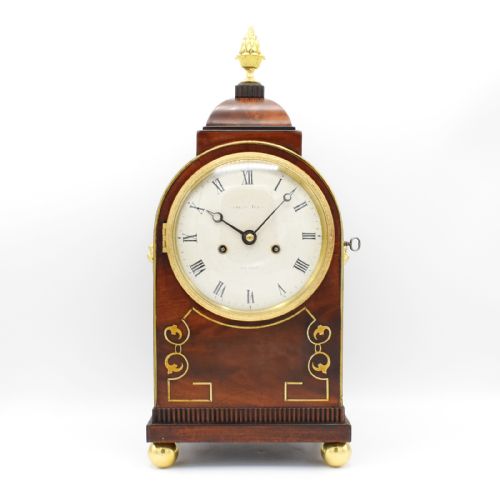
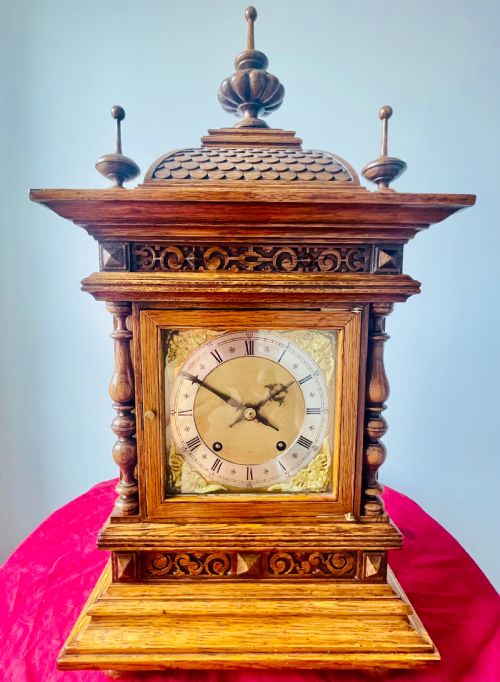
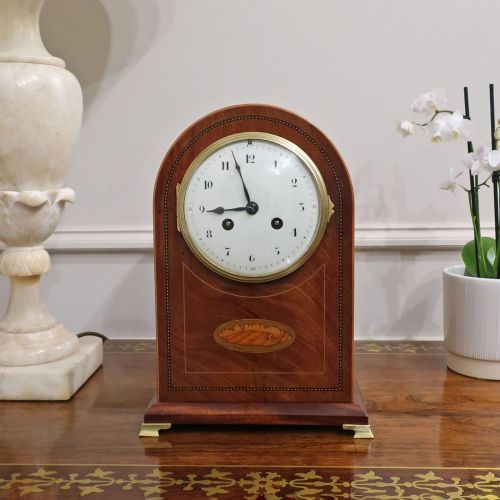

Chime Mantel Clock
When you search for a chime mantel clock, you are looking at domestic timepieces designed to sound the hours and quarters across Victorian, Edwardian, and Art Deco interiors.

Chime Mantel Clock
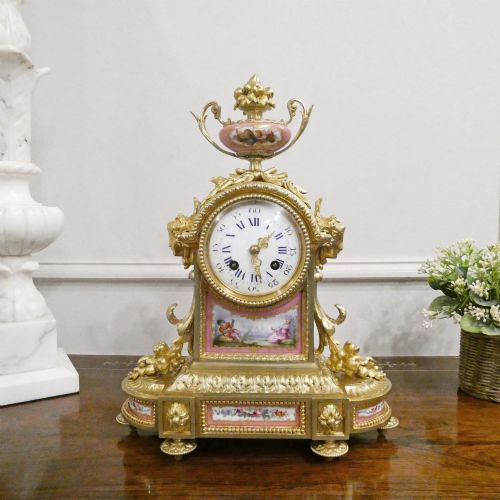
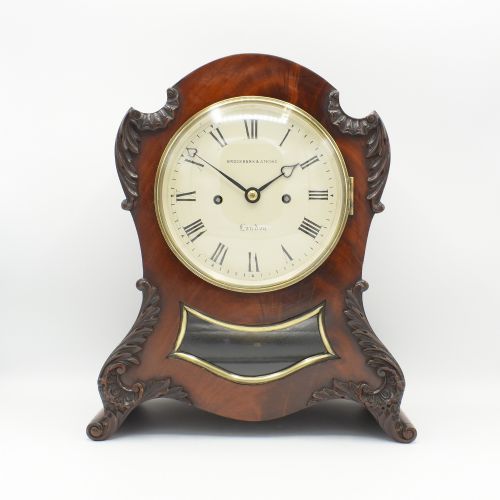
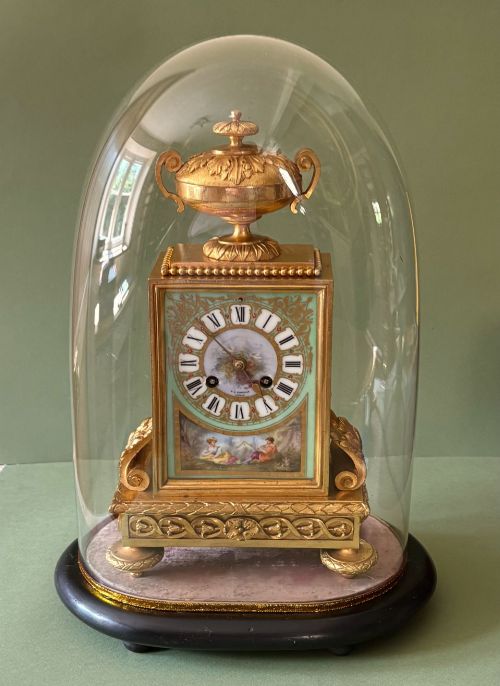
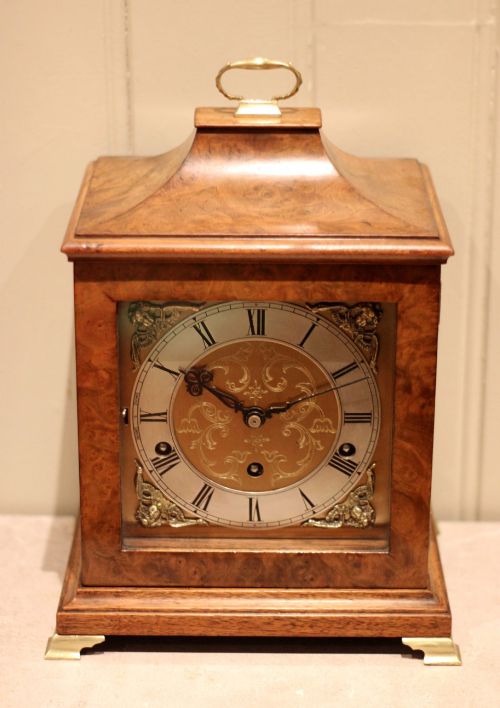
A chime mantel clock is a self-contained timekeeper intended for a shelf, table, or mantelpiece, combining mechanical timekeeping with musical or striking chime movements. These pieces range from compact wooden carriage formats to substantial architectural bracket clocks driven by spring or fusee movements.
The selections on this page span the eighteenth century through to the mid-twentieth century, encompassing English workshop pieces and continental European production. Walnut and mahogany cases predominate, alongside occasional examples in brass, gilt bronze, porcelain, and marble.
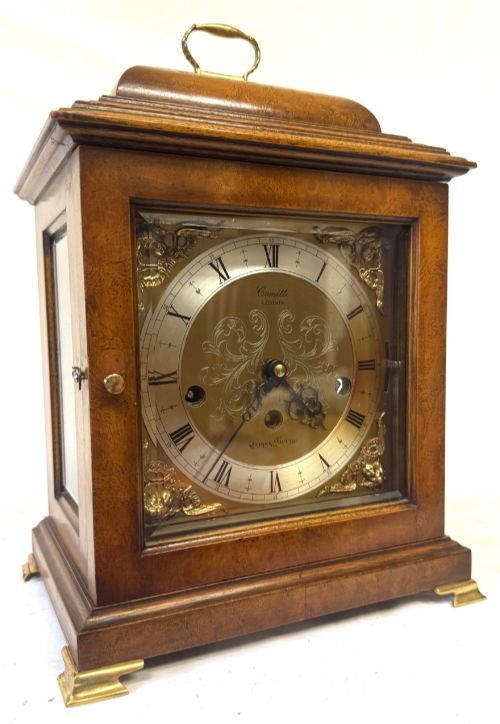
Buyers will encounter distinct regional traditions, notably English bracket clocks by makers such as Elliott or Mappin & Webb, alongside German movements produced by firms like Winterhalder & Hofmeier or H.A.C. Styles move from Georgian and Regency formality through Victorian ornamentation to clean Art Deco lines.
Materials and construction
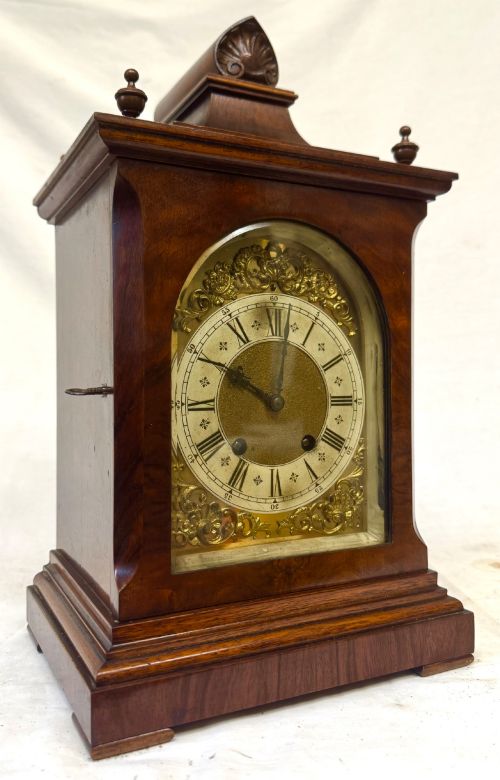
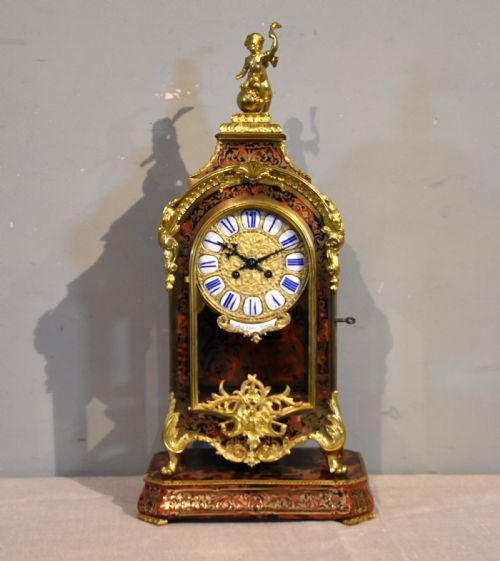
Cases were constructed from dense cabinet timbers such as mahogany, oak, and walnut, frequently finished with burr veneers, marquetry inlay, or ebonised details. Metal components utilised cast brass, ormolu, and gilt bronze, particularly for bezels, dial mounts, and decorative figures.
Dial construction combined silvered brass chapter rings, enamel numerals, and glazed bezels, often protected by bevelled glass panels. Movements relied on brass plates, steel arbours, and intricate gear trains designed to power multiple gongs or bells for Westminster, Whittington, or bim-bam melodies.
Listings feature cases in mahogany, walnut, oak, and brass, spanning the nineteenth and twentieth centuries.
What separates examples in quality
Quality in a chime mantel clock rests on the precision of the movement and the integrity of the case construction. Finer examples employ complex triple-fusee or multi-train mechanisms that distribute power evenly and drive multiple chimes cleanly.
Cabinetwork differentiates standard production from workshop triumphs, visible in the selection of matched burr walnut veneers, hand-carved mouldings, and heavy cast brass mounts. The clarity and resonance of the chime, governed by well-mounted gongs or tuned bells, mark the highest tier of maker output.
Elliott of London·Mappin & Webb·Winterhalder and Hofmeier·Gustav Becker·Japy Freres·Thwaites and Reed
The Chime Mantel Clock Glossary
- Fusee
- A conical pulley used in better-quality clocks to maintain equal force on the gear train as the mainspring unwinds. This mechanism improves timekeeping accuracy across the duration of the wind.
- Bracket clock
- A portable table clock originally designed to sit on a wall bracket to project sound more effectively. Later versions retained the name despite resting directly on furniture.
- Ting tang
- A two-hammer striking movement that sounds two different notes on the quarters or hours. It offers a simpler acoustic alternative to full tune-playing mechanisms.
- Chinoiserie
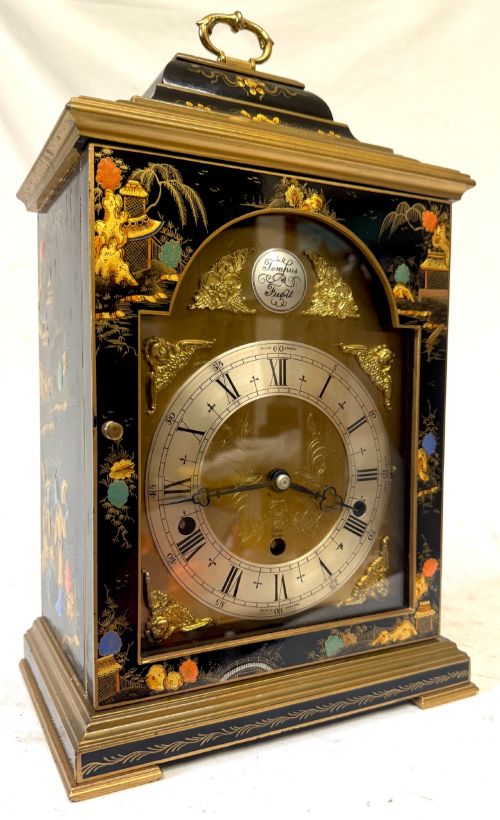
- A decorative style employing hand-painted or lacquered oriental motifs on wood surfaces. It appears on select twentieth-century clock cases.
- Boulle
- A method of marquetry using brass inlaid into tortoiseshell or dark horn, named after the French cabinetmaker. Pieces featuring this technique reflect continental stylistic influence.
Chime Mantel Clock: Frequently Asked Questions
How do I wind my chime mantel clock?
Use the designated key on the winding squares located on the dial face, turning gently until resistance is felt. Avoid over-winding to protect the internal mainsprings.
Ensure you do not force the hands backward past the striking points while setting the time. Letting the chimes complete their sequence prevents jamming in the movement train.
What is a Westminster chime?
A Westminster chime is a four-note melody played on quarter-hours, modelled on the Cambridge quarters used by the clock at the Palace of Westminster. The sequence builds with each quarter until the full melody precedes the hour strike.
This chime mechanism requires additional gear trains within the clock body, often visible through glass panels or rear access doors.
How can I tell a Victorian clock from an Art Deco one?
Victorian clocks tend to feature heavy mahogany, walnut, or marble cases with ornate carvings, brass mounts, and architectural detailing. Their dials often display Roman numerals and intricate hand-engraved brass spandrels.
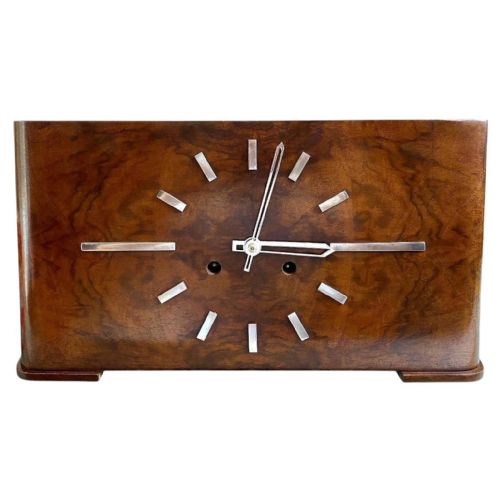
Art Deco examples utilise streamlined geometric wooden cases, sometimes combined with chrome or inlaid veneers. Their dials embrace minimalist numbering and clean, symmetrical surrounds.
Where should I place a chime mantel clock?
Position the clock on a stable, level surface away from direct sunlight, dampness, and draughts. A solid mantelpiece or heavy sideboard provides an ideal foundation for acoustic resonance.
Level placement ensures the pendulum or balance wheel beats evenly, which keeps the timekeeping accurate and prevents the movement from stopping prematurely.