




Mahogany Chime Table Clock
A mahogany chime table clock brings time and tone into a room through solid timber and precise brass movement.
Mahogany Chime Table Clock
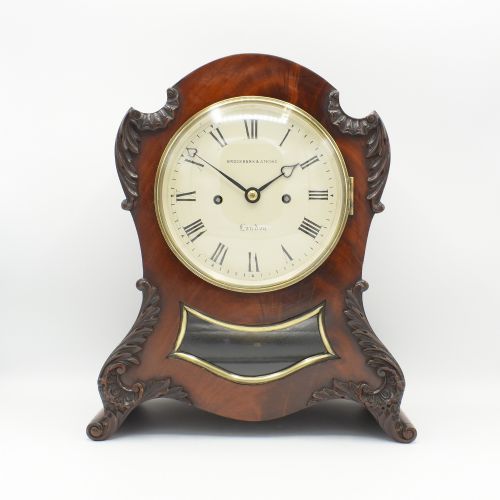
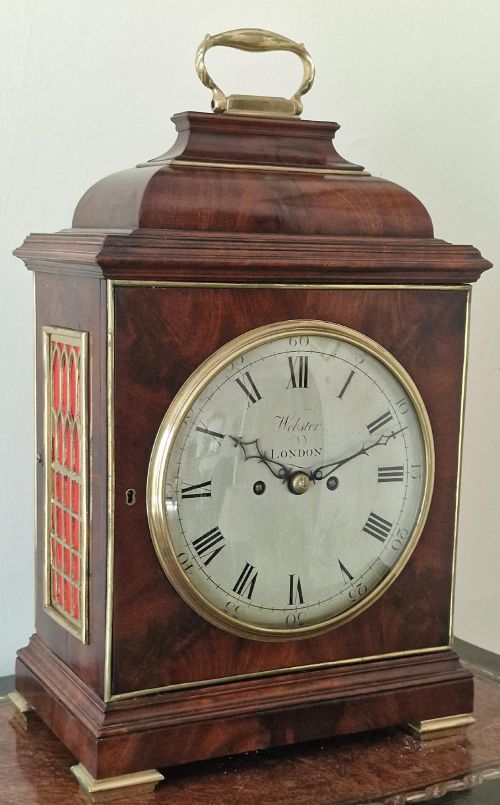
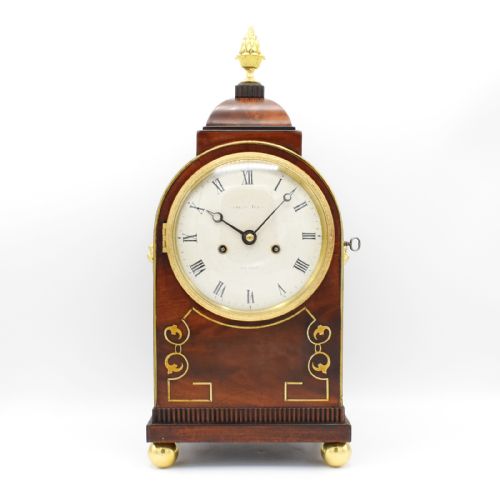
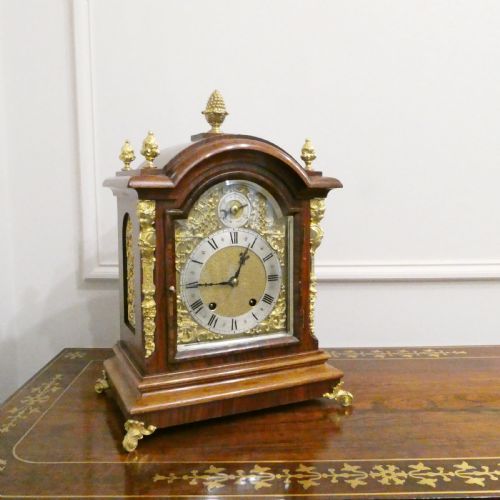
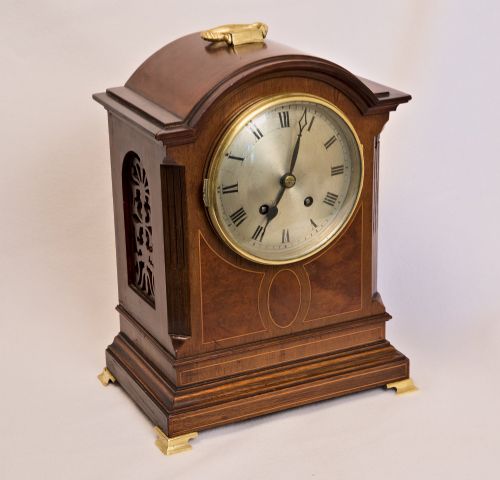
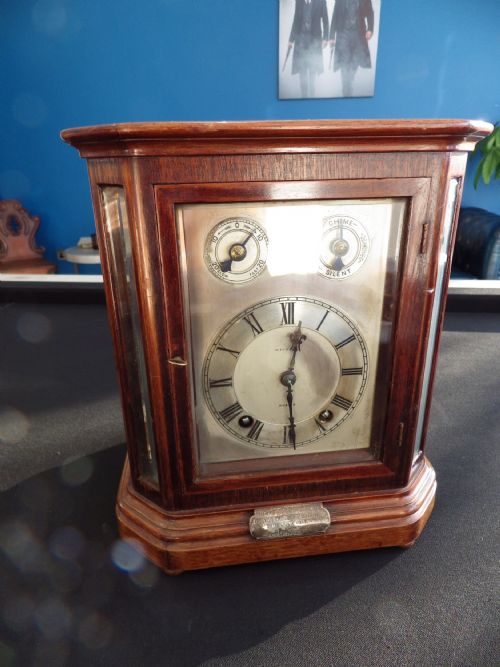
A mahogany chime table clock sits upon a bracket, mantel, or table, housing a striking or chiming movement inside a timber case. These pieces appear across Georgian, Regency, Victorian, and Edwardian periods, displaying forms such as bracket clocks, mantel clocks, and break arch or lancet cases.
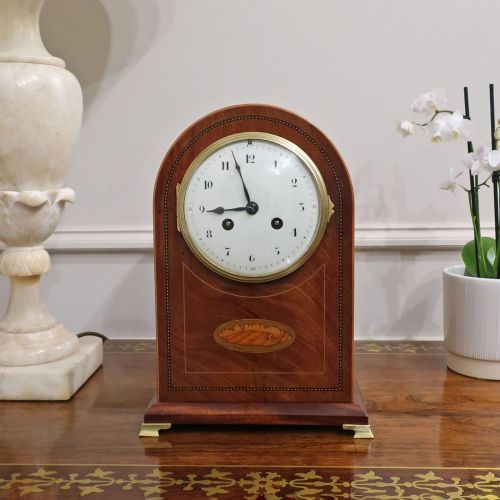
Makers from London and provincial towns, alongside continental workshops, produced these clocks with eight day movements, twin fusees, or ting tang strikes. The examples seen here range from plain architectural architectural timber boxes to inlaid Edwardian designs and French Louis XIV style mantel clocks.
Materials and Construction
Cases combine solid mahogany and satinwood veneers over a timber carcase, frequently inlaid with brass lines or fitted with brass mounts and glass panels to reveal the dial and movement. Dials utilise silvered metal or enamel with black numerals, protected behind glass doors.
Movements rely on brass gear trains, fusees, and springs to drive the striking and chiming mechanisms, sometimes accompanied by ormolu ornaments or wooden mouldings. Joinery and case construction follow traditional cabinetmaking methods appropriate to each period.
Judgement of Quality
Quality rests in the precision of the brass movement, the crispness of the engraved silvered dial, and the weight of the timber case. Finer pieces demonstrate robust fusee movements by known makers and carefully figured mahogany veneers with balanced inlay.
Case proportion and originality dictate the standing of a clock. Examples retaining their correct bracket, original glass, and undamaged brasswork command greater attention from collectors than altered or heavily restored specimens.
Brockbanks And Atkins·Charles Pratt London·Schneckenburger·Mappin And Webb·Francis Perigal·Winterhalder And Hofmeier·J Condliff Liverpool·Budgen Croydon
The Mahogany Chime Table Clock Glossary
- Bracket clock
- A portable clock designed to sit on a wall bracket or table. These spring-driven pieces often feature brass carrying handles.
- Fusee
- A conical pulley inside the clock that equalises the declining power of the mainspring as it unwinds. This mechanism ensures more accurate timekeeping.
- Ting tang
- A striking mechanism using two hammers and two bells to sound the quarters or hours with a dual note. It provides a distinct chime variant.
- Twin fusee
- A movement utilising two separate fusees, one to drive the timekeeping train and another for the striking train. This setup allows both functions to run independently.
- Chamfer top
- A case style featuring bevelled or angled edges along the top surface. It offers a neat architectural finish to table clocks.
Mahogany Chime Table Clock: Frequently Asked Questions
What is a bracket clock?
A bracket clock is a portable spring-driven timepiece originally built to rest upon a matching wall bracket. Over time, many transitioned to sitting directly on tables, desks, or mantelpieces.
These clocks feature carrying handles on top and glazed side panels, allowing light to reach the internal brass movement.
How do twin fusee movements work?
A twin fusee movement uses a conical pulley system connected to the mainspring by a chain or cord. One fusee powers the timekeeping train, while the second powers the strike or chime.
This design maintains even tension on the gears as the spring unwinds, delivering steadier accuracy throughout the running period.
Where should I place a table clock?
Table clocks require a stable, level surface away from direct sunlight, drafts, and dampness to protect the mahogany wood and internal steel components. Placing them on a sturdy mantelpiece or dedicated shelf ensures the pendulum or balance wheel remains undisturbed.
Level placement is essential for the escapement to beat evenly and keep correct time.
How do I identify the period?
Period identification relies on case architecture, dial materials, and woodwork details. Georgian and Regency pieces favour architectural mahogany blocks and brass inlay, while Victorian and Edwardian examples often introduce chiming rods and lighter marquetry.
Signatures on the brass dial or engraved backplate provide definitive clues to the date of manufacture.