




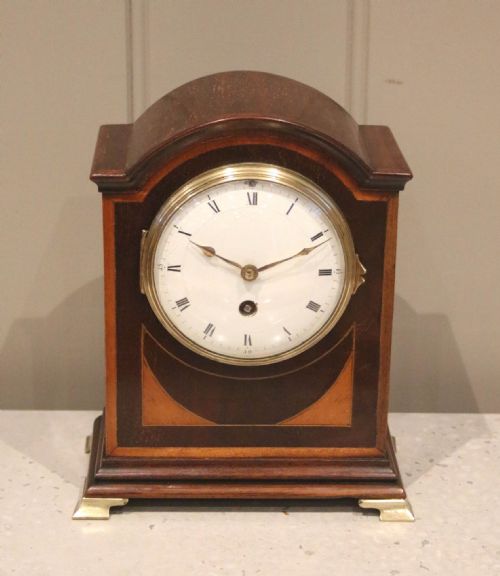
Edwardian Style Bracket Clock
These edwardian style bracket clock pieces offer classic timekeeping in mahogany, satinwood, and lacquer, bringing traditional elegance to any room.
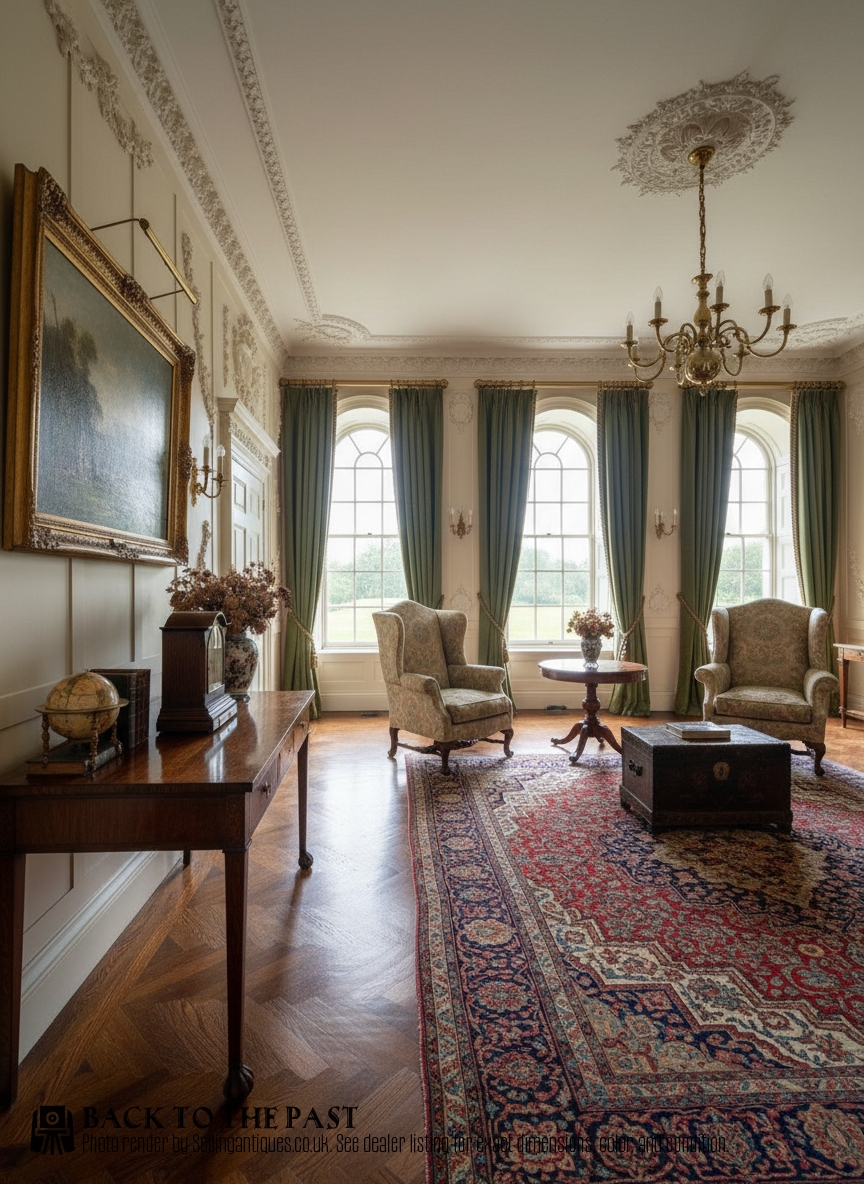
Edwardian Style Bracket Clock
An edwardian style bracket clock stands as a formal timekeeper designed for desks, tables, and mantelpieces. These pieces draw on 19th Century, Regency, and Victorian influences alongside Edwardian designs.
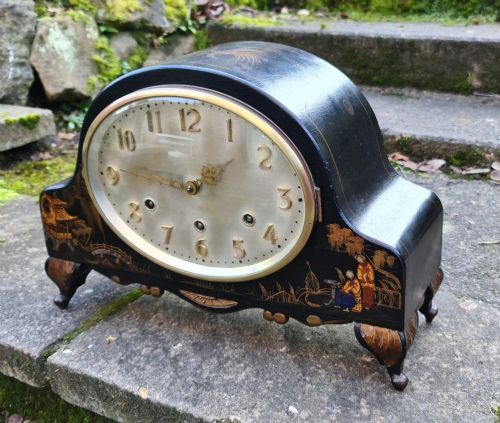
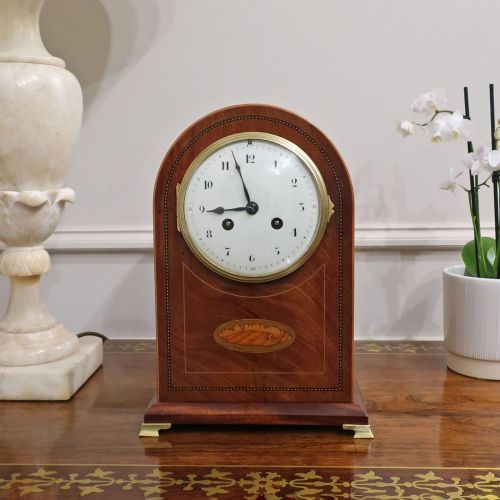
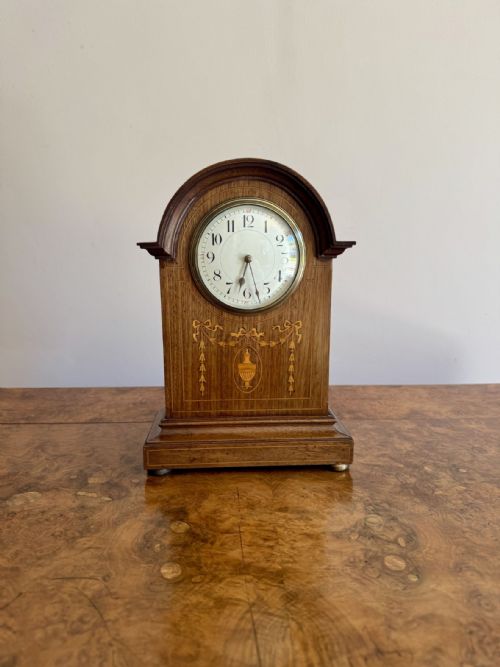
The selection ranges from simple mahogany break arch cases to elaborate French Belle Epoque and Chinoiserie models. Cream and green lacquer finishes appear alongside inlaid wood cases featuring brass and enamel details.
Materials and Construction
Maker workshops utilised solid and veneered timbers such as mahogany, satinwood, burr walnut, and oak for the cases. Woodwork frequently incorporates decorative inlay work and ebonised detailing.
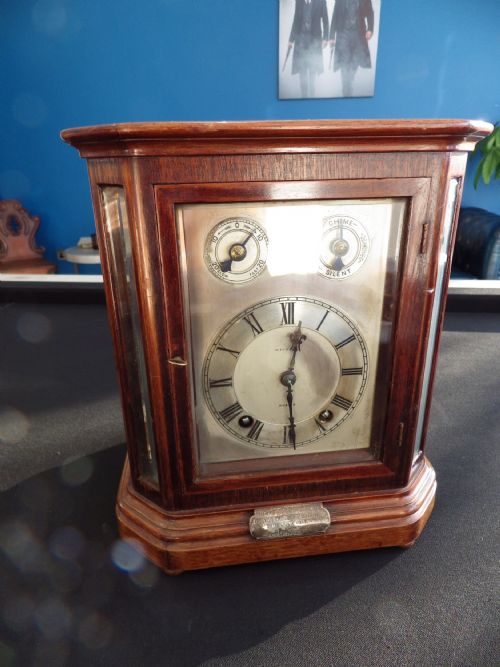
Dials combine brass, silvered metal, and enamel elements, protected behind glass panels. Movements include eight-day striking mechanisms, Westminster chimes, single fusee systems, and French mechanisms.
One listed clock carries a history tied to a special presentation given to a doctor in Ireland.
Quality and Craftsmanship
Distinction in these clocks rests upon the precision of the cabinetwork and the refinement of the interior movement. Finely figured mahogany veneers, delicate satinwood inlay, and substantive brass fittings elevate standard pieces.
The complexity of the clockwork, from simple timepieces to quarter-striking and Westminster-chime movements, defines the standard of production. Original dials with crisp enamel or silvered numerals distinguish superior examples.
Baldwin of Loughborough·W&H
The Edwardian Style Bracket Clock Glossary
- Bracket clock
- A portable table or mantel clock, originally designed to sit on a wall bracket. These pieces now rest primarily on desks and mantelpieces.
- Fusee
- A conical pulley used in spring-driven clocks to maintain even power delivery as the mainspring unwinds. This mechanism improves timekeeping accuracy.
- Chinoiserie
- European decorative style imitating Chinese artistic traditions. Lacquer finishes in cream and green reflect this aesthetic.
- Inlay
- Decorative technique where contrasting pieces of wood or metal are inserted into the primary surface. Satinwood and lighter timbers are common in these designs.
- Belle Epoque
- A period of French and European design spanning the late nineteenth and early twentieth centuries. Pieces from this era often display ornate mahogany cases.
Edwardian Style Bracket Clock: Frequently Asked Questions
What is an edwardian style bracket clock?
An edwardian style bracket clock is a mantel or table timekeeper styled after traditional designs from the Edwardian era and earlier periods. They utilise wood cases, glass panels, and mechanical movements.
These clocks function as both decorative objects and working timepieces for domestic interiors.
How do I wind the movement?
Most mechanical clocks require a key to tension the mainspring through holes on the dial face. Care must be taken not to overwind the mechanism.
Consulting the specific movement type helps determine the correct winding schedule.
Where should I place my clock?
These clocks suit stable flat surfaces such as mantelpieces, desks, and sturdy tables away from direct heat sources and drafts. A level surface ensures the pendulum or balance wheel operates evenly.
Proper placement protects both the wooden case and the internal mechanical components.
How do I identify the period?
Period identification relies on casework materials, dial style, and construction techniques. Edwardian and 19th Century pieces often combine mahogany, inlay, and brass hardware.
Movement stamps and case labels occasionally provide specific maker and date clues.