


Warm Brown Clock
A warm brown clock brings rich timber tones and reliable mechanics into a room, offering both practical timekeeping and historic character.

Warm Brown Clock
A warm brown clock encompasses tall longcase pieces, sturdy wall timepieces, and desk-bound bracket clocks constructed primarily from rich timbers such as oak, mahogany, and pollard oak. These items span periods from the eighteenth century through to the mid-twentieth century, showcasing the evolution of domestic timekeeping.
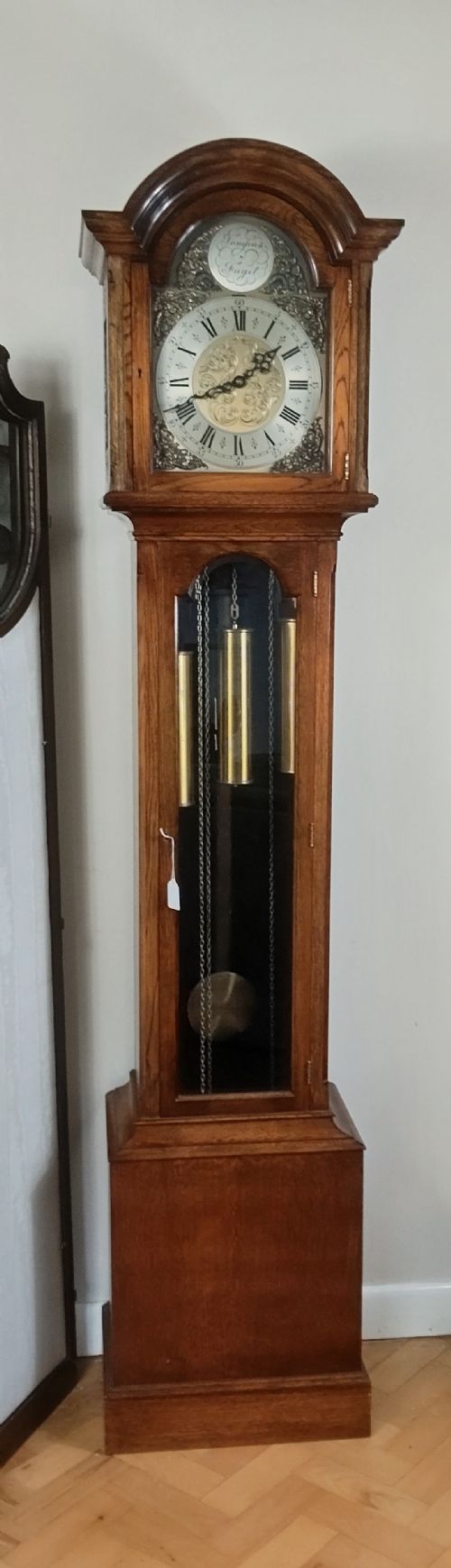
The most frequent examples encountered on this page are tall grandfather and longcase clocks housed in oak or mahogany cases. Alongside these floor-standing pieces, buyers will regularly find wall clocks and bracket clocks rendered in similar deep brown woods.
How they were made
Cabinetmakers constructed the wooden housings using traditional joinery methods, selecting timbers like oak, mahogany, elm, and pollard oak for their durability and depth of grain. These cases frequently incorporate brass dials, bezels, and pendulum bobs to contrast with the dark wood.
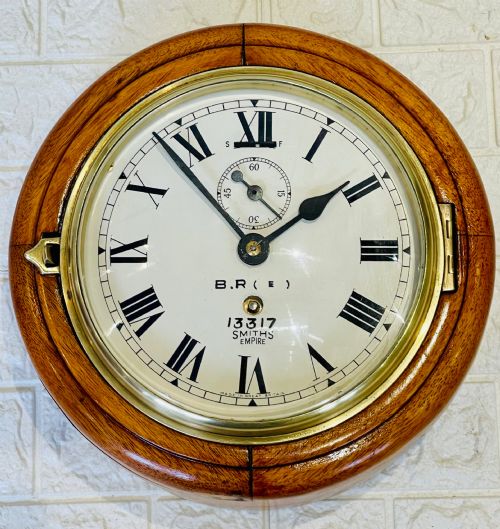
A friendly railway clock watches over the selection, reminding everyone that maritime time waits for no one.
What varies in quality
The distinction between standard and superior pieces lies in the crispness of the timber grain, the fidelity of the brass dial engraving, and the precision of the mechanical movement. Finer examples display carefully selected veneers, such as pollard oak, and bear the signature of a known maker on the dial or movement.
Proportion and execution dictate overall merit. Well-proportioned longcase cases with integrated hood columns and clean dial layouts command greater attention than utilitarian alternatives lacking decorative refinement.
David Craig Ford Path head·Zenith·Pennington of Camberwell London·Henry Smith·DeLa Salle And Christie London·Barraud And Lund
The Warm Brown Clock Glossary
- Longcase clock
- A tall pendulum clock enclosed in a wooden case, commonly known as a grandfather clock. These floor-standing pieces often feature arched faces and weights suspended within the trunk.
- Twin fusee
- A mechanical movement using a conical pulley and chain to ensure even force from the mainspring as it unwinds. This mechanism improves timekeeping accuracy across the duration of the wind.
- Bracket clock
- A portable table or shelf clock, historically designed to sit upon a wall bracket. They are frequently housed in wooden cases with brass carrying handles and glass panels.
- Penny moon
- A revolving disc showing the phases of the lunar cycle through an aperture on the clock dial. This complication is typically found on eighteenth and nineteenth-century longcase clocks.
Warm Brown Clock: Frequently Asked Questions
How do I wind a mechanical longcase clock?
Winding requires inserting a crank key into the winding holes on the dial face and turning it slowly until the weights rise near the top. Care must be taken not to overwind the mechanism.
Most eight-day clocks need attention once a week. Establishing a consistent winding day helps maintain regular timekeeping.
Where should I place a tall wooden clock?
These clocks require a stable, dry interior wall away from direct sunlight and strong temperature fluctuations. Floor-standing pieces must stand on level ground to ensure the pendulum swings evenly.
Securing tall longcases to the wall using hidden brackets prevents accidental tipping. Proper placement protects both the timber case and the delicate movement inside.
How do I distinguish a Georgian clock from a Victorian one?
Georgian pieces, dating from the eighteenth and early nineteenth centuries, generally feature simpler proportions, classic dial layouts, and solid oak or mahogany construction. Victorian examples often incorporate heavier ornamentation, regional stylistic flourishes, or wider dial proportions.
Examining the internal movement style and timber finishing usually clarifies the period of manufacture. Makers' signatures on the dial also provide a clear indication of date.
Do bracket clocks require wall brackets?
Bracket clocks were historically designed to sit on matching wall shelves to project sound and aid visibility. Today, they function equally well resting securely on a sturdy mantelpiece, sideboard, or desk.
Their portable nature allows them to move easily between rooms. Placing them on a stable surface protects the internal escapement from vibrations.