
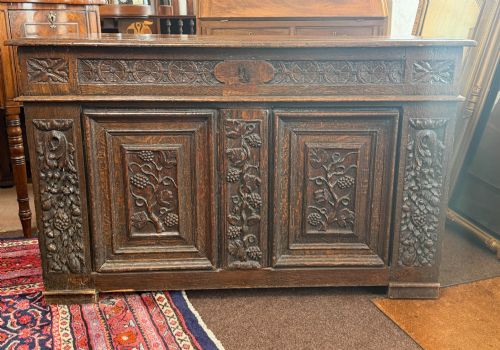
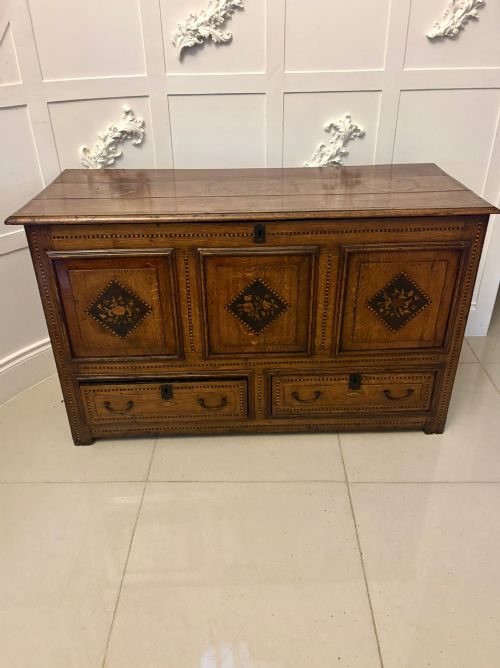
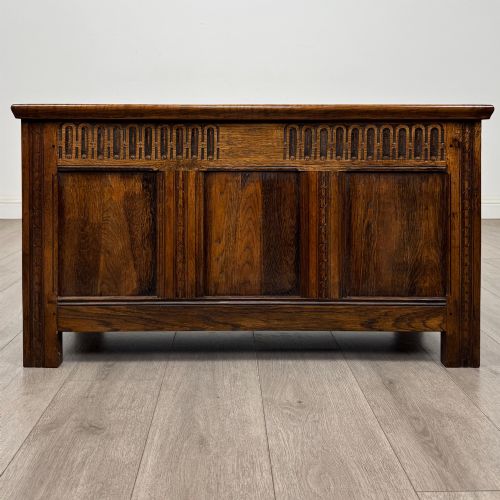


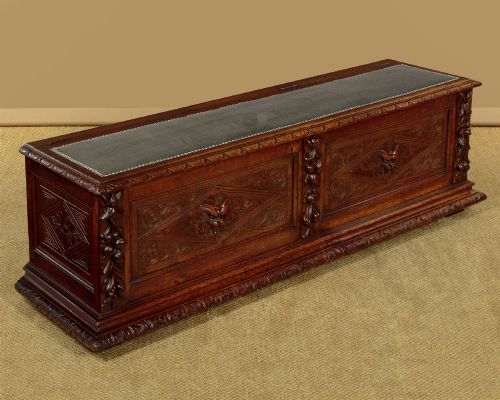
Carved Storage Trunk
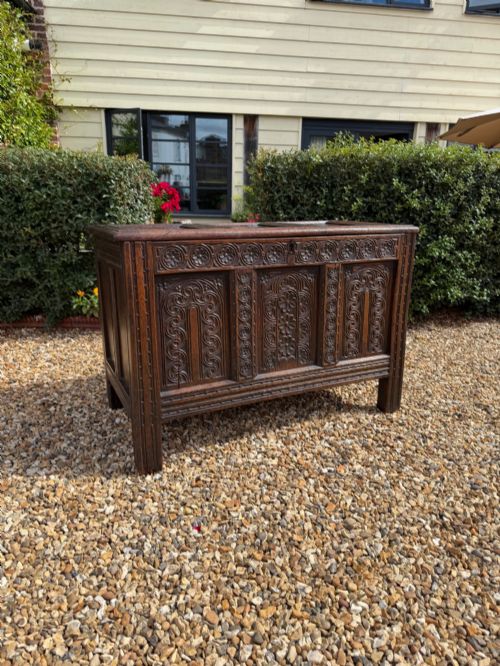
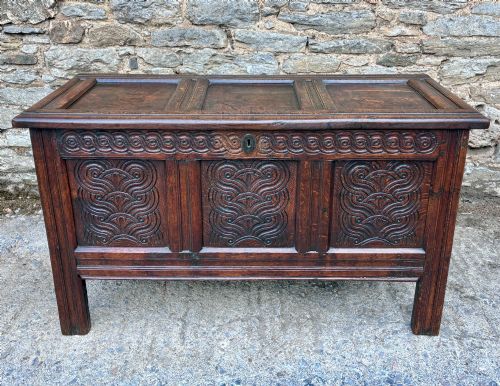
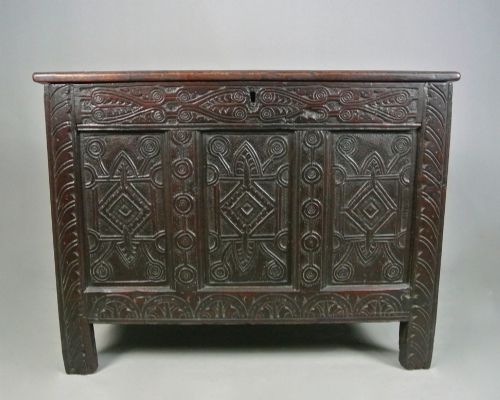
A carved storage trunk provides robust interior storage while bearing the crisp chisel work of past centuries.

Carved Storage Trunk
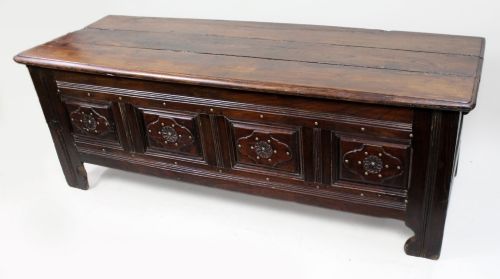
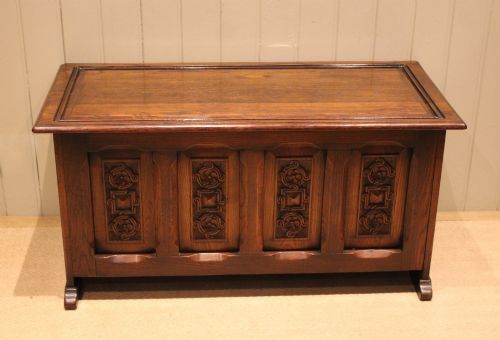
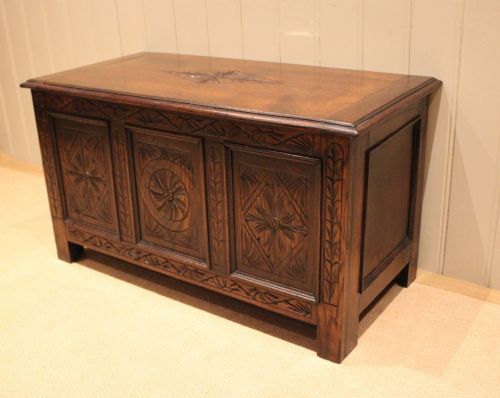
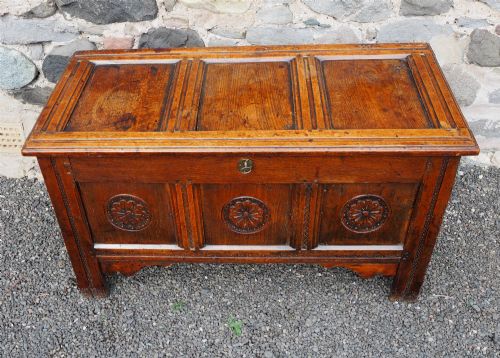
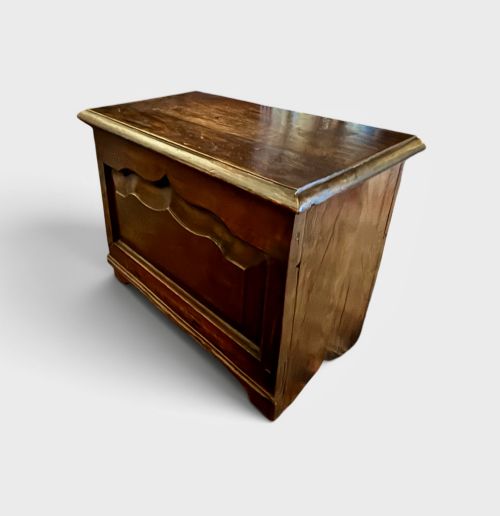
A carved storage trunk, often listed as a coffer or chest, serves as a traditional repository for household textiles and valuables. The pieces encountered on this page span from the sixteenth century through the Georgian era and into later revival styles.
Early examples date from the sixteenth and seventeenth centuries, constructed in solid oak with deep panelled lids and carved fronts. Later variations include eighteenth-century mule chests incorporating lower drawers, alongside nineteenth- and twentieth-century interpretations.
Materials and construction
Makers relied primarily on solid oak, supplemented by regional timbers such as elm, teak, cypress, and hardwood. Boards were joined using traditional framing techniques and pegged joints.
Surface ornamentation involved hand carving, marquetry inlay, and mother of pearl detail. Iron and brass fittings such as strap hinges and lock plates reinforced the structural heavy timber.
Listings feature solid oak alongside teak, elm, cypress, and hardwood, spanning from the sixteenth century to the twentieth century.
Assessing the craftsmanship
The standard of execution in the carved decoration distinguishes standard utility boxes from superior workshop commissions. Crisp, deeply incised relief work shows greater hand skill than shallow, repetitive stamped patterns.
Original surface patination and the survival of primary structural elements, including hinges and internal till boxes, determine the integrity of the piece. Later alterations or replaced timber panels alter the historical coherence of the trunk.
The Carved Storage Trunk Glossary
- Coffer
- A heavy wooden chest traditionally used for storing valuables or documents. These boxes often feature hinged lids and elaborate front panel carving.
- Mule chest
- A storage chest that combines a lidded compartment with one or more drawers built into the base. This form emerged during the seventeenth and eighteenth centuries.
- Marquetry inlay
- The technique of fitting decorative wood veneers into prepared recesses to form geometric or pictorial patterns. This ornament appears on select seventeenth-century and later pieces.
- Panelled construction
- A method of joining wooden boards using stiles and rails to allow the wood to expand and contract safely with humidity changes. This prevents the large timber faces from splitting.
Carved Storage Trunk: Frequently Asked Questions
What were carved storage trunks used for?
These trunks served as secure domestic containers for household linens, woollens, and valuables before fitted wardrobes became common.
Their sturdy construction also allowed them to function as tables or seating benches within the home.
How do I identify a seventeenth century oak coffer?
Seventeenth-century examples display pegged frame construction, hand- split oak boards, and characteristic chip-carved or geometric strapwork on the front panels.
They also exhibit authentic surface patination developed through centuries of handling and beeswax application.
What is the difference between a coffer and a mule chest?
A standard coffer consists solely of a top-opening lid over a single deep storage compartment.
A mule chest incorporates one or more drawers beneath the main storage well, offering easier access to smaller items.
How do I clean and maintain an antique oak trunk?
Maintain the wood by applying a traditional beeswax polish sparingly and buffing with a soft bristle brush to preserve the surface sheen.
Keep the timber away from direct heat sources and dramatic humidity fluctuations to prevent splitting.