

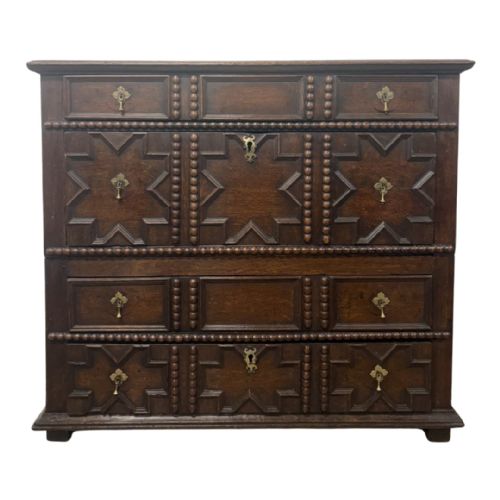
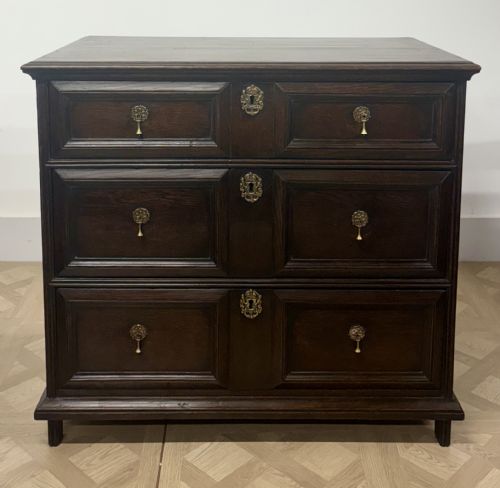
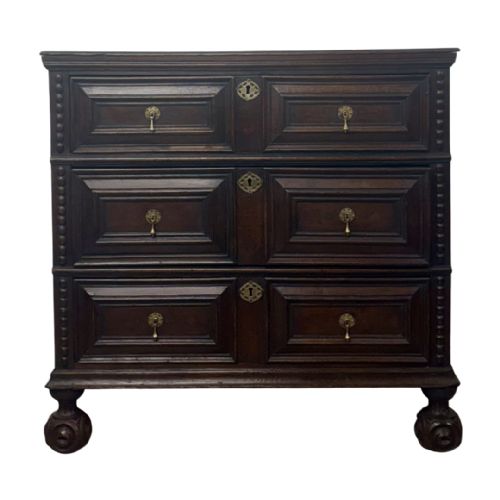
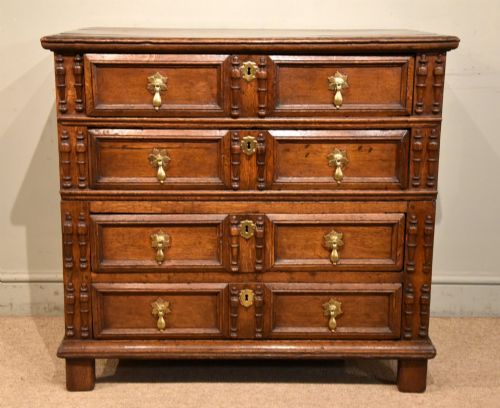
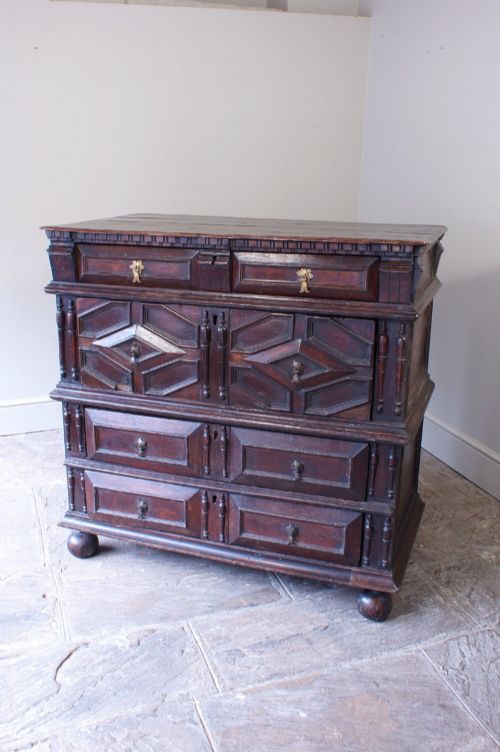
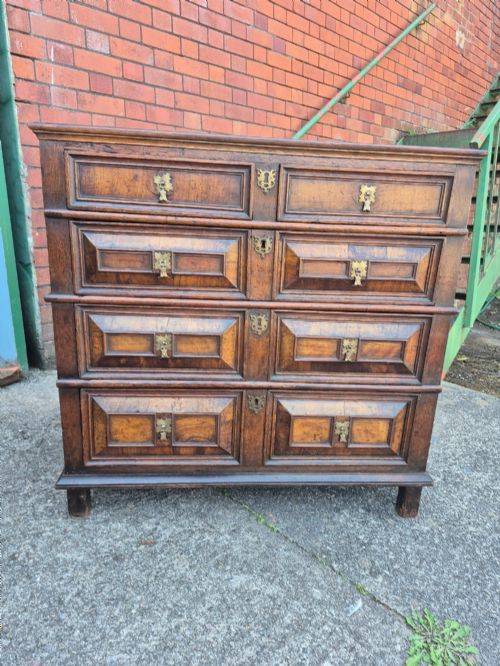
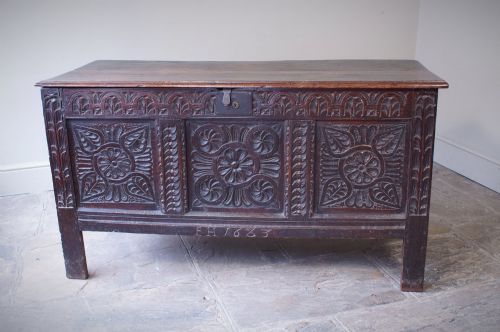
Charles I Oak Chest
A charles i oak chest brings seventeenth-century timber into a room, offering heavy grain and boarded construction designed for centuries of storage.
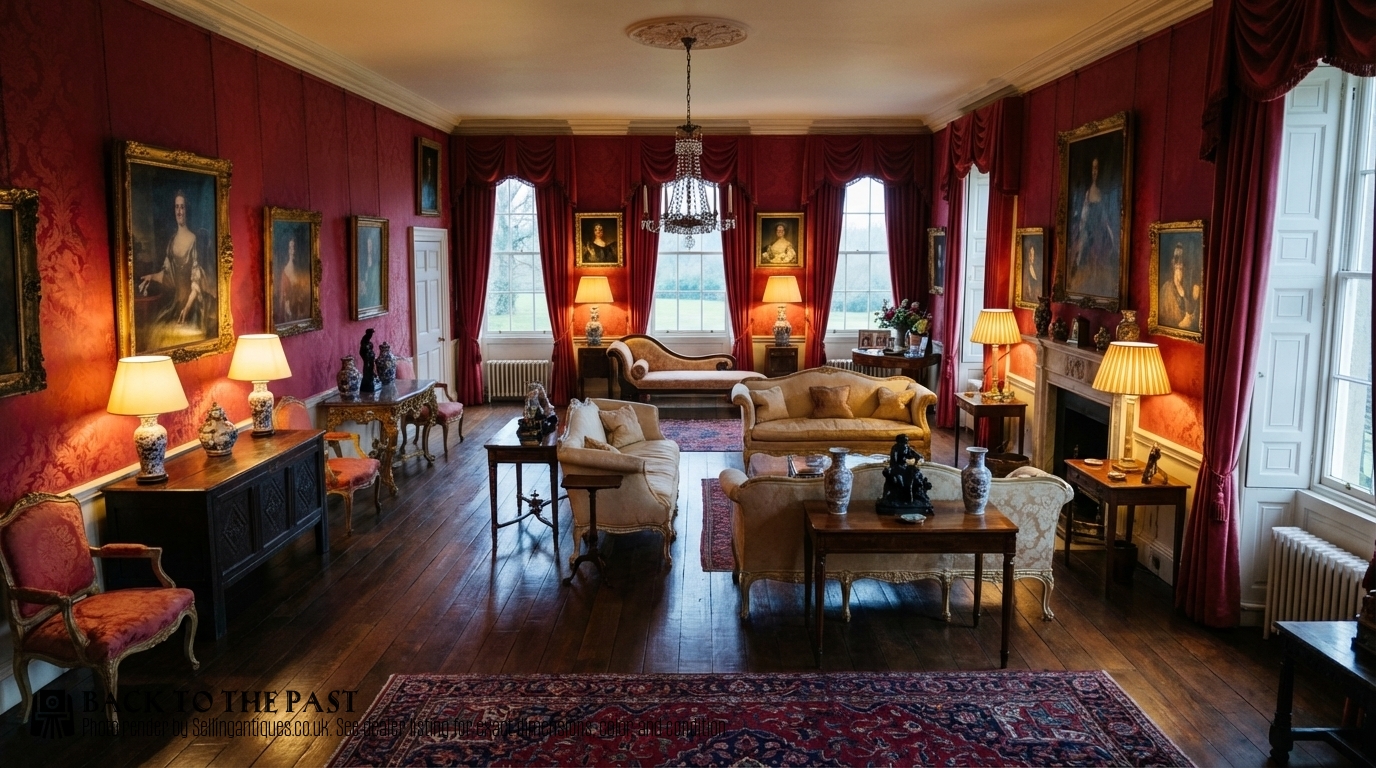
What they are
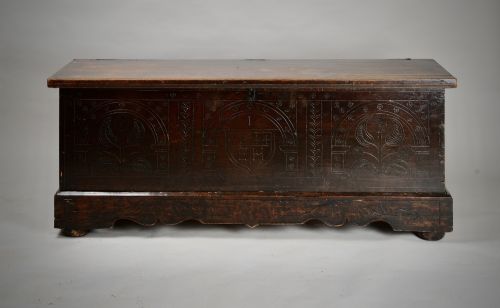
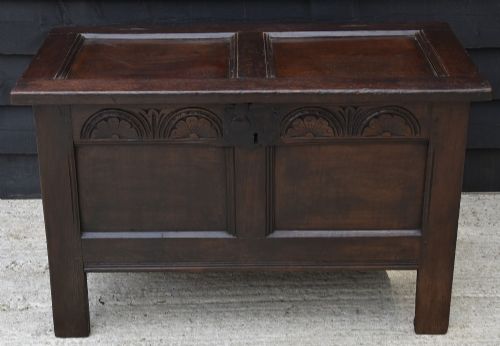
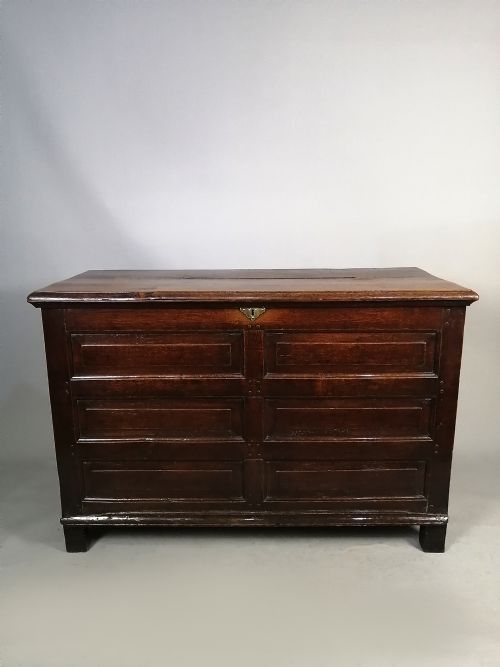
A charles i oak chest is a sturdy seventeenth-century storage piece, encompassing boarded coffers, blanket boxes, and panelled trunks built for domestic utility. These heavy containers held textiles, valuables, and household stores in period homes before fitted wardrobes existed.
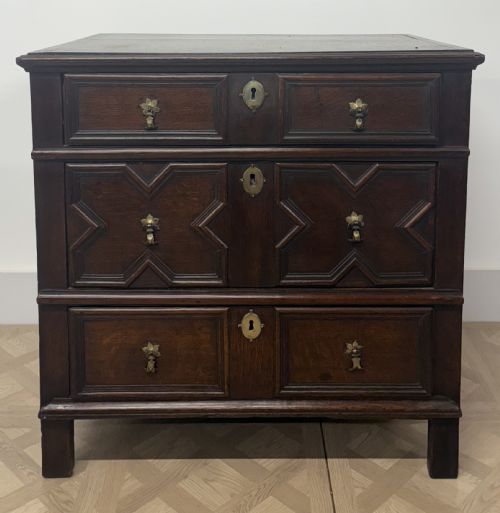
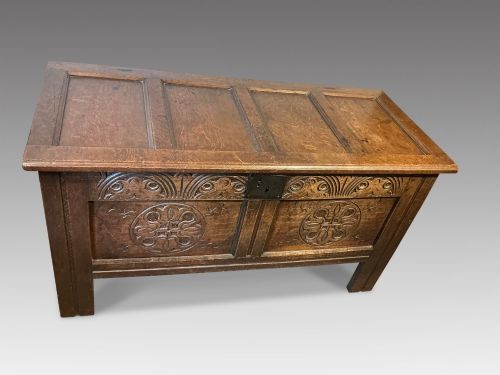
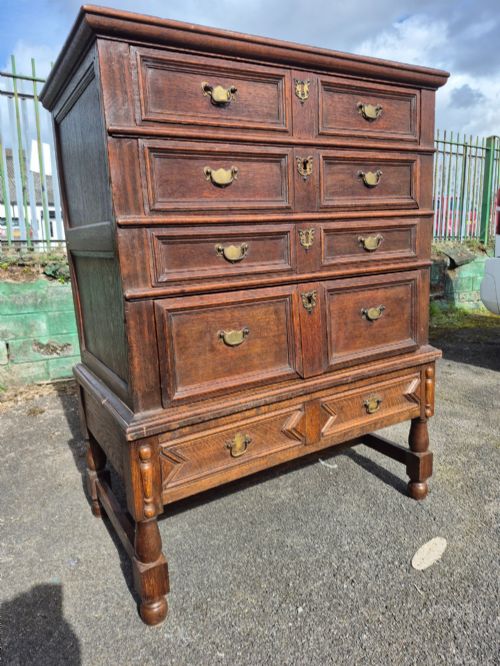
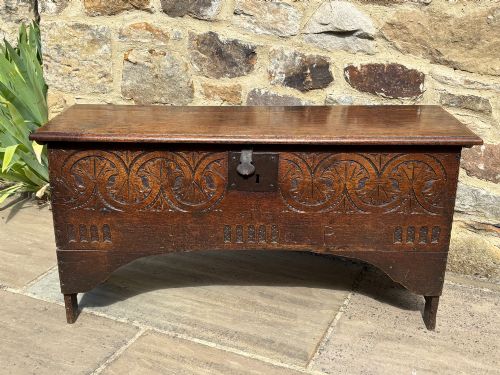
The versions most common in trade are six-plank board constructions and multi-panel coffers, frequently displaying carved fronts from the seventeenth century. Alongside these, related forms from the broader period include mule chests with lower drawers and compact storage boxes.
How they were made
Joiners built these pieces using solid oak boards joined by pegged mortise and tenon frames, or simple nailed and boarded joints in six-plank examples. Timber was hand-riven or sawn from local trees, showing the natural medullary rays and growth rings characteristic of early English forestry.
Hardware consisted of hand-forged iron hinges, latches, and occasional wrought iron strapwork to secure the lids. Surface decoration relied on gouge and chisel carving, geometric panel moulding, or plain unadorned timber boards left to age naturally.
Retail Price Guide 2026
Typical UK retail prices for charles i oak chest, calculated from the Sellingantiques database of over a million retail prices indexed since 2003. This retail price guide relies exclusively on Sellingantiques data; no external sources or auction records are used, so the figures do not describe the wider market.
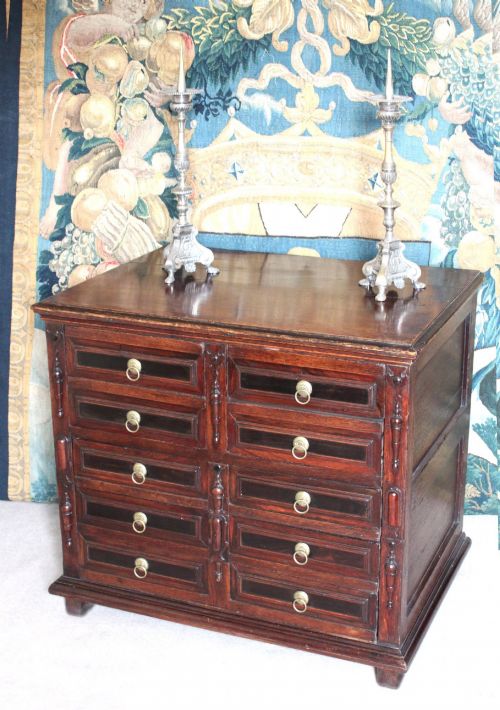
Listings demonstrate the survival of seventeenth-century oak, iron, and wrought iron in both boarded coffers and panelled blanket boxes.
What varies in quality
The distinction between ordinary utility boxes and superior examples rests on the depth and ambition of the timber carving, alongside the crispness of the original joinery. Triple-panel fronts with detailed geometric or figural carving demand greater skill from the maker than plain boarded trunks.
Survival of original surface finish and structural integrity defines the standing of a piece, particularly where lids, hinges, and baseboards remain unaltered by later repairs. The choice of quarter-sawn oak displaying prominent figuring also elevates the visual weight of the construction.
The Charles I Oak Chest Glossary
- Cofer
- A heavy wooden chest used for storing valuables, textiles, or documents in domestic interiors. These containers often featured domed or flat hinged lids and robust boarded sides.
- Mule chest
- A storage chest fitted with one or more drawers beneath the main compartment, bridging the design between a traditional cofer and a chest of drawers.
- Six plank chest
- A primitive form of trunk constructed from six distinct boards of timber joined at the edges with pegs or nails. It represents one of the earliest and most direct methods of box construction.
- Panel
- A flat piece of timber fitted within a grooved frame to allow the wood to expand and contract safely with humidity changes. This technique prevented the splitting common in wide solid boards.
- Wrought iron
- Iron heated and shaped by a blacksmith using hand tools to create structural hinges, brackets, and carrying handles. Each piece bears individual hammer marks from its fabrication.
Frequently Asked Questions
What did people store inside a charles i oak chest?
Households used these heavy wooden containers primarily for linen, woollen blankets, winter garments, and family valuables. Because domestic architecture lacked built-in closets, large boxes served as portable security vaults.
Valuable documents, silverware, and church plate also found safe keeping beneath heavy hinged lids secured by iron padlocks. Over generations, their role shifted from active utility to decorative furniture.
How do I care for seventeenth-century oak timber?
Solid oak requires stable indoor humidity and protection from direct heat sources that cause boards to shrink and split. Keeping the timber away from radiators preserves the structural joints and historic surface finish.
Application of traditional wax polish maintains the moisture balance in the grain without building up synthetic residues. Gentle dusting with a dry cloth keeps the surface clean without stripping the historic patina.
How can I tell a boarded chest from a panelled one?
A boarded chest uses single wide planks joined directly at the corners, visible in simple six-plank constructions. These rely on the thickness of the board itself for strength.
Panelled construction employs a separate framework of stiles and rails holding thinner floating panels in grooves. This lighter, more advanced technique accommodated seasonal wood movement in larger furniture.
Where were these oak chests originally made?
Local carpenters and regional joiners built these pieces across English counties using native oak timber felled nearby. Specific regional traits sometimes appear in the carving styles and construction methods typical of particular shires.
Workshops operated in market towns and rural estates, supplying sturdy furniture directly to yeoman farmers and gentry households. Surviving examples reflect the local availability of materials and prevailing vernacular traditions.