






Historic Oak Coffer
A historic oak coffer is a robust wooden storage chest built for centuries of domestic use, offering timeless utility and deep period character.
Historic Oak Coffer
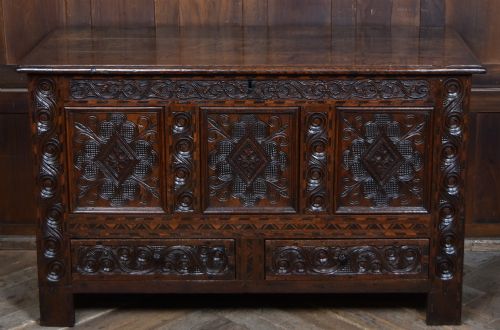
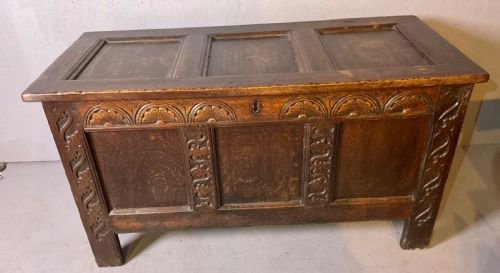
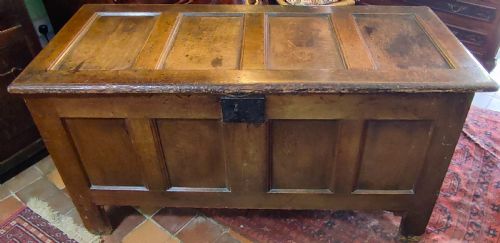
A historic oak coffer is a substantial storage chest that provides a direct link to early domestic interiors. When searching for a historic oak coffer, buyers encounter forms ranging from simple boarded constructions to heavily carved joined examples. The pieces available span several centuries, with seventeenth-century specimens appearing alongside sixteenth-century and eighteenth-century pieces.
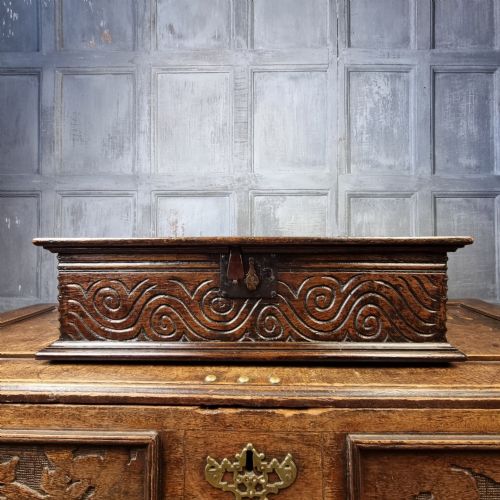
The assortment on this page includes specialised storage variants alongside standard chests. Buyers will find desk boxes, Bible boxes with internal drawers, sword chests, blanket chests, and mule chests. These functional objects served varied domestic purposes in early households, from securing valuables to storing textiles.
Materials and construction
These chests are built primarily from solid timber, predominantly oak, complemented by hardware in iron, wrought iron, and brass. Joinery methods evolved from early boarded construction techniques to sophisticated joined frameworks. Wood inlay also appears on selected examples, adding decorative contrast to the timber surfaces.
Makers utilised traditional hand-working methods to shape and assemble each chest. Carved friezes and panels decorate many of the seventeenth-century and eighteenth-century pieces, reflecting the prevailing styles of their respective periods such as Jacobean, Elizabethan, Tudor, and Georgian.
Construction materials across these pieces combine solid oak and wood inlay with functional iron, wrought iron, and brass hardware.
Factors of quality
Quality in these chests rests upon the integrity of the timber and the sophistication of the construction. Pieces utilising joined frames generally display greater structural ambition than simple boarded boxes. The presence of period surface carving and decorative wood inlay distinguishes finer examples from plain utility pieces.
The Historic Oak Coffer Glossary
- Boarded coffer
- A primitive chest constructed from wide planks pinned or nailed together at the edges. This represents an early method of box-making before frame-and-panel techniques became common.
- Joined coffer
- A chest built using a frame of stiles and rails fitted with inset panels. This construction method allows the wood to expand and contract naturally without splitting.
- Mule chest
- A storage chest featuring one or more drawers built into the base beneath the main compartment. This form bridges the evolution between the traditional coffer and the modern chest of drawers.
- Bible box
- A small tabletop or desk storage box traditionally used for holding family scriptures and documents. These often feature sloping lids and internal drawers.
- Sword chest
- A narrow chest specifically proportioned to accommodate long arms and blades. These specialised pieces reflect the specific security needs of early households.
Historic Oak Coffer: Frequently Asked Questions
What is a historic oak coffer?
A historic oak coffer is a heavy wooden storage chest made primarily in the sixteenth, seventeenth, and eighteenth centuries. These pieces were standard household furniture used for securing valuables, clothing, and documents.
They appear in various styles including Elizabethan, Jacobean, and Georgian. Their sturdy construction has allowed them to survive for centuries in domestic settings.
How were coffers used originally?
Early households used coffers primarily for safe storage and occasionally as seating or tables. Valuables, textiles, and household linens were locked inside to protect them from theft, dampness, and pests.
Specialised variants like Bible boxes and sword chests held specific items of value. Their portability also made them suitable for transporting belongings during travel.
How do I date a historic oak coffer?
Dating relies on observing construction methods, decorative styles, and hardware details. Sixteenth-century pieces often feature simple boarded construction, while seventeenth-century examples typically employ joined framing and carved friezes.
Stylistic cues such as Elizabethan, Tudor, or Jacobean carved motifs provide further chronological markers. Eighteenth-century versions often show softer proportions and Georgian influences.
Where can I place an oak coffer at home?
These chests function well as living room coffee tables, bedroom blanket storage, or hallway statement pieces. Their flat lids provide useful surface area while the internal compartment conceals modern clutter.
Placing them away from direct heat sources and strong sunlight protects the historic timber. Environmental stability preserves both the oak and any original iron or brass hardware.