
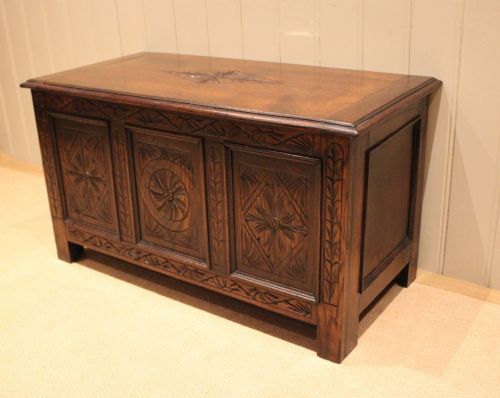
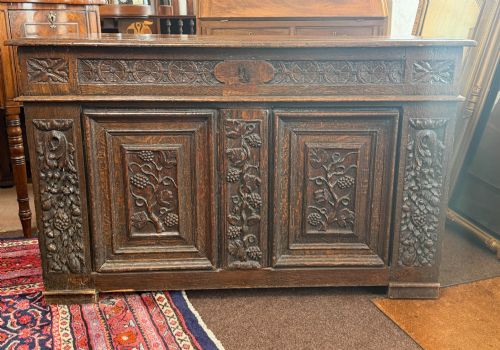

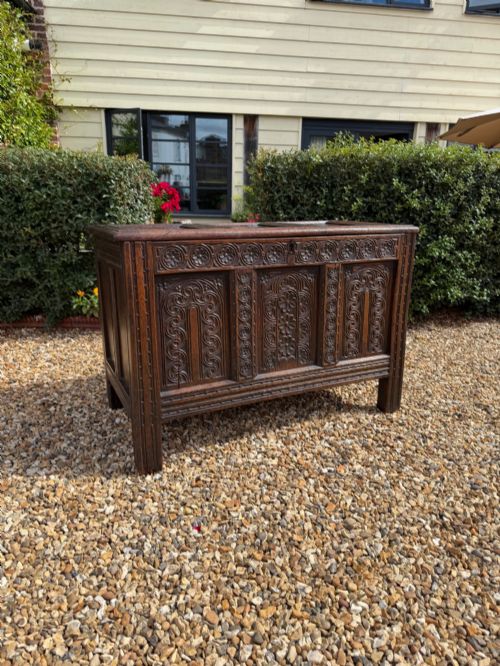
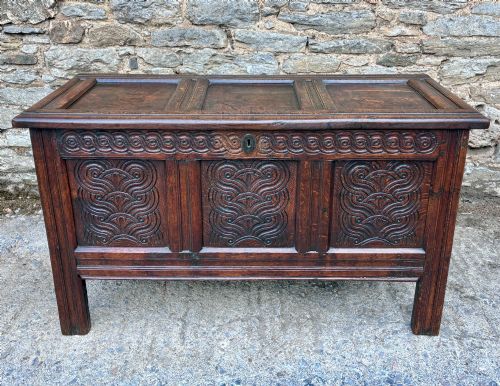
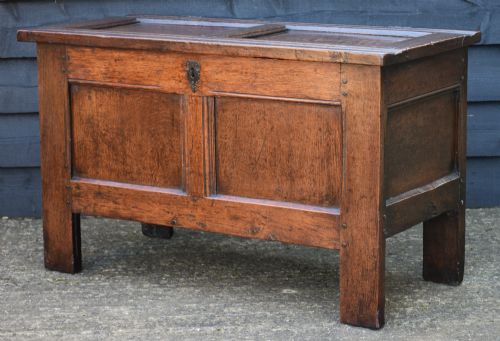
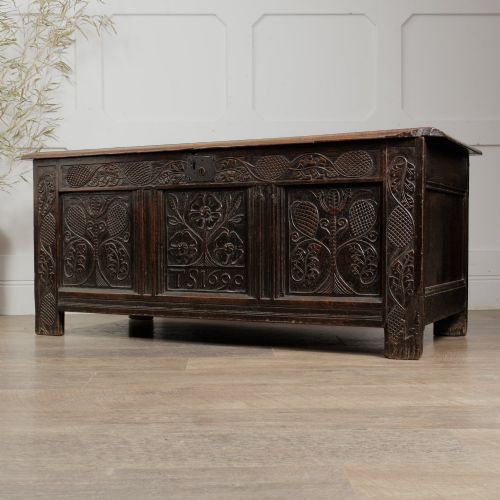
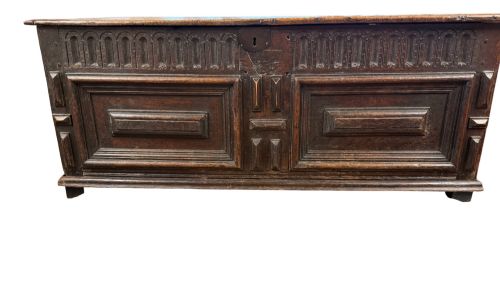
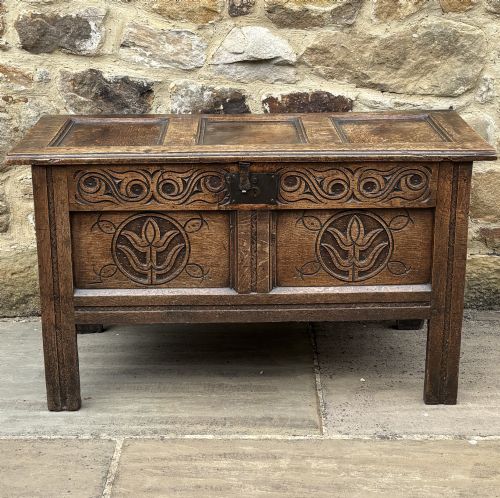
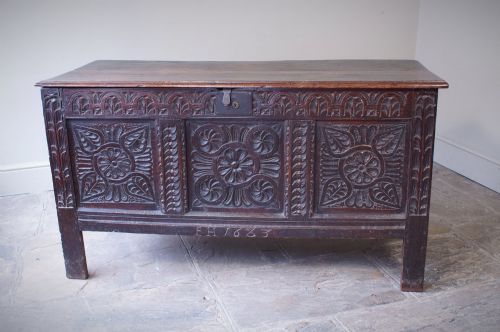
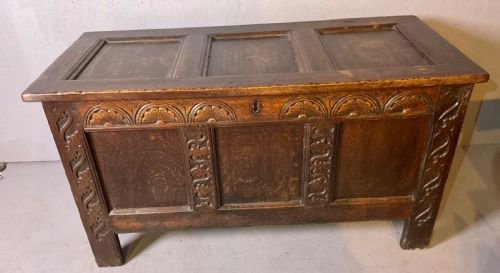
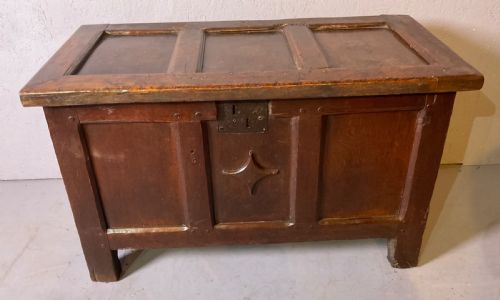
Seventeenth Century Blanket Box
A seventeenth century blanket box brings substantial timber construction and historic character into a modern interior.
Seventeenth Century Blanket Box
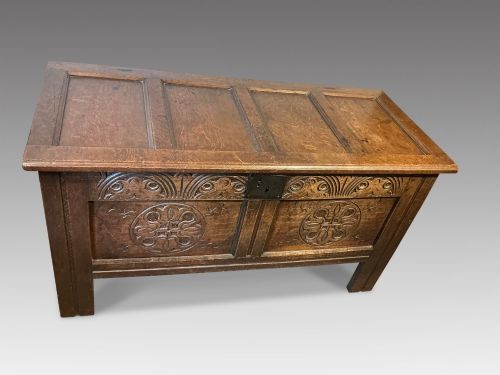
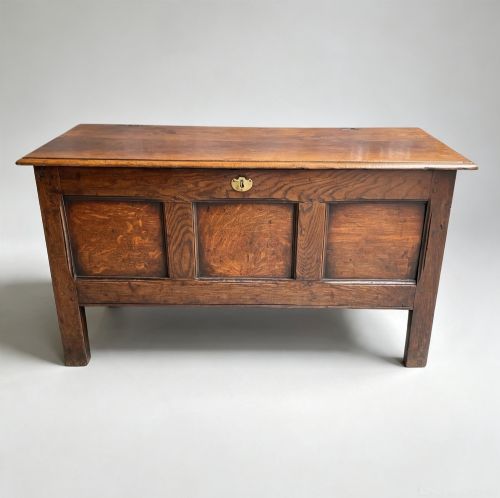
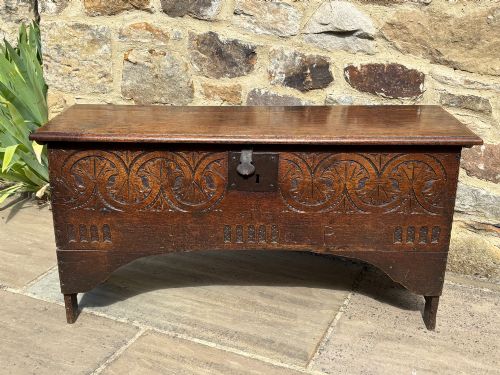
A seventeenth century blanket box functions primarily as a sturdy storage chest, frequently catalogued under headings such as coffer, chest, or sword chest. Buyers seeking these items will find heavy timber vessels designed for domestic storage, often featuring panelled construction and hinged lids.
The pieces appearing on this page span several stylistic categories, predominantly Jacobean and Charles I periods, alongside later revival iterations. Formats range from small proportions and provincial Welsh or Lakeland examples to larger mule chests equipped with lower drawers.
Origin points vary across regional English workshops, including Dorset, Devon, and the Gower Peninsula, as well as Spanish imports utilising leather. Most surviving examples are constructed from solid oak, though individual items incorporate iron hardware and wood inlay.
Methods and materials
Construction relies heavily on sturdy oak timbers assembled using traditional frame and panel techniques to accommodate seasonal wood movement. Joinery employs pegged mortise and tenon joints rather than metal screws or modern adhesives.
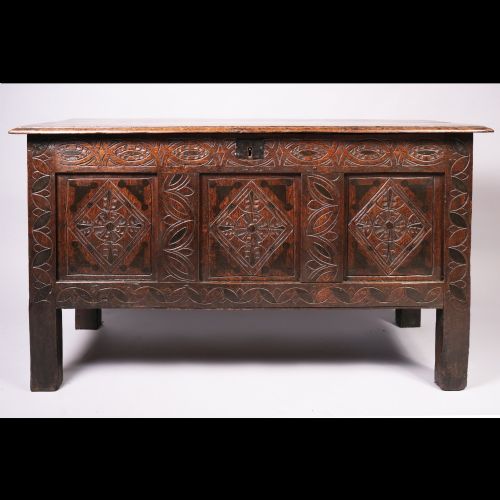
Surface ornamentation on these chests incorporates hand carving, arcaded panels, and occasionally wood inlay or ebonised details. Iron and brass hardware, including strap hinges and locks, secures the heavy lids and provides structural reinforcement.
One recorded piece carries a specific regional attribution to an apprentice workshop linked to Thomas Dennis in Ottery St. Mary.
Distinctions in quality
Quality in a seventeenth century blanket box depends on the crispness and depth of the original carved decoration, such as arcading or panel motifs. Examples retaining their untouched surface patination and authentic structural timber rank above heavily restored or altered pieces.
Proportion and regional distinctiveness also influence standing, with provincial traits like specific Welsh or West Country carving styles adding character. The integrity of the original joined framework and unblemished board lids separates standard utility chests from finer decorative works.
Thomas Dennis
The Seventeenth Century Blanket Box Glossary
- Coffer
- A heavy wooden chest traditionally used for storing valuables, linen, or documents. These storage vessels form the primary category for seventeenth century box furniture.
- Mule chest
- A storage chest fitted with one or more drawers beneath the main opening compartment. This hybrid form bridges the traditional coffer and the modern chest of drawers.
- Arcaded
- Decorated with a series of arched motifs carved into the wood panels, often resembling classical architectural arches. This style frequently appears on Jacobean period furniture.
- Linenfold
- A style of wood carving that imitates folded parchment or linen cloth, commonly seen on panelled furniture. It provides a textured surface texture typical of early British joinery.
- Joined oak
- Furniture constructed using interlocking mortise and tenon joints secured by wooden pegs. This method defined English cabinet making before the widespread adoption of veneering.
Seventeenth Century Blanket Box: Frequently Asked Questions
What were seventeenth century blanket boxes used for?
These robust timber chests served households as secure storage for valuable textiles, clothing, blankets, and household documents. Their flat lids also allowed them to function as tables or benches within domestic halls.
In addition to everyday storage, certain regional variants like sword chests accommodated specific weaponry or accumulated family heirlooms over generations.
How do I identify a Jacobean coffer?
Jacobean pieces typically feature dark oak timber, heavy frame and panel construction, and characteristic carved motifs like guilloche, lozenges, or architectural arcading. The hardware usually consists of hand-wrought iron strap hinges.
Proportions tend to be stout and solid, reflecting the joinery techniques common in seventeenth century English workshops before later lighter styles emerged.
Where should I place a heavy oak chest?
A substantial oak coffer works well as a focal point in an entrance hallway, at the foot of a bed, or anchoring a living room wall. Its flat top provides a useful surface for displaying items.
Keep such timber pieces away from direct heat sources and intense sunlight to prevent the historic oak boards from drying out or splitting.
Are mule chests different from standard coffers?
Mule chests combine the deep top-opening compartment of a traditional coffer with one or more drawers built into the base. This evolution offered easier access to frequently used items without lifting the heavy main lid.
Standard coffers rely solely on the top lid for access, lacking the lower drawer configuration found on mule variants.