


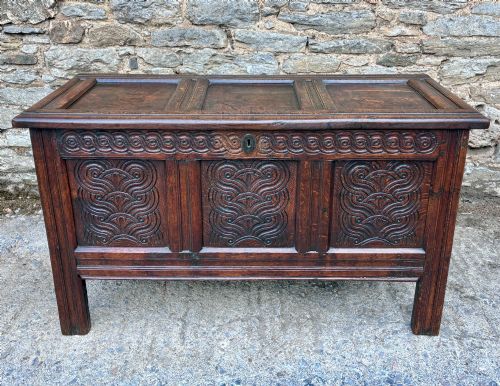
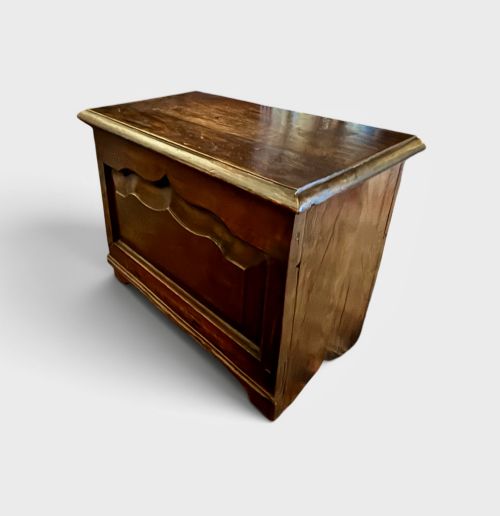
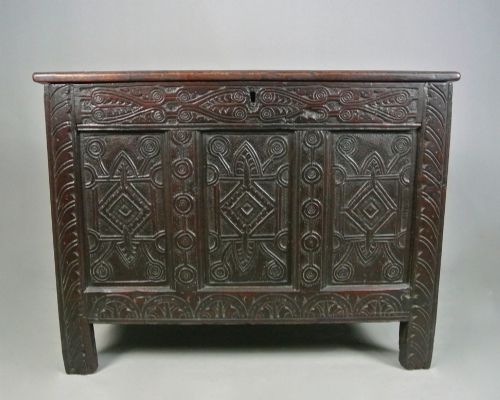
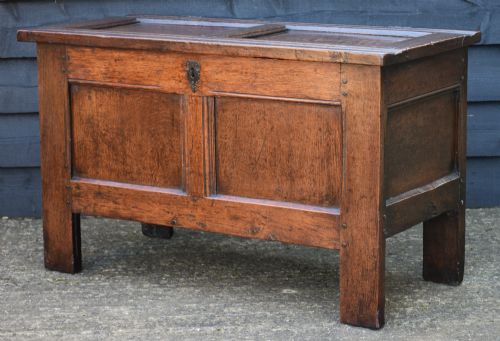
Carved Panel Oak Trunk
A carved panel oak trunk is a sturdy storage piece built from timber to hold household goods, offering practical function alongside centuries of craft.
Carved Panel Oak Trunk
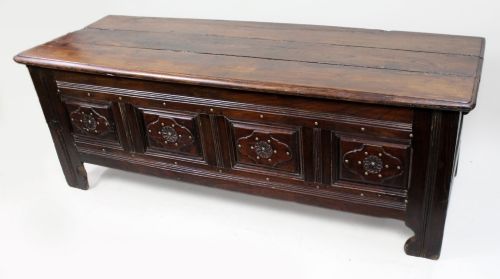
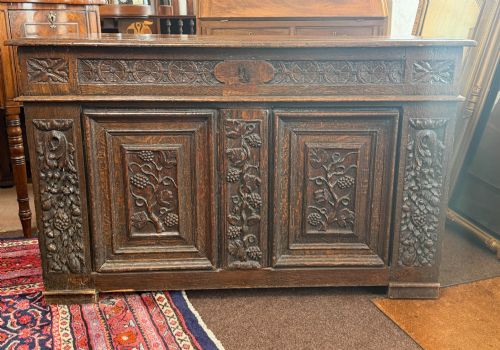
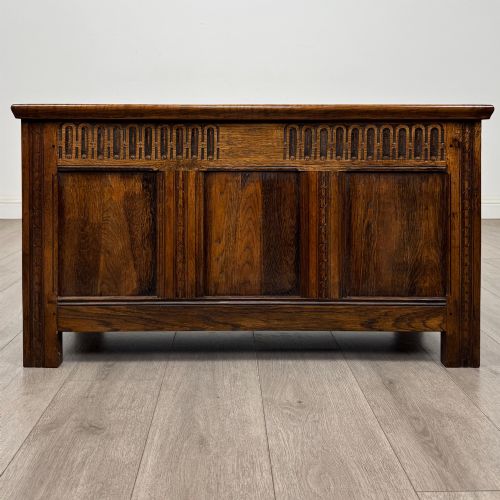
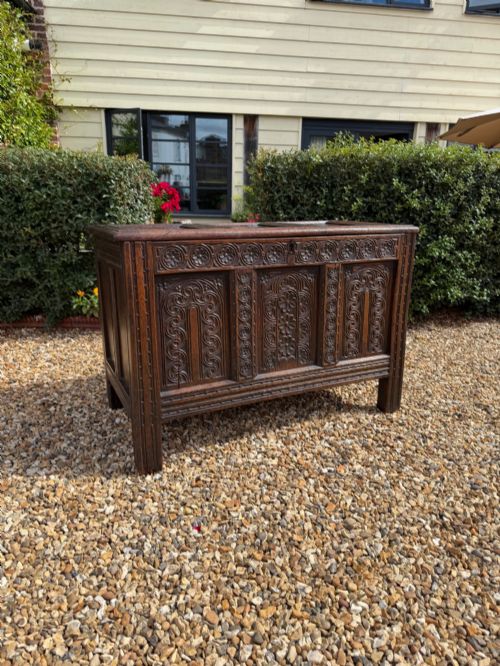
A carved panel oak trunk brings together robust domestic storage and traditional woodworking from several distinct centuries. When searching for a carved panel oak trunk, buyers encounter forms ranging from early seventeenth-century Welsh and English examples to later Georgian pieces and twentieth-century revivals.
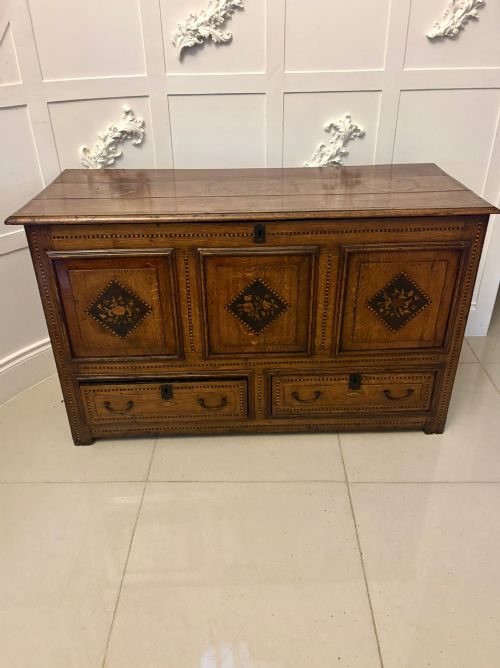
These items appear under various names including coffers, mule chests, blanket boxes and storage chests. The majority span the seventeenth and eighteenth centuries, displaying panel construction designed to accommodate textiles, documents and household valuables.
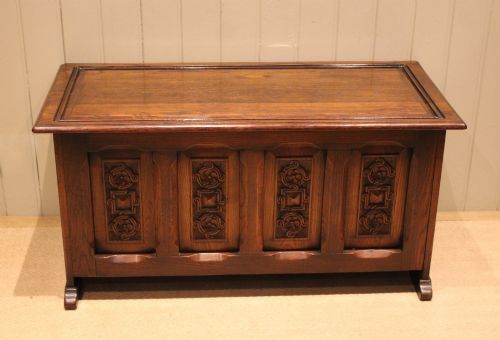
Regional variations emerge across England, Wales and France, incorporating styles from Jacobean geometric motifs to French provincial work. Later twentieth-century interpretations replicate these earlier seventeenth-century aesthetics using solid timber and carved details.
Materials and construction methods
Solid oak forms the primary structural material, often paired with secondary timbers like pine for internal elements. Craftsmen utilised frame and panel construction to allow the wood to expand and contract naturally with environmental humidity changes.
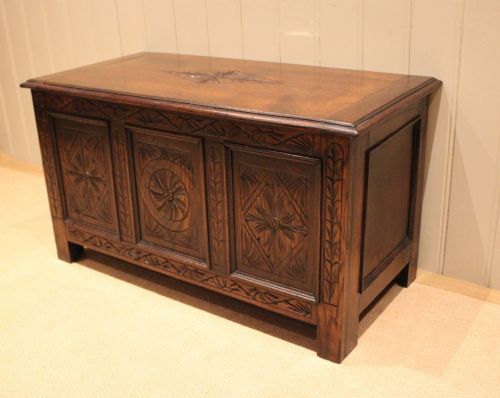
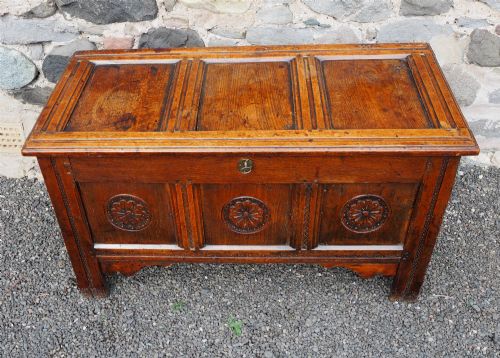
Surface decoration relies on hand-carved panels featuring geometric patterns, floral motifs and Gothic tracery. Hardware consists of iron hinges, straps and brass fittings, while some examples incorporate marquetry inlay, wood inlay or ebonised wood details.
Carved Panel Oak Trunk Retail Price Guide 2026
Typical asking prices for carved panel oak trunk among the pieces listed under this phrase on Sellingantiques today, from the lower quarter to the upper quarter. They describe what is for sale here now, not the wider market.
Ecclesiastical panels occasionally escaped the church to find new life keeping domestic blankets warm.
Distinctions in craftsmanship and survival
Depth of carving and clarity of design separate standard utility boxes from exceptional regional pieces. Crisp execution of architectural mouldings and panels indicates higher workshop standards.
Originality of timber, surface patination and retention of period ironwork or brass hardware dictate desirability. Alterations to lids, feet or floorboards reduce historical integrity compared to untouched examples retaining their original proportions.
The Carved Panel Oak Trunk Glossary
- Coffer
- A heavy wooden chest traditionally used for storing valuables, documents or clothes. Most examples feature a hinged lid and panelled construction.
- Mule chest
- A storage chest that incorporates one or more drawers beneath the main lift-top compartment. This form bridges the evolution between simple coffers and standard drawer chests.
- Jacobean
- A design style spanning the early seventeenth century characterised by rigid symmetry, strapwork and deep geometric carving. It frequently reappears in later revival pieces.
- Marquetry inlay
- Decorative veneer work applied in patterns to create pictorial or geometric designs on the surface of the timber. This technique appears on select seventeenth-century examples.
- Panel construction
- A method where thin wooden panels float within grooved frames to prevent splitting as the timber responds to atmospheric changes. It remains a hallmark of period cabinetmaking.
Carved Panel Oak Trunk: Frequently Asked Questions
How do I date an oak coffer?
Dating relies on construction methods, hinge types, nail construction and the style of the carved panels. Seventeenth-century examples typically show peg joinery and hand-riven timber, whereas later pieces display standardised dimensions and machine-sawn components.
Secondary indicators include regional characteristics, tool marks on the interior boards and the presence of original iron or brass hardware. Comparing the timber shrinkage and patination helps confirm the age of the piece.
What is the difference between a coffer and a trunk?
A coffer is constructed with heavy frame and panel joinery intended for permanent domestic storage of textiles and valuables. Trunks often utilise lighter board construction and are typically covered in leather, canvas or hide for travel.
While everyday language often treats the terms interchangeably, period examples described as coffers almost exclusively feature rigid architectural joinery and solid timber panels.
Can I use a carved oak chest as a coffee table?
These chests function well as coffee tables provided the top boards are flat and stable enough to support objects. Placing items on top requires attention to heat and moisture protection to preserve the antique wood finish.
Internal storage access remains practical for blankets or living room items, though frequent use requires careful handling of the historic hinges and lid.
Why do some coffers have drawers at the bottom?
Coffers with drawers at the base are classified as mule chests, representing an transitional step in furniture evolution. The lower drawers allowed easier access to smaller items without needing to lift the heavy main lid.
This form emerged during the seventeenth and eighteenth centuries to combine the deep storage of a traditional chest with the organised utility of drawer compartments.