
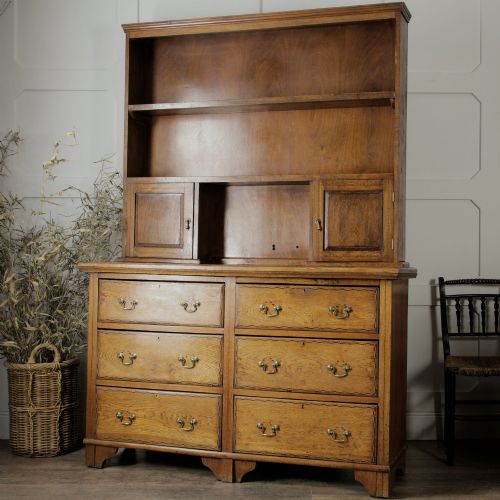


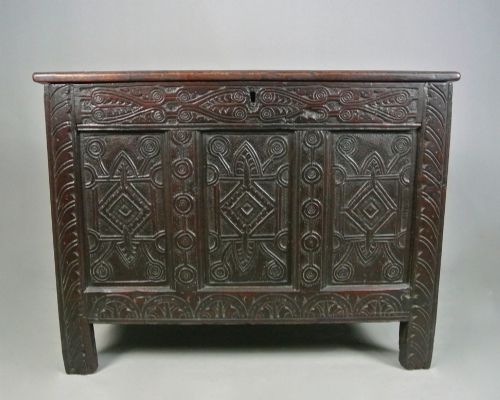
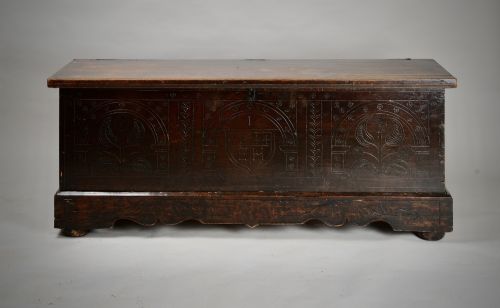
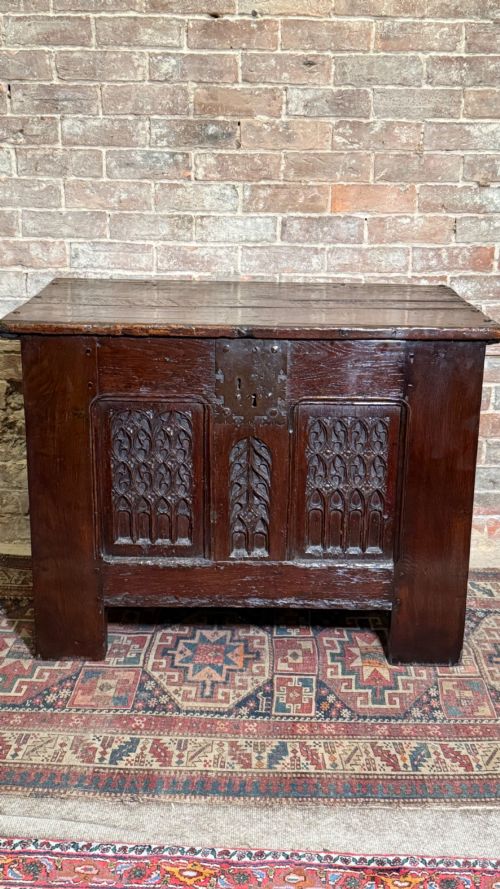
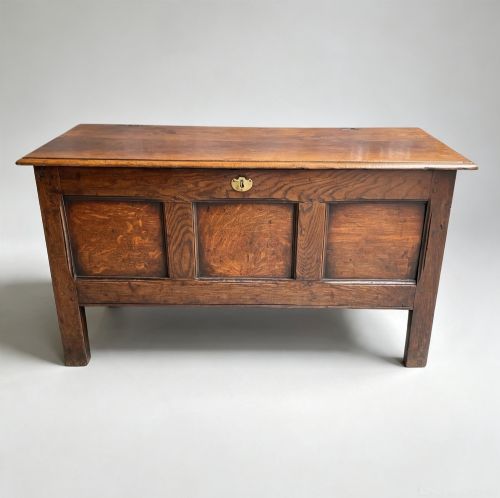
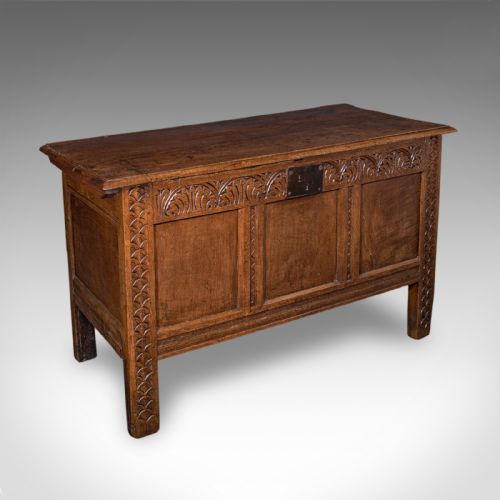
Early Oak Storage Chest
An early oak storage chest brings centuries of domestic history into a room, offering robust utility and honest joinery.
Early Oak Storage Chest
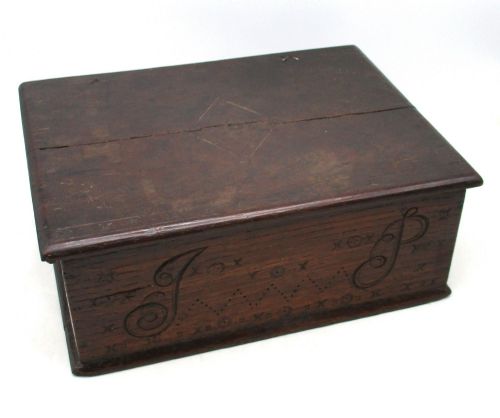
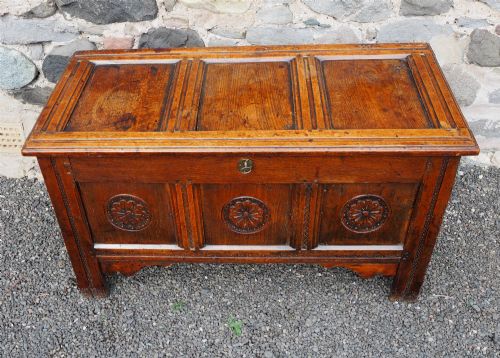
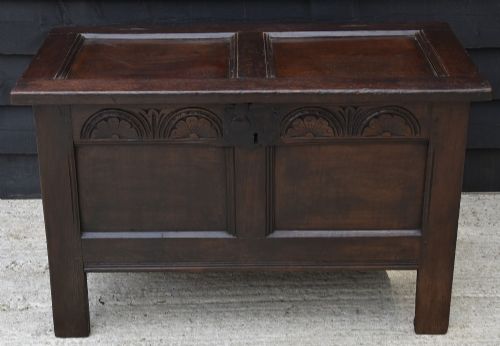
An early oak storage chest typically presents as a sturdy coffer, blanket box, or panelled trunk designed to safeguard household goods. These pieces span from the sixteenth century through the Georgian period, with seventeenth-century examples appearing frequently on the market.
Makers shaped these utilitarian objects from native timber to withstand heavy use, resulting in forms ranging from simple plank construction to elaborate geometric mouldings and carved panels. Alongside traditional coffers, buyers encounter related formats such as low press cupboards, mule chests, and miniature box coffers.
Originating from English, Welsh, and continental workshops, these items reflect the vernacular architecture and interior timberwork of their era. Their survival demonstrates the enduring strength of solid oak and heavy iron hardware.
Materials and Construction Methods
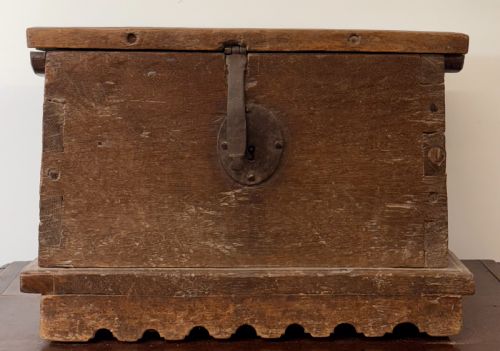
Joiners relied on solid oak planks, secured with pegged mortise and tenon joints to build the primary structure of each coffer. Iron hinges, locks, and wrought brackets provided essential reinforcement and operational security for the heavy lids.
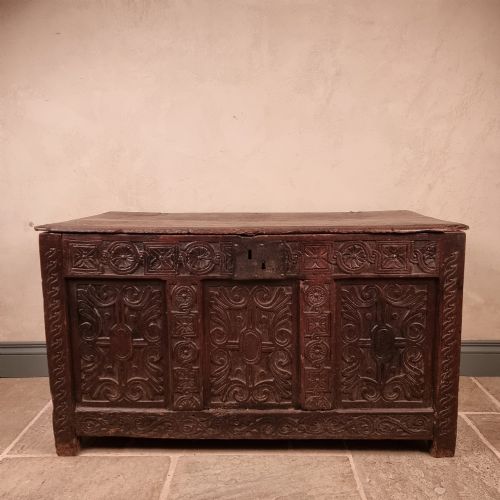
Surface ornamentation involved hand carving, geometric moulding, and occasionally fruitwood inlay or olive oyster veneers on later or more ambitious pieces. Timber surfaces gained depth over generations through natural oxidation and wax polishing rather than modern chemical finishes.
Several trunks show traces of green paint that survived centuries of scrubbing by generations of housekeepers.
Evaluating Quality and Authenticity
Quality rests upon the integrity of the original timber and the retention of primary structural elements such as base boards, feet, and lid hinges. Retaining the original lock mechanism and unblemished panel work elevates an example significantly above one with extensive timber replacement.
The crispness of hand-carved motifs or the precision of geometric mouldings distinguishes standard provincial work from master joinery. Proportion and scale also dictate value, with smaller proportions and miniature forms commanding particular attention from collectors.
The Early Oak Storage Chest Glossary
- Coffer
- A heavy wooden chest used historically for storing valuables, linen, or documents. These pieces often feature hinged lids and sturdy plank or panel construction.
- Mule chest
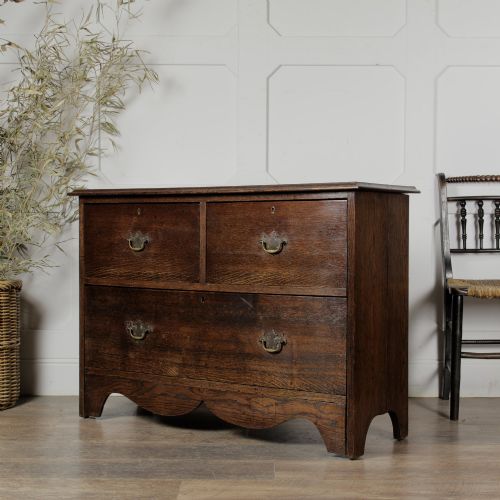
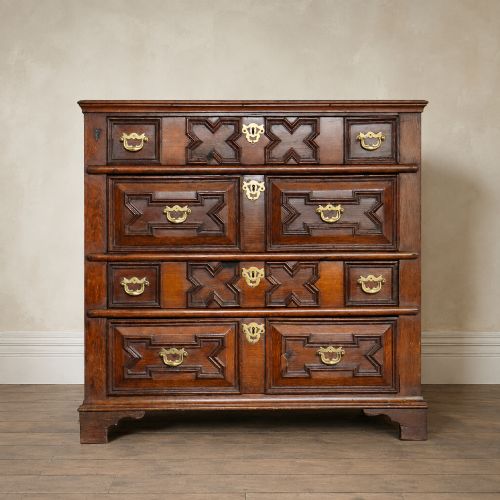
- A traditional storage chest featuring one or more drawers beneath the main internal compartment. This form bridges the evolution from the simple coffer to the modern chest of drawers.
- Panelled
- A method of construction where a frame holds thin central boards to accommodate the natural expansion and contraction of timber. This technique prevents the wood from warping or splitting.
- Geometric moulded
- Surface decoration formed by applying small geometric wooden mouldings to the front panels in repeating patterns. This style appears frequently on late seventeenth-century case furniture.
- Six plank
- A primitive construction method where the chest body consists of simply six boards joined edge-to-edge with nails or dowels. These items represent some of the earliest surviving domestic storage forms.
Early Oak Storage Chest: Frequently Asked Questions
How do I date an early oak storage chest?
Dating relies on examining construction techniques, tool marks, and hardware types used by the original joiner. Hand- cleft boards, pegged joints, and wrought iron strap hinges typically point toward earlier centuries.
Stylistic cues such as linenfold carving, geometric mouldings, or panel styles further narrow the decade of origin. Comparing the timber patina to known period examples helps confirm the age of the piece.
Were these chests used only for blankets?
Households utilised these versatile containers to safeguard valuable textiles, woollens, church plate, and important documents from damp and pests. Their heavy lids and secure locks made them strongboxes for family wealth before dedicated closets became common.
Over time, many functioned as everyday furniture, doubling as window seats or hallway benches. Their robust construction allowed them to endure multiple domestic roles across generations.
How should I care for historic oak furniture?
Maintain a stable room temperature away from direct heat sources and strong sunlight to prevent the historic oak from drying out or splitting. Feeding the timber occasionally with a traditional beeswax polish preserves the surface sheen.
Avoid modern silicone-based sprays, which can penetrate the grain and harm the ancient patina. Gentle dusting with a dry, soft cloth is sufficient for routine maintenance.
What is the difference between a coffer and a mule chest?
A coffer is a traditional storage box accessed entirely from a single hinged lid on the top. It represents the oldest form of domestic chest in the English tradition.
A mule chest incorporates one or more drawers beneath the main storage cavity, combining box storage with drawer accessibility. This hybrid form gained popularity during the late seventeenth and early eighteenth centuries.