
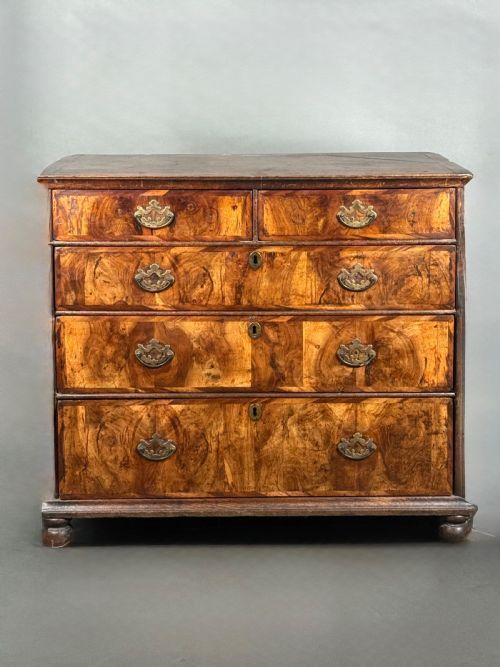
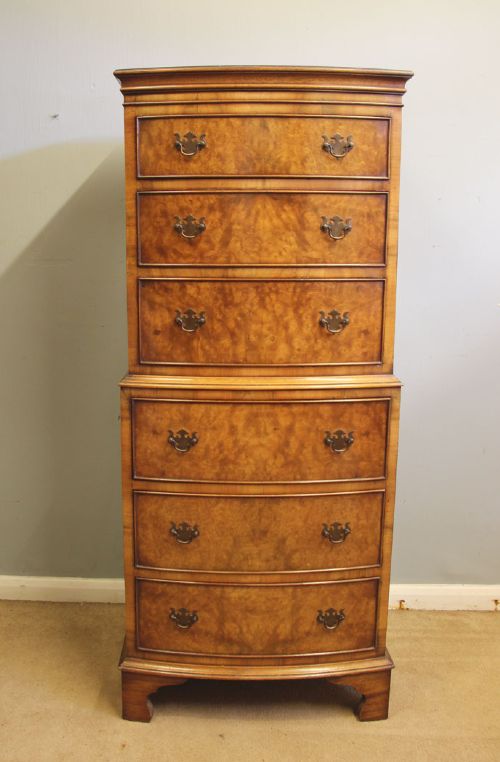
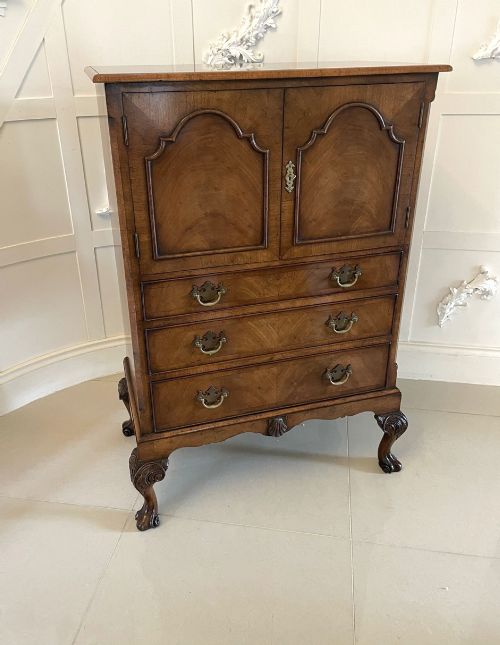
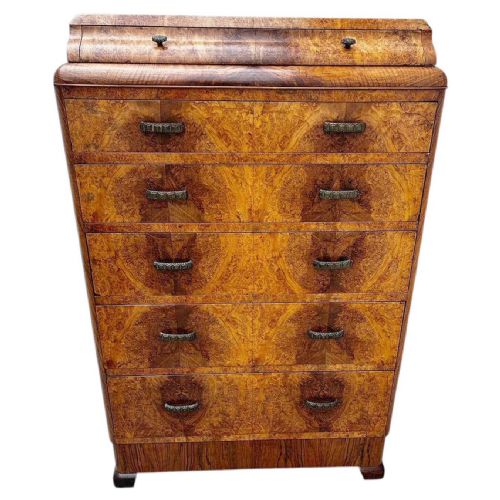
Burr Walnut Tallboy Chest
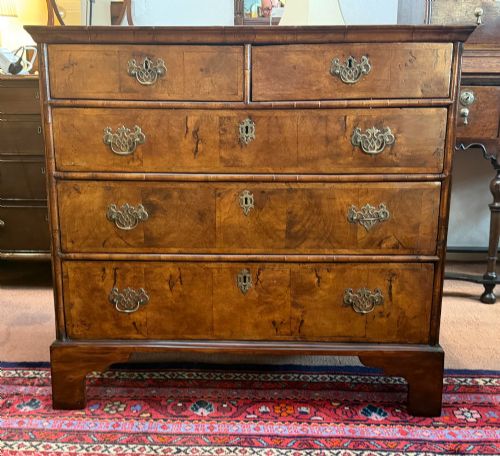
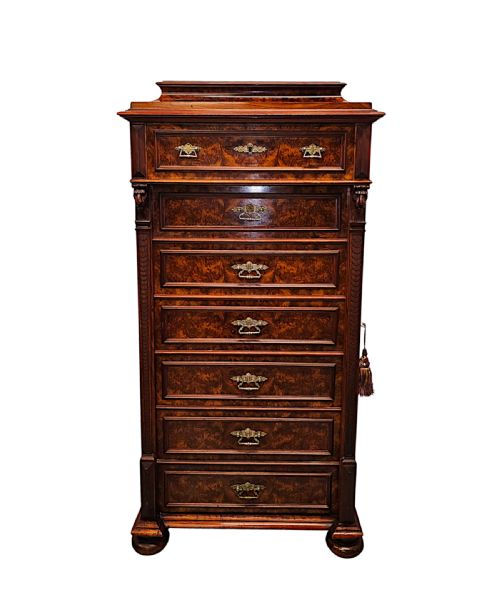
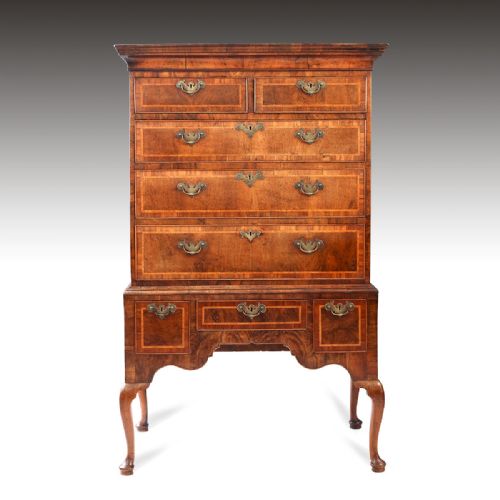
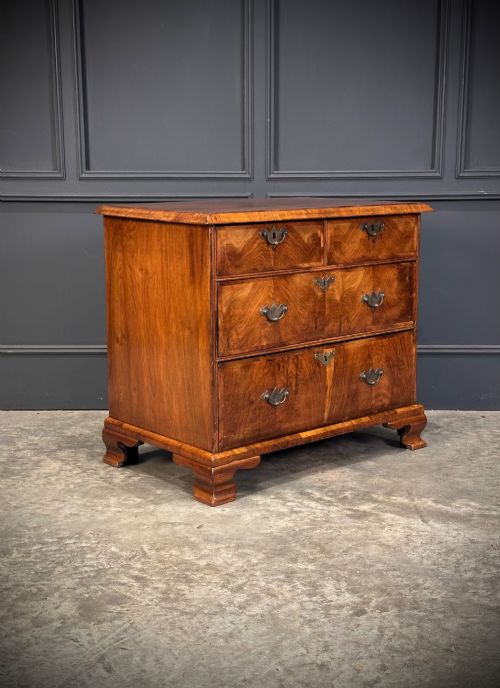
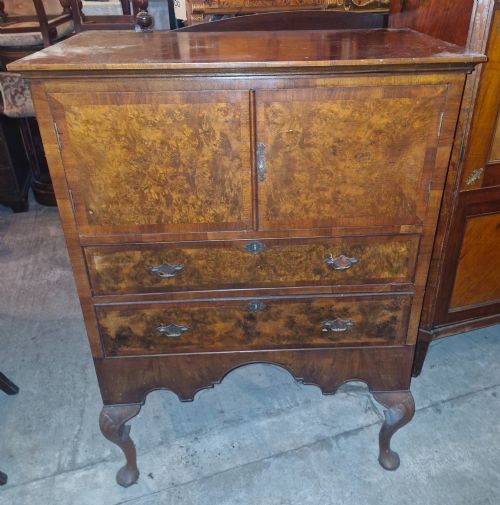
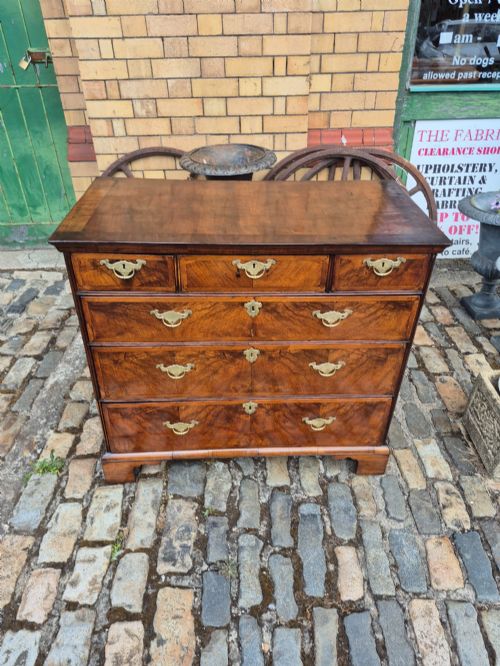
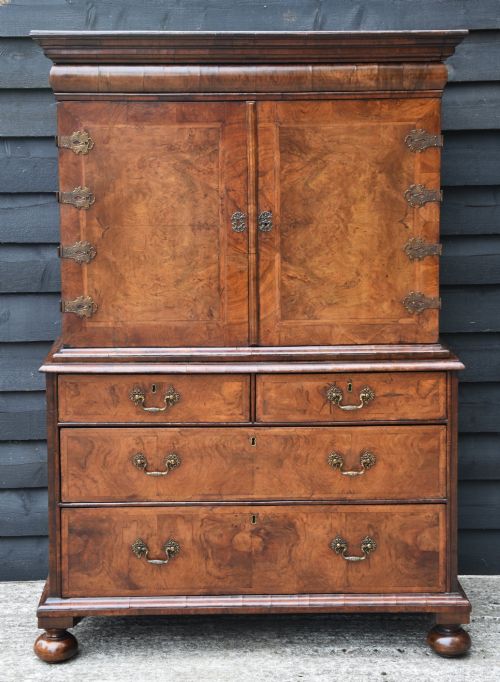
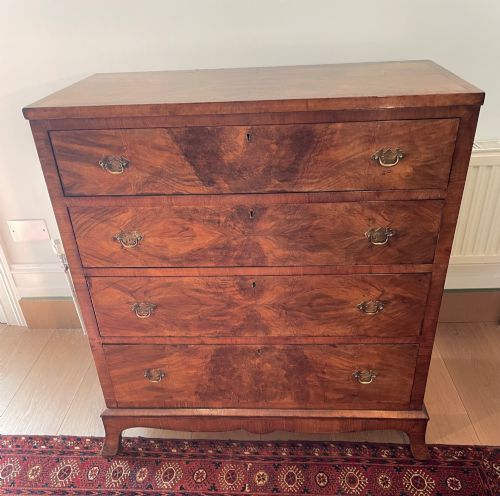
A burr walnut tallboy chest brings stately vertical presence and mesmerising grain patterns into a room.
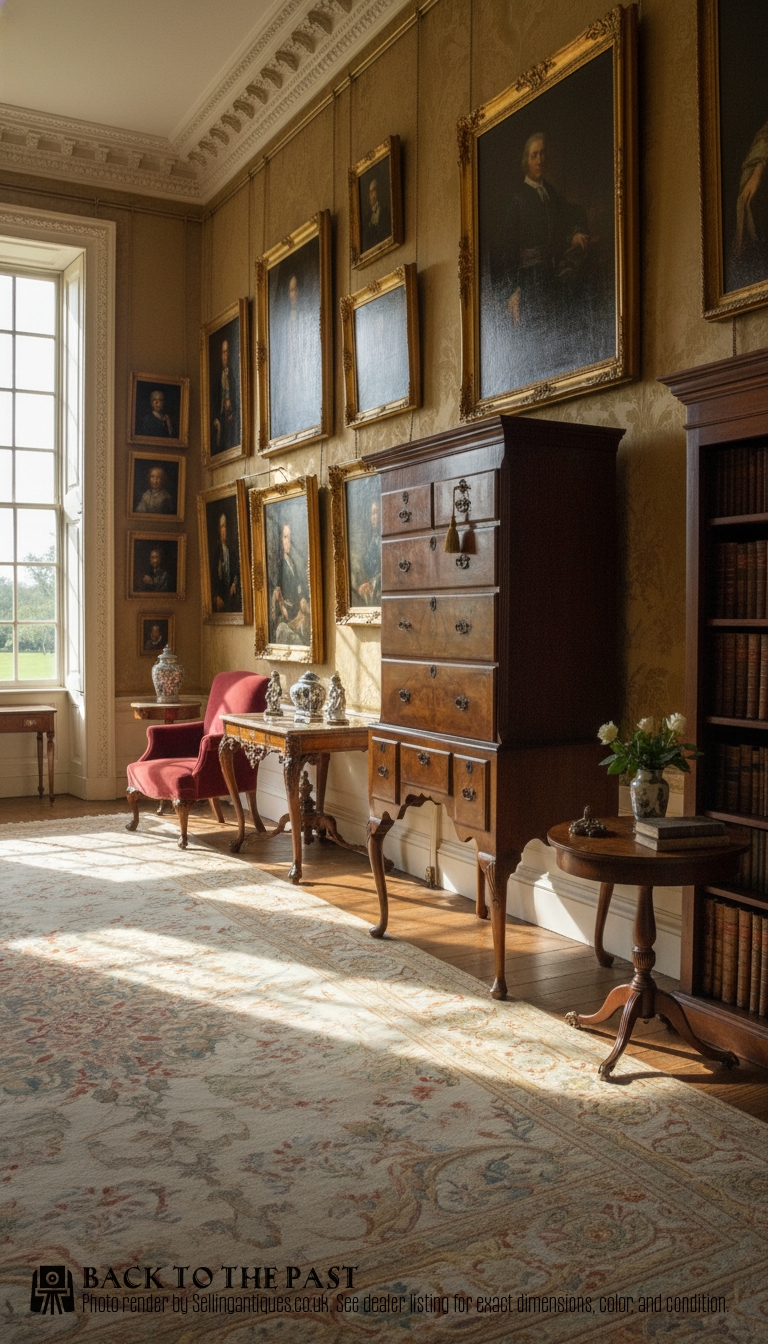
Burr Walnut Tallboy Chest
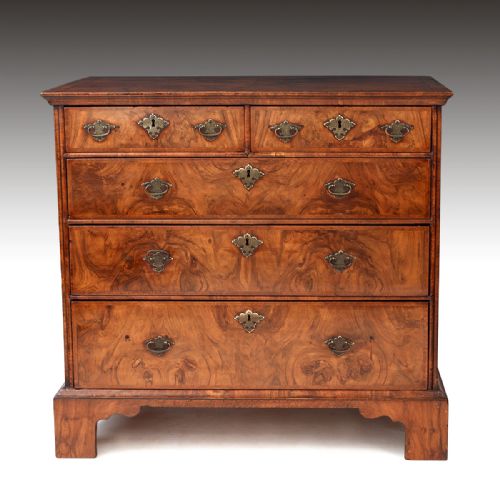
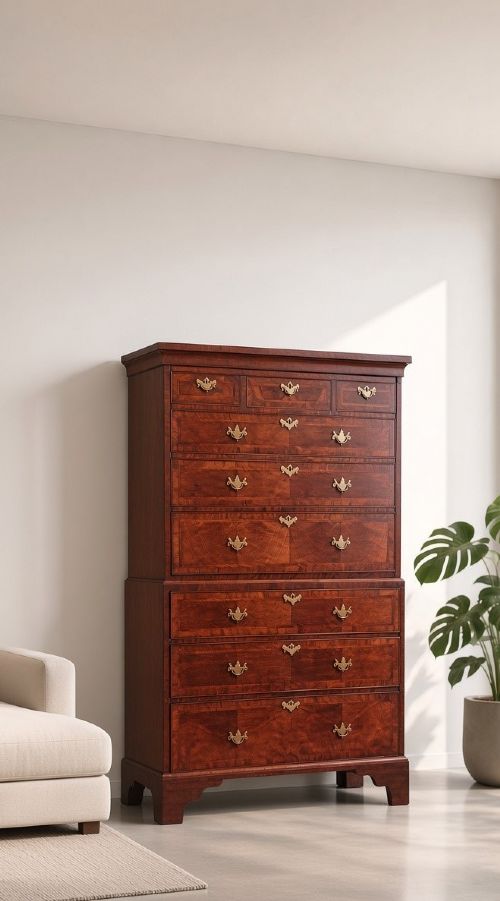
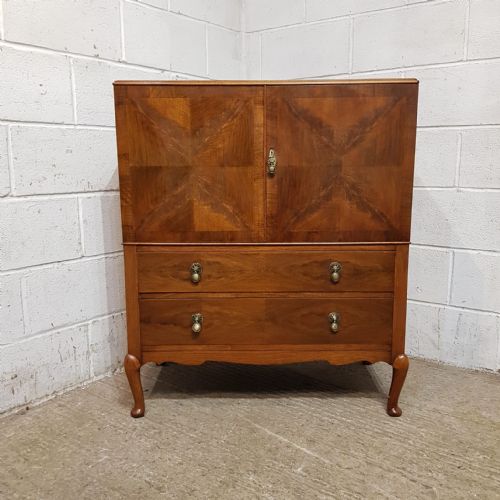
A burr walnut tallboy chest combines high-capacity vertical storage with the decorative impact of figured timber veneers. Buyers encounter two-piece chests on chests, cabinets on stands, and dedicated tallboy designs spanning from the seventeenth and eighteenth centuries through to the twentieth century.
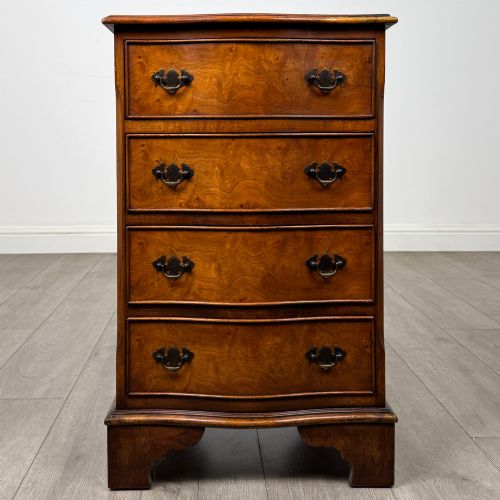
The material vocabulary ranges from early Queen Anne and Georgian period originals to later Edwardian and Art Deco revivals. Forms include serpentine fronts, bow fronts, and traditional flat facades set upon bracket feet or integrated stands.
Makers and cabinetmakers across these periods utilised native oak and pine as secondary carcass timbers while reserving richly patterned walnut for the primary exterior surfaces. The resulting pieces offer substantial drawer depth without sacrificing floor space.
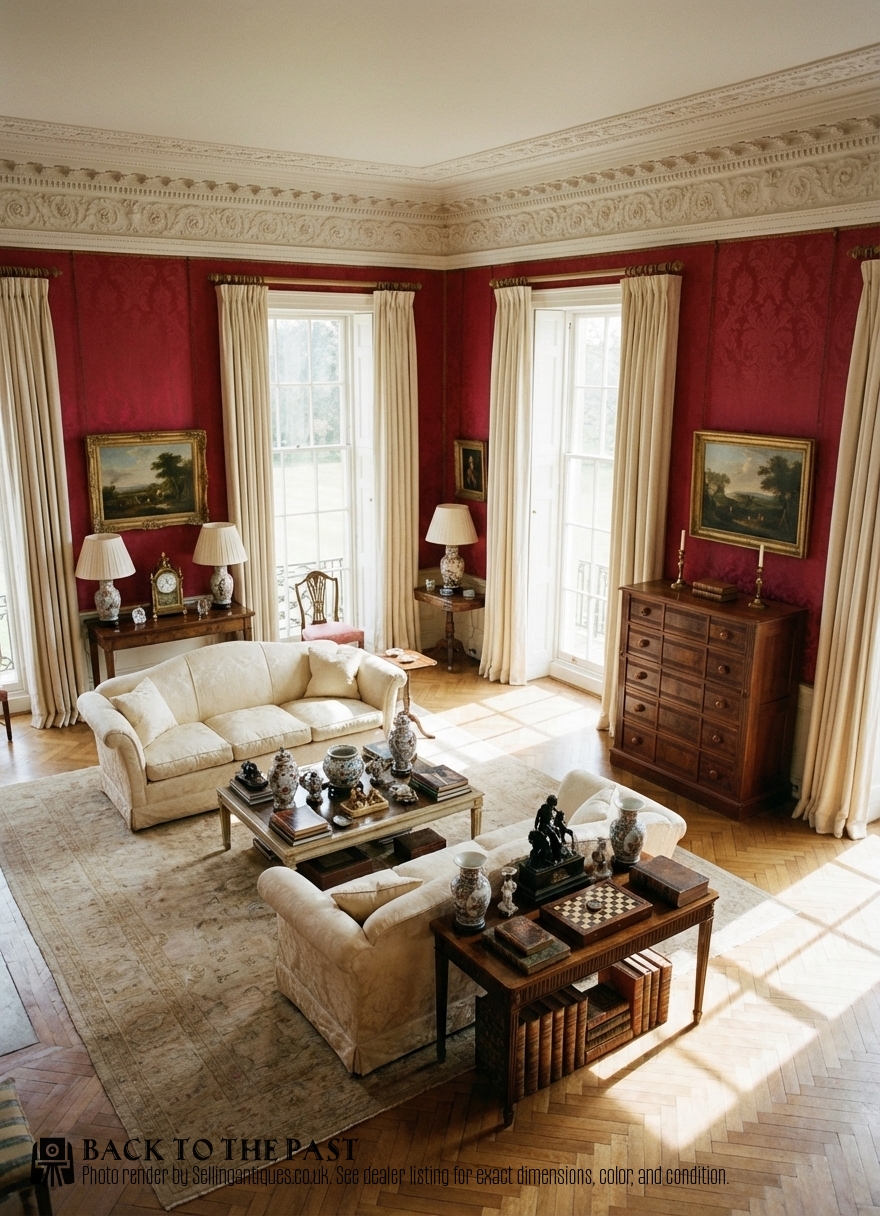
Materials and Construction
Craftsmen applied thin slices of burr walnut veneer to stable carcass timbers such as oak, pine, and solid walnut to achieve complex, swirling grain patterns across the drawer fronts and top panels. Cross-banding and line inlay frequently bordered these panels to frame the figures of the wood.
Carcase construction typically involved dovetailed drawer boxes and solid timber backs, paired with brass drop handles, backplates, or escutcheons. Secondary woods like oak provide structural rigidity behind the decorative exterior veneers.
Burr Walnut Tallboy Chest Retail Price Guide 2026
Typical asking prices for burr walnut tallboy chest among the pieces listed under this phrase on Sellingantiques today, from the lower quarter to the upper quarter. They describe what is for sale here now, not the wider market.
Listings feature burr walnut tallboy chests spanning from the seventeenth century through Georgian and Victorian eras up to 1930s Art Deco.
Quality Indicators
The visual consistency of the burr walnut veneer across multiple drawers distinguishes superior examples from simpler ones. Cabinetmakers who carefully matched the grain pattern from the top drawer down to the base achieved a harmonious aesthetic that lesser pieces lack.
Finesse in secondary details, such as the precision of line inlay, the crispness of mouldings, and the original patination of the brass hardware, separates standard workshop production from exceptional commissions.
Gillows
The Burr Walnut Tallboy Chest Glossary
- Tallboy
- A tall chest of drawers, often constructed as a chest on chest or a chest on a stand, designed to maximise vertical storage.
- Burr walnut
- A prized timber harvested from the abnormal growth knots of walnut trees, yielding intricate, swirling grain patterns full of small circles and eyes.
- Chest on chest
- A two-part storage piece featuring a wider lower section topped by a slightly narrower upper chest.
- Veneer
- A thin layer of finely figured wood applied to a stable secondary timber carcass to display decorative grain without structural warping.
- Bracket foot
- A small architectural foot supporting the corners of a case piece, shaped in a simple 'L' profile or withogee curves.
Burr Walnut Tallboy Chest: Frequently Asked Questions
What is a burr walnut tallboy chest?
A burr walnut tallboy chest is a tall storage unit made by applying highly figured burr walnut veneer over a sturdy timber carcass, combining deep drawer capacity with decorative presence.
These pieces range from early eighteenth-century examples to later twentieth-century revivals, offering versatile vertical storage for bedrooms and living spaces.
How do I care for burr walnut furniture?
Burr walnut requires stable indoor humidity levels and protection from direct sunlight to prevent the delicate veneers from drying out or fading over time.
Regular dusting with a soft, dry cloth maintains the finish without the need for heavy chemical polishes or waxes.
How can I tell the period of a tallboy?
Dating relies on examining construction methods, such as hand-cut dovetails on drawer boxes, secondary woods like oak or pine, and the prevailing hardware styles.
Cabinetry from the seventeenth and eighteenth centuries exhibits different proportions and foot types compared to Edwardian or Art Deco interpretations.
Where should I place a tallboy in my home?
Because of their vertical proportions, tallboy chests fit well in bedrooms, dressing rooms, or hallways where floor space is limited but vertical storage is required.
Positioning them away from direct heat sources and radiators protects the antique timber and veneer from thermal shock.