

Warm Brown Walnut Chest
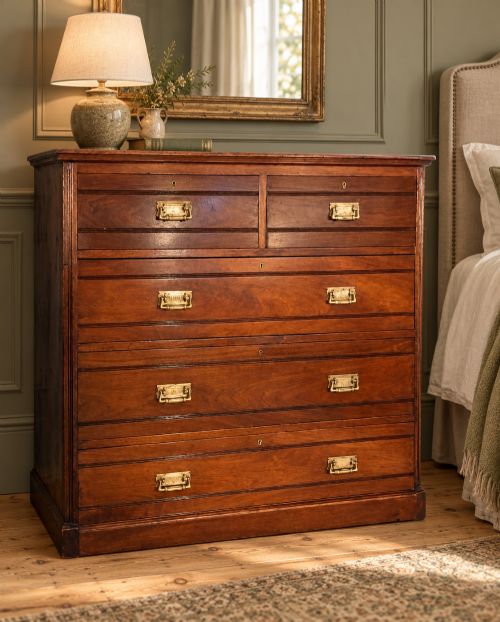
A warm brown walnut chest brings deep timber grain and enduring proportions to a room, offering practical storage through centuries of craftsmanship.
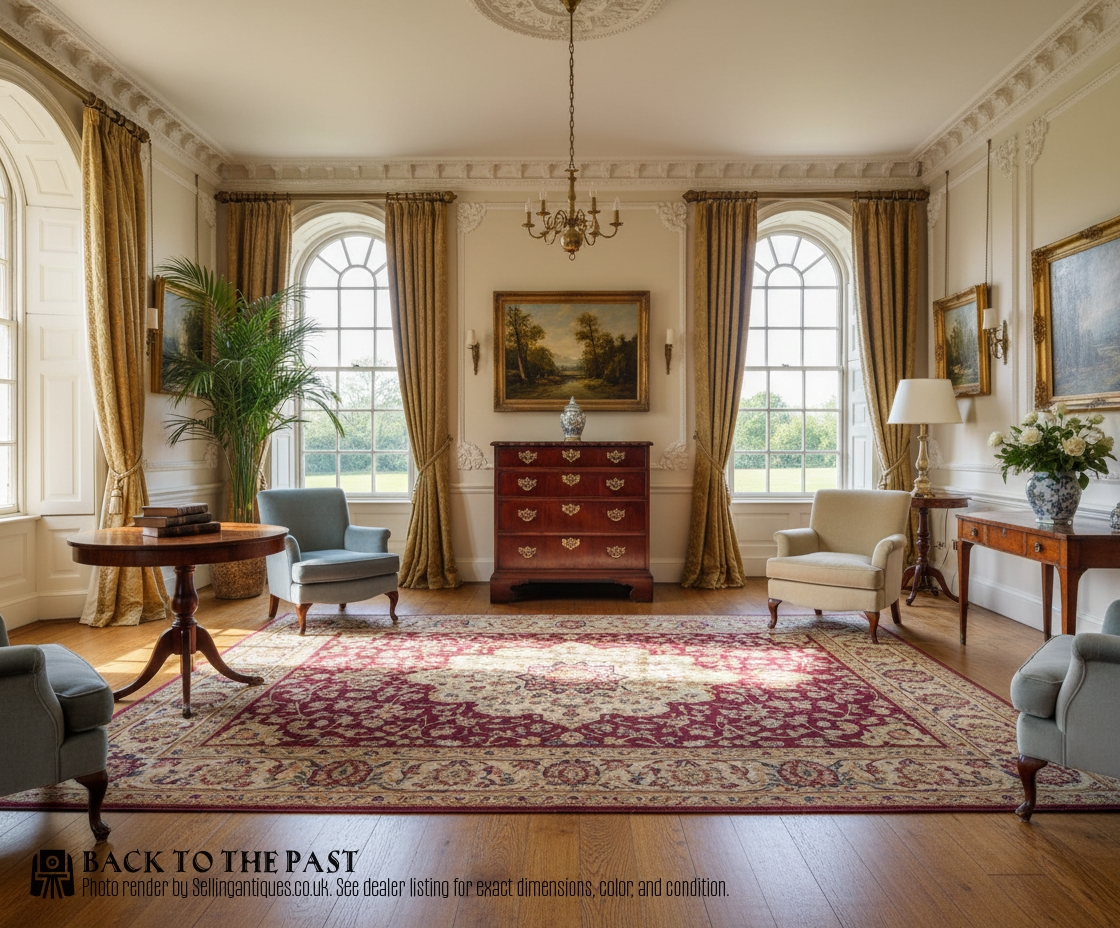
Warm Brown Walnut Chest
A warm brown walnut chest provides substantial storage space while displaying the rich, dark tones and distinctive figuring characteristic of walnut timber. These pieces span from the seventeenth century through the Georgian, Victorian, and Edwardian eras, reflecting changing domestic needs over generations.
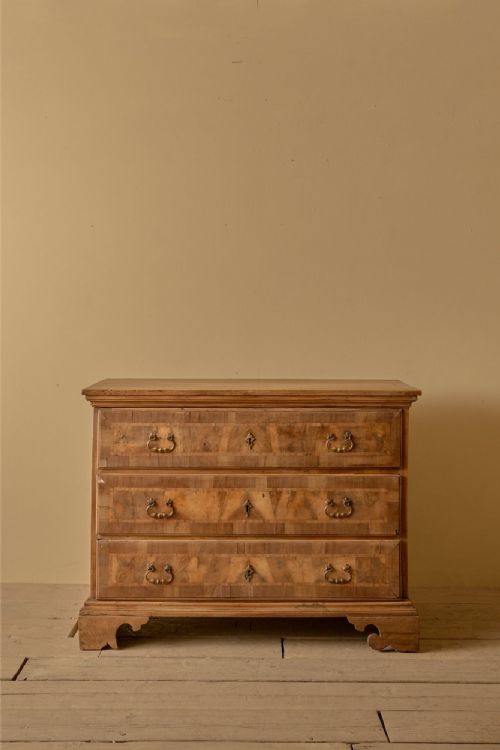
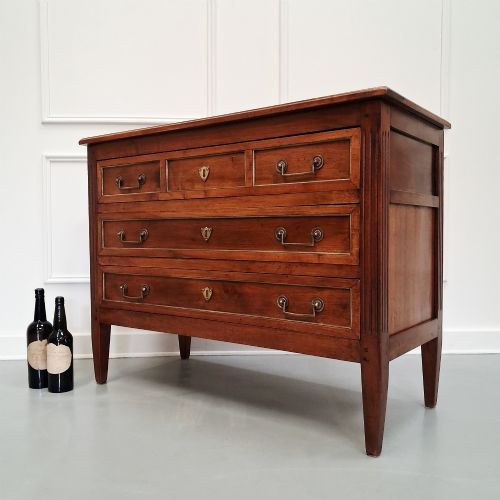
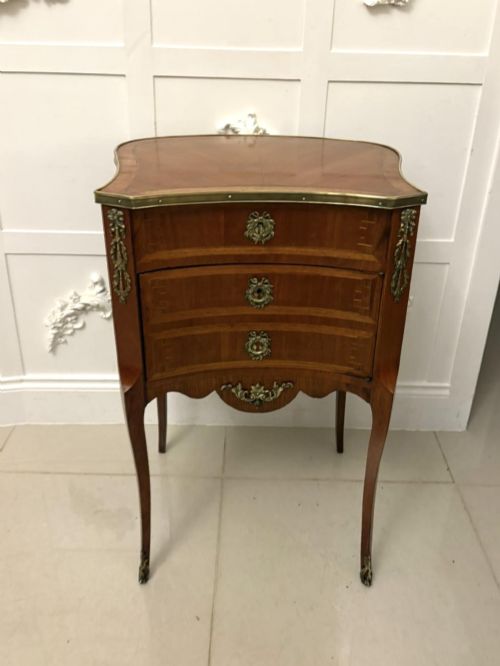
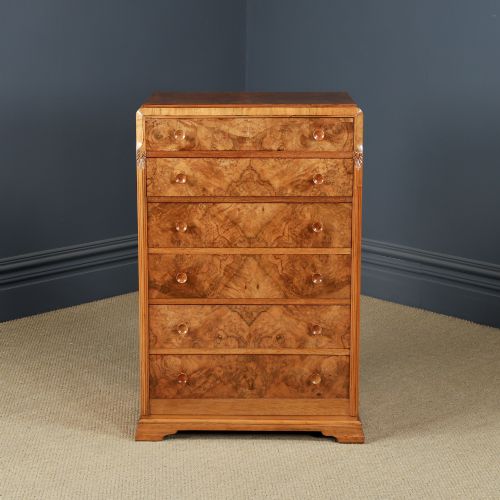
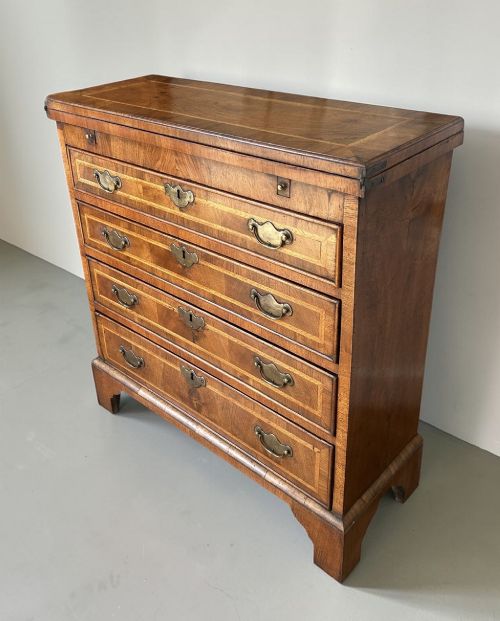
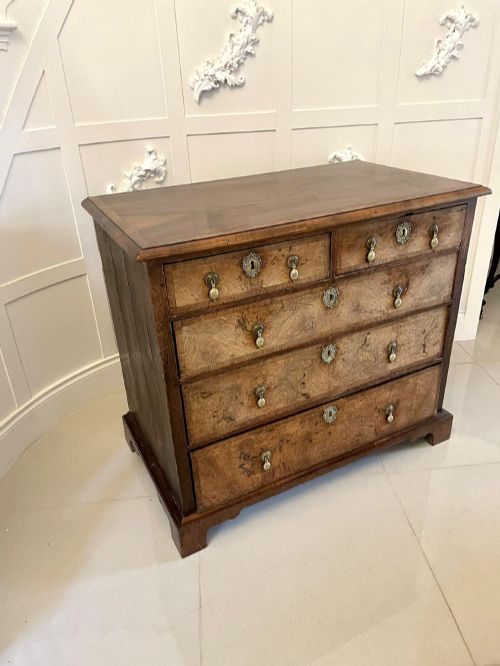
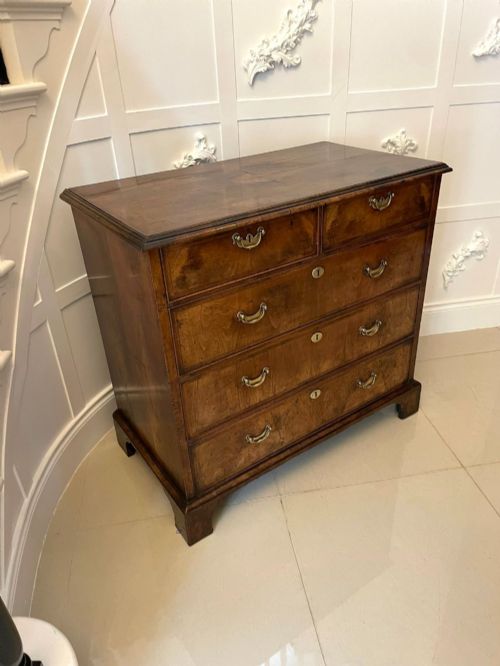
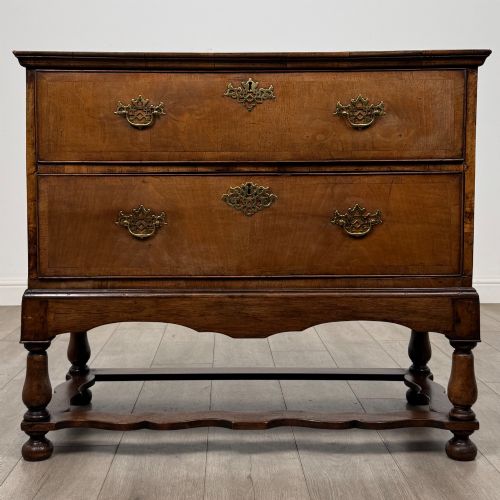
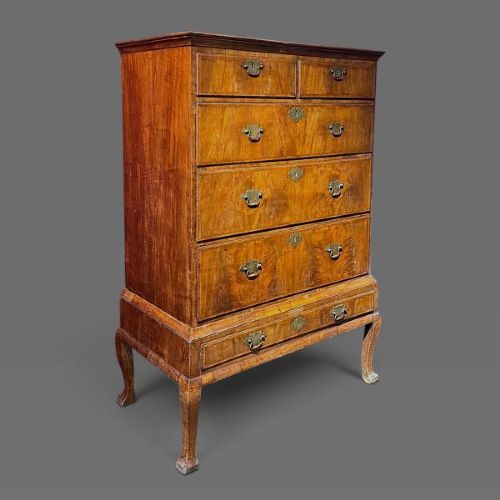
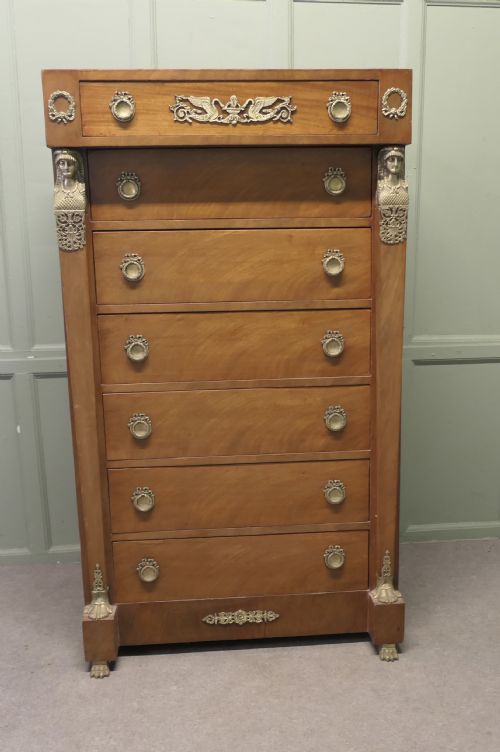
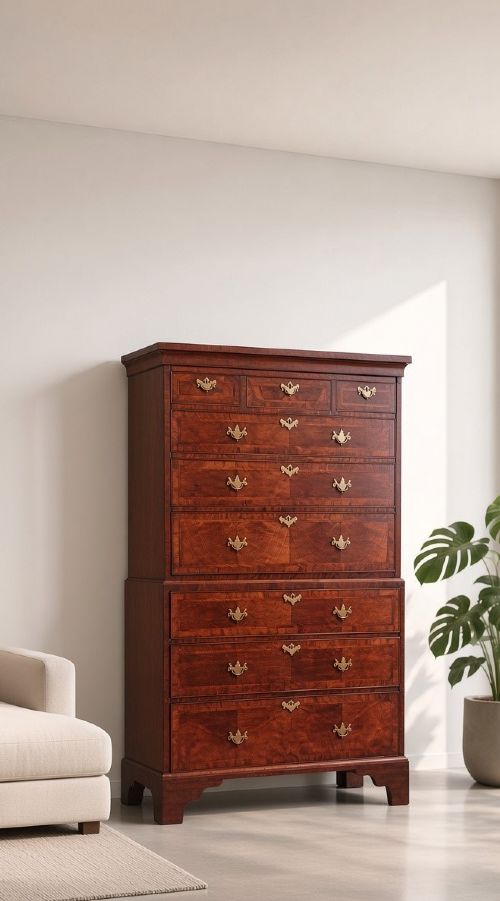
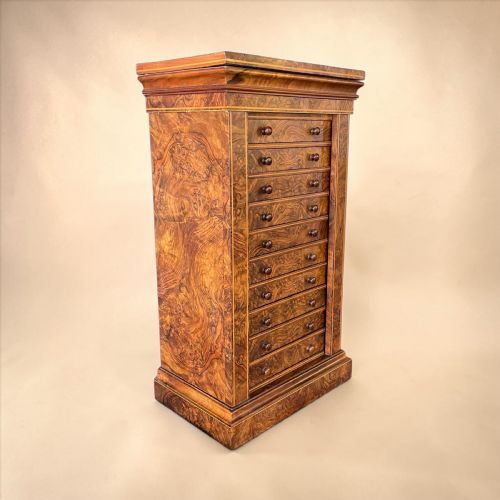
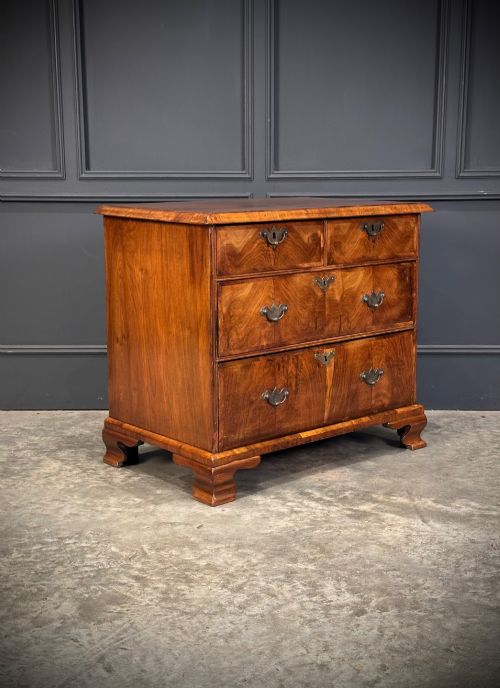
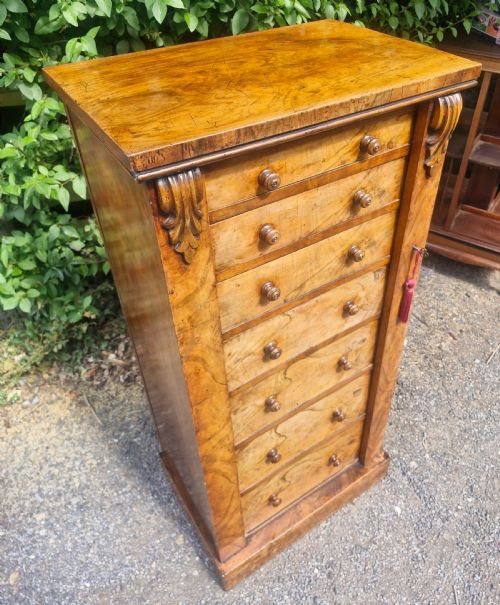
The most common forms found here are traditional chests of drawers, alongside taller chest on chest designs, compact Wellington chests, and commodes. Surviving examples often incorporate crossbanding, feather-banded borders, or marquetry inlay that highlights the natural warmth of the wood.
Origins range across British, French, Italian, and Austrian workshops, demonstrating diverse regional preferences in drawer configuration and overall silhouette. Buyers encounter everything from modest provincial designs to elaborate bureau and cabinet combinations.
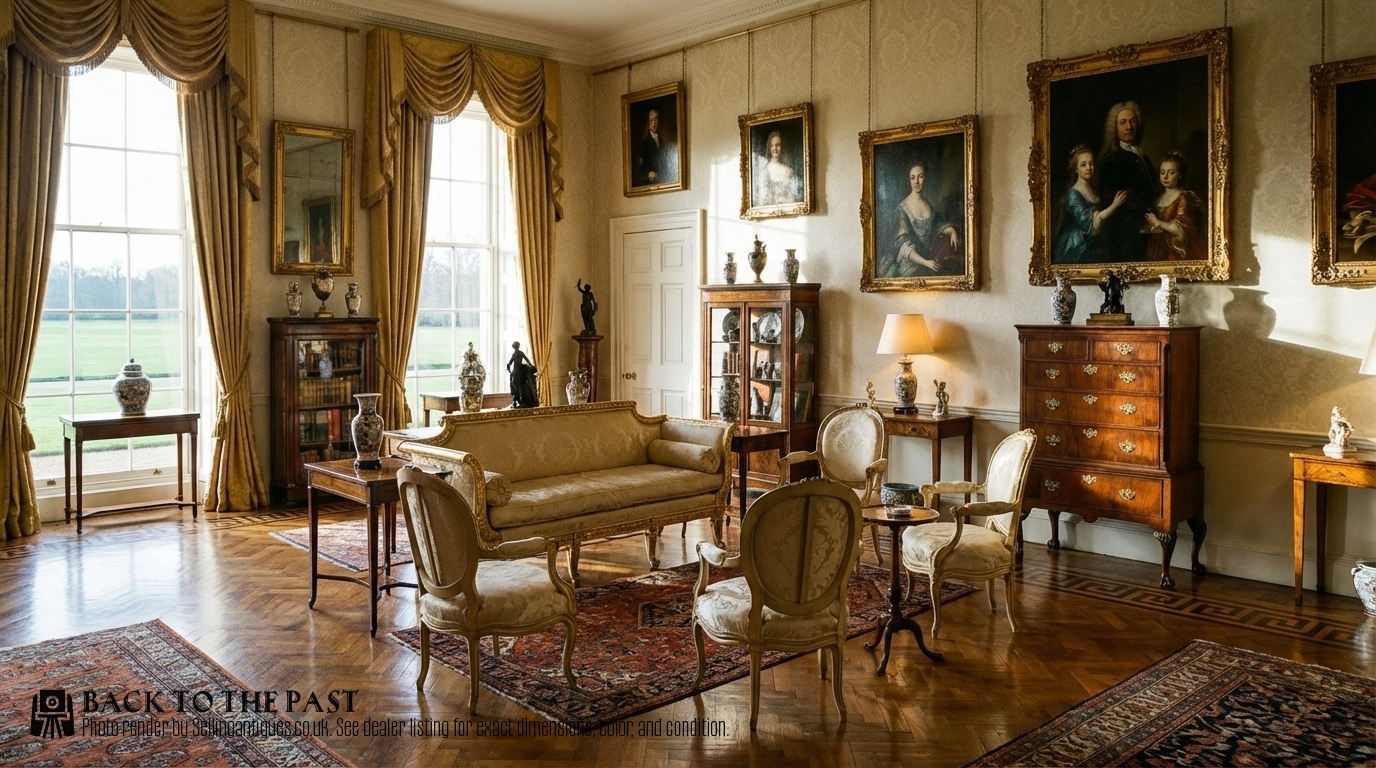
How they were made
Cabinet makers utilised solid walnut or applied fine walnut veneer and burr walnut over secondary structural timbers such as oak and pine. Surfaces were frequently enhanced with intricate marquetry, parquetry, and contrasting inlay work using satinwood or kingwood.
Hardware played an essential structural and decorative role, with brass handles and escutcheons secured to drawer fronts. Drawer construction typically relied on hand-cut dovetails, ensuring durability through centuries of daily use.
Warm Brown Walnut Chest Retail Price Guide 2026
Typical asking prices for warm brown walnut chest among the pieces listed under this phrase on Sellingantiques today, from the lower quarter to the upper quarter. They describe what is for sale here now, not the wider market.
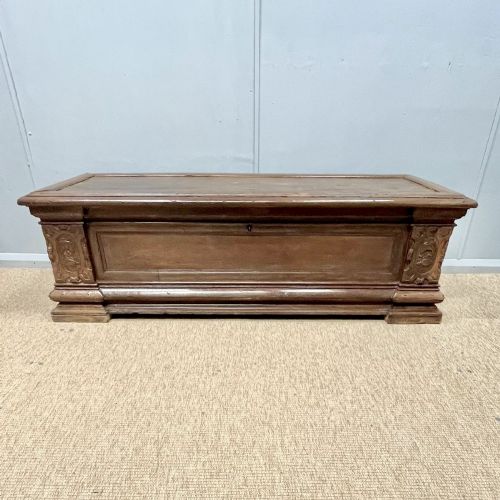
A tiny apprentice piece mule chest sits alongside monumental cabinets, proving that nineteenth-century trainees practised their dovetails on furniture built for mice.
What varies in quality
The grade of timber selection largely defines the upper tier of these pieces, particularly the symmetry and depth of figured walnut or burr walnut veneers. Master craftsmen arranged grain patterns deliberately across drawer fronts to create balanced visual harmony.
Structural integrity and the retention of original surfaces, patination, and brass hardware distinguish finer examples from heavily restored ones. The precision of inlay work and the subtlety of crossbanding further separate standard production from exceptional cabinet-making.
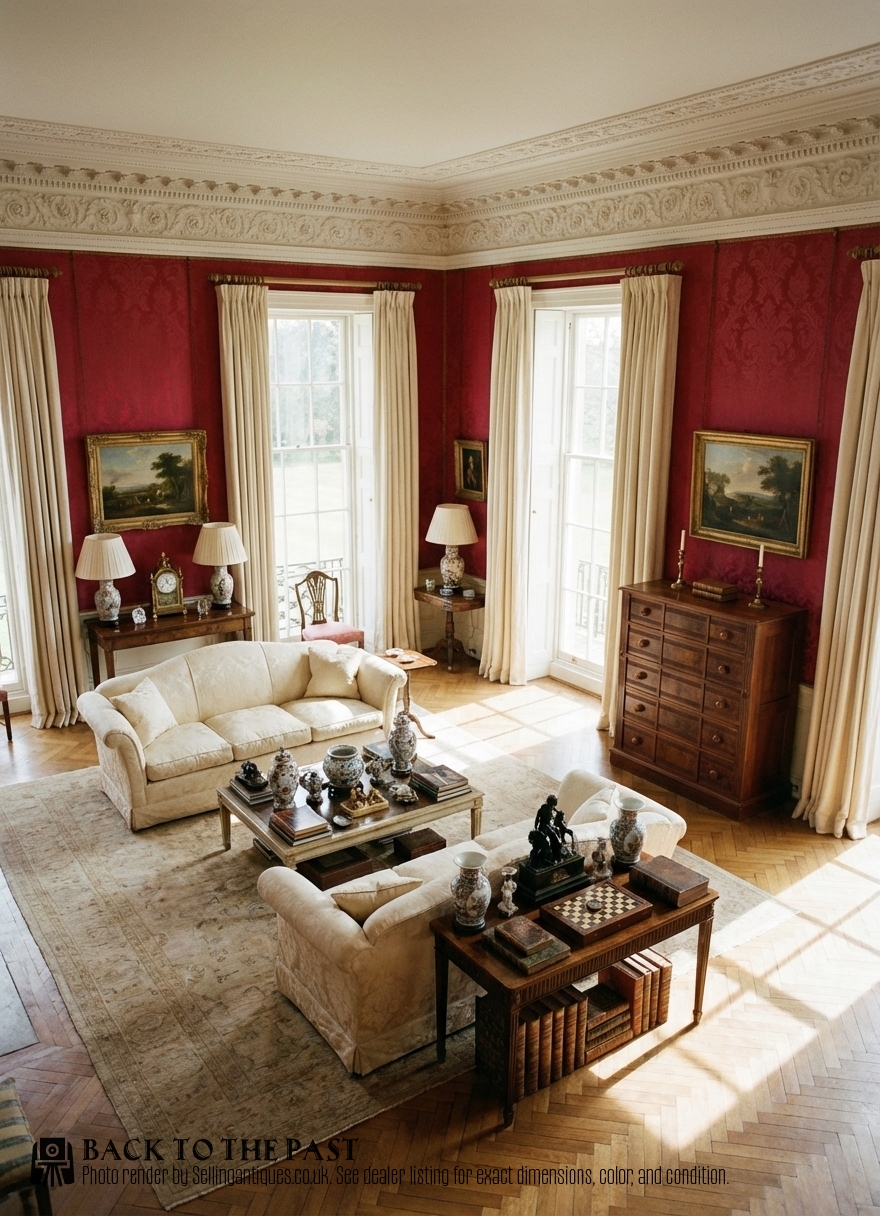
The Warm Brown Walnut Chest Glossary
- Crossbanding
- A decorative border technique where thin strips of veneer are laid perpendicular to the main grain of the surface. This frames drawer fronts and tabletops with a contrasting direction of grain.
- Feather banding
- A delicate inlay technique involving two strips of veneer cut diagonally and laid together to form a herringbone pattern resembling a feather. It is commonly found edging walnut furniture from the early eighteenth century.
- Wellington chest
- A tall, narrow chest of drawers secured by a hinged locking side pilaster that fastens all drawers simultaneously. Originating in the nineteenth century, it maximises vertical storage in compact spaces.
Warm Brown Walnut Chest: Frequently Asked Questions
How do I date a walnut chest?
Dating relies on observing construction methods, drawer dovetails, hardware styles, and the presence of specific decorative treatments like feather banding or crossbanding. Examining the secondary timbers inside drawers also helps confirm the period.
Cabinet-making techniques evolved significantly from seventeenth-century geometric framing through Georgian proportions to Victorian mass production, providing clear chronological markers.
What is the difference between a commode and a chest of drawers?
A commode generally refers to a low, decorative cabinet or chest of continental European origin, often featuring serpentine or bombe shaping. Standard chests of drawers are typically taller and derive more directly from British cabinet-making traditions.
Both forms served similar storage functions in domestic interiors but reflect distinct regional design preferences and proportions.
How should I care for antique walnut wood?
Maintain walnut furniture by keeping it away from direct sunlight and sudden changes in room temperature or humidity, which can cause timber to split or veneer to lift. Apply a quality beeswax polish sparingly to nourish the grain.
Avoid modern silicone-based sprays, as they build up over time and dull the natural warmth and patination of the antique finish.
Are these pieces suitable for modern bedrooms?
These chests offer versatile storage that integrates easily into contemporary room schemes, providing generous drawer space alongside historic character. Their rich brown tones complement both neutral modern interiors and traditional settings.
Measuring available floor space and ceiling height ensures the chosen chest or tallboy fits comfortably without overwhelming the room.