
English Georgian Chest
An English Georgian chest brings solid timber, honest construction and quiet domestic history into a modern room.
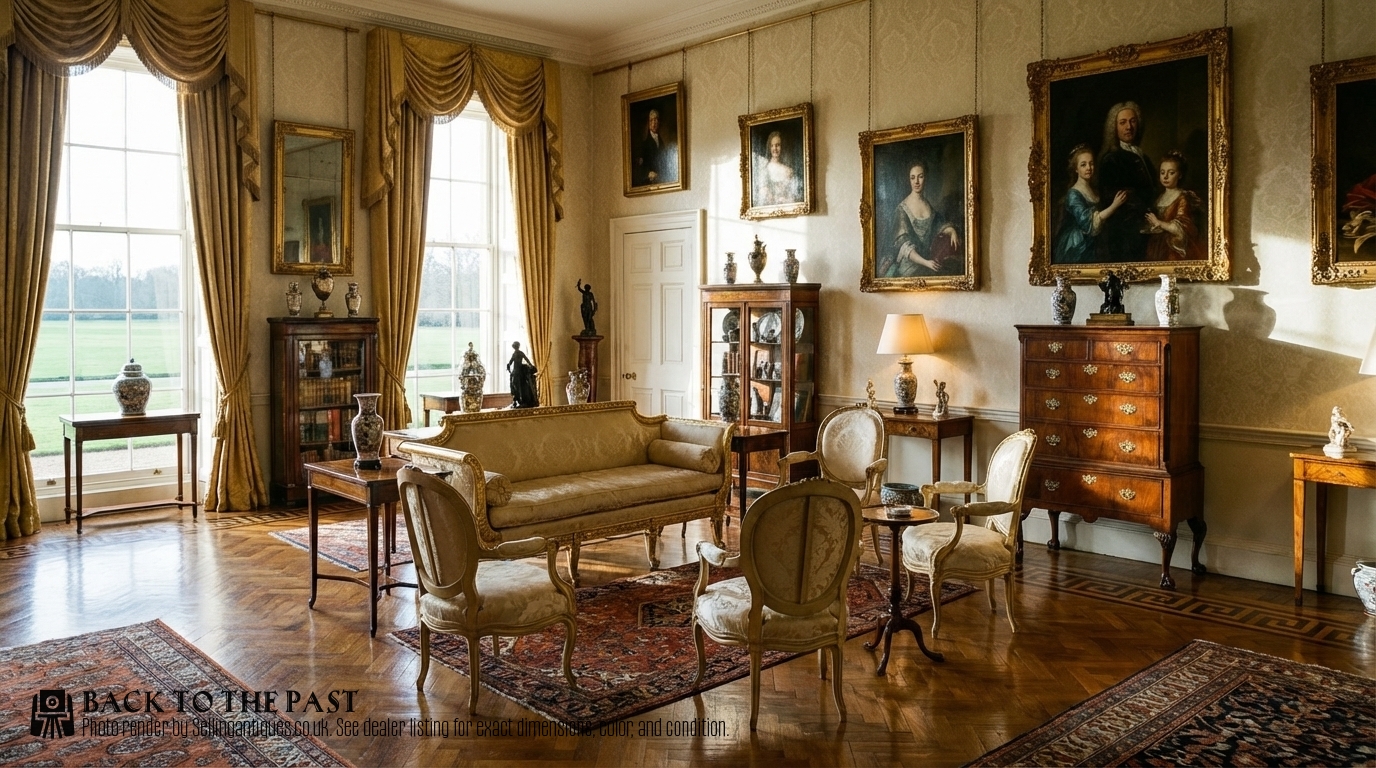
English Georgian Chest
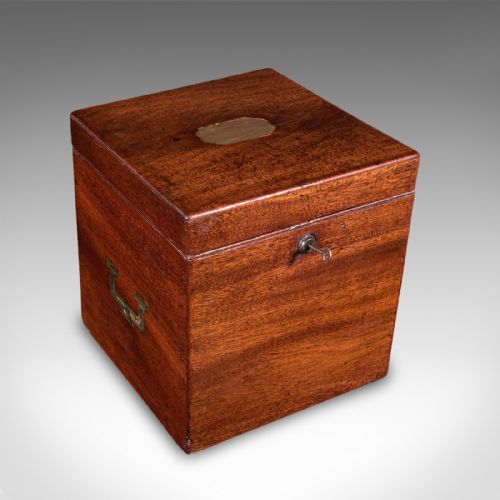
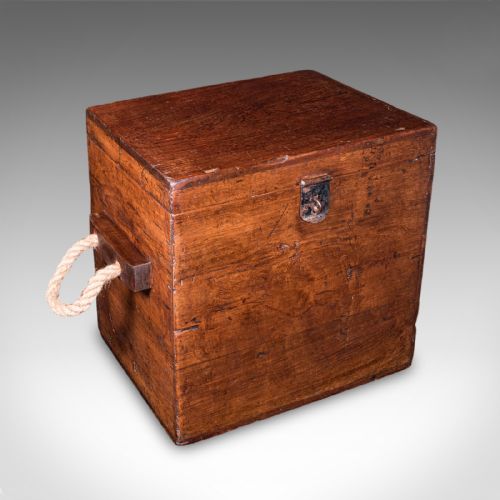
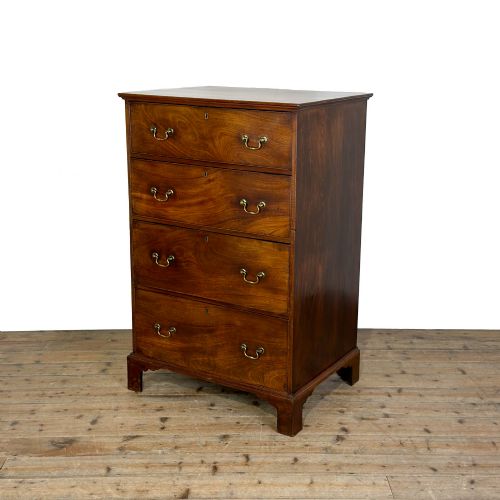
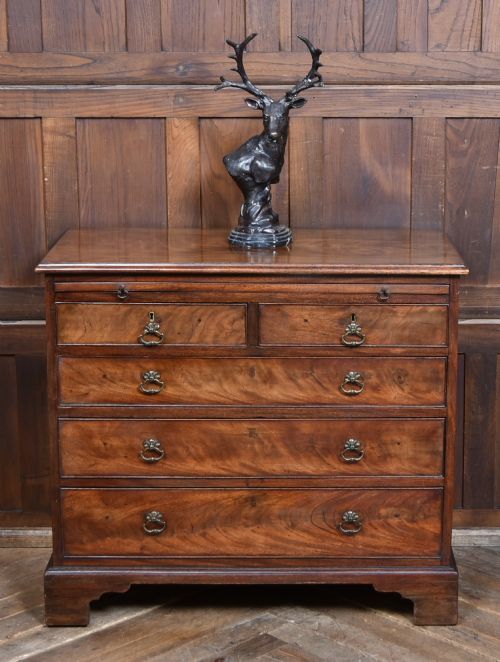
An English Georgian chest encompasses a range of domestic timber storage furniture produced across the eighteenth and early nineteenth centuries, covering the reigns of the Hanoverian monarchs. Pieces meeting this description span utilitarian blanket boxes, oak mule chests, tallboys, and compact bedside tables.
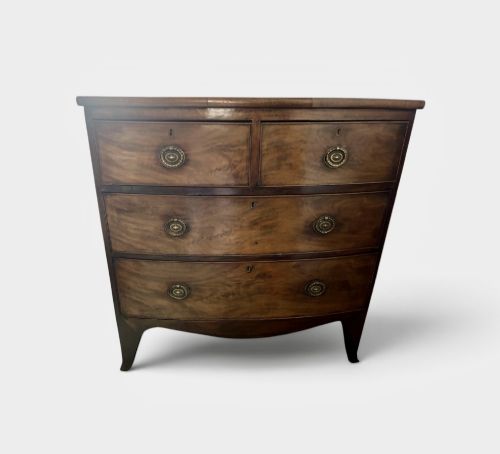
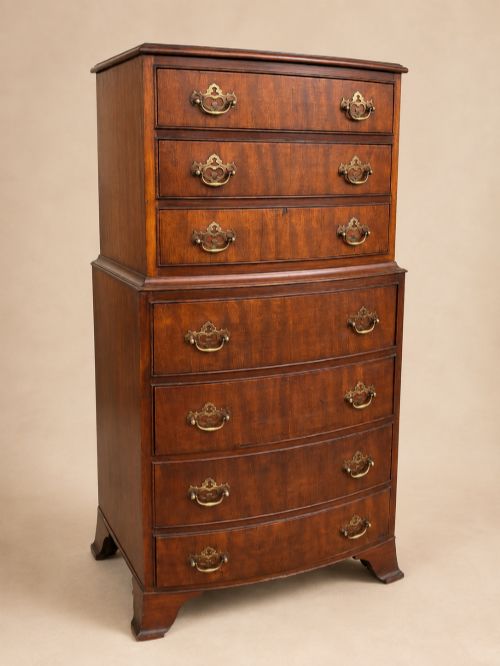
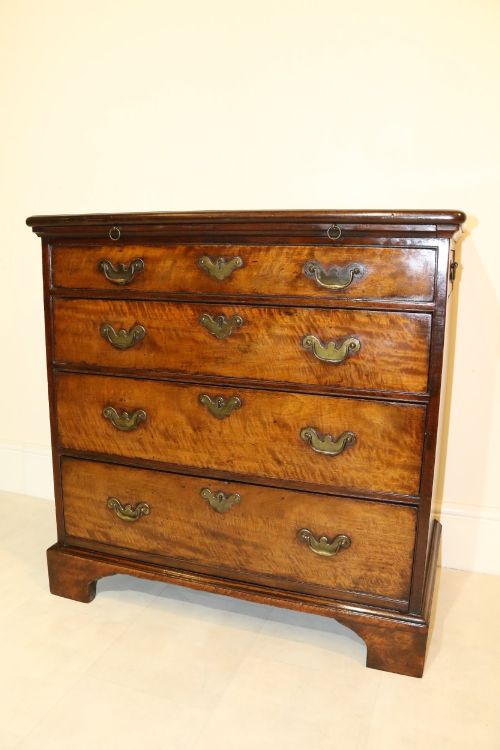
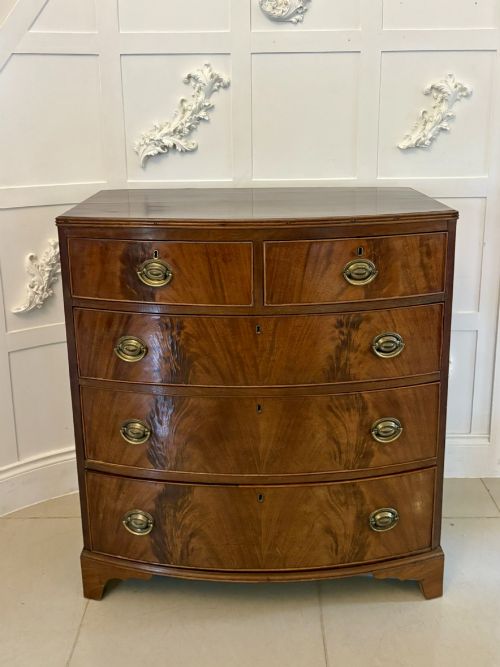
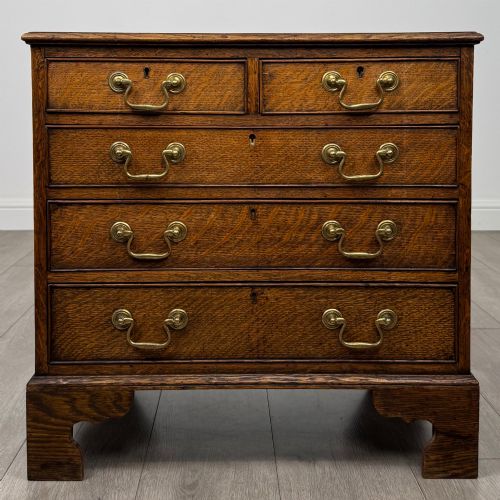
The version most commonly encountered on this page is the rectilinear or bow-fronted chest of drawers constructed in mahogany, oak, or walnut. These storage items served vital household functions in bedrooms and dressing rooms long before fitted wardrobes existed.
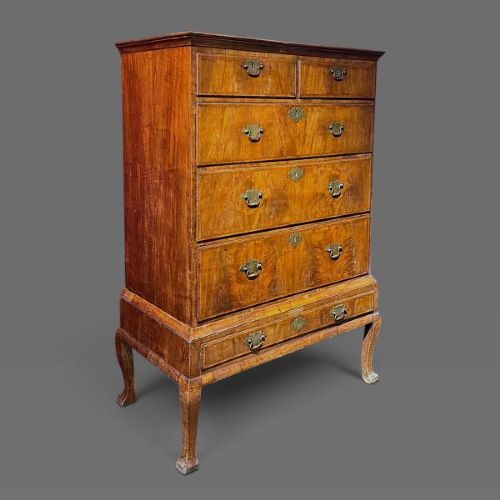
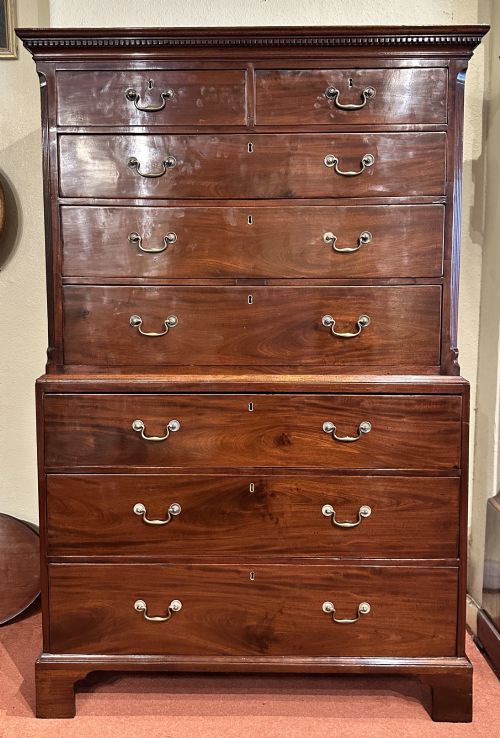
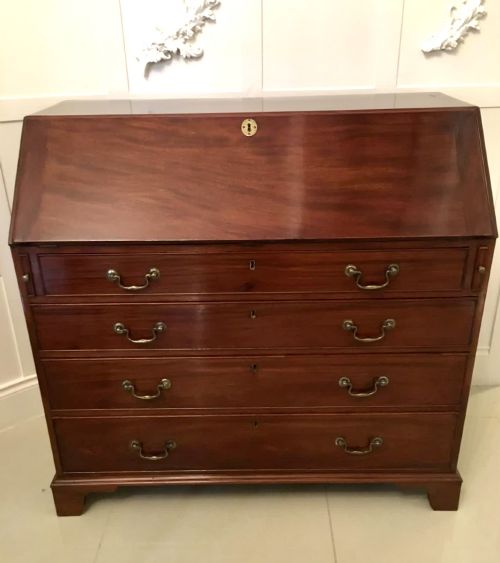
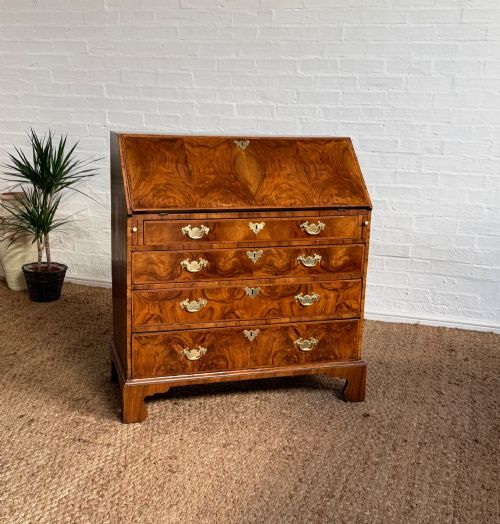
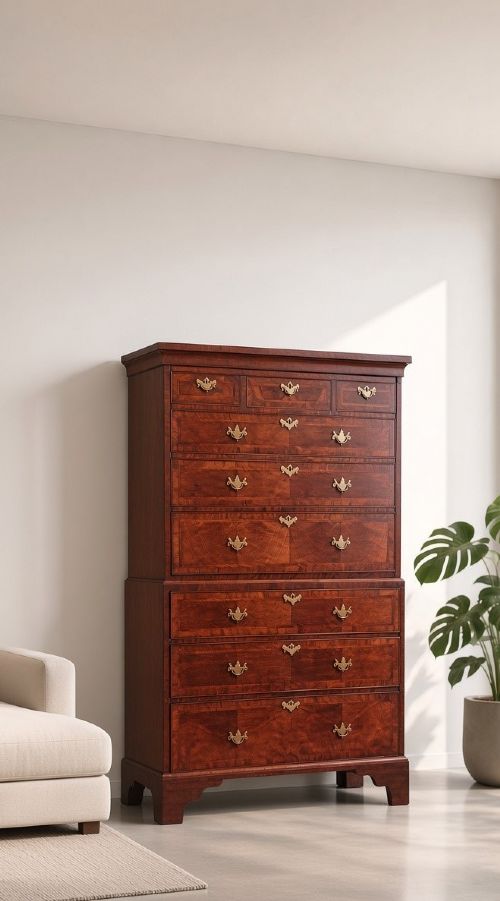
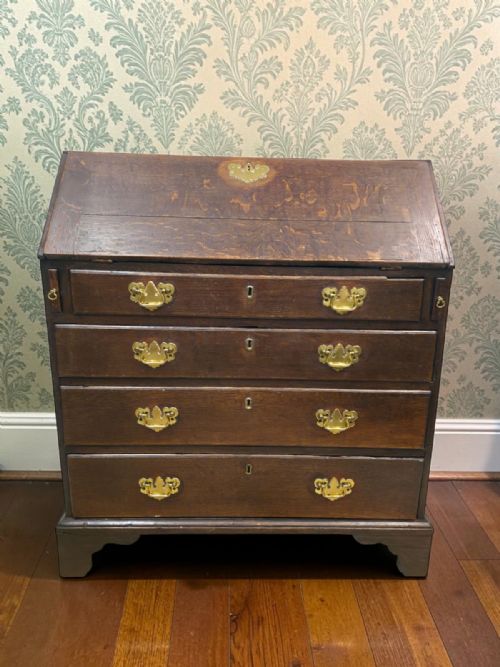
Makers of this era also produced specialised forms such as bureau chests with drop-down writing slopes, secretary desks, and tall chests on chests. Each variation reflects the evolving domestic needs of homes during the 18th century and the Regency period.
How They Were Made
Cabinet makers built these pieces using dense native and imported timbers, relying heavily on figured mahogany, quarter-sawn oak, and rich walnut veneers. Secondary woods like pine and elm appear frequently for internal drawer linings and back panels.
Construction relied on traditional joinery techniques, including hand-cut dovetails for drawer boxes and mortise and tenon frames for structural support. Surfaces were finished with wax or oil to nourish the grain rather than forming a heavy modern barrier film.
Specialised forms recorded here include writing bureaux, tallboys, cellarettes, and compact bedside tables.
What Varies in Quality
Quality reveals itself in the selection of timber figure, such as the depth of flame in mahogany veneers or the rich patterning of burr walnut. Workshops that utilised tightly grained, well-matched boards produced pieces with superior visual rhythm across the drawer fronts.
The integrity of the internal construction further separates standard utility pieces from exceptional examples. Smoothly running drawers with precise hand-cut dovetails and retained original brass hardware indicate meticulous original craftsmanship.
The English Georgian Chest Glossary
- Bow front
- A convex curved cabinet front popular during the Regency period. This shape softens the profile of a room while maximising internal drawer space.
- Chest on chest
- A tall storage unit formed by stacking a smaller chest of drawers directly on top of a larger base chest. This two-tier form is also frequently called a tallboy.
- Bureau
- A desk featuring a hinged sloping flap that opens to reveal a writing surface and small interior compartments. Many examples integrate these writing compartments directly above standard storage drawers.
- Mule chest
- A blanket box or storage chest fitted with one or more functional drawers beneath the main lift-top compartment. This form bridges the gap between traditional trunks and modern drawer chests.
- Cross-banding
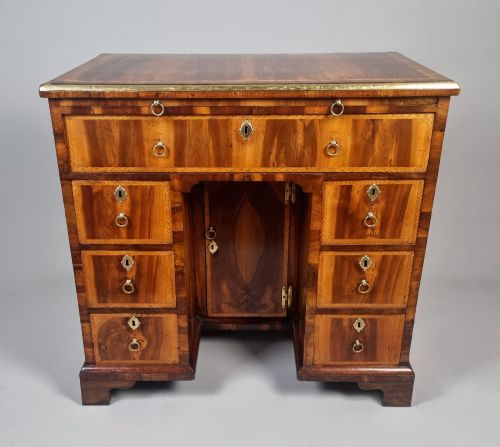
- A decorative border technique where thin strips of veneer are laid perpendicular to the surrounding grain. This detail frames drawer fronts and top surfaces on finer walnut and mahogany pieces.
English Georgian Chest: Frequently Asked Questions
How do I date an English Georgian chest?
Dating relies on observing changes in timber choice, hardware styles, and construction methods across the decades. Oak predominates in earlier pieces, while mahogany and imported veneers gain favour as the eighteenth century progresses.
Secondary indicators include the evolution of bracket feet, apron designs, and internal drawer assembly. Hand-cut dovetails and original brasses help narrow down the period of manufacture.
Where should I place a chest in my home?
These versatile timber pieces fit naturally into bedrooms, hallways, or living spaces as functional storage furniture. Their modest depths make them suitable for corridors and alcoves where bulkier modern furniture fails to fit.
Keeping them away from direct heat sources and strong sunlight protects the historic timber and polished finishes. Proper placement preserves the structural integrity of the antique wood over decades of daily use.
What is the difference between a tallboy and a standard chest?
A standard chest consists of a single vertical stack of drawers designed at a height accessible for surface use. A tallboy, or chest on chest, adds vertical capacity by stacking two separate cabinet sections.
This double-tiered construction allowed households to store considerably more textiles within the same floor footprint. Tallboys generally require higher ceilings due to their elevated overall stature.
How do I care for antique timber furniture?
Maintaining these pieces requires gentle cleaning with a soft cloth and occasional applications of traditional beeswax. Avoiding silicone-based sprays prevents chemical buildup that can damage historic polish over time.
Stable room humidity prevents the solid timbers and delicate veneers from cracking or warping. Treating the wood with care ensures the historical surface develops an even deeper patina.