

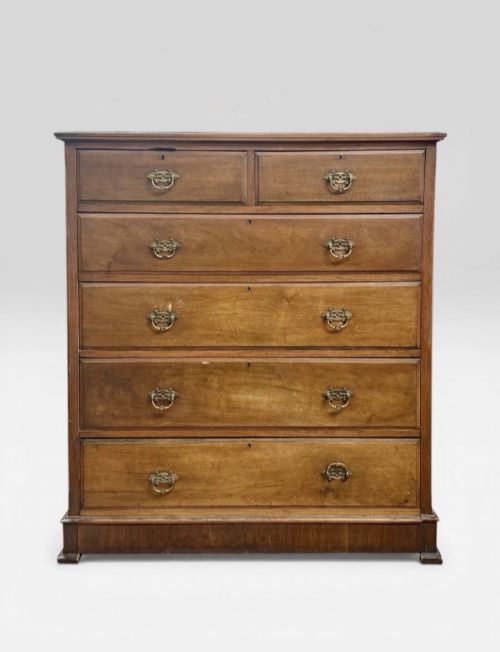
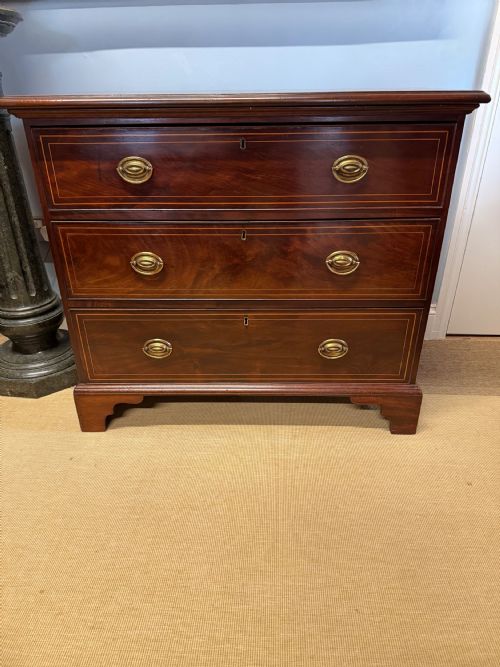
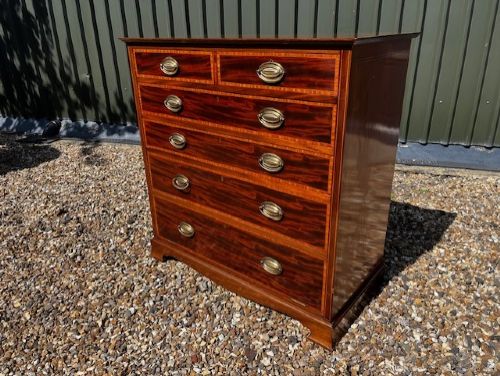

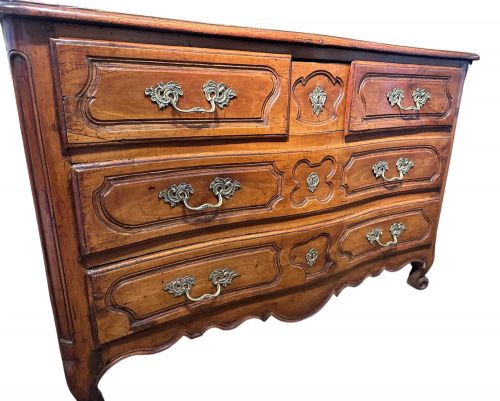

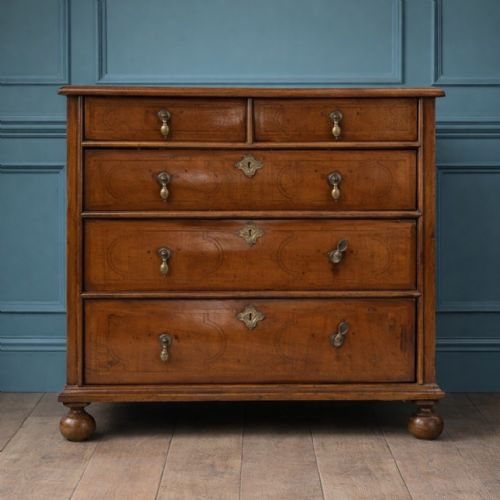
Brass Drop Handle Dresser
A brass drop handle dresser brings together sturdy timber and working metal, offering generous storage with period character.
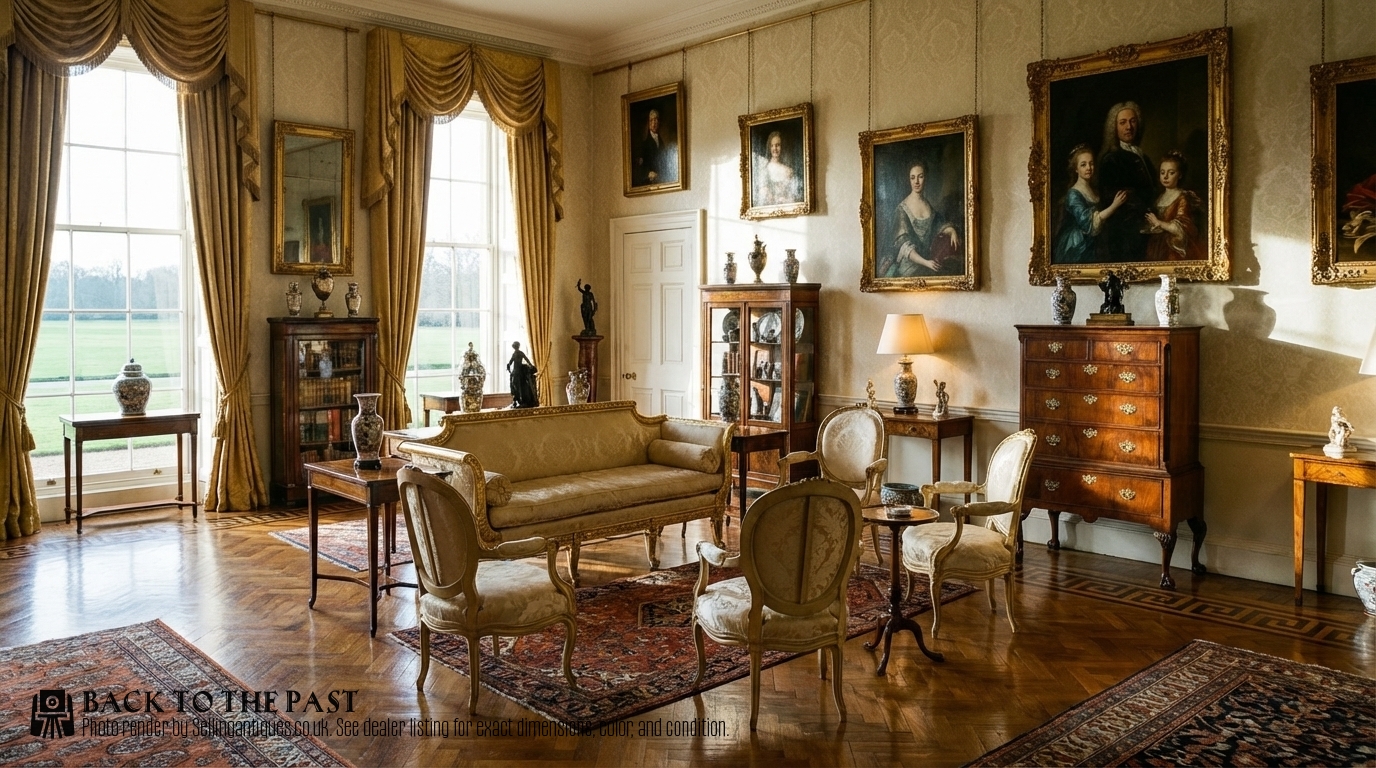
Brass Drop Handle Dresser
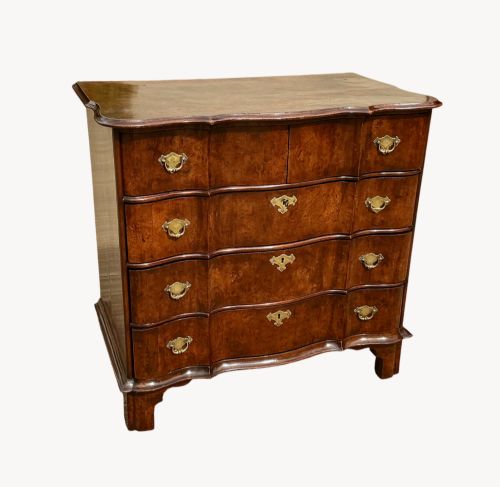
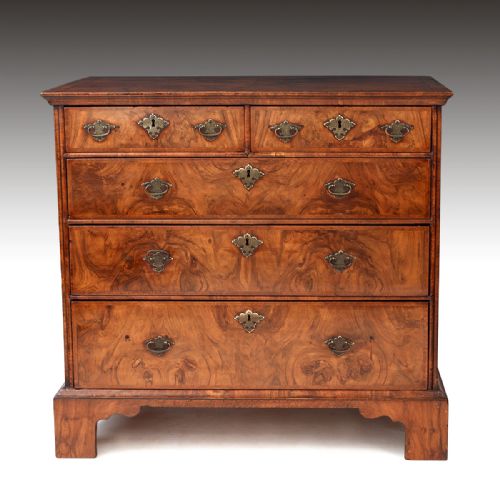
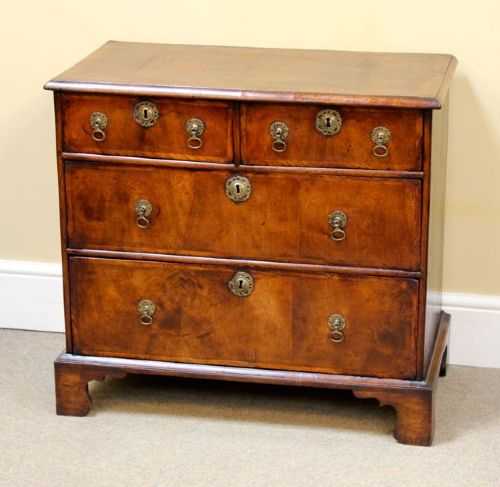
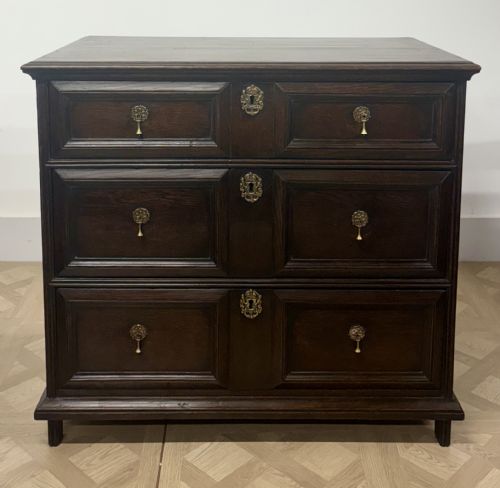
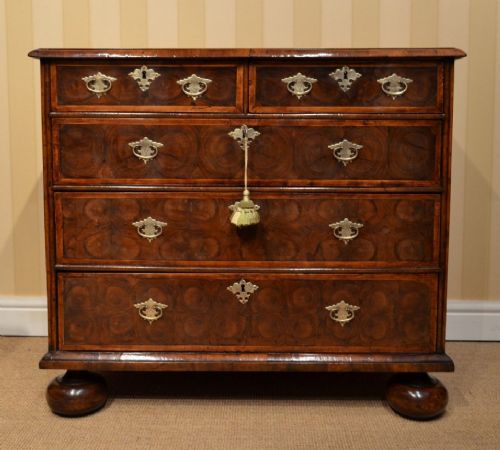
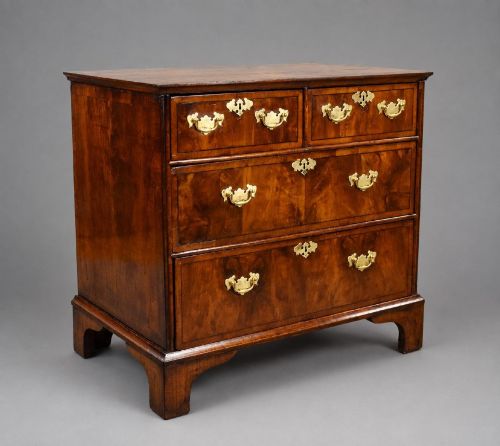
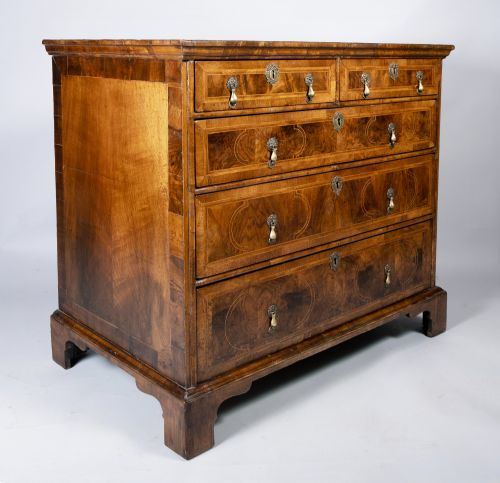
The versions most frequently met on this page belong to the Georgian and earlier periods, showcasing woods such as burr walnut, oak, and mahogany. Many examples demonstrate regional cabinetmaking styles from English, Dutch, and Scottish workshops.
Distinctions in quality
The refinement of the timber selection largely determines the standard of a piece, particularly the matching of burr walnut figures or the straightness of mahogany grain. Finer examples display meticulous attention to veneer symmetry and secondary wood choice.
The integrity of the construction and the preservation of original brass hardware elevate an item. Alterations to stands, handles, or surfaces shift a piece away from its original state.
Several walnut chests hide intricate marquetry details inside their drawers, rewarding anyone curious enough to pull them all the way out.
The Brass Drop Handle Dresser Glossary
- Drop handle
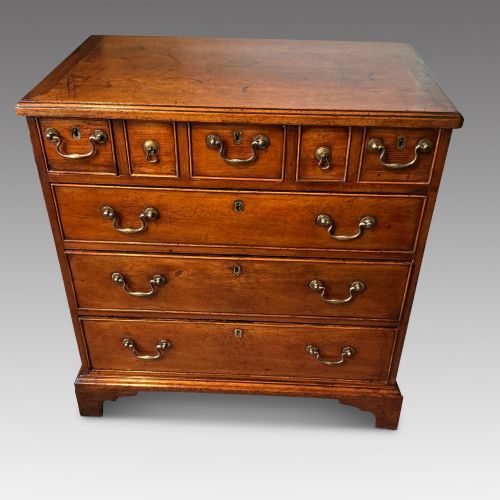
- A pendant-shaped metal handle suspended from a fixed plate attached to the drawer front. This fitting swings freely to allow the hand to pull the drawer open.
- Oyster veneer
- Circular cross-sections of branches sliced and laid down in patterns resembling oyster shells. Cabinetmakers utilised this technique on late seventeenth-century walnut surfaces.
- Geometric moulding
- Raised wooden strips applied in repeating geometric patterns to drawer fronts or panels. This style frequently appears on seventeenth-century oak and walnut furniture.
- Serpentine front
- A furniture front curving outward in the centre and inward at the sides. This contour requires skilled carpentry to shape the timber and fit the corresponding drawers.
- Dovetail
- An interlocking joint formed by interlocking wedge-shaped fingers. It secures drawer corners together with high structural strength.
Brass Drop Handle Dresser: Frequently Asked Questions
How do I date a chest of drawers?
Dating relies on examining the construction methods, timber choices, and secondary woods used inside the piece. Drawer linings and backboards often reveal the period of manufacture.
stylistic details like geometric mouldings or serpentine fronts also point toward specific decades or reigns.
Are the brass drop handles original?
Original brass hardware leaves specific ghost marks and pin holes on the timber surface when inspected closely. Replacements often utilise existing holes but may leave older fixing marks visible on the interior.
Examining the patination on both the metal and the surrounding wood helps determine if the handles belong to the period of the carcass.
What is burr walnut?
Burr walnut comes from a growth deformity on the walnut tree where grain grows in a swirling, distorted pattern. Cabinetmakers sliced this wood into thin veneers to create highly decorative patterned surfaces.
It appears prominently on pieces dating from the late seventeenth and eighteenth centuries.
How should I care for antique wood furniture?
Keep wooden furniture away from direct heat sources and drastic humidity changes to prevent the timber from splitting or warping. Dust regularly with a dry cloth and apply occasional wax suitable for antique finishes.
Avoid modern silicone polishes that can penetrate the grain and damage the historic finish.