

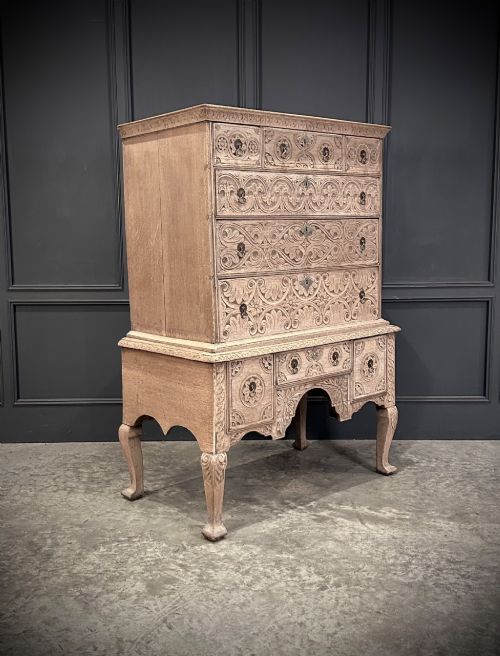
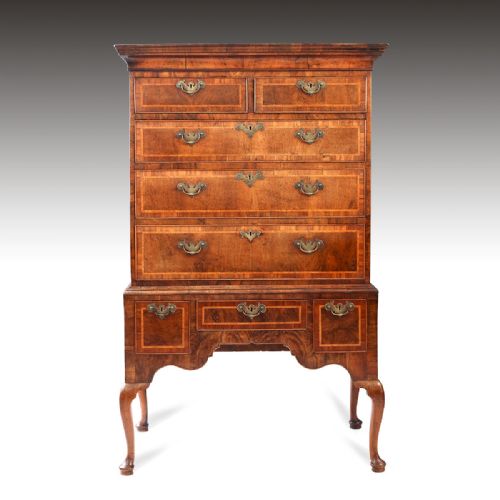
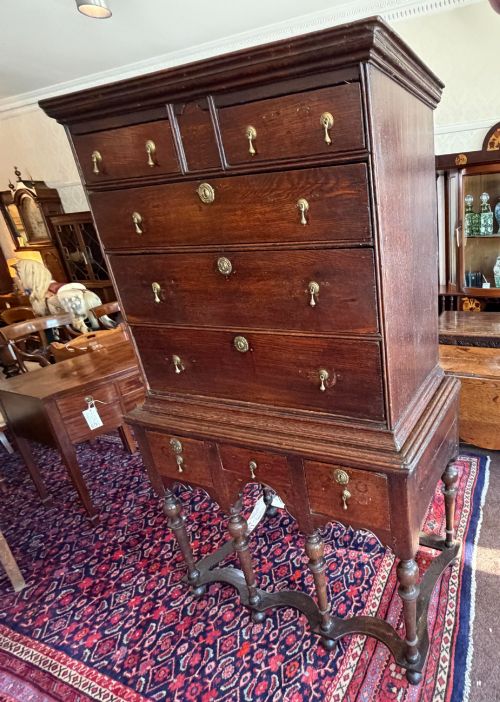
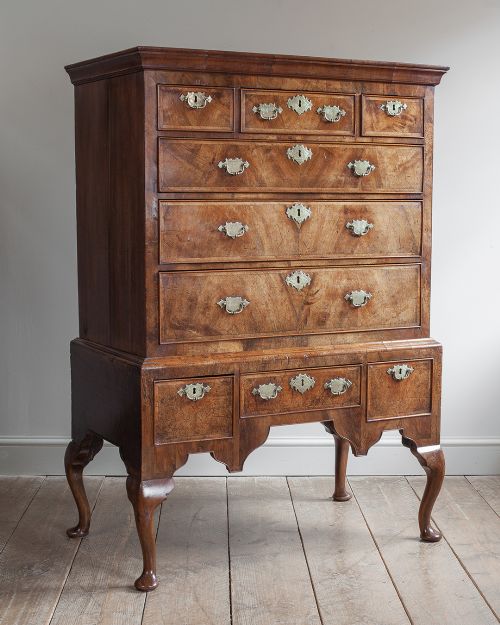


Georgian Tallboy on Stand
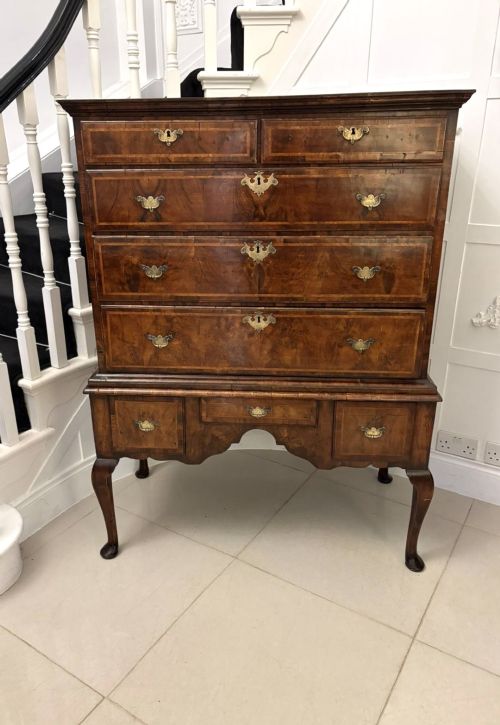
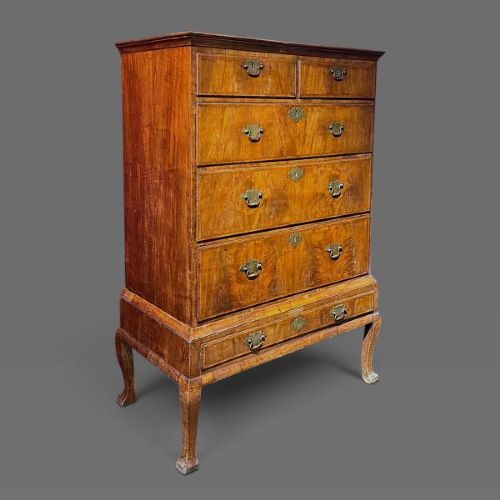
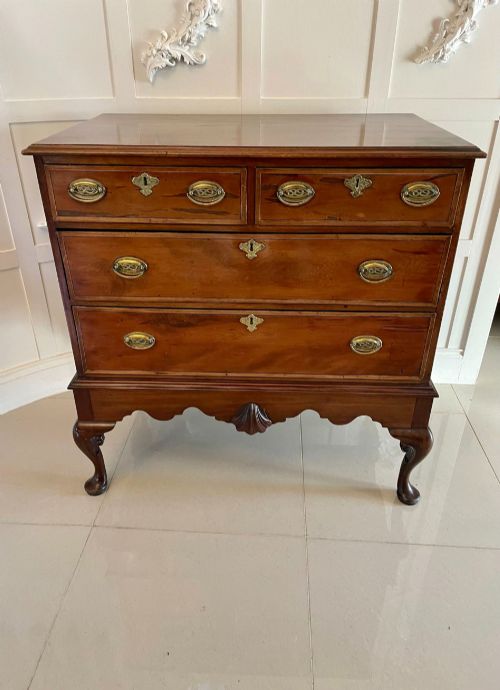
A georgian tallboy on stand is a commanding storage piece uniting a multi-drawer chest with a raised support frame.
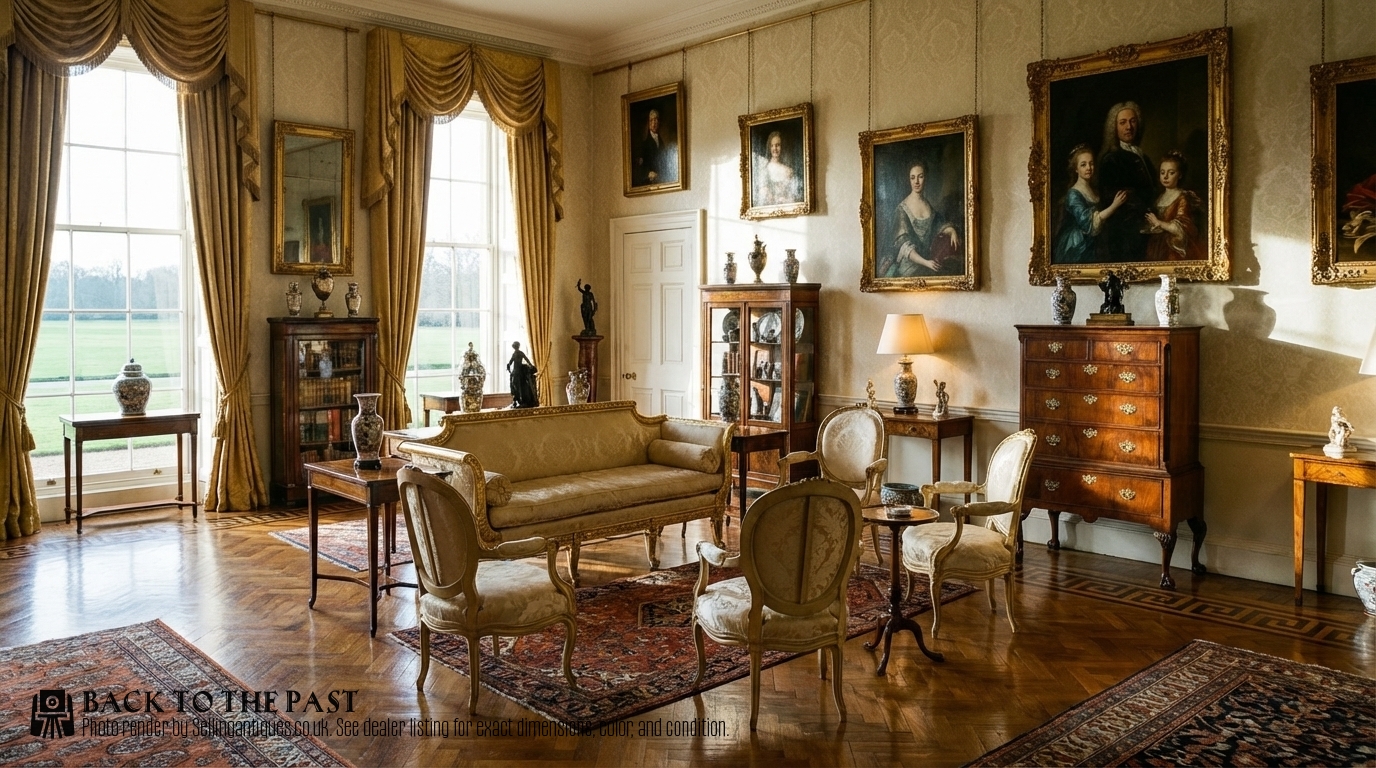
Georgian Tallboy on Stand
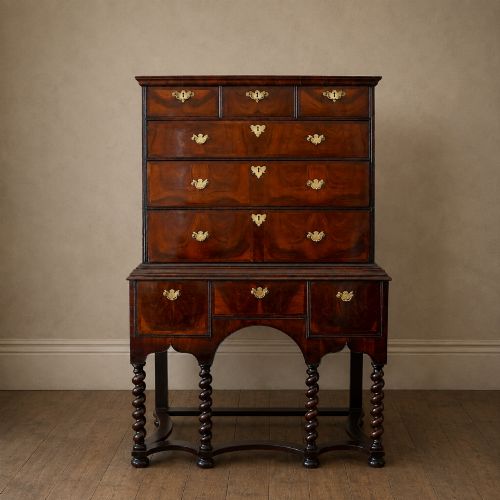
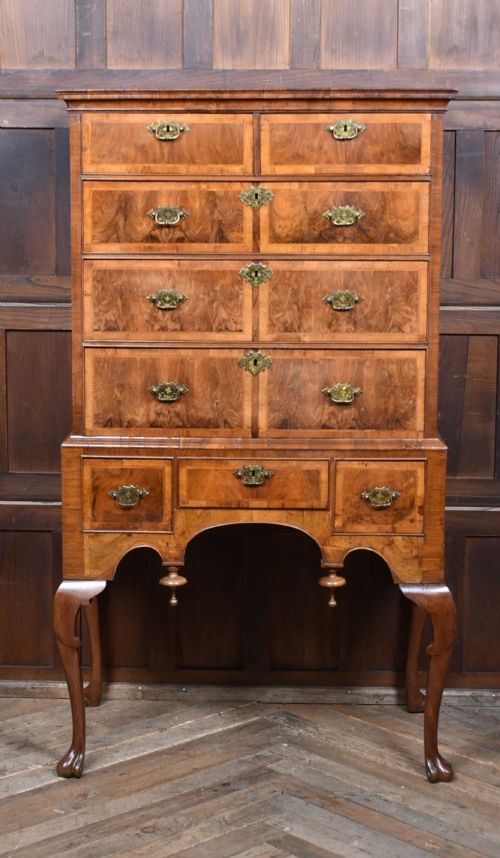
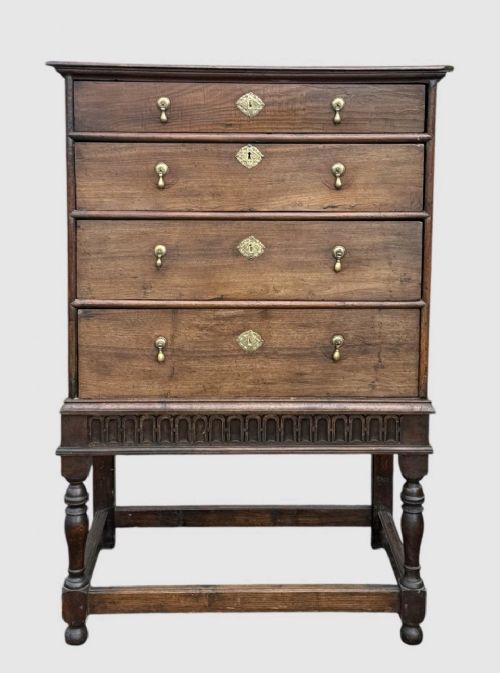
The pieces listed on this page span several centuries, with the majority originating from the eighteenth century alongside later revival examples. Oak, walnut, and mahogany form the primary carcasses, complemented by styles ranging from Queen Anne through George III.
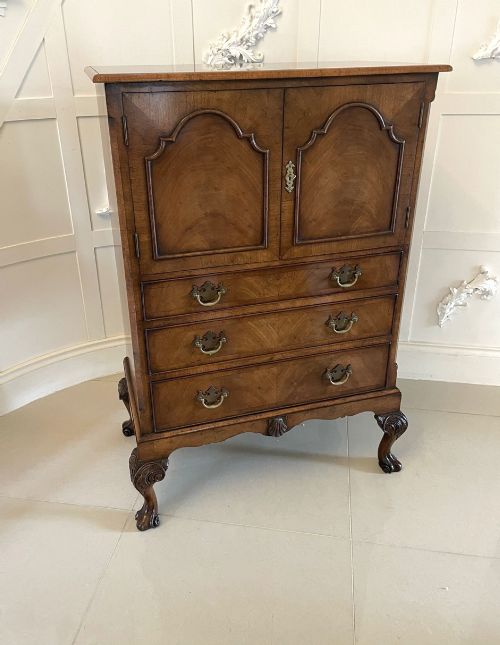
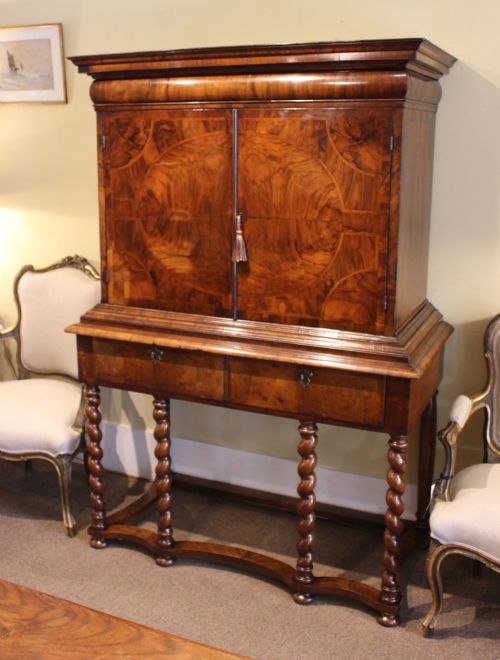
Beyond standard drawer configurations, variations include bureau compartments and cabinet doors concealing inner storage. These furnishings serve as prominent focal points within traditional interiors while offering considerable capacity for linen or papers.
How They Were Made
Cabinetmakers constructed these pieces using native timbers such as oak and walnut, frequently applying fine veneers including burr walnut and mahogany across the primary surfaces. Cross-banding and satinwood inlay accent panels, while brass drop handles and escutcheons secure the drawer fronts.
Joinery methods rely on sturdy dovetail joints for drawer construction and tenon frames for the supporting stands. Finishes involve traditional polishing techniques that highlight the natural grain patterns of the wood.
One cheerful example arrives finished in a distressed mottled blue paint over its eighteenth-century walnut frame.
What Varies in Quality
The distinction between average and exceptional pieces rests upon the choice of timber veneer and the finesse of the foundational joinery. Selected burr walnut or figured mahogany displays complex, matching grain patterns across the drawer fronts that elevate the visual presence.
Proportion and structural integrity dictate the standing of a piece within the range. Refined cabriole legs on early examples or crisp mouldings on later ones reflect the skill of the original workshop.
SAMUEL YOUNG NANTWICH & BUNBURY
The Georgian Tallboy on Stand Glossary
- Tallboy
- A tall chest of drawers made in two sections, often positioned upon a low stand with legs. This form maximises vertical storage capacity while maintaining a manageable footprint.
- Veneer
- A thin layer of figured wood applied over a secondary timber carcass to provide decorative surface patterns. Burr walnut and mahogany veneers feature prominently in finer examples.
- Cabriole leg
- A furniture leg that curves outward and then tapers inward with an arched profile resembling animal limbs. This characteristic shape appears frequently on early eighteenth-century stands.
- Oyster veneering
- Small circular or oval pieces cut horizontally from branches and arranged in decorative patterns across drawer fronts. This technique creates a distinctive marbled surface appearance.
- Dovetail
- An interlocking joint formed by interlocking wedge-shaped fingers used to secure drawer corners. Hand-cut dovetails indicate traditional period craftsmanship.
Georgian Tallboy on Stand: Frequently Asked Questions
How were they used historically?
Historically, these pieces served to store clothing, linens, and personal valuables in domestic chambers. The elevated stand kept contents away from damp floors.
Drawer divisions allowed households to organise garments and documents securely. The lower section sometimes included a pull-out slide for folding clothes.
How do I style one at home?
Place a tallboy against a solid wall in a hallway, bedroom, or living room to utilise vertical space efficiently. Keep the surrounding decor minimal to highlight the timber grain.
The top surface accommodates decorative objects or lighting, provided the height remains accessible. Ensure the room has sufficient clearance for opening drawers and cabinet doors.
How to tell periods apart?
Early eighteenth-century pieces often feature walnut veneers, oyster patterns, and cabriole legs influenced by Queen Anne and George I styles. Later eighteenth-century examples lean toward mahogany with straight legs and refined stringing.
Revival pieces from the twentieth century reproduce these earlier forms using older or matching timbers. Examine the interior construction, wood shrinkage, and handle fixings to determine age.