
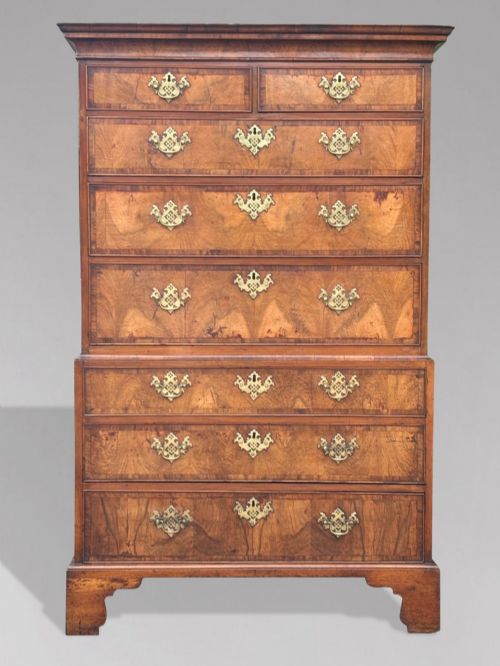
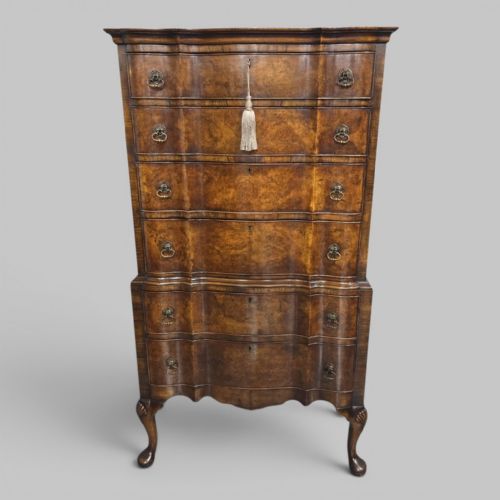
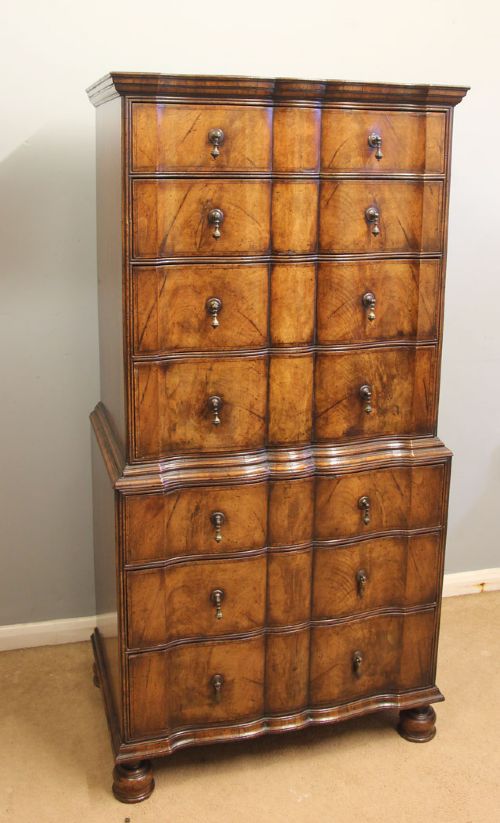


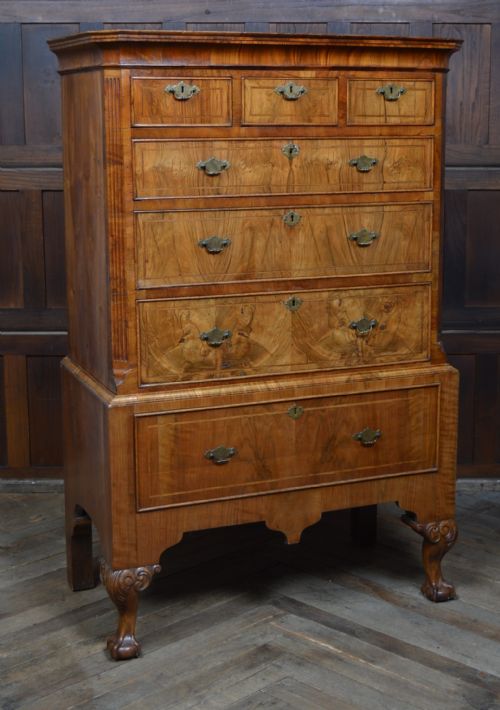


Figured Walnut Highboy
A figured walnut highboy brings deep, rippling grain and practical elevation into a room.
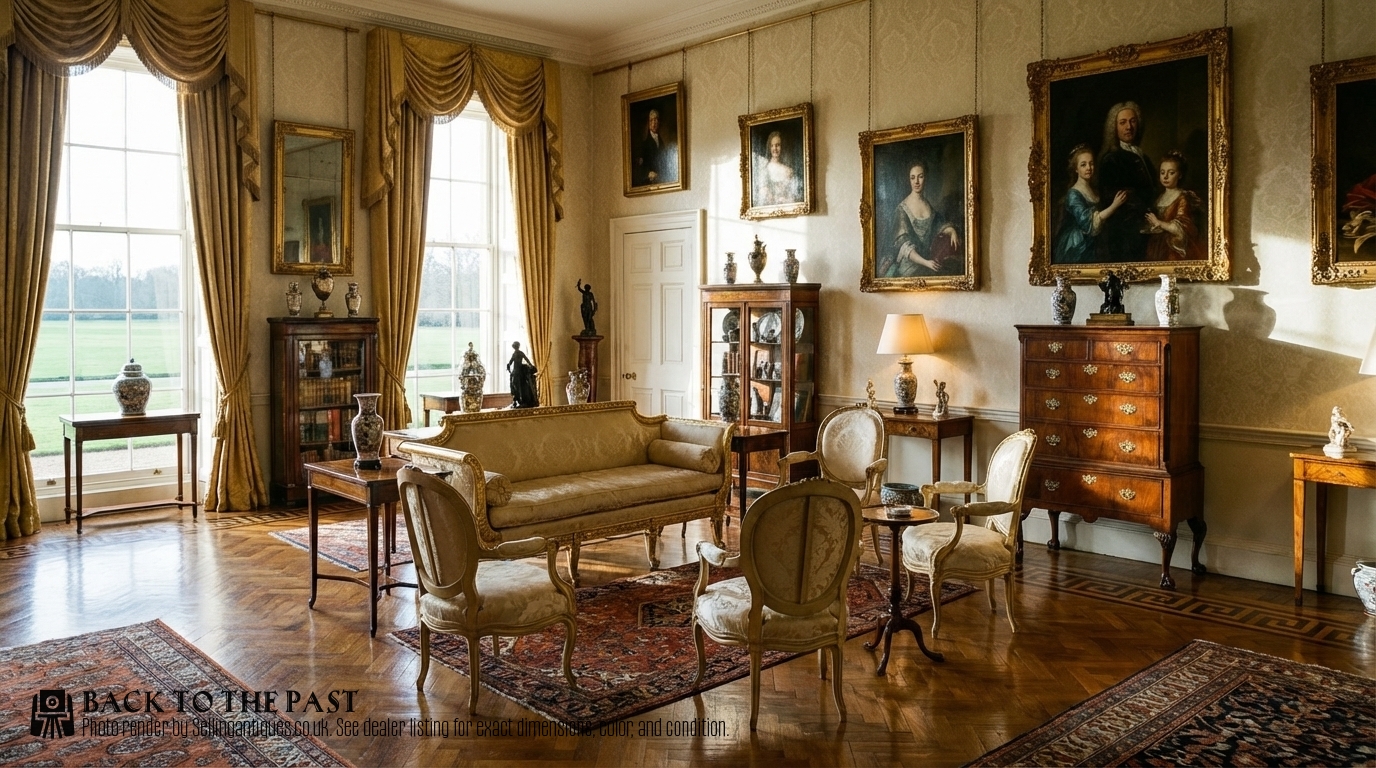
Figured Walnut Highboy
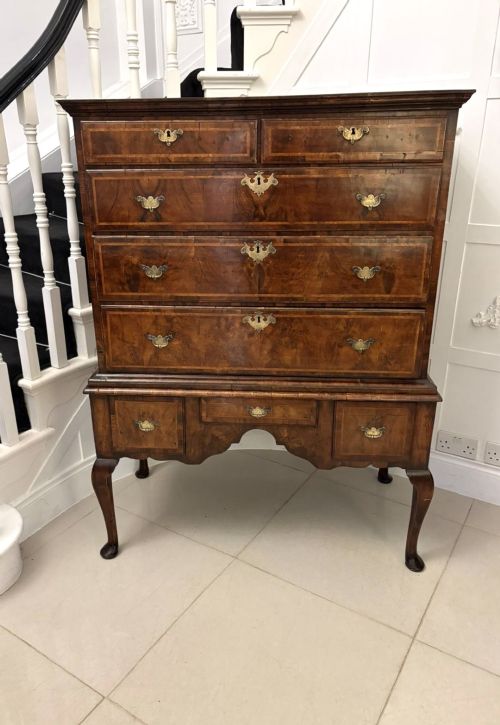
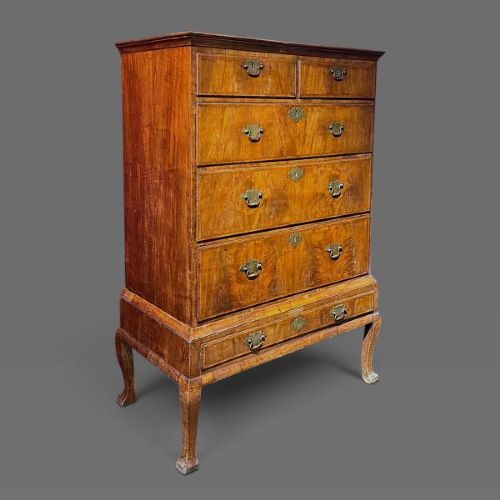
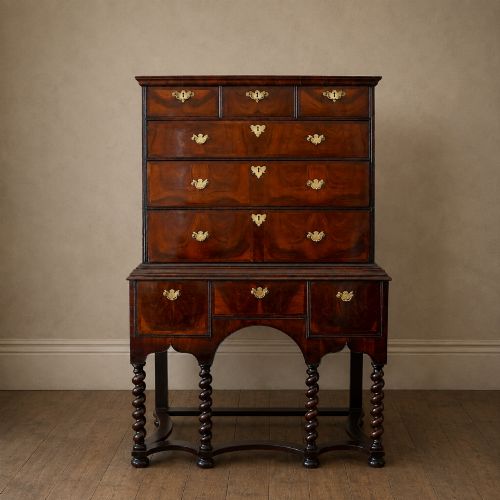
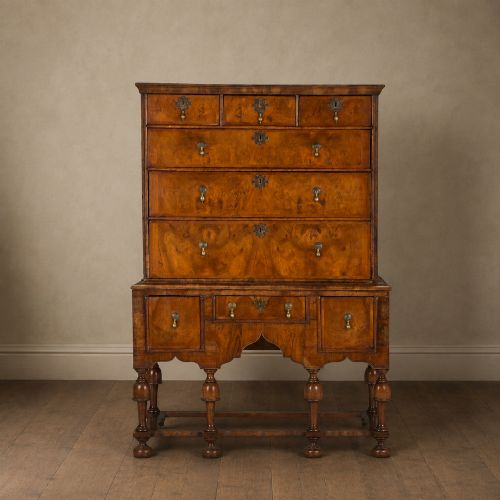
When you search for a figured walnut highboy, you are looking at tall case furniture designed to hold garments while lifting the primary storage off the floor on a dedicated stand or lower chest base. These pieces combine upper and lower sections, frequently taking the form of a chest on stand or a chest on chest, often referred to as a tallboy.
On this page, the versions you are most likely to meet span the seventeenth century through the Georgian era, alongside later interpretations from the Edwardian period and the Victorian years. They showcase prominent grain patterns across multiple drawers, balanced by supportive legs or base cabinets that elevate the entire silhouette.
How they were made
Cabinetmakers constructed these pieces using solid timbers of oak and pine for internal carcases and drawer linings, applying fine veneers of walnut, burr walnut, and figured walnut to the external surfaces. The decorative grain was meticulously sawn and arranged to create mirrored patterns across the drawer fronts.
Brass hardware, including drop handles and escutcheons, was fitted to secure the drawers and accent the warm tones of the timber. Stands and legs were joined using traditional framing techniques to support the considerable weight of the upper chests.
The page includes items spanning the seventeenth century, the Georgian period, and later revival styles up to the early twentieth century.
What varies in quality
The distinction between average examples and the finest pieces lies in the choice and arrangement of the veneer, where dramatic figuring and well-matched grain patterns elevate the visual impact of the facade. Original surfaces and patination achieved through centuries of handling separate untouched items from those that have undergone extensive refinishing or replacement of parts.
Proportion and structural integrity also dictate the standing of a piece, with harmonious heights between the upper chest and the supporting stand ensuring a balanced composition. Secondary timbers like oak within the drawer construction point to higher tiers of cabinetmaking compared to simpler pine carcases.
The Figured Walnut Highboy Glossary
- Figured walnut
- Timber exhibiting wavy, swirling, or mottled grain patterns that catch the light from different angles. It was selected by cabinetmakers for its decorative appeal on primary drawer fronts.
- Chest on stand
- A form comprising an upper section of drawers resting upon a lower frame with legs. This configuration lightens the overall silhouette compared to a floor-to-ceiling wardrobe.
- Tallboy
- A tall chest of drawers, often constructed in two sections as a chest on chest. The upper portion sits securely upon a slightly wider lower chest.
- Burr walnut
- Wood taken from the abnormal growth knots of a walnut tree, yielding dense, swirling clusters of eyes and rings. It represents some of the most expensive veneering material used in antique furniture.
- Escutcheon
- A protective metal plate surrounding the keyhole of a drawer. It prevents the wood from splintering around the lock over repeated use.
Figured Walnut Highboy: Frequently Asked Questions
What is a figured walnut highboy?
A figured walnut highboy is a tall storage chest featuring distinctive, rippling wood grain, typically elevated on a stand or built as a chest on chest.
These pieces combine vertical storage capacity with decorative veneering designed to showcase the natural patterns of the timber.
How do I date a walnut highboy?
Dating relies on examining the construction methods, secondary woods like oak or pine, drawer dovetailing, and the overall style of the legs and brass hardware.
Earlier examples from the seventeenth and early eighteenth centuries display different leg turnings and joinery compared to later nineteenth or twentieth-century revivals.
Where should I place a highboy?
A highboy requires a wall with sufficient vertical clearance to accommodate its tall proportions without overwhelming the surrounding furniture. Placing it away from direct heat sources protects the walnut veneers and underlying timbers from drying out.
Because these pieces offer substantial drawer space, they function effectively in bedrooms, hallways, or living spaces needing vertical storage.
Are highboys and tallboys the same?
The terms are often used interchangeably, though a highboy specifically denotes a chest raised on a tall leg stand, while a tallboy traditionally refers to a chest on chest.
Both forms achieve a similar tall silhouette and serve the same primary function of providing abundant drawer storage.