




Barley Twist Chest
A barley twist chest brings robust turned columns and rich timber grain to an interior, making it a robust storage choice.
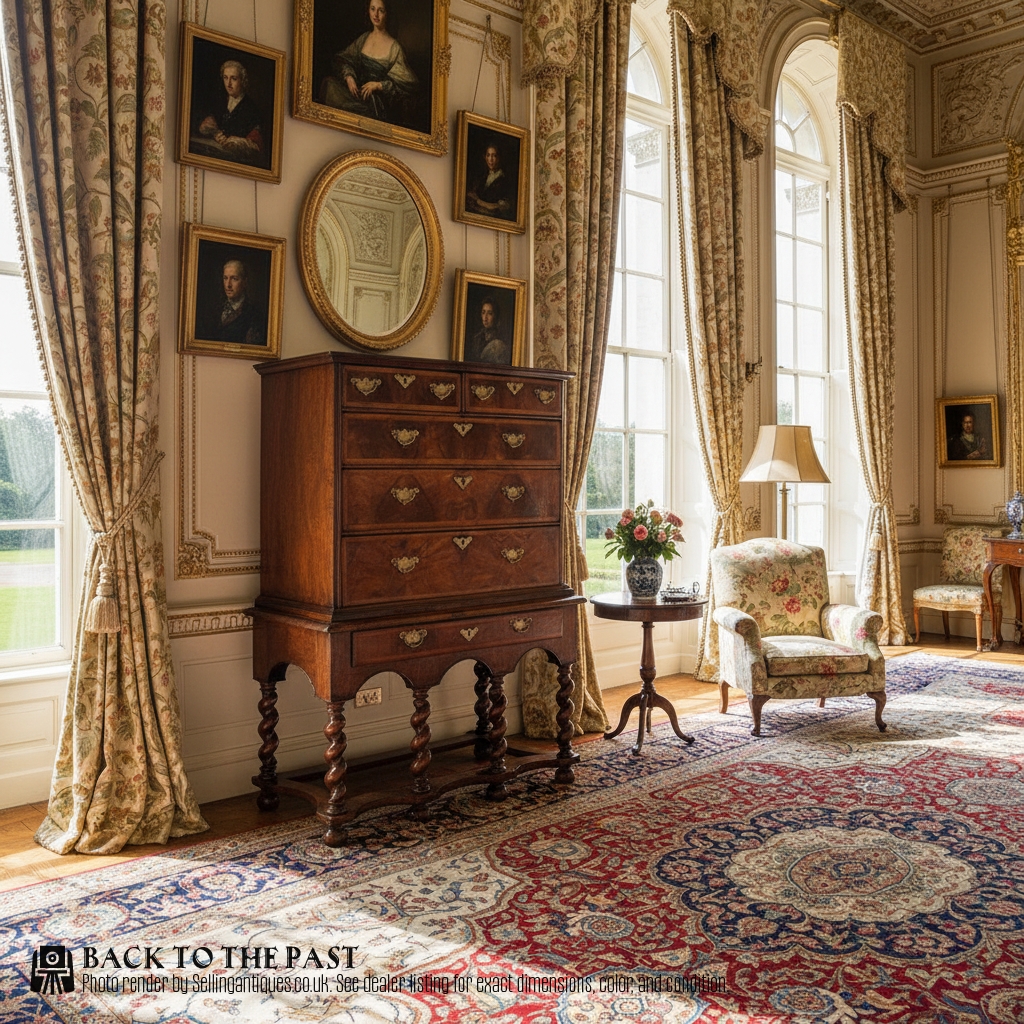
What these pieces are
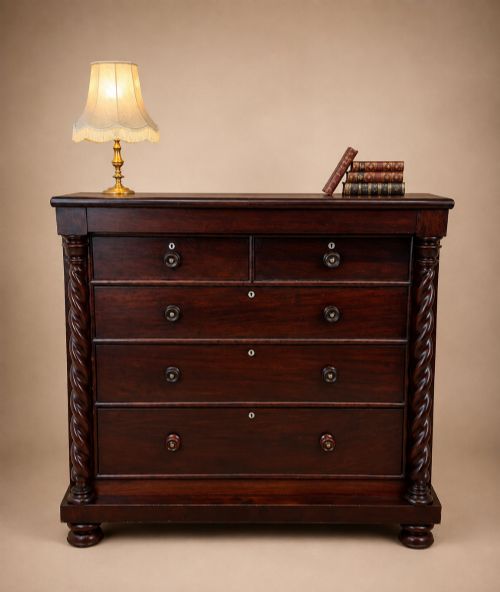
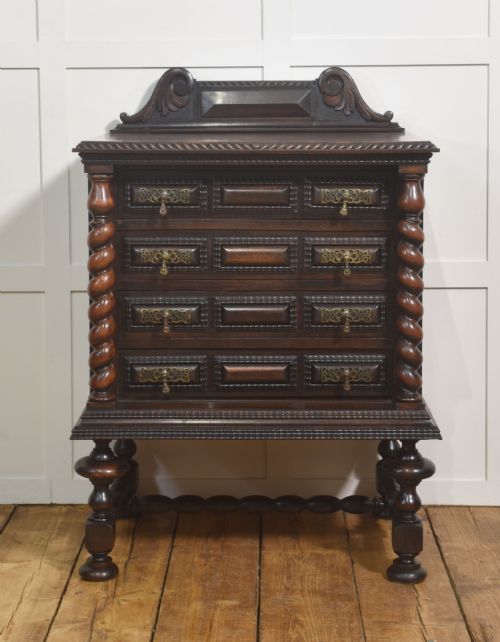
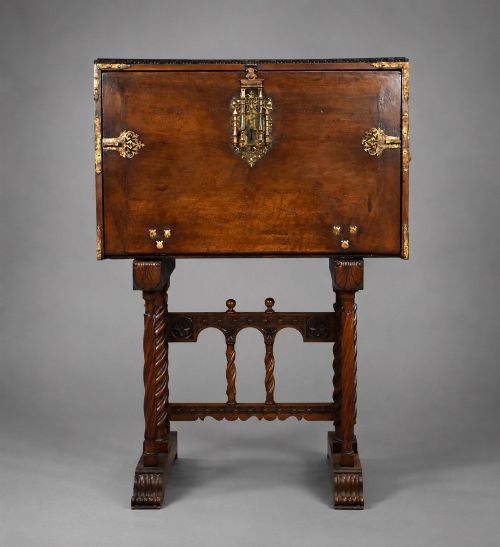
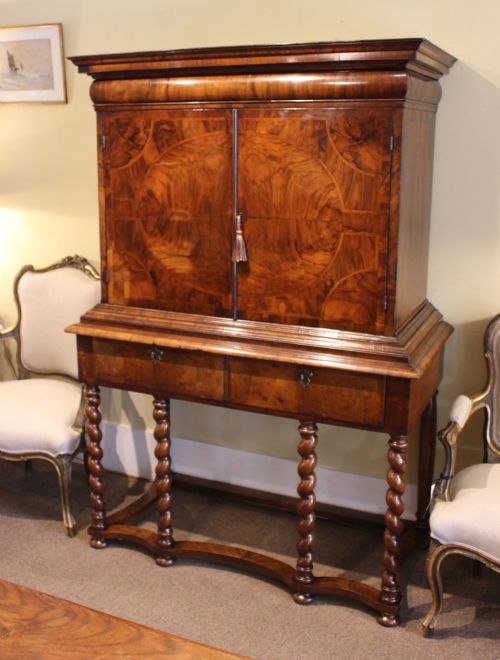
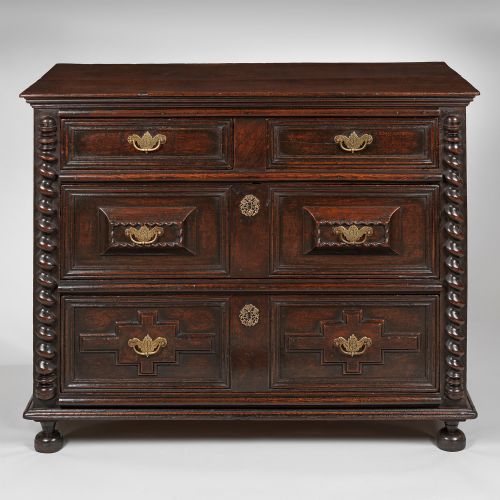
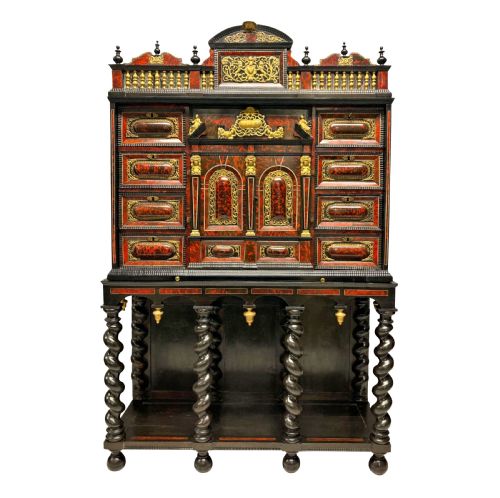
A barley twist chest combines functional drawer storage with distinctive spiral-turned columns framing the structure. These pieces appear across several distinct historical periods, including the seventeenth, eighteenth, and nineteenth centuries.
Early examples often feature walnut or oak construction with characteristic spiral supports, while later Victorian and Edwardian interpretations adopt broader mahogany and satin birch timbers. Each period imparts a distinct proportion and finish to the overall form.
How they were made
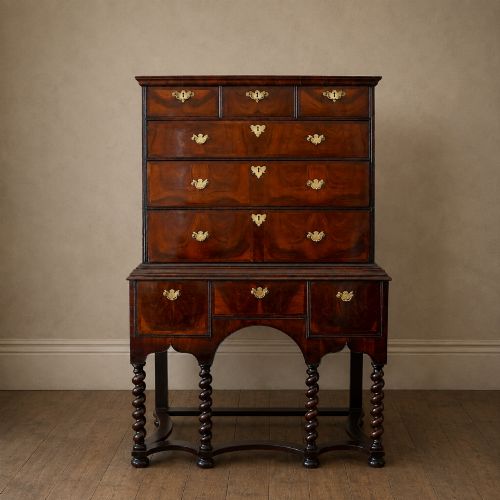
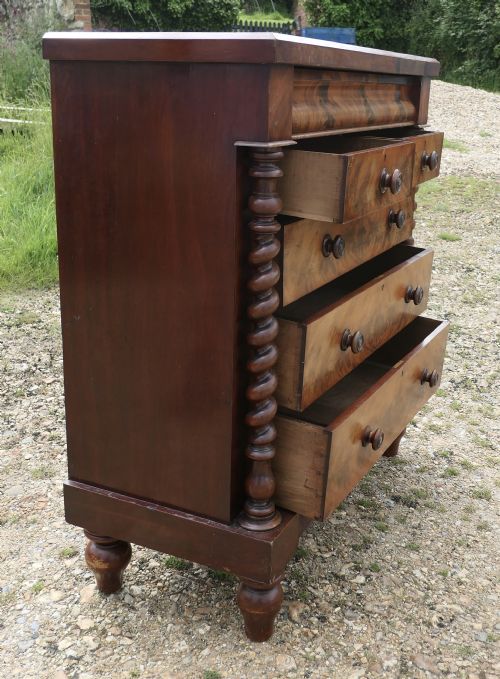
Cabinet makers utilised solid hardwoods such as oak, walnut, and mahogany, frequently applying flame mahogany veneer to primary drawer fronts for visual depth. Structural integrity depended on traditional joinery methods suited to heavy timber construction.
The characteristic spiral columns were shaped by hand turning, requiring precise skill to maintain uniform curves along the timber shaft. Brass hardware, including drop handles and escutcheons, was fitted to secure the drawer fronts.
Retail Price Guide 2026
Typical UK retail prices for barley twist chest, calculated from the Sellingantiques database of over a million retail prices indexed since 2003. This retail price guide relies exclusively on Sellingantiques data; no external sources or auction records are used, so the figures do not describe the wider market.
Some Victorian examples hide a deep, secret top drawer behind a moulded wooden fascia.
What varies in quality
Quality rests upon the crispness of the spiral turnings and the selection of timber figures, where carefully matched grain patterns elevate the visual impact. Superior examples demonstrate meticulous alignment of drawer linings and structural framing.
The integrity of the original hardware and the depth of the timber patina distinguish finer pieces from later adaptations or heavily restored items. Proportions remain balanced, ensuring the turned columns integrate harmoniously with the primary case.
The Barley Twist Chest Glossary
- Barley twist
- A spiral turning resembling a twisted rope, popular in furniture legs and applied column decorations during the seventeenth century and revived in later periods.
- Flame mahogany
- A veneer cut from timber where the branch meets the trunk, producing a flickering, flame-like pattern across the drawer fronts.
- Chest on stand
- A case piece raised on a separate base with legs, frequently utilised in seventeenth and eighteenth-century walnut and oak designs.
- Escutcheon
- A protective brass plate surrounding a keyhole, often shaped to complement the period style of the drawer fronts.
- Scotch chest
- A tall chest of drawers traditionally featuring a deep blind top drawer above smaller configuration drawers, often rendered in mahogany.
Frequently Asked Questions
What periods do these chests come from?
The available pieces span multiple centuries, ranging from seventeenth-century oak and walnut examples to eighteenth-century George I designs and nineteenth-century Victorian interpretations.
Later Edwardian and twentieth-century revivals also appear, showing how cabinet makers continually revisited earlier spiral-turned styles.
Which timbers were used?
Maker choices included native and imported hardwoods, with oak and walnut dominating seventeenth-century pieces.
Mahogany, flame mahogany veneer, and satin birch became prevalent in later Victorian and Edwardian variations.
How do I identify the age?
Dating relies on examining construction methods, timber choice, and hardware fixings alongside the overall stylistic proportions.
Earlier seventeenth and eighteenth-century pieces display hand-cut joinery and native woods, whereas nineteenth-century versions often utilise denser mahogany framing.
Where do the spiral columns appear?
Turned spiral columns typically flank the main body of the chest as applied decorative pilasters or frame the supporting base on chests on stands.
Some dressing chests incorporate them around mirror supports or the primary outer edges.