


Large Mahogany Chest
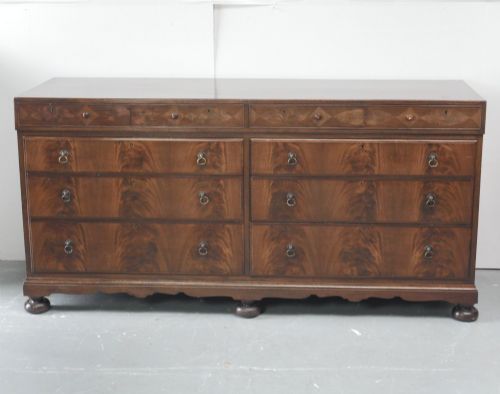
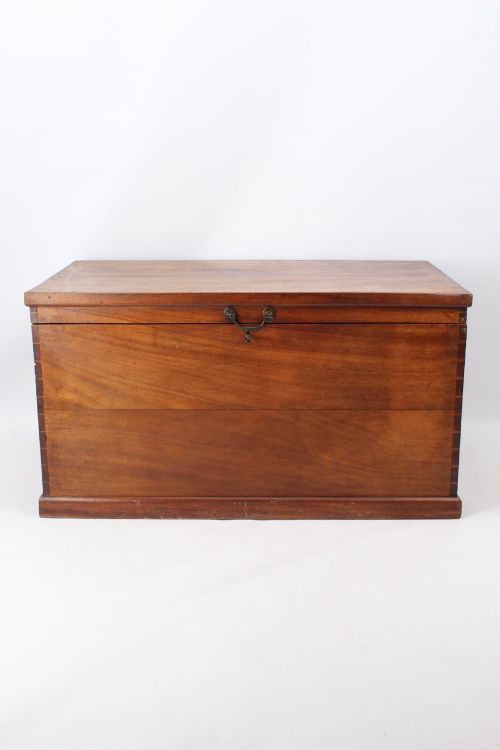
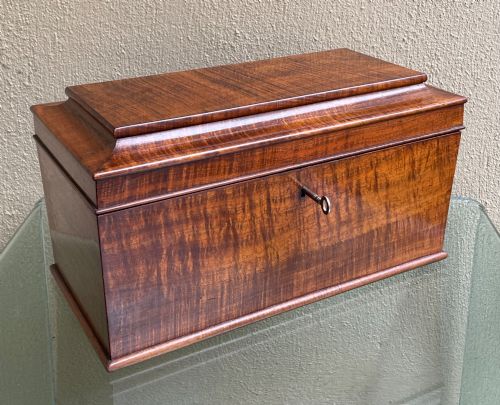
A large mahogany chest holds substantial storage capacity within rich timber grains, offering timeless utility for any traditional bedroom scheme.
What a large mahogany chest is
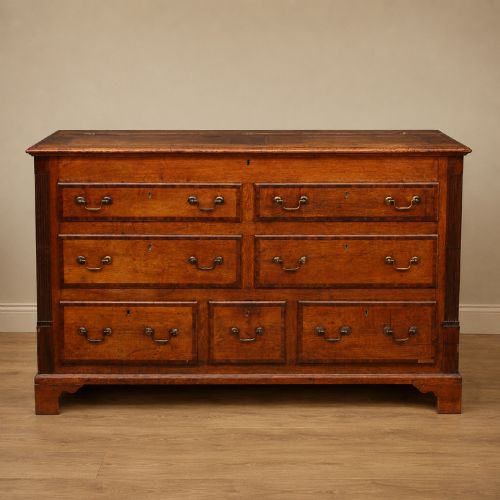
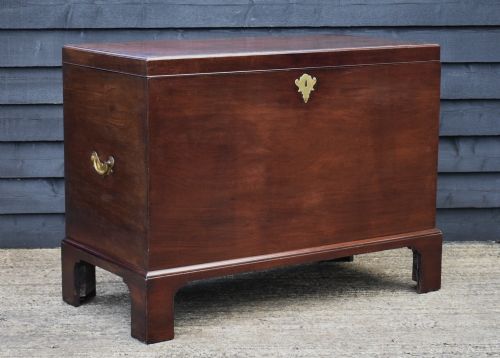
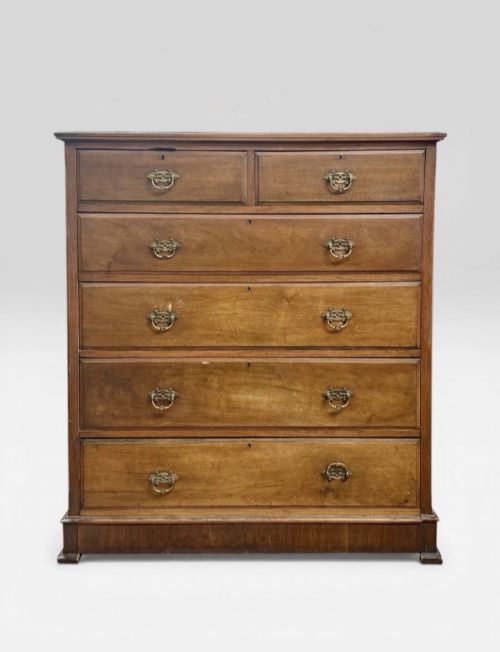
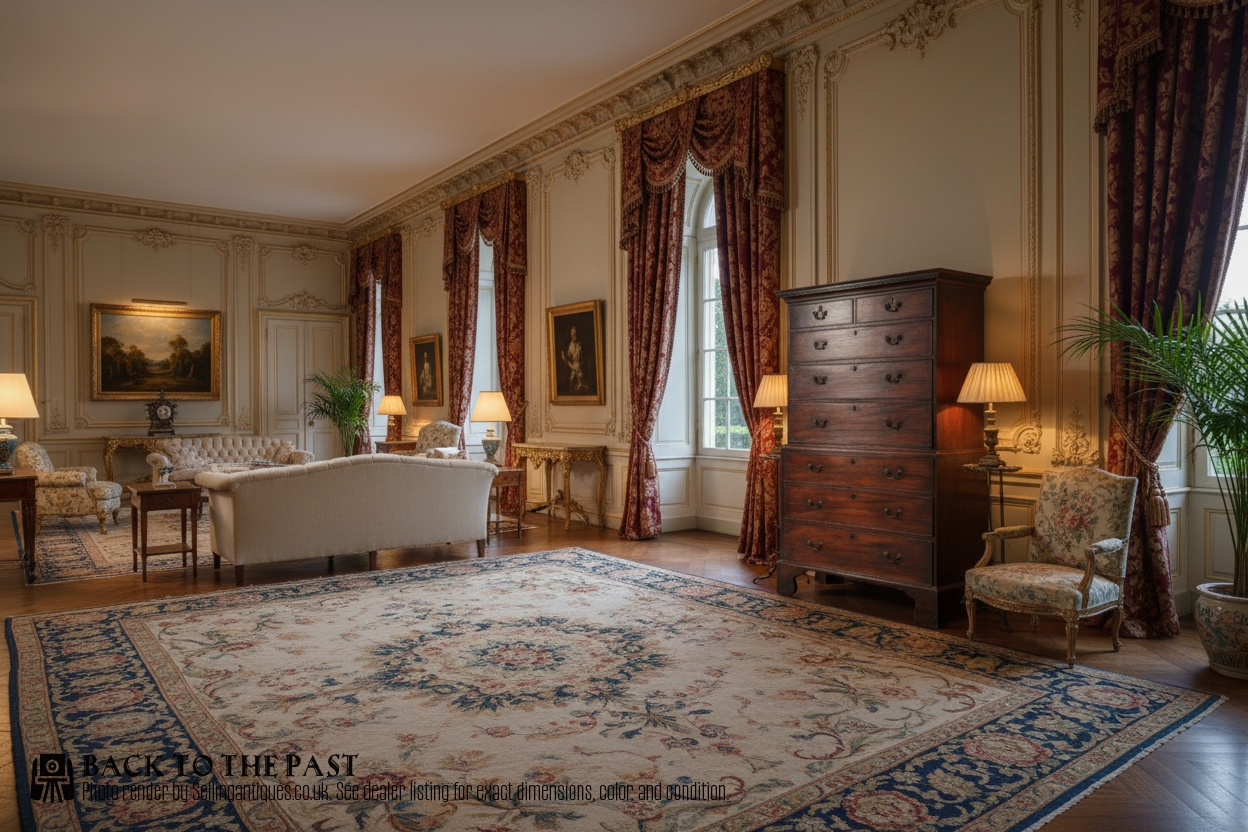
A large mahogany chest primarily takes the form of a substantial chest of drawers, tallboy, or chest on chest originating from the eighteenth and nineteenth centuries. These pieces provide deep and wide drawer configurations designed to hold heavy linens and garments.
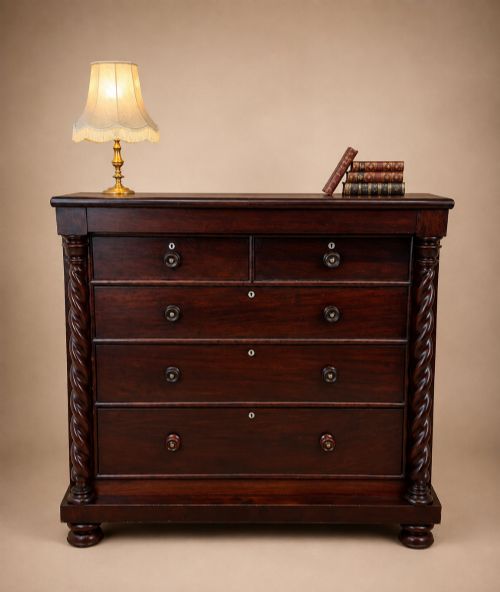
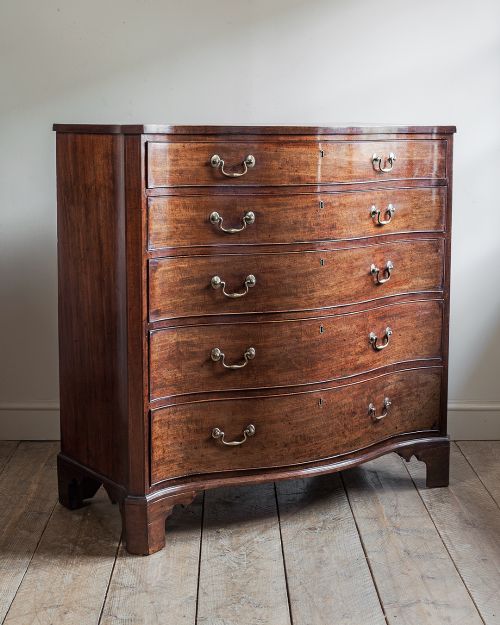
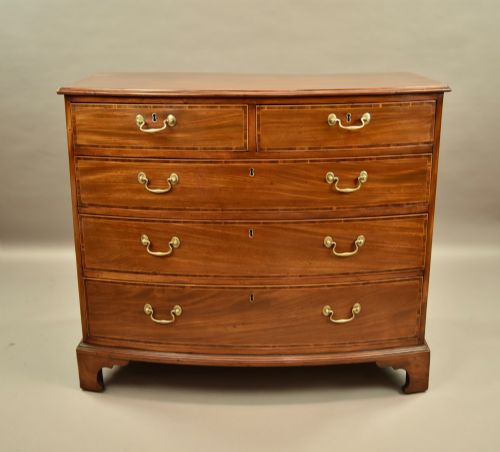
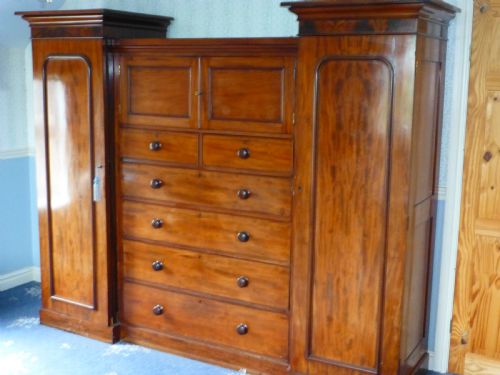
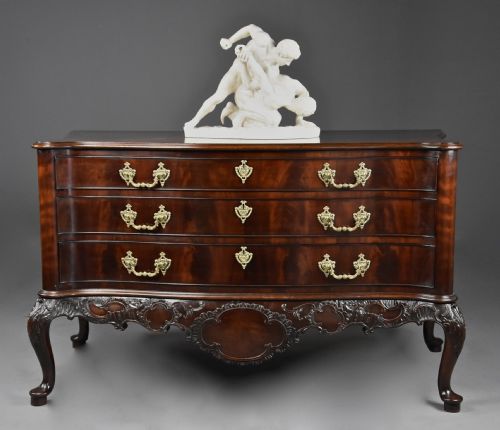
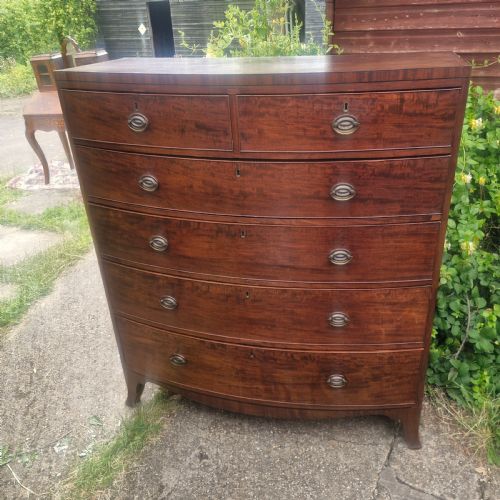
Buyers seeking a large mahogany chest will frequently encounter Victorian and Georgian examples, alongside Regency bow front pieces and occasional Scottish or Scotch chests. The selection also encompasses serpentine commodes in the Chippendale style and related furniture forms.
Originating as practical storage furniture for domestic interiors, these substantial timber pieces served wealthy households and country homes. Their enduring presence in the antique market reflects robust construction and lasting functional utility.
What varies in quality
The refinement of the timber selection dictates the visual appeal, where highly figured flame mahogany veneer or well-matched grain patterns elevate a piece above standard stock. Superior execution is also evident in the crispness of carved details, such as bracket feet or Chippendale style shaping.
Proportion and structural integrity separate standard utility pieces from exceptional examples, with finer chests maintaining balanced drawer arrangements and clean lines. The quality of internal secondary woods and the precision of the dovetail joints further define the standard of manufacture.
Retail Price Guide 2026
Typical UK retail prices for large mahogany chest, calculated from the Sellingantiques database of over a million retail prices indexed since 2003. This retail price guide relies exclusively on Sellingantiques data; no external sources or auction records are used, so the figures do not describe the wider market.
The Large Mahogany Chest Glossary
- Tallboy
- A tall chest of drawers, often constructed as a chest on chest where a smaller upper section sits upon a larger base.
- Bow front
- A convex curved front facade typical of Regency period chests that softens the rectangular profile of the furniture.
- Serpentine
- A gently undulating front edge featuring a convex centre flanked by concave curves, frequently seen on mid eighteenth century and revival commodes.
- Scotch chest
- A regional variant of a chest of drawers originating from Scotland, usually featuring a deep top drawer over multiple smaller and larger drawers.
- Bracket foot
- A simple structural foot that supports the corners of a chest, shaped in profile and mitred at the corner joints.
Frequently Asked Questions
How do I date a large mahogany chest?
Dating relies on observing structural characteristics, timber choice, and hardware styles associated with specific periods like the Georgian or Victorian eras. Examining the secondary woods inside the drawers provides additional clues regarding the manufacturing date.
Georgian pieces often exhibit fine hand-cut dovetails and bracket feet, whereas Victorian examples tend to be heavier with wider proportions and distinct drawer configurations.
What is the difference between a tallboy and a standard chest?
A standard chest of drawers stands at waist or chest height, whereas a tallboy rises significantly higher by stacking one cabinet section on top of another.
This vertical configuration allowed households to maximise storage capacity without occupying additional floor space in the bedroom.
How do I care for mahogany furniture?
Maintain the timber by keeping the chest away from direct sunlight and heat sources to prevent the mahogany veneer from drying out or splitting. Dust the surface regularly with a soft, dry cloth and apply natural wax polish sparingly.
Avoid modern liquid silicones or harsh chemical cleaners, as these substances can degrade the traditional polish finish over time.
Where should I place a large chest in my home?
These substantial pieces require adequate wall space and a sturdy floor to support their considerable weight and deep drawer projections. Bedrooms and spacious hallways serve as traditional placements where their generous proportions remain functional.
Ensure the chosen room maintains stable humidity levels to protect the antique timber and internal joinery.