



Antique Wooden Highboy
An antique wooden highboy brings vertical presence and layered storage to a room, offering tall timber chests raised on stands or built in stacked sections.

Antique Wooden Highboy
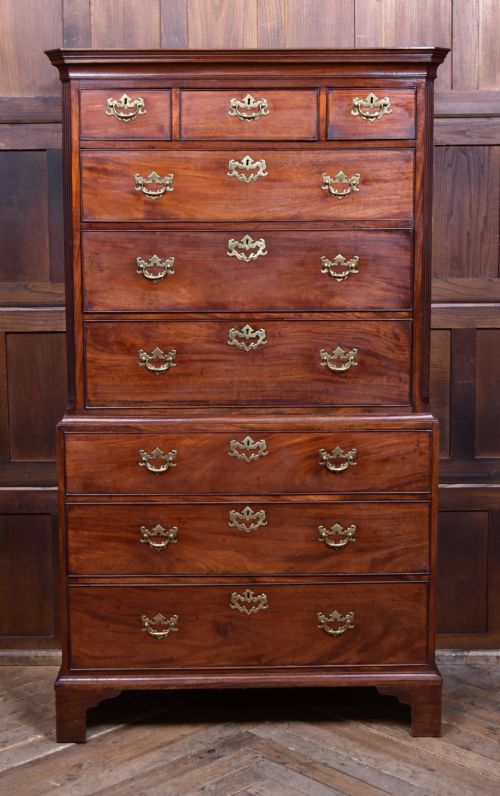
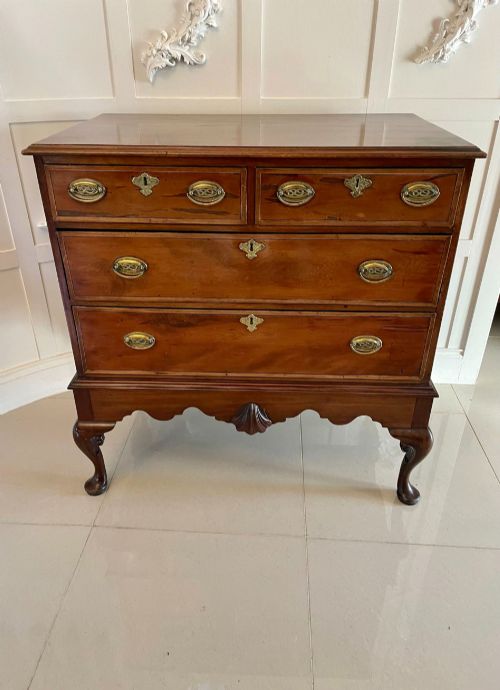
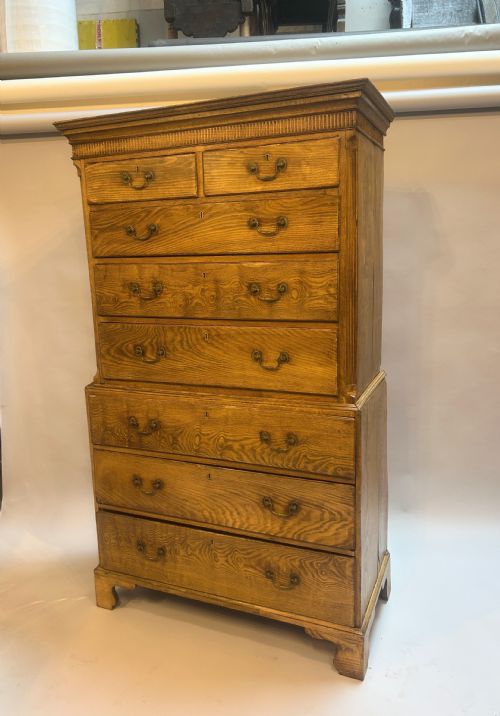
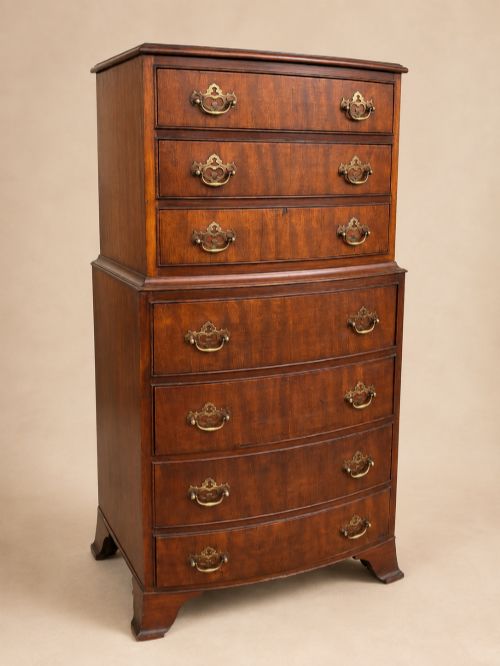
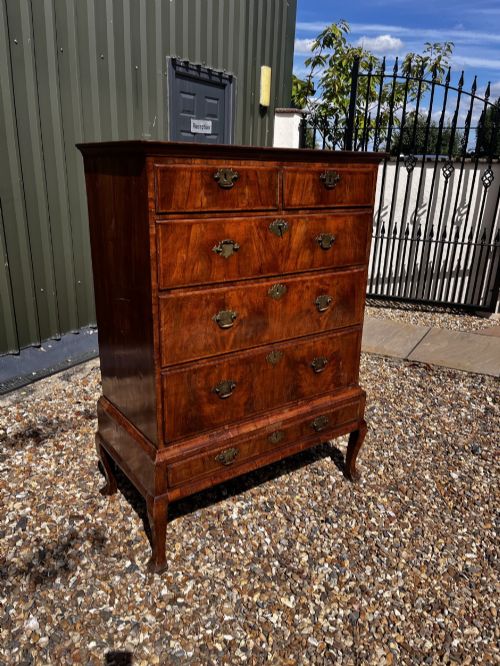
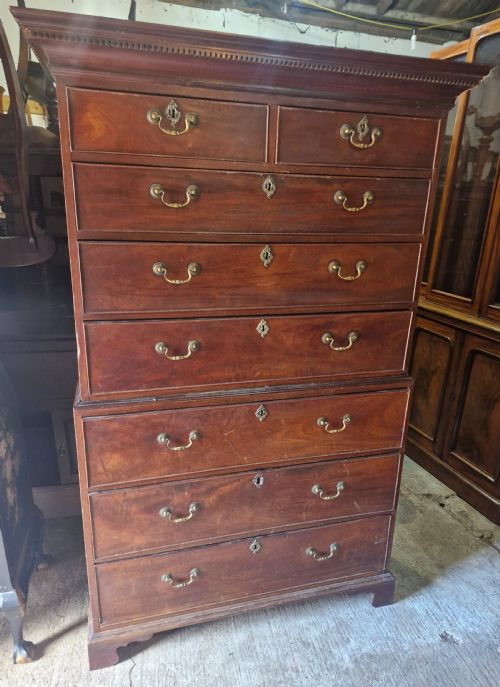
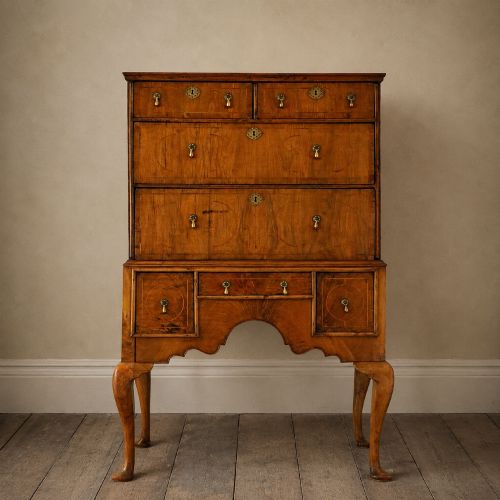
When you search for an antique wooden highboy, you encounter tall stacked case furniture primarily taking the form of chests on chests and chests on stands. These pieces provide substantial vertical drawer space while occupying a modest footprint on the floor.
The selections span from seventeenth-century walnut and oak examples up through Georgian mahogany pieces and later twentieth-century revivals. Georgian mahogany chests on chest and earlier walnut chests on stand dominate the available forms.
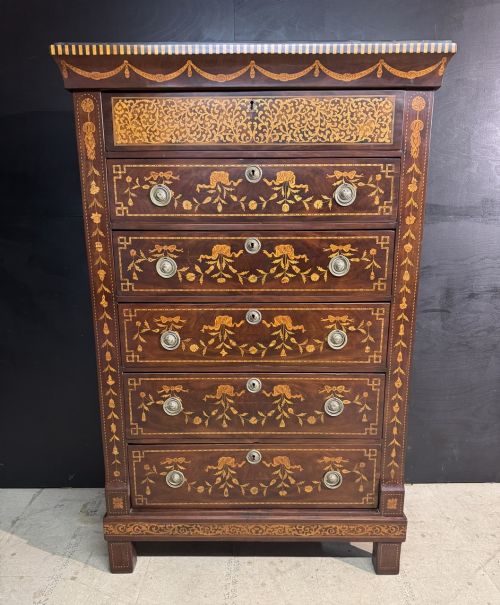
Origin points range across English workshops, Welsh oak traditions, Channel Islands cabinetmaking, and Dutch marquetry pieces. Each regional school brings distinct timber choices and decorative treatments to the vertical case format.
Materials and Construction
Cabinetmakers constructed these tall pieces using structural timbers such as oak and walnut, alongside dense imported mahogany for primary visible surfaces. Secondary woods support internal drawer framing while fruitwood inlay and burr amboyna veneer provide decorative surface contrast.
Joinery methods rely on sturdy pegged frames, dovetailed drawer construction, and crossbanding to stabilise timber against seasonal movement. Brass drop handles and escutcheons secure the drawer fronts while completing the functional hardware scheme.
Antique Wooden Highboy Retail Price Guide 2026
Typical asking prices for wooden highboy among the pieces listed under this phrase on Sellingantiques today, from the lower quarter to the upper quarter. They describe what is for sale here now, not the wider market.
The listings span multiple centuries, uniting seventeenth-century oak and walnut frames with Georgian mahogany and twentieth-century revival pieces.
Defining Quality
The calibre of a piece rests upon the crispness of its timber figuring, the integrity of its surface veneers, and the harmony of its proportions. Pieces retaining their original stands and period brassware command greater appreciation among collectors.
Subtle differences in moulding definition, the depth of drawer linings, and the restraint or ambition of marquetry inlay separate standard cabinetwork from exceptional examples. The transition between the upper and lower sections reveals the maker's structural skill.
The Antique Wooden Highboy Glossary
- Tallboy
- A tall chest of drawers, frequently built as a chest on chest where a smaller upper section sits upon a larger lower base.
- Chest on Stand
- A drawer chest elevated upon a distinct supporting table frame with legs, typical of earlier seventeenth and eighteenth-century designs.
- Marquetry
- The art of applying decorative veneer pieces in floral or geometric patterns onto a primary wood surface.
- Crossbanding
- A narrow strip of veneer laid around the border of a drawer front or top with the grain running perpendicular to the centre panel.
- Escutcheon
- A protective metal plate surrounding a keyhole, usually fashioned from brass on these case pieces.
Antique Wooden Highboy: Frequently Asked Questions
What is a highboy?
A highboy is a tall chest of drawers structured in two stacked sections or raised on a distinct low stand. This vertical format maximises drawer capacity without demanding extensive floor space.
Cabinetmakers developed these pieces to store garments and linens securely above floor dampness. Their elevated proportions give them a commanding architectural presence in a room.
How do I style a highboy?
Position your tall chest against a sturdy wall where its height anchors the surrounding furniture arrangement. Keep the top surface uncluttered to let the timber grain and upper mouldings remain the visual focus.
Pair the piece with lower seating or side tables to balance the vertical lines in your interior. Ensure adequate clearance around the drawers so they open smoothly without obstruction.
Are these pieces stable?
Due to their towering height, many chests on stand and tallboys utilise heavy internal framing and substantial base sections to maintain balance. Securing the piece to a wall with a discreet bracket provides extra security if you live in an active household.
Heavier drawer contents placed in the lower tiers naturally lower the centre of gravity. Regular checks on the floor levelling beneath the feet keep the tall frame steady.
How do I date these pieces?
Dating relies on observing timber choices, construction techniques, hardware styles, and overall proportions. Walnut and oak dominate the seventeenth and early eighteenth centuries, while mahogany prevails across the Georgian period.
Details like dovetail thickness, drawer lining materials, and marquetry motifs point towards specific decades of manufacture. Comparing the stylistic cues against documented historical periods confirms the likely era.