


Claw Foot Walnut Chest
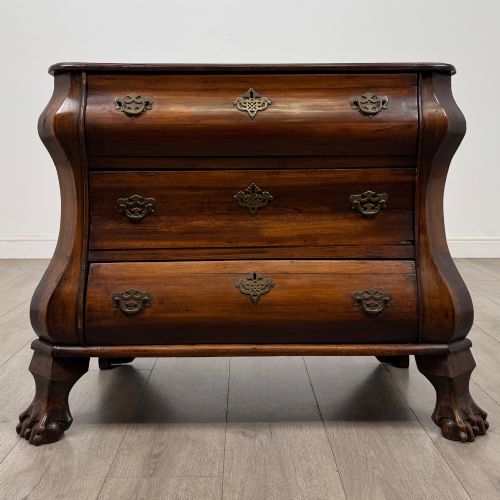
These claw foot walnut chest examples bring rich timber and bold bombé forms into a room, offering both presence and storage.
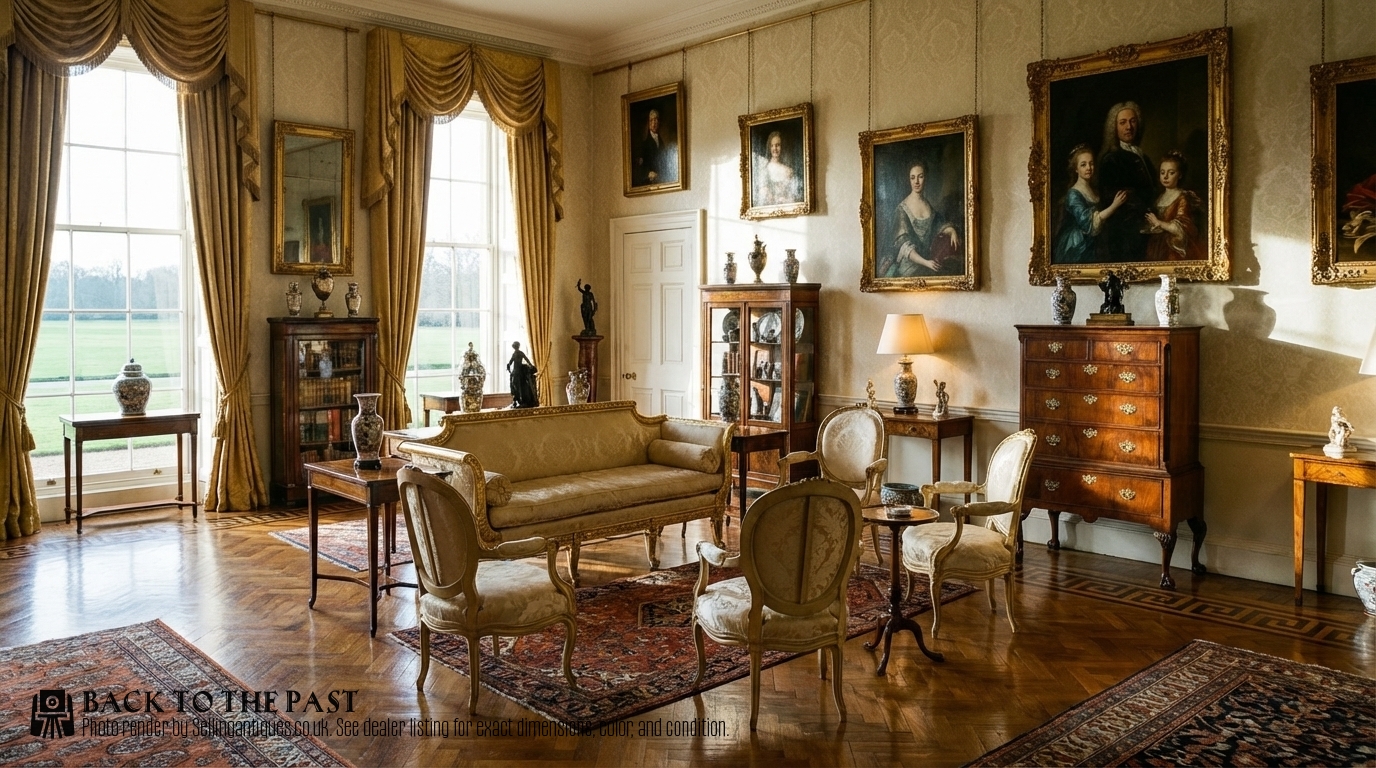
Claw Foot Walnut Chest
When you search for a claw foot walnut chest, you encounter substantial storage furniture shaped by continental and British makers across several centuries. The pieces span periods from the eighteenth century through to the Edwardian era, showing significant variation in form.
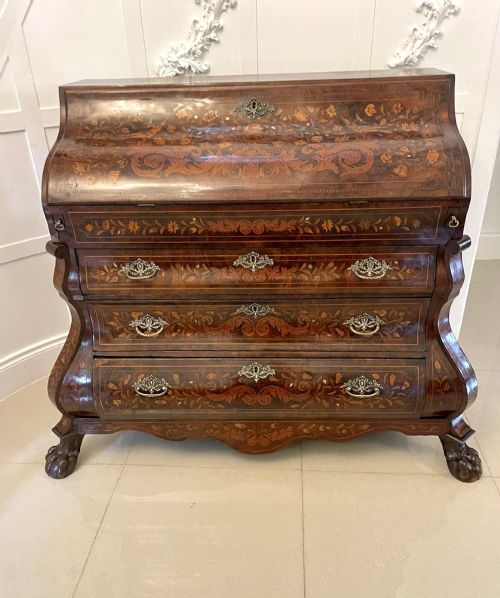
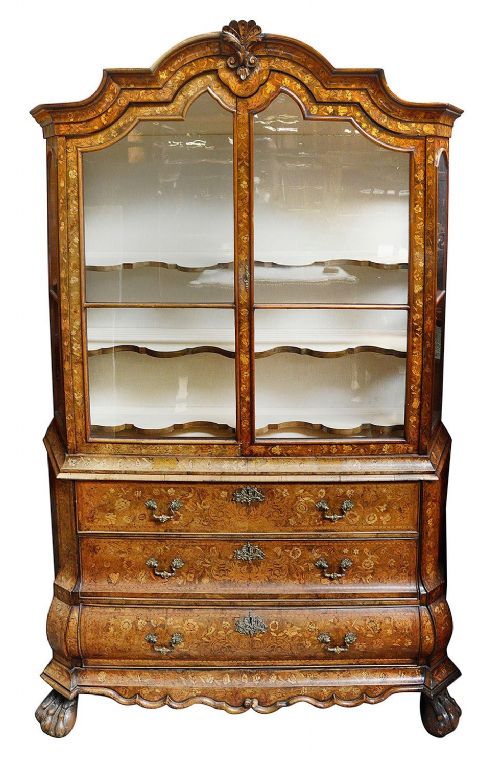
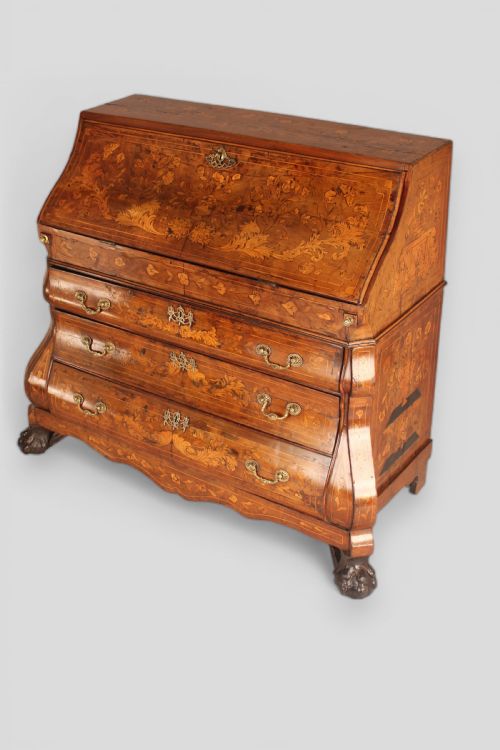
The selection here most frequently includes bureau desks and bombé chests of drawers alongside display cabinets and linen presses. Walnut and burr walnut dominate the surfaces, often enriched by fruitwood marquetry or wood inlay.
The origin stretches across English workshops and Dutch centres of cabinet making, yielding distinctive regional silhouettes. Baroque and Rococo influences shape the carved details and the characteristic swelling drawer fronts.
Materials and construction
Cabinet makers built these carcasses primarily from solid walnut and pine, applying highly figured burr walnut veneers across the principal surfaces. Fruitwood marquetry and varied wood inlay create complex floral and pictorial patterns on the drawer fronts and doors.
Secondary timbers such as mahogany and fruitwood support the internal construction of drawers and writing compartments. Brass hardware, including handles and escutcheons, finishes the composition alongside occasional glass panels in display doors.
The listings span the eighteenth century, the Georgian period, the nineteenth century and the Edwardian era.
Distinguishing quality
The standard of a piece rests upon the selection and matching of the burr walnut veneer across the facade. Superior examples display thoughtful grain continuity and crisp execution in the floral marquetry and inlay.
Construction fidelity dictates longevity, particularly in the structural stability of the curved bombé forms and the movement of heavy drawers. The integration of period mounts and the integrity of the timber surfaces separate more accomplished pieces from simpler ones.
The Claw Foot Walnut Chest Glossary
- Bombé
- A swelling or bulging outline typical of continental furniture fronts. This curvaceous profile requires advanced veneer work to follow the complex contours.
- Marquetry
- Decorative patterns formed by fitting together thin slices of various woods. Floral and pictorial motifs appear frequently across the drawer fronts.
- Vitrine
- A glass-fronted display cabinet intended for the exhibition of valued objects. These pieces often share the walnut construction and marquetry of the chests.
- Bureau
- A desk featuring a sloping writing flap that drops down to reveal internal pigeonholes and small drawers. Many examples combine this writing function with a chest base.
Claw Foot Walnut Chest: Frequently Asked Questions
How do I clean a walnut surface?
Maintain the timber by dusting with a dry, soft cloth and applying a quality wax periodically to nourish the grain. Avoid chemical cleaners and direct sunlight to protect the historic polish.
Keep the humidity in the room stable to prevent the walnut veneers from lifting or splitting over time.
Where should I place a bombe chest?
Position these substantial pieces against a sturdy wall where their curved profiles and deep proportions can be appreciated without obstructing movement. Ensure the floor is level so the drawers open evenly.
Allow sufficient clearance around the piece to view the marquetry and the carved feet properly.
How do I identify an eighteenth century piece?
Examine the construction methods visible inside the drawers and at the back, looking for hand-cut joints and native secondary timbers like pine. The presence of dense burr walnut and eighteenth century hardware offers strong indications.
Compare the silhouette against established Dutch and Georgian design conventions recorded in the period evidence.
What is a linen press cupboard?
A tall storage unit designed originally to hold folded linen and textiles on internal sliding trays or shelves. These pieces often feature panelled doors enclosing the upper storage section above a chest base.
They provide deep vertical capacity while displaying the same figured walnut surfaces found on smaller chests.