


Brown Glazed Jug
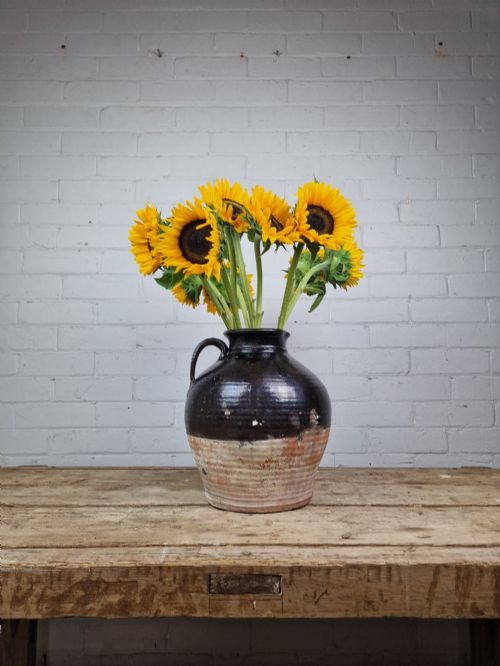
A brown glazed jug brings earthy weight and rich historic character to a table, spanning centuries of practical and decorative pottery.
Brown Glazed Jug
A brown glazed jug encompasses robust vessels designed for everyday service, display, and storage across centuries of British and continental pottery tradition. When exploring this selection, buyers encounter forms ranging from utilitarian storage flasks to decorative majolica and art pottery pieces.
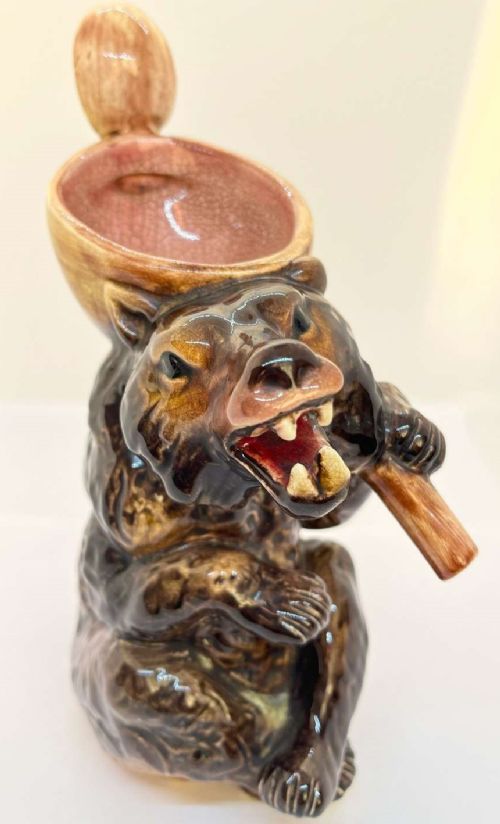
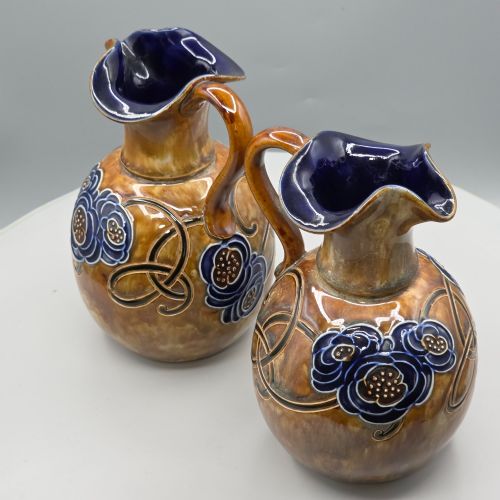
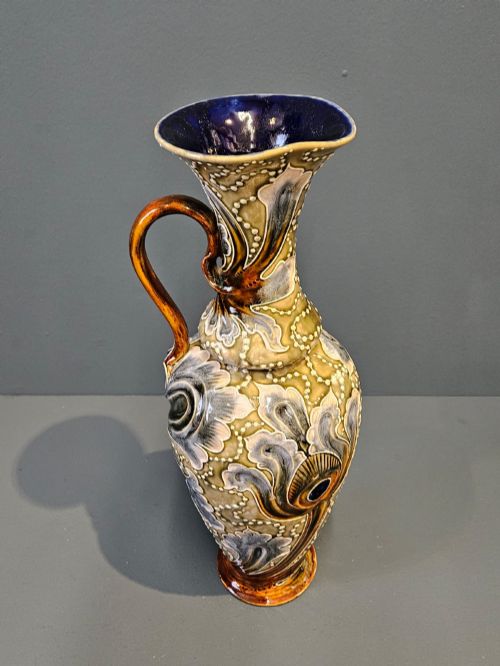
The material lineage spans utilitarian earthenware, heavy stoneware, and specialised salt glaze or lead glaze finishes. Many surviving examples date from the nineteenth century, including Victorian harvest jugs, art pottery creations, and character Toby jugs.
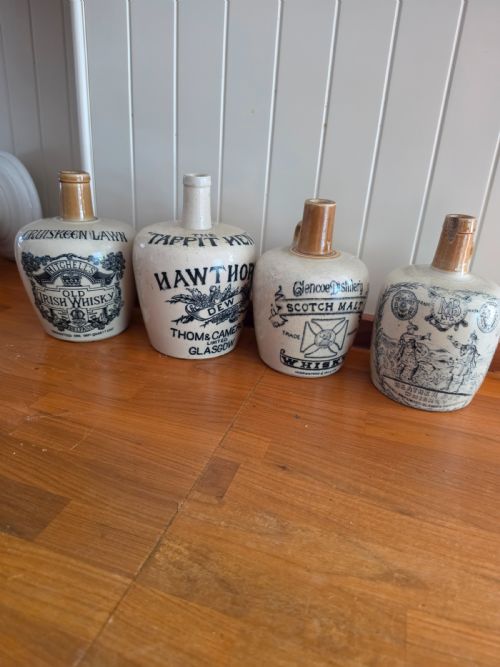
Earlier pieces reach back to the seventeenth and eighteenth centuries, featuring slipware decoration and silver collars or hinged lids. These vessels served diverse functions, acting as ale pitchers, whisky flasks, puzzle jugs, and wine bottles.
How They Were Made
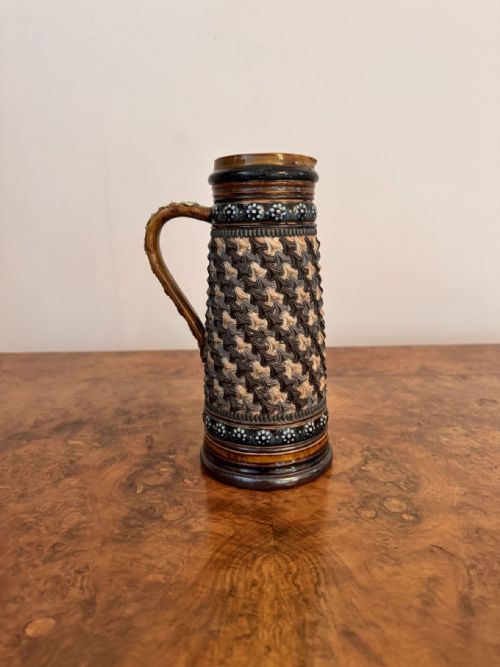
Potters shaped clay on the wheel or in moulds before applying lead glaze or salt glaze to create the characteristic impervious brown surface. Salt glazing involved throwing common salt into the kiln during high-temperature firing, producing a pitted, orange-peel texture on stoneware bodies.
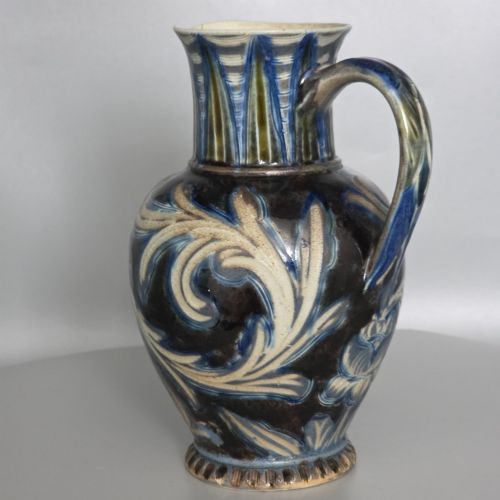
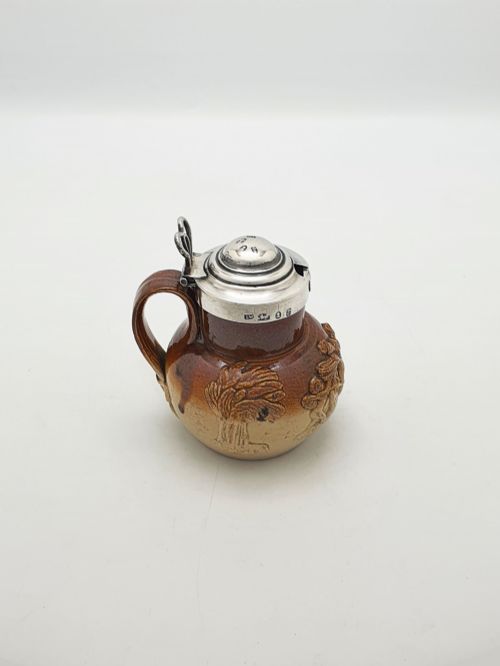
Earthenware vessels often received slip decoration, where liquid clay was trailed over a contrasting body before glazing and firing. Master artisans added intricate incised patterns, relief motifs, and applied metallic collars of sterling silver to elevate functional items.
Listings feature stoneware, earthenware, and ceramic pieces finished with salt glaze or lead glaze across the nineteenth and seventeenth centuries.
What Varies in Quality
The distinction between ordinary utility ware and superior examples rests in the crispness of moulded relief, the dexterity of hand-incised ornament, and the depth of the glaze. Pieces bearing specific artist monograms or factory stamps demonstrate individual studio skill rather than mass production.
The integration of precious metal mounts, such as hallmarked sterling silver rims and hinged lids, marks higher tiers of production intended for formal domestic settings. Condition and originality of these secondary components significantly influence the character of each piece.
Doulton Lambeth·George Jones·Holdcroft
The Brown Glazed Jug Glossary
- Salt Glaze
- A vitreous coating formed on stoneware by introducing common salt into the kiln at the height of firing. This chemical reaction creates a textured surface resembling orange peel.
- Slipware
- Pottery decorated with slip, which is liquid clay thinned to the consistency of cream, applied to the unbaked body by trailing or dipping. It represents one of the oldest decorative techniques in ceramic history.
- Majolica
- A type of earthenware coated with an opaque tin-lead glaze and painted with metallic oxide colours, popular during the Victorian era for vibrant botanical and animal forms.
- Puzzle Jug
- A traditional drinking vessel featuring a perforated neck that prevents normal drinking, requiring the user to imbibe through a concealed tubular spout connected to the handle.
Brown Glazed Jug: Frequently Asked Questions
How were brown glazed jugs used?
These vessels primarily served to store, pour, and serve liquids such as ale, wine, water, and spirits in domestic or tavern settings. Larger examples functioned as storage flagons or advertising flasks for commercial goods.
Over time, many transitioned into decorative display items, particularly as Victorian art pottery and majolica gained popularity in middle-class homes.
How can I tell the age of a stoneware jug?
Dating relies on examining manufacturing techniques, stylistic markers, maker stamps, and the characteristics of the glaze and body fabric. Earlier pieces often display weightier proportions, hand-thrown irregularities, and simpler salt-glazed surfaces.
Later nineteenth-century examples frequently incorporate factory stamps, intricate incised art pottery designs, or hallmarked silver collars that provide precise chronological markers.
What is the difference between stoneware and earthenware?
Stoneware is fired at higher temperatures until the clay body vitrifies, making it completely non-porous and naturally water-resistant even without glaze. Earthenware uses a more porous clay fired at lower temperatures, requiring a protective glaze layer to hold liquids.
Stoneware generally offers greater durability and weight, which explains its widespread historical use for heavy-duty storage and tavern flagons.