
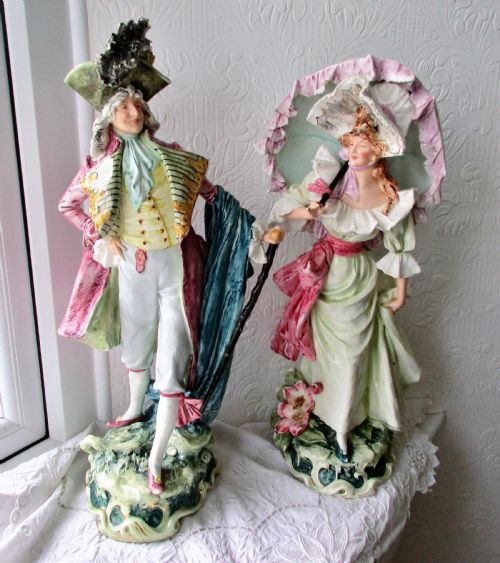


19th Century French Pottery
These 19th century french pottery pieces bring provincial earthenware, faience, and salt-glazed stoneware into everyday spaces.
19th Century French Pottery
When you search for 19th century french pottery, you encounter a varied selection of utilitarian vessels, decorative vases, and figurative pieces originating from regional workshops. The selection centres heavily on earthenware and faience, spanning styles from French provincial to Rococo Revival.
Confit pots, tian bowls, and water filters represent the utilitarian domestic output, whilst painted faience vases, urns, and figurines cater to interior display. Most items originate from the nineteenth century, with occasional pieces stretching back into the eighteenth or forward toward the early twentieth century.
Regional production defines much of what appears, from the green-glazed terracotta of the South of France to specialised ceramics from Desvres, Gien, Quimper, and Bavent. Buyers encounter both robust kitchen vessels designed for heavy use and highly decorative polychrome wares intended for salons.
Materials and construction
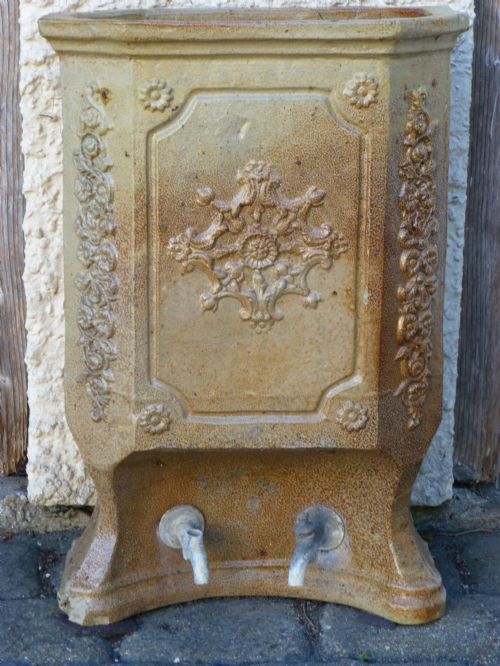
Makers utilised local clays, shaping terracotta, earthenware, and stoneware either by hand or upon the wheel to form substantial vessels like confit jars, tian bowls, and water filtration fountains. Salt glazing and lead glazing provided durable, waterproof surfaces for functional containers holding liquids or preserves.
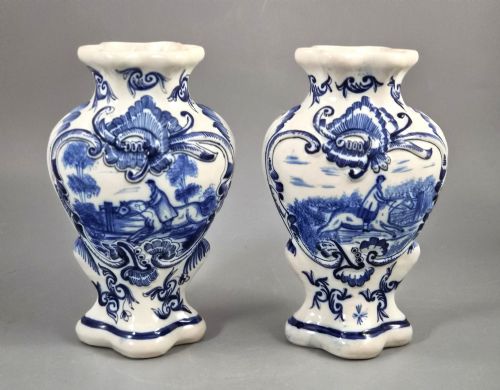
Tin glazing offered a smooth white ground on faience pieces, upon which painters applied manganese blue, polychrome enamels, and detailed mythological or floral motifs before firing. Relief moulding appeared on figurines, wall brackets, and commemorative items, adding sculptural depth beneath the glaze.
Evaluating quality and execution
The degree of artistic control in the painting and modelling separates standard kitchen utility wares from high-end cabinet pieces. Fine faience relies on crisp hand-painted detailing, balanced polychrome palettes, and careful glaze application without excessive pooling or crawling.
Subtlety of form and uniformity in regional glazes dictate the standing of utilitarian items like confit pots and tian bowls. Pieces retaining clear factory marks or attributed to notable potteries carry distinct documentary value alongside their physical merit.
Fourmaintraux-Courquin at Desvres·Gien Faience·Bavent In Normandy·Sarreguemines·HR Quimper·Jules Vieillard
The 19th Century French Pottery Glossary
- Confit pot
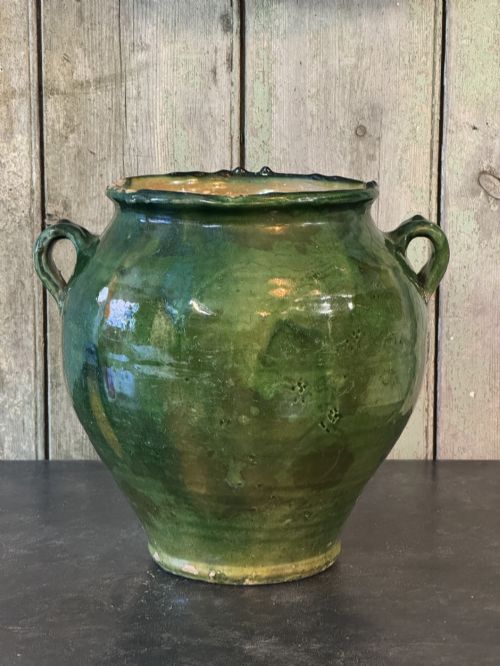
- A traditional French earthenware jar featuring a glazed interior and upper exterior, originally utilised for storing preserved meats. These pots come in various sizes and display characteristic earth-toned lead glazes.
- Salt glaze
- A vitreous coating formed by throwing common salt into the kiln during high-temperature firing, creating an orange-peel texture upon stoneware. This treatment provides exceptional durability for water filters and barrels.
- Tian bowl
- A large, wide earthenware basin from the South of France used in domestic food preparation and washing. They typically exhibit deep green or yellow lead glazes over heavy clay bodies.
- Vide-poche
- A small decorative dish intended for emptying pockets of loose items like keys or coins. In French ceramics, these appear frequently as fretted or shaped faience trays.
19th Century French Pottery: Frequently Asked Questions
What were confit pots used for?
Confit pots served primarily as storage containers in French farmhouses for preserving meats such as duck or pork in fat. Their partially glazed earthenware construction kept contents stable in cool pantries.
Today, collectors utilise these pots as decorative accents, umbrella stands, or vase containers for dried botanicals and large floral arrangements.
How do I identify French faience?
French faience typically presents a tin glaze that creates an opaque white background, decorated with hand-painted blue, manganese, or polychrome pigments. Motifs range from traditional florals to mythological figures and armorial crests.
Examining the foot ring and underside often reveals maker marks, painter initials, or factory stamps specific to regions like Desvres, Quimper, or Gien.
Are salt glazed items waterproof?
Salt glazing creates a dense, vitrified surface that seals the porous clay body underneath, making the vessel naturally impervious to liquids. This technical quality suited salt-glazed stoneware for water filtration fountains, vinegar barrels, and storage crocks.
Such vessels require no internal modern sealing and function safely with water when cleaned with care.
Where were tian bowls made?
Tian bowls originated in the rural South of France, where workshops produced them locally from heavy earthenware clays. Their generous dimensions accommodated large-scale domestic chores.
In modern interiors, these broad bowls sit comfortably on large tables or floor spaces as sculptural display items.