


Brass Wall Charger
A brass wall charger brings heavy metalwork, intricate engraving and global revival styles from the nineteenth century onto the wall.
Brass Wall Charger
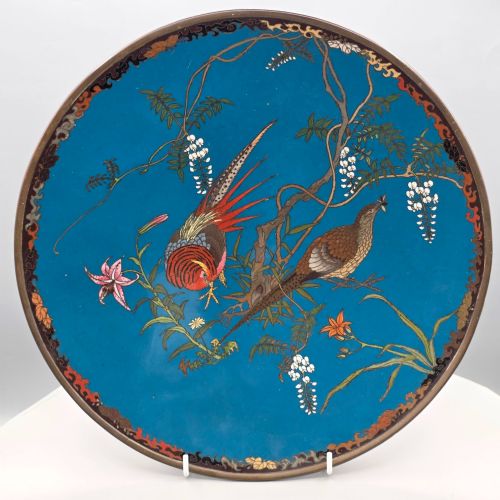
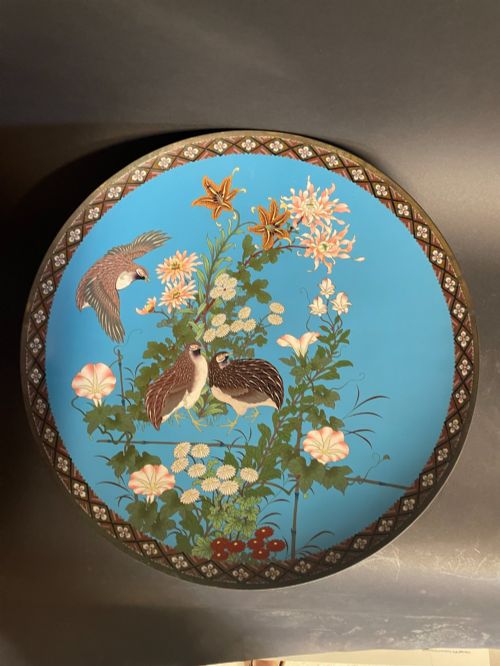
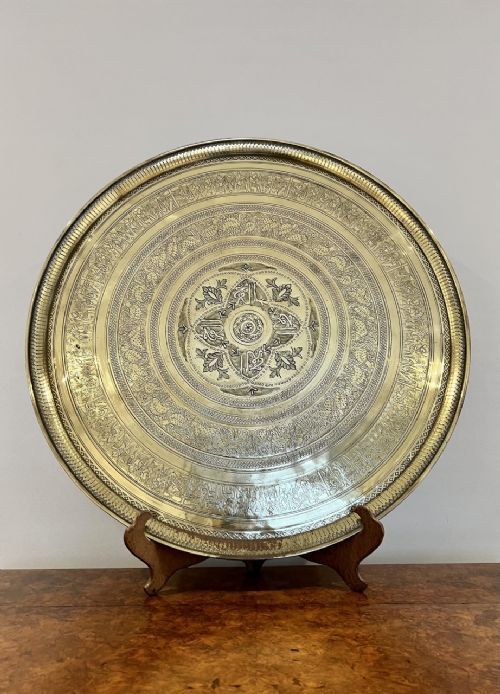
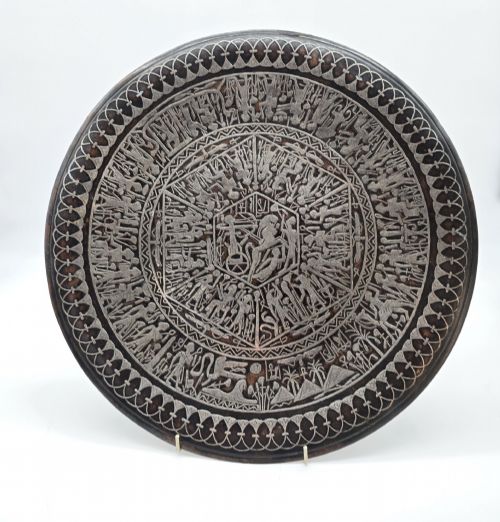
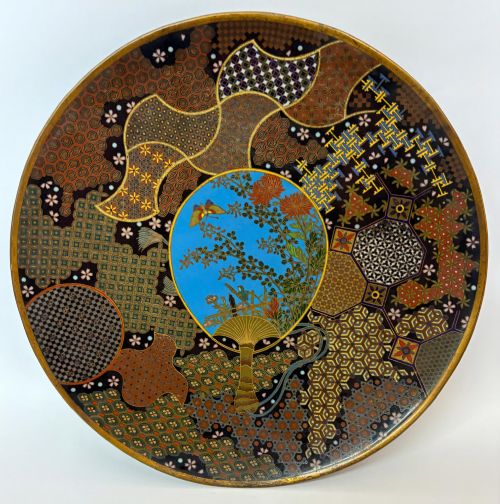
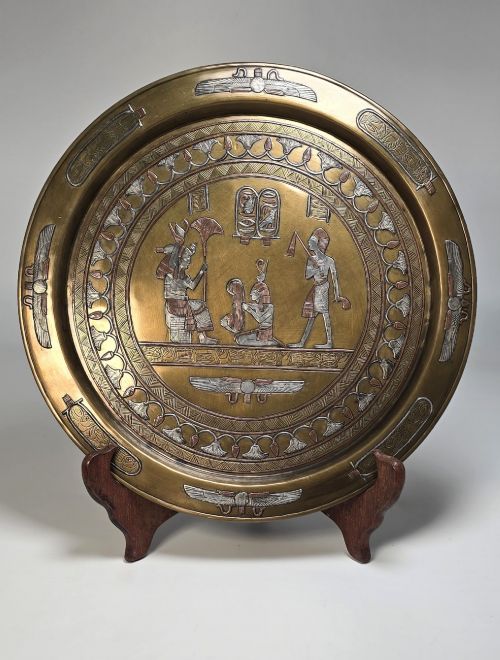
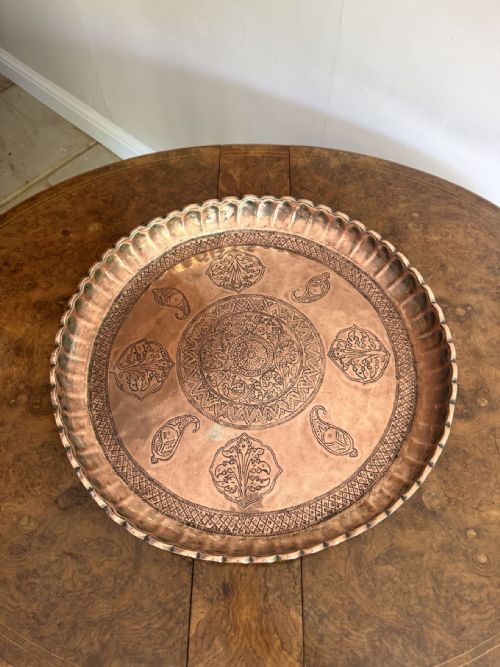
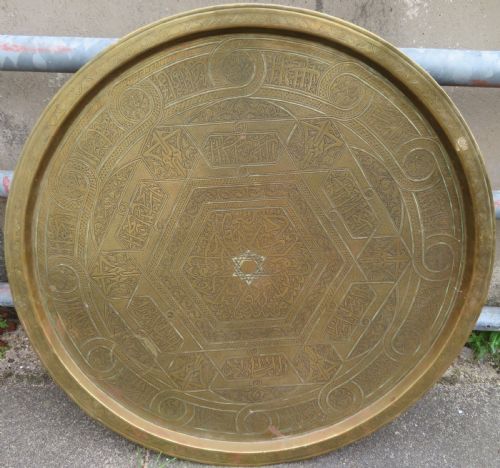
A brass wall charger is a large decorative metal dish or plaque intended for display, encompassing circular trays, platters and shallow bowls. When searching for a brass wall charger, buyers encounter diverse cultural traditions ranging from Japanese Meiji period cloisonné enamel and Middle Eastern Cairo Ware to British Arts and Crafts metalwork.
The selections span the eighteenth century to the early twentieth century, with a strong concentration of late nineteenth-century Victorian and Meiji examples. Pieces frequently double as trays or shields, fitted with wall hanging mechanisms to display detailed repoussé, engraving and inlaid metal designs.
How they were made
Makers utilised base metals such as brass, copper, bronze and patinated metal as the foundation for elaborate surface decoration. Techniques combined hammering, repoussé relief work and hand engraving with silver and copper inlay.
Japanese examples incorporated cloisonné enamel, applying vitreous enamel pastes within fine wire compartments on metal bases. Middle Eastern and Cairo Ware pieces integrated mixed metal inlay, while British Arts and Crafts items relied on hand-hammered surfaces.
Several chargers capture distinct animal personalities, depicting leaping koi, owls by Mount Fuji, frogs, and attentive ibises frozen in metal.
What varies in quality
Quality rests upon the crispness of the hand engraving and the complexity of the metal inlay. Superior examples display deep, controlled repoussé relief and finely balanced composition across the surface of the charger.
The precision of cloisonné wirework and the depth of the enamel palette distinguish master-level Japanese chargers from simpler production pieces. In Middle Eastern and Indian metalwork, the density and neatness of the silver and copper inlay determine the grade.
The Brass Wall Charger Glossary
- Repoussé
- A metalworking technique where the artisan hammers the design from the reverse side to form a raised relief on the front. This method creates tactile depth on chargers and shields.
- Cloisonné
- An enamelling process using thin metal wires soldered to a base to create cells filled with coloured glass paste. Japanese artisans mastered this technique to depict birds, flora and landscapes.
- Cairo Ware
- Late nineteenth-century metalwork originating in Egypt, typically comprising brass or bronze inlaid with silver and copper calligraphy or geometric patterns. These items were popular during the Grand Tour period.
- Alms dish
- A shallow basin traditionally used in churches for collecting offerings, often featuring embossed religious or heraldic motifs. Earlier examples from the eighteenth century frequently take this form.
- Komai style
- A specialised Japanese metalworking technique involving iron or bronze inlaid with fine threads of gold and silver. It is frequently seen on Meiji period decorative plates.
Brass Wall Charger: Frequently Asked Questions
How do I hang a brass wall charger safely?
Most chargers feature an integrated foot ring or rim that accommodates a secure wall wire or spring bracket. Ensure the chosen fixing matches the substantial weight of the metal.
Avoid adhesives or damaging direct screws through the base metal. Professional picture wire looped securely around the reverse rim distributes the weight evenly.
How should I clean my antique brass charger?
Dust the surface regularly with a soft, dry cloth to prevent grime accumulation in the engraved recesses. Avoid aggressive chemical polishes that strip desirable age patination.
Historical pieces benefit from retaining their darker oxidation highlights. Gentle cleaning preserves the contrast in mixed metal and inlaid surfaces.
What is the difference between a charger and a tray?
A charger is primarily designed for display and decorative wall hanging rather than functional service. Trays often feature integrated handles or flat bases suited for carrying.
Many nineteenth-century examples crossed boundaries, serving as dining accessories before transitioning to wall display items. Pierced rims and hanging loops generally indicate intended wall placement.
How do I date a nineteenth-century brass charger?
Examine the manufacturing technique, tool marks on the reverse and stylistic influences such as Aesthetic Movement or Egyptian Revival motifs. Maker marks, signatures and registration stamps offer precise chronological markers.
Material composition also guides dating, as mixed metal and patinated copper work flourished particularly during the late Victorian and Meiji eras.