


Repousse Copper Tray
These repousse copper tray examples range from Arts and Crafts chargers to intricate Eastern pieces, offering tactile depth and historic character.
Repousse Copper Tray
A repousse copper tray brings hammered texture and distinct metalwork into a room, serving as both a functional dish and a wall charger. When searching for a repousse copper tray, buyers encounter forms spanning decorative chargers, card trays, and gallery dishes.
The pieces on this page originate from distinct stylistic traditions, notably the British Arts and Crafts movement, Art Nouveau, and Anglo-Indian or Persian workshops. Many examples date from the late nineteenth century up to 1920, reflecting periods of intense artisan production.
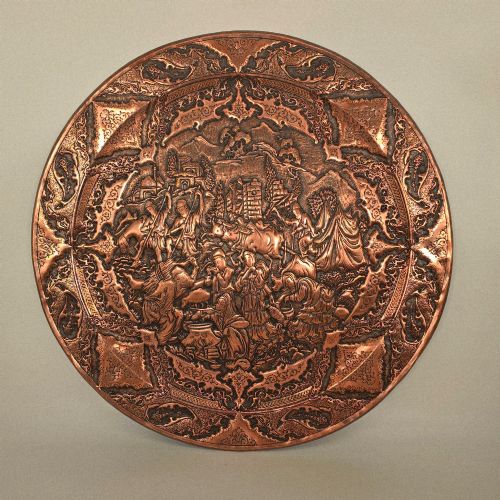
British examples often display the hand of regional guilds with motifs like pomegranates and foliage. Alongside these, imported Indo-Persian and Kashmiri pieces introduce pierced borders and dense chased patterns to the selection.
How they were made
Artisans formed these objects by hammering sheet metal from the reverse side to raise the design in relief, a technique known as repousse. Working with copper, brass, and patinated copper, makers combined this beating method with fine chasing from the front to sharpen details.
Certain pieces integrate contrasting elements such as iron, silver plate, or wooden frames in oak and hardwood. Workshops also utilised hand-piercing to create intricate openwork borders alongside solid embossed surfaces.
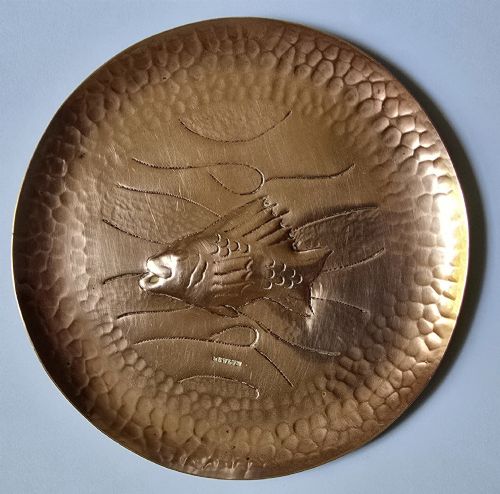
Copper fish and hunting goddesses stare out from nineteenth-century metalwork, keeping silent watch over quiet hallways.
What varies in quality
Quality rests in the crispness and depth of the hammered relief work, distinguishing hurried production from master craftsmanship. Heavier gauge metal and thoughtful composition of floral or animal motifs elevate certain chargers well above standard utility items.
The distinction also lies in the surface finish and patination, where deliberate handling highlights the transition from recessed planes to raised highlights. Stamped maker marks or well-documented attribution add distinct weight to an individual piece.
Newlyn·Faulkner Bronze Company
The Repousse Copper Tray Glossary
- Repousse
- Metalworking technique where the design is hammered into relief from the reverse side. This process creates tactile dimension on the surface of chargers and dishes.
- Chasing
- Working metal from the front side to refine and sink lines after the initial repousse shaping. It adds sharp detail to leaves, animals, and geometric borders.
- Charger
- A large decorative plate or tray intended for display rather than standard dining use. These items frequently hang on walls or sit centrally on furniture.
- Patinated copper
- Metal that has developed an aged surface coloration through natural oxidation or chemical treatment. This finish accentuates the varied planes of hammered relief.
- Pierced work
- Metal sheet that has been cut through to form openwork patterns or grilles. Kashmiri and Indian pieces often employ this method along their rims.
Repousse Copper Tray: Frequently Asked Questions
How were copper trays used?
These metal items served as visiting card receivers, serving dishes, or decorative wall chargers in period interiors. Large chargers were frequently mounted on walls to catch the light in Arts and Crafts and eclectic room schemes.
Smaller card trays sat on hall tables to greet visitors, while gallery trays held glassware or calling cards. Their reflective metallic surfaces added warmth and visual texture to dark wood furniture.
How do I clean a copper tray?
Historic metal surfaces benefit from minimal intervention to preserve their original patination and aged character. Dusting with a soft dry cloth is usually sufficient for regular maintenance.
Harsh commercial polishes should be avoided because they strip away desirable age tones and historical depth. Specialist conservator waxes can protect the metal if handling is frequent.
How do I distinguish Arts and Crafts trays?
British Arts and Crafts examples often feature hand-beaten surfaces with motifs drawn from nature, such as pomegranates, fish, and stylised foliage. Strumming tool marks left by the artisan remain visible across the copper plate.
Guilds like Newlyn left distinct stamps on the rim or base, tying the object to specific regional workshops. These pieces prioritise honest construction and direct evidence of hand manufacture over machine perfection.
What is the difference between Indo-Persian and British trays?
Indo-Persian and Kashmiri work tends to feature dense, all-over engraved patterns, pierced borders, and heavier integration of silver plating. The decorative vocabulary relies on intricate geometric and floral repetition.
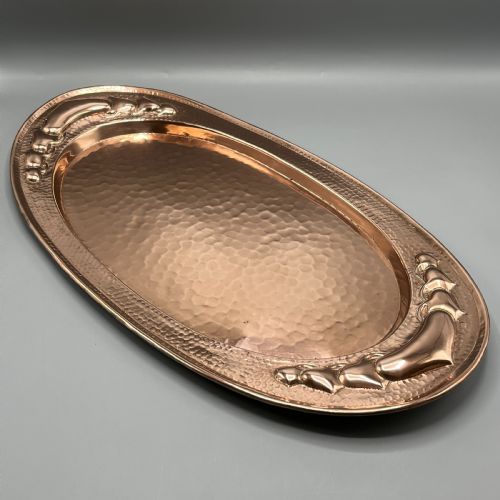
British pieces from the same era lean towards bolder, stylised Art Nouveau plant forms or simple hammered textures with prominent central motifs. The overall aesthetic reflects local British guild ideals rather than traditional Eastern court designs.