




Copper Serving Tray
These copper serving tray pieces bring tactile warmth to any table, combining heavy metal construction with hand-finished detail.
Copper Serving Tray
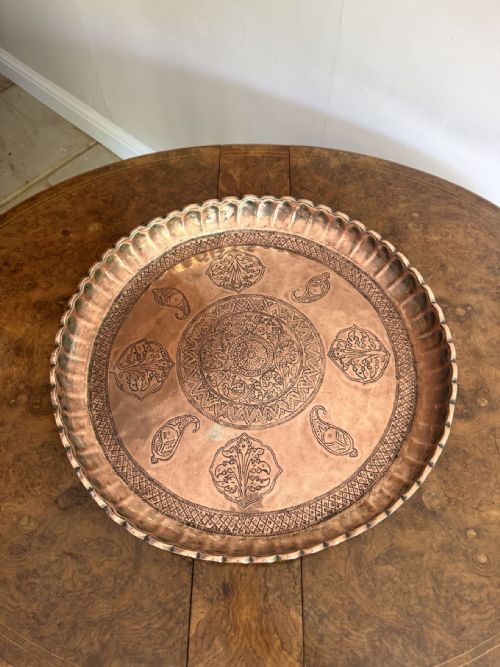
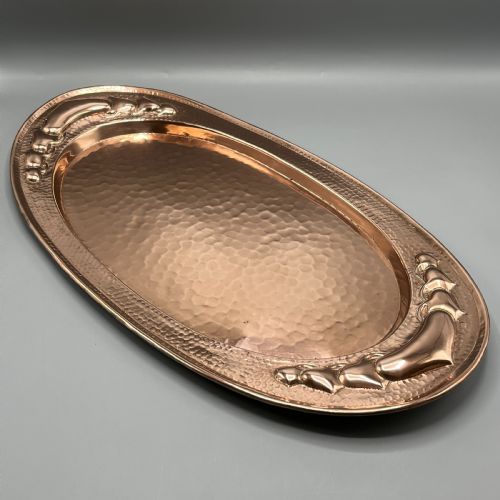
When you search for a copper serving tray, you enter a field defined by robust nineteenth-century utility and decorative Arts and Crafts or Art Nouveau handcraft. These pieces range from large circular chargers and twin-handled tea platters to smaller cocktail and card trays.
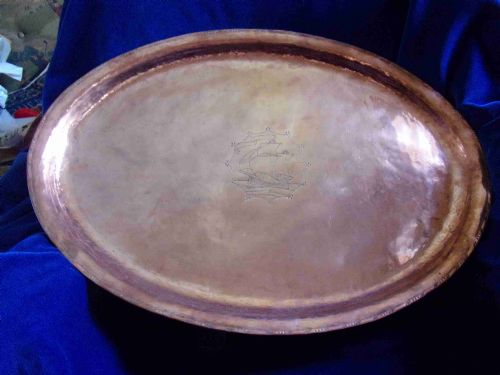
You are most likely to meet circular or oval pieces bearing hammered surfaces, repoussé floral motifs, or mixed metal inlays. The selection moves between plain Victorian kitchenware, English arts and crafts workshop output, and various international designs.
Regional variations include engraved Middle Eastern, Indo-Persian, and Kashmiri work alongside Japanese cloisonne enamel pieces. European output leans heavily on Art Nouveau whiplash curves and Newlyn school handbeaten textures.
Standards of craftsmanship
Quality rests upon the weight of the metal gauge and the precision of the hand-worked decoration. Stronger pieces display crisp repoussé relief, secure handle attachments, and purposeful hammering rather than uniform machine stamping.
The distinction between standard commercial output and workshop pieces lies in the articulation of the surface design. Maker attribution, such as signed Newlyn or marked Guild work, elevates the standing of an individual tray.
Copper Serving Tray Retail Price Guide 2026
Typical asking prices for copper serving tray among the pieces listed under this phrase on Sellingantiques today, from the lower quarter to the upper quarter. They describe what is for sale here now, not the wider market.
The inventory records regional styles ranging from British Arts and Crafts and Victorian domestic ware to Indo-Persian and Japanese metalwork.
Hugh Wallis·John Pearson·Newlyn·WMF
The Copper Serving Tray Glossary
- Repoussé
- A metalworking technique where the artisan hammers the design from the reverse side to form a raised relief on the front. This method creates tactile depth on trays.
- Old Sheffield Plate
- An early fusing process where a sheet of silver is fused to a copper core by heat and pressure. Edges often reveal the underlying copper seam.
- Arts and Crafts
- A design movement valuing manual skill, hand-beaten textures, and vernacular styles over industrial mass production. This style dominates many copper serving trays.
- Cloisonne Enamel
- A technique where enamel paste is fired within wire compartments soldered to a metal base. It appears on select decorative trays.
- Gallery tray
- A serving tray fitted with a raised pierced or solid railing around the perimeter to secure items. These often feature wooden bases combined with copper or brass.
Copper Serving Tray: Frequently Asked Questions
Are these trays food safe?
Most antique copper serving trays were designed for display, tea service, or holding decanters rather than direct food contact. Unlined copper reacts with acidic foods and beverages.
If you plan to use a tray for serving drinks, protect the surface with a linen cloth or glassware coasters. Modern food safety standards rarely apply to nineteenth-century decorative metalware.
How do I date an antique copper tray?
Examine the construction methods, tool marks, and any maker stamps or registry marks on the reverse. Handbeaten marks combined with Arts and Crafts or Art Nouveau styling typically point to the late nineteenth or early twentieth century.
Plain rolled edges and machine-stamped uniformity usually indicate later twentieth-century production. Heavier Old Sheffield Plate pieces often date to the early nineteenth century.
Can I use a copper tray daily?
Daily use is entirely practical for serving drinks, holding letters, or organising coffee table items, provided you handle the piece with care. Soft cloths under heavy items will prevent unnecessary scratching.
Expect the metal to acquire further natural handling marks over time, which contributes to the aesthetic life of antique copper.