




Arts and Crafts Tray
An arts and crafts tray brings hand-beaten metalwork and solid timber into daily use, offering tactile honesty that mass-produced homeware lacks.
Arts and Crafts Tray
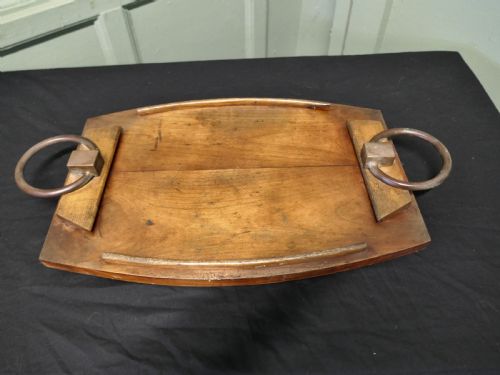
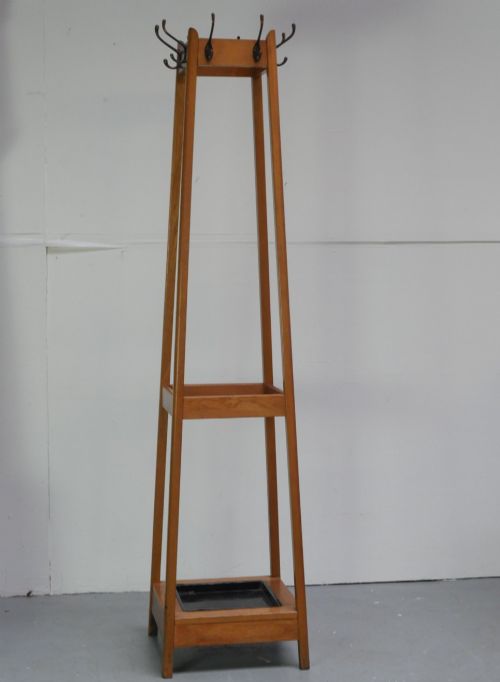
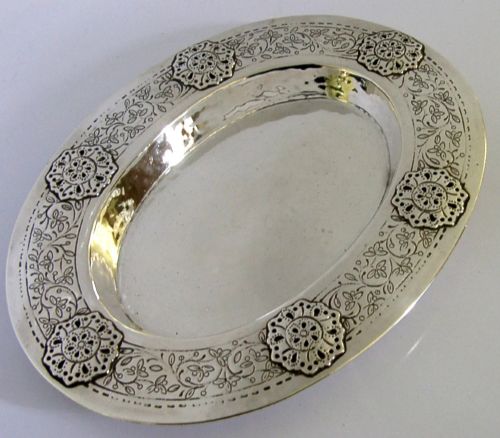
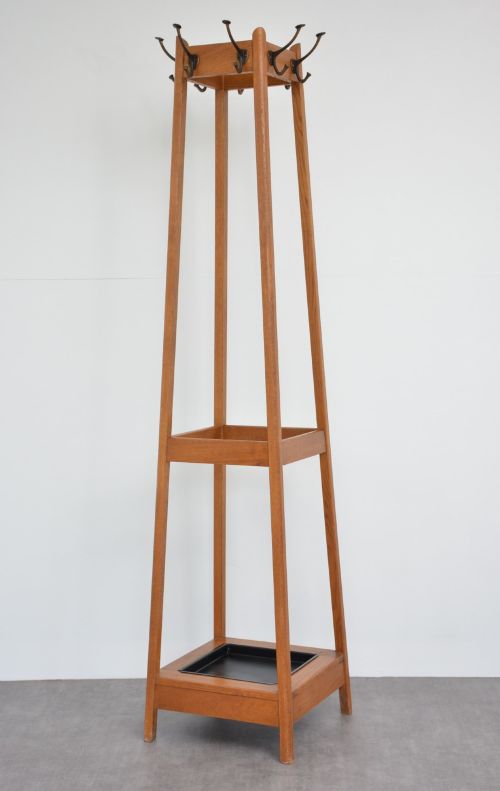
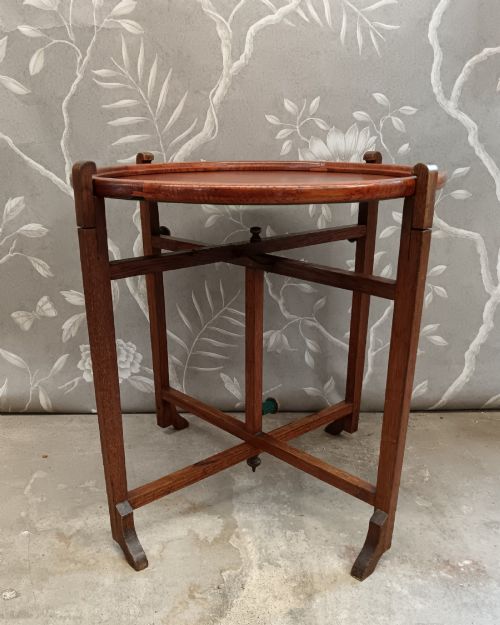
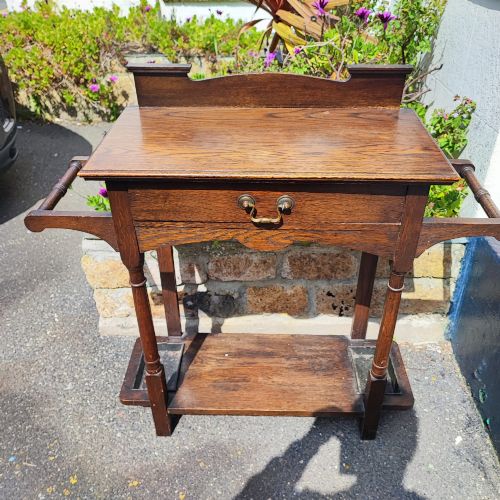
An arts and crafts tray encompasses heavy metal serving platters, decorative chargers, and the integral drip trays found in hall stands. These items emerge from late Victorian, Edwardian, and early twentieth-century workshops valuing utility alongside simple ornamentation. Buyers frequently encounter beaten copper and pewter vessels bearing riveted handles, alongside oak hall furniture incorporating removable metal trays.
Makers and guilds across Britain produced these domestic objects in styles intersecting with Art Nouveau and English Country House aesthetics. Surviving examples range from small visiting card dishes to large serving platters and wall plates. The category also embraces specialised forms like ship's trays and smoking stands designed for specific domestic routines.
Materials and construction methods
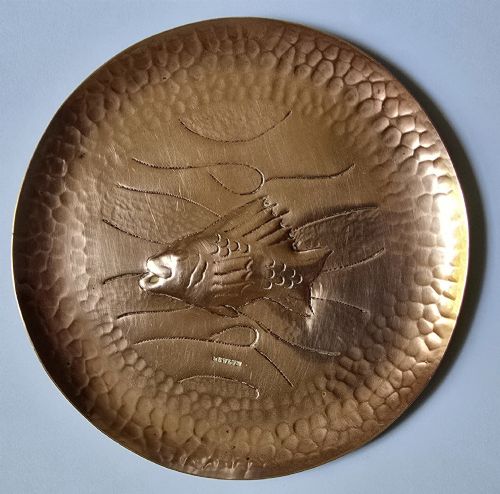
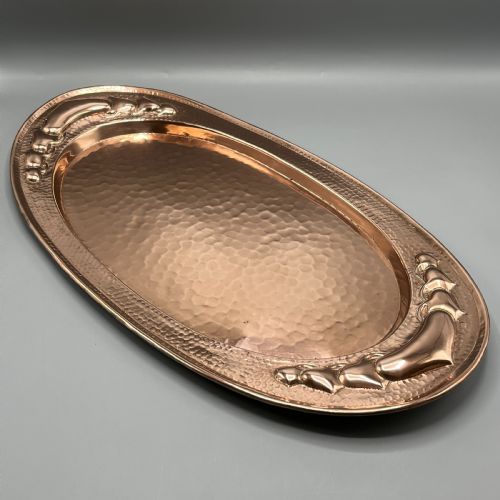
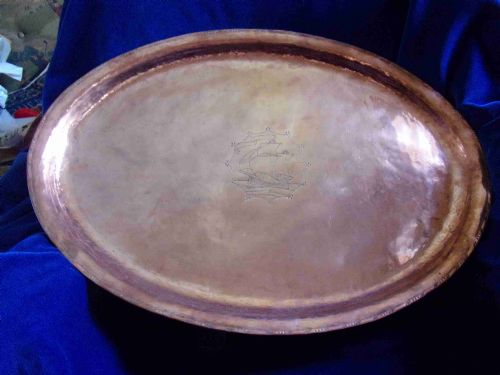
Metals such as copper, brass, and pewter dominate the metalware pieces, shaped by hand-hammering and planishing over wooden blocks to create textured surfaces. Artisans applied repoussé techniques to raise floral motifs, animal subjects, and geometric borders from the reverse side of the sheet. Silver plating and sterling silver appear in select serving platters and cocktail trays.
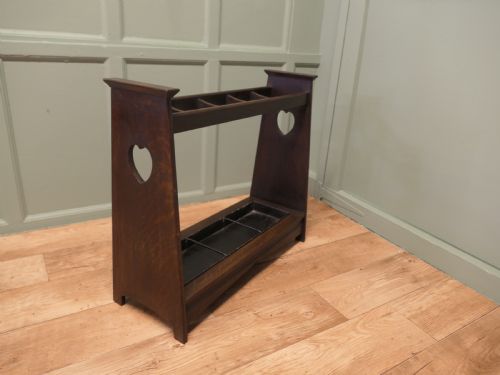
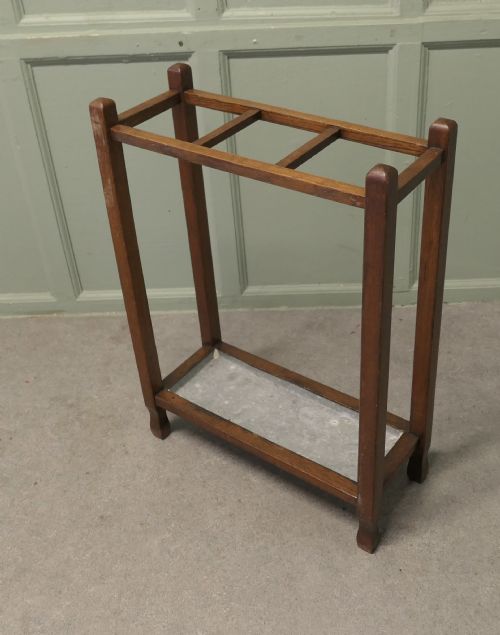
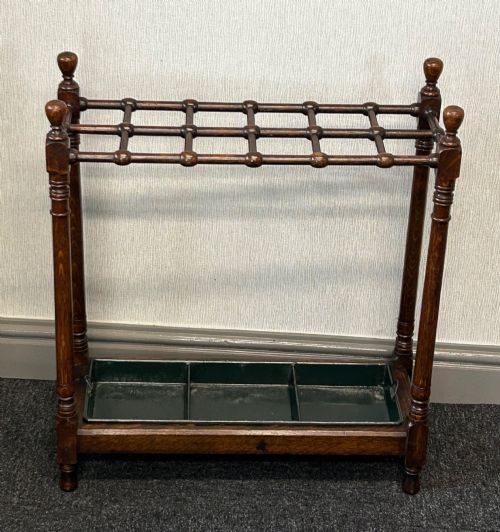
Woodwork relies primarily on oak, mahogany, elm, and walnut for furniture-based trays and umbrella stands. Joinery emphasises sturdy construction through visible tenons and carved detailing, often paired with original metal liners designed to catch moisture.
Arts and Crafts Tray Retail Price Guide 2026
Typical asking prices for arts and crafts tray among the pieces listed under this phrase on Sellingantiques today, from the lower quarter to the upper quarter. They describe what is for sale here now, not the wider market.
Several umbrella stands include integrated copper trays designed to keep muddy hallway floors entirely pristine.
Assessing quality and execution
Quality rests upon the depth and control of the hand-beaten finish, where confident planishing marks distinguish skilled metalwork from mechanical stamping. The weight of the metal sheet and the crispness of repoussé motifs, such as pomegranates or foliage, dictate the piece's sculptural presence.
For wooden forms and furniture trays, structural integrity and the preservation of original metal drip pans determine value. Pieces carrying workshop stamps or verifiable attributions to prominent schools and designers command greater distinction than unmarked commercial output.
Liberty and Co·Newlyn·Hugh Wallis·John Pearson·Archibald Knox·Hukin and Heath·Faulkner Bronze Company
The Arts and Crafts Tray Glossary
- Planishing
- The process of smoothing and shaping metal with a polished hammer, leaving characteristic facet marks across the surface. This technique hardens the material while creating a distinctive light-reflective texture.
- Repoussé
- A metalworking technique where the artisan hammers the design from the reverse side to form a raised relief on the front. Artisans then refine the details on the upper side using chasing tools.
- Charger
- A large decorative plate or tray used traditionally for service or display rather than everyday dining. These items frequently hang on walls or sit upon sideboards to showcase intricate motifs.
- Tudric
- The trade name used by Liberty & Co. for their range of pewterware produced during the early twentieth century. Many notable designers, including Archibald Knox, created domestic pieces under this line.
- Drip tray
- A shallow removable metal liner fitted into the base of umbrella and stick stands to catch moisture from wet walking canes. They are frequently fashioned from copper, zinc, or brass.
Arts and Crafts Tray: Frequently Asked Questions
How do I clean antique copper trays?
Maintenance requires gentle washing with warm soapy water and a soft cloth to preserve the historical patina. Avoid harsh abrasive polishes that strip away the aged surface character.
Leaving the natural oxidation untouched maintains the aesthetic value established over the decades. Only mild cleaning suited for historic metalwork should ever touch the surface.
Were these metal trays meant for daily dining?
Many larger copper and brass chargers served primarily as decorative wall plates or calling card receptacles rather than kitchenware. Serving trays with twin handles saw active use for tea and hospitality.
Durability varied by metal thickness, with heavier beaten specimens built for practical service. Lighter decorative dishes remained strictly ornamental elements within Edwardian interiors.
How can I identify a Liberty piece?
Authentication relies on finding stamped maker marks, registration numbers, or specific trade names like Tudric pewter. Design traits often feature stylized floral motifs, clover leaves, or celtic-influenced lines.
Retailer stamps from Liberty and Co frequently appear on the underside of pewter dishes and oak furniture. Comparing documented workshop patterns confirms the origin.
What is the difference between Newlyn and general copperware?
Newlyn metalwork originates from the Cornish school, characterised by marine life, fish, and coastal motifs executed in heavy repoussé copper. Stamped initials or specific workshop punches often validate the geographic attribution.
General arts and crafts copper utilised broader botanical themes and less localized iconography. The distinct hand-hammered texture of the Newlyn workshop remains particularly deep and tactile.