



Hammered Copper Tray
A hammered copper tray brings tactile warmth and disciplined metalwork into a room, most often arriving from the Arts and Crafts and Art Nouveau periods.
Hammered Copper Tray
When you search for a hammered copper tray, you are looking at metalware shaped by hand, ranging from small visiting card trays to large decorative chargers and occasional table tops. The pieces most likely to be met on this page date from the late nineteenth century and the early decades of the twentieth century.
Makers working within the Arts and Crafts and Art Nouveau movements produced the majority of these examples. Forms vary from simple circular serving platters to twin-handled trays and hanging spirit kettles, sometimes incorporating materials such as oak or wrought iron.
Geographic influences stretch beyond Britain to include Persian and Anglo-Indian designs. These pieces function equally as wall-hanging decorative chargers and as serviceable trays for daily use.
How they were made
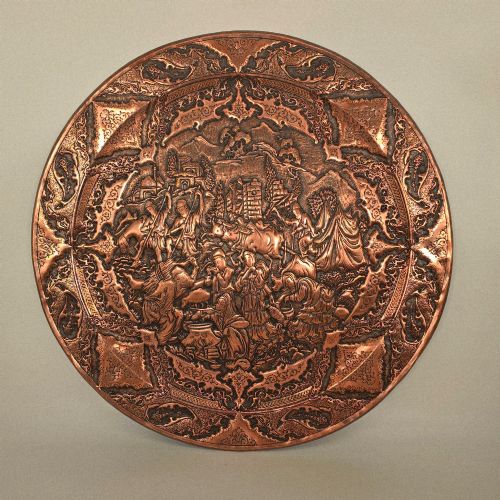
Craftsmen shaped these objects through hand-beating and repoussé work, pushing the metal from the reverse to raise motifs of pomegranates, foliage, and animal themes on the surface. Patination was frequently applied to accentuate the depth of the hand-hammered texture.
Selected examples integrate structural elements of wrought iron or oak frames, particularly when the metal functions as an occasional table top. Enamel and brass details occasionally appear to highlight specific decorative borders and floral reliefs.
Hammered Copper Tray Retail Price Guide 2026
Typical asking prices for hammered copper tray among the pieces listed under this phrase on Sellingantiques today, from the lower quarter to the upper quarter. They describe what is for sale here now, not the wider market.
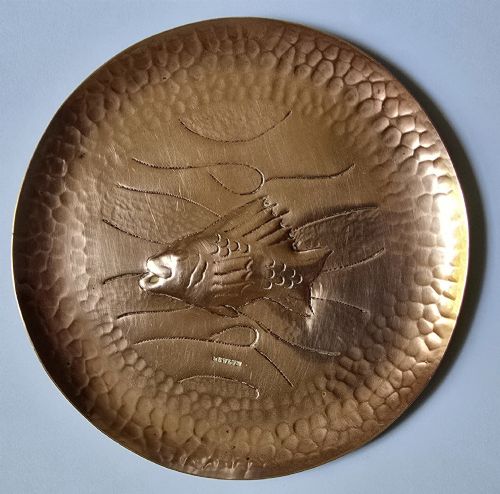
Some trays feature animal motifs peering out from the beaten foliage.
What varies in quality
The distinction between ordinary and exceptional metalwork lies in the crispness of the repoussé relief and the regularity of the hammer marks. Master metalworkers executed designs with deliberate rhythm, creating balanced compositions of foliage and figures that catch the light evenly.
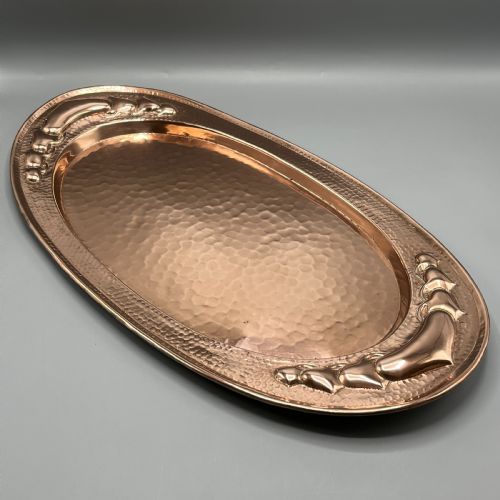
The weight of the metal and the integrity of construction also separate standard production from superior pieces. Thicker gauge copper maintains its rigidity over time, while integrated handles and rolled or pie crust edges demonstrate advanced proficiency.
Newlyn·Hugh Wallis·Faulkner Bronze Company·Gustav Stickley
The Hammered Copper Tray Glossary
- Repoussé
- Metalworking technique where the design is hammered into relief from the reverse side. This method allows craftsmen to create three-dimensional pictorial scenes and botanical motifs.
- Arts and Crafts
- Design movement spanning the late nineteenth and early twentieth centuries that prioritised handcraftsmanship over industrial manufacturing. It favoured simple forms and vernacular materials.
- Art Nouveau
- International style characterised by flowing, organic lines and floral motifs. It heavily influenced the decorative borders and handles found on many metal vessels of this era.
- Charger
- A large decorative plate or tray intended for display on a wall or sideboard rather than for practical service. These pieces frequently feature intricate engraved or raised patterns.
- Patination
- The natural or artificially induced surface colour developed on copper over time. A rich patina adds visual depth and protects the underlying metal.
Hammered Copper Tray: Frequently Asked Questions
How do I clean a hammered copper tray?
Dust gently with a soft cloth to preserve the historic surface and accumulated patina.
Avoid aggressive metal polishes that strip away character and alter the original colour.
Can I use these trays for serving food?
Many historical vessels function primarily as decorative chargers or card trays rather than tableware.
Check the surface condition and lining before exposing the metal to moisture or acidic food items.
How do I identify an Arts and Crafts tray?
Look for visible hammer marks, hand-raised botanical motifs, and robust gauges of metal.
Stylistic cues often point toward vernacular traditions and workshop stamps from the period.
Why do some trays have wooden frames?
Larger metal surfaces were frequently mounted onto oak bases to create functional occasional table tops.
The combination of hammered metal and timber was a favoured technique among regional workshops.