



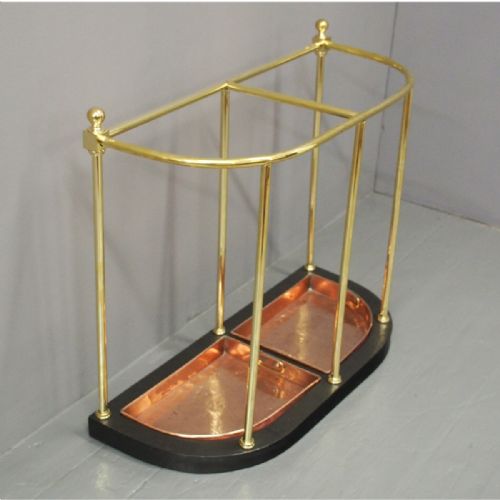
Edwardian Copper Tray
These edwardian copper tray pieces are hand-beaten serving items defined by the Arts and Crafts and Art Nouveau movements, bringing tactile warmth and period utility to any room.
What they are
An edwardian copper tray combines practical serving use with the expressive metalwork characteristic of the late nineteenth and early twentieth centuries. These pieces appear most frequently in forms such as card trays, serving platters, and larger decorative trays, shaped by the hands of period metalworkers.
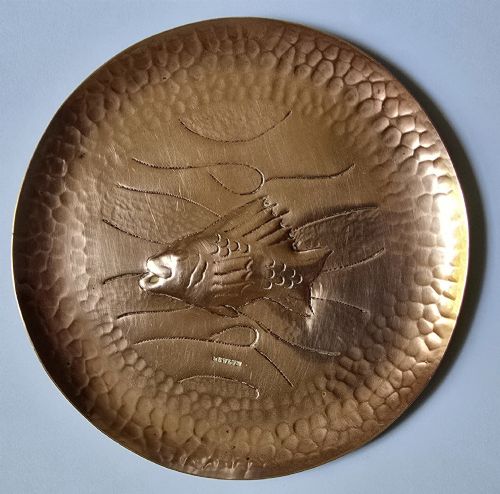
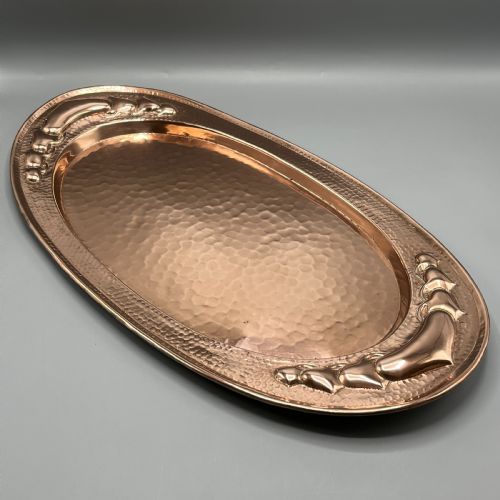
The aesthetic of an edwardian copper tray spans both Arts and Crafts and Art Nouveau styles, often featuring hand-beaten surfaces and organic motifs. Examples range from compact card trays intended for visiting cards to twin-handled serving platters designed for afternoon tea.
How they were made
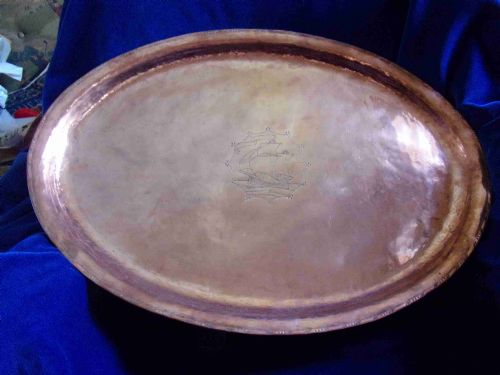
Makers fashioned an edwardian copper tray by hammering sheets of metal by hand to build up the body and create a textured finish. This technique left visible tool marks across the surface, recording the physical labour of the workshop.
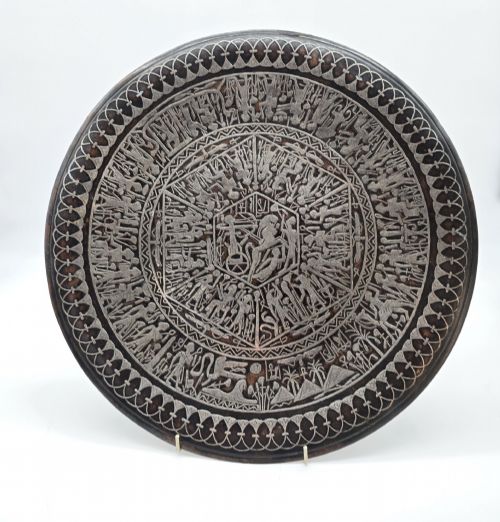
Decoration on an edwardian copper tray often involved repoussé work, where designs were pushed out from the reverse side to create raised patterns. Some pieces incorporate contrasting materials such as brass, alongside animal motifs or botanical themes.
Retail Price Guide 2026
Typical UK retail prices for edwardian copper tray, calculated from the Sellingantiques database of over a million retail prices indexed since 2003. This retail price guide relies exclusively on Sellingantiques data; no external sources or auction records are used, so the figures do not describe the wider market.
Listings for this phrase include pieces dated from 1880 through 1920, executed in copper and brass.
What varies in quality
The quality of an edwardian copper tray rests upon the crispness of the hand-beaten texture and the balance of its form. Stronger examples display deliberate, controlled hammer work rather than flat, machine-rolled surfaces.
Maker identification elevates a piece, particularly when a stamp links an edwardian copper tray to established centres of production like Newlyn. The depth of the repoussé relief and the weight of the metal further separate standard domestic items from superior studio work.
Newlyn
The Edwardian Copper Tray Glossary
- Repoussé
- A metalworking technique where the design is hammered into relief from the reverse side. This method creates tactile, three-dimensional surface decoration.
- Arts and Crafts
- A design movement valuing handcraftsmanship and traditional techniques over industrial mass production. It heavily influences the construction of these metal items.
- Art Nouveau
- A style characterised by flowing, organic lines and motifs derived from the natural world. It appears frequently in the decorative borders of period metalwork.
- Card tray
- A small vessel historically used in hallways for visitors to leave calling cards. These compact trays often feature raised rims.
Frequently Asked Questions
How do I clean an edwardian copper tray?
Maintain the surface by dusting with a soft cloth and avoiding harsh abrasive cleaners that strip the historic finish.
Allow the natural patina to remain, as excessive polishing removes the character accumulated over a century of age.
Were these trays meant for food use?
Most examples served domestic functions such as carrying afternoon tea or holding visiting cards in entrance halls.
Using them for modern consumption requires care regarding the historic metal surface and any underlying treatments.
How can I tell Arts and Crafts from Art Nouveau?
Arts and Crafts pieces emphasise visible hand-beating, construction marks, and straightforward structural honesty.
Art Nouveau examples lean towards whiplash curves, stylized floral patterns, and flowing organic motifs.
What does a Newlyn stamp indicate?
A stamp from Newlyn links the piece to the Cornish cooperative known for distinctive hand-beaten copper work.
Marked items carry a direct connection to this specific regional tradition of metalcraft.