






Antique Copper Tray
When you handle an antique copper tray, you hold centuries of metalworking skill, from British Arts and Crafts workshops to Middle Eastern bazaars.
Antique Copper Tray
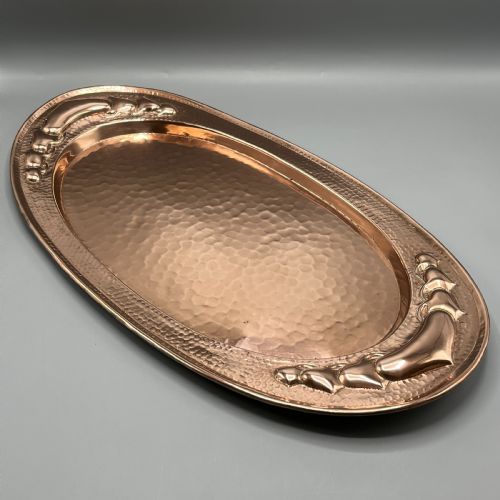
An antique copper tray encompasses domestic serving platters, deep decorative chargers, and removable table tops spanning the Victorian era through the early twentieth century. These pieces bridge utilitarian hearth items and fine decorative wall plaques made for display.
The selections encountered most frequently on this page originate from British Arts and Crafts studios, continental Art Nouveau designers, and Middle Eastern or Egyptian workshops. Domestic serving vessels sit alongside heavy repousse wall chargers and intricate mixed-metal trays.
Makers ranged from rural English guilds to Grand Tour artisans in Cairo and Persia, utilising local motifs and traditional hammering methods. Buyers seek these objects for their tactile surfaces, warm metallic tones, and historic utility.
Materials and construction methods
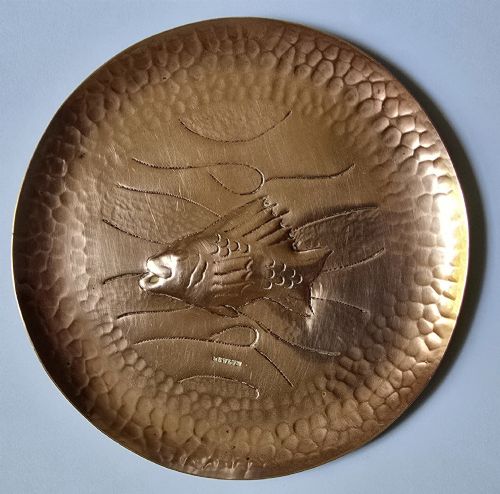
Artisans hammered sheet metal by hand, raising flat copper blanks into deep vessels using specialised wooden stakes and heavy mallets. This process leaves distinct tool marks across the surface that identify individual craftsmanship.
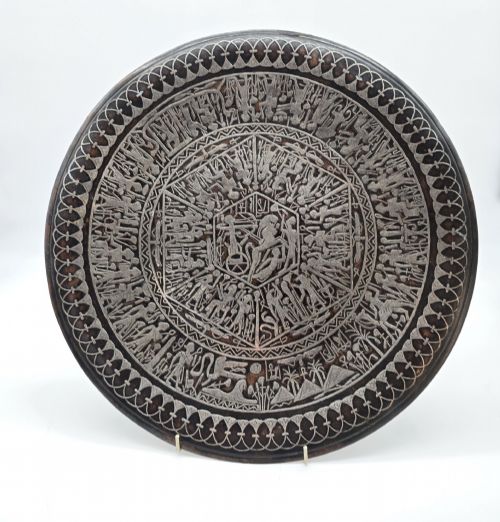
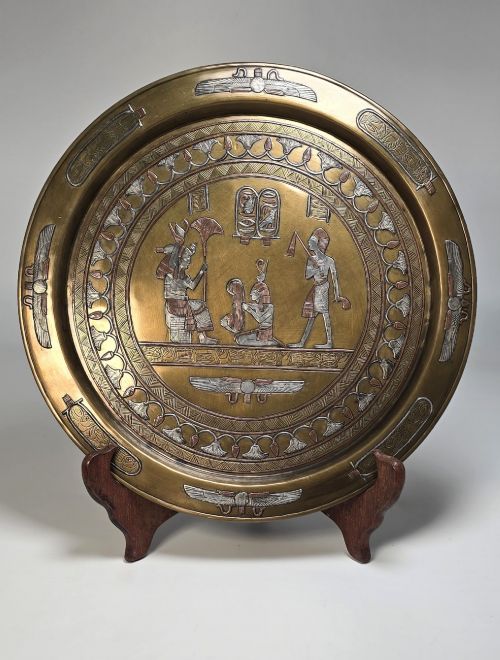
Many examples incorporate contrasting metals, applying silver inlay, brass mountings, or cloisonne enamel directly onto the patinated copper base. Cairo Ware pieces typically combine copper, silver, and bronze in complex geometric or calligraphic patterns.
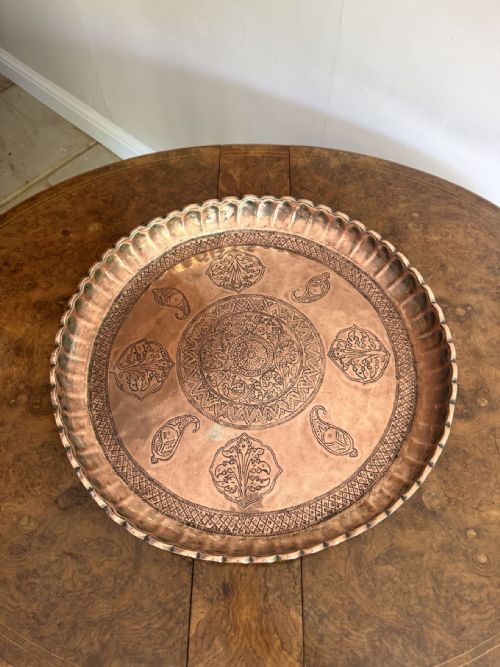
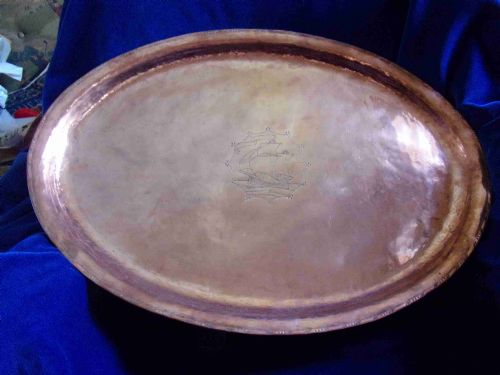
English Arts and Crafts pieces often rely on planished finishes where small, controlled hammer blows create a textured light-reflecting skin. Edges are frequently folded, wired, or pie-crusted to give rigidity to the shallow walls.
One unexpected tray doubles as a copper log layer designed to keep Victorian hearths tidy.
Distinctions in craftsmanship and design
Superior execution shows in the precision of the hand-chased relief and the depth of the repousse work, where motifs like pomegranates or dragons project with crisp definition from the background. Lesser examples display shallow, machine-pressed stamping with blurred foliage and flat planes.
The integrity of the construction separates standard utility items from masterworks, evident in robust gauge metal that resists flexing under weight. Signed studio pieces by known metalworkers command greater attention due to documented provenance and superior finishing.
Surface patination and the harmonious integration of mixed metals dictate visual success. Finely inlaid silver wires remain flush with the copper ground, whereas lower grade items show clumsy solder joints and superficial etching.
Hugh Wallis·Newlyn
The Antique Copper Tray Glossary
- Repousse
- A metalworking technique where the artisan hammers the design from the reverse side to form a raised relief on the front. This method creates tactile depth on chargers and decorative plaques.
- Planishing
- The process of smoothing and shaping sheet metal with a light hammer after the initial raising stage. It produces a uniform pattern of small facets across the copper surface.
- Cairo Ware
- Late nineteenth-century metalwork originating from Egypt featuring dense silver and copper inlay on a dark brass or bronze ground. These pieces were popular acquisitions during the Grand Tour period.
- Charger
- A large ornamental plate or shallow dish intended primarily for wall display rather than serving food. They often feature elaborate engraved or hammered pictorial scenes.
- Cloisonne
- An enamelling technique where artists solder thin metal wires to a metal base to create compartments filled with coloured glass paste. Japanese examples frequently depict floral or animal subjects.
Antique Copper Tray: Frequently Asked Questions
How do I clean an antique copper tray?
Maintenance requires minimal intervention to preserve the historic patination accumulated over generations. Light dusting with a soft dry cloth is usually sufficient for regular upkeep.
Avoid abrasive metal polishes that strip away the natural dark oxidation and scratch the hand-beaten surface. Professional conservation wax can be applied sparingly if protection against active tarnishing is necessary.
Can I use these trays for serving food?
Most antique copper vessels were designed for decorative display, card holding, or afternoon tea presentation rather than direct contact with acidic foodstuffs. Historic pieces often lack modern food-safe sealants.
Utilise them for dry items, display purposes, or as table tops rather than wet service. Modern protective liners help preserve the original metal interior from staining.
What is the difference between Arts and Crafts and Cairo Ware?
Arts and Crafts pieces emphasise British vernacular design, hand-hammered textures, and naturalistic plant motifs executed by guild workshops. The aesthetic values utility combined with honest hand construction.
Cairo Ware originates from Middle Eastern workshops catering to European travellers, characterised by dense silver and copper inlay on dark metallic grounds. Their ornamentation draws on Islamic geometric patterns and calligraphy.
How can I date an antique copper tray?
Dating relies on examining manufacturing marks, stylistic movements, and construction techniques visible on the reverse of the metal. Arts and Crafts items typically date from the turn of the twentieth century.
Stamps from specific guilds or named makers provide precise attribution. Machine-rolled edges and unvarnished natural patination generally point towards the Victorian and Edwardian eras.