



Hammered Copper Platter
A hammered copper platter brings tactile warmth and disciplined hand-work to a room, offering robust metalwork shaped by Arts and Crafts and Persian traditions.
Hammered Copper Platter
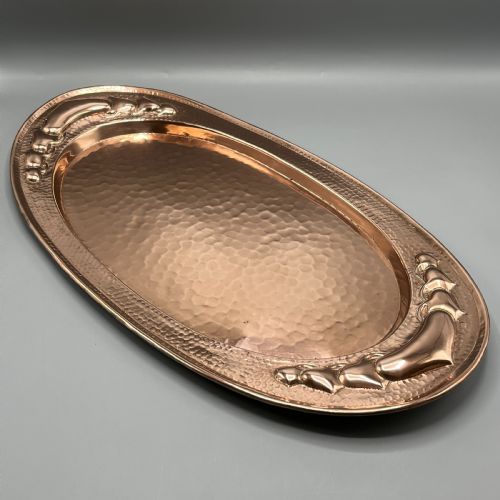
A hammered copper platter takes the form of circular decorative chargers, serving trays, and large trays produced primarily across the Victorian and Edwardian eras. These domestic and decorative items emerge from diverse design movements including Arts and Crafts, Art Nouveau, and Anglo-Indian Raj traditions.
The versions most frequently encountered on this page date from around 1880 to 1920, executed in copper, patinated copper, beaten copper, and occasionally incorporating brass elements. Makers and workshops utilise techniques ranging from plain expansive surfaces to heavily worked borders.
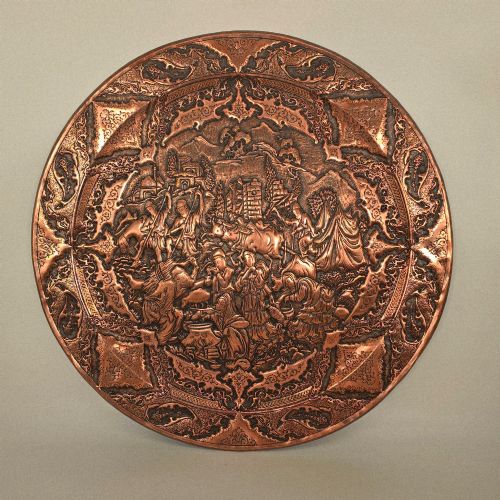
Many examples display distinct regional or stylistic motifs, such as Persian engraved designs, pomegranates with foliage, animal motifs, and floral relief patterns. Formats span simple pie crust edges to twin-handled serving vessels intended for display or utility.
How they were made
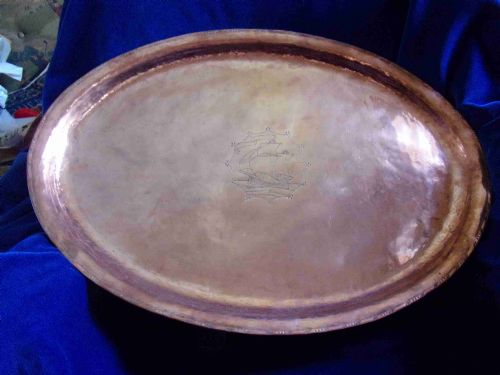
Makers shaped these objects using sheet metal beaten by hand with hammers, creating characteristic dimpled or textured surfaces that catch the light. Repousse work pushed the metal design forward from the reverse side to create raised decorative relief.
Engraving and chasing were often applied to the front surface after initial hammering to sharpen details in foliage, animals, and geometric patterns. Patination treatments were applied to copper to darken recessed areas and highlight the raised motifs.
Hammered Copper Platter Retail Price Guide 2026
Typical asking prices for hammered copper platter among the pieces listed under this phrase on Sellingantiques today, from the lower quarter to the upper quarter. They describe what is for sale here now, not the wider market.
Pomegranates and animal motifs frequently peer out from the beaten metal, proving that Edwardian domestic copper had a wild side.
What varies in quality
Quality rests in the depth and crispness of the hand-hammered repousse work, distinguishing pieces with confident, deep relief from flat or mechanically stamped alternatives. The weight of the metal and the integrity of edge details, such as pie crust shaping, reveal the maker's skill.
Design execution separates standard domestic wares from workshop pieces associated with specific stylistic centres like Newlyn or attributed makers. The harmony between decorative motifs and the natural patination of the copper dictates the visual success of the piece.
Hugh Wallis·Faulkner Bronze Company
The Hammered Copper Platter Glossary
- Repousse
- A metalworking technique where the artisan hammers the metal from the reverse side to form a raised design in relief on the front. This method gives the surface a tactile, three-dimensional quality.
- Charger
- A large decorative plate or platter traditionally used for display or ceremonial service rather than everyday dining. These items often feature elaborate border work and central motifs.
- Patinated Copper
- Copper that has been chemically or naturally treated to alter its surface colour and tone. This process darkens the metal to accentuate engraved details and repousse relief.
- Pie Crust Edge
- A decorative, scalloped border shaped along the rim of a tray or platter. It resembles the fluted pastry edge of a baked pie.
Hammered Copper Platter: Frequently Asked Questions
What is a hammered copper platter?
A hammered copper platter is a hand-worked metal dish or tray featuring beaten surfaces and decorative motifs produced during the late nineteenth and early twentieth centuries.
These pieces encompass serving trays, decorative chargers, and twin-handled vessels originating from British Arts and Crafts workshops as well as Persian and Anglo-Indian traditions.
How were these platters used?
Many examples functioned as decorative chargers displayed on walls or sideboards to showcase intricate repousse and engraved designs.
Others served practical domestic roles as large serving trays, handling food and drink within Victorian and Edwardian households.
How do I date a copper tray?
Dating relies on stylistic markers such as Art Nouveau floral lines, Arts and Crafts motifs, and regional Anglo-Indian or Persian design elements spanning from the eighteen-eighties to the nineteen-twenties.
Physical construction clues like heavy-gauge beaten copper and workshop attributions further anchor pieces to specific Victorian and Edwardian periods.
What is the difference between brass and copper pieces?
Copper platters display a warm reddish-brown metallic tone and take patination readily to accentuate hand-hammered relief work.
Brass variants incorporate a brighter yellow alloy, sometimes combined with copper elements as seen in specific Anglo-Indian Raj decorative chargers.