



Hand Hammered Copper Tray
A hand hammered copper tray brings tactile warmth and enduring utility to any interior scheme.
Hand Hammered Copper Tray
A hand hammered copper tray is a functional serving piece or decorative charger defined by its worked metallic surface. When you search for this phrase, you find items ranging from small card receptacles to large display platters.
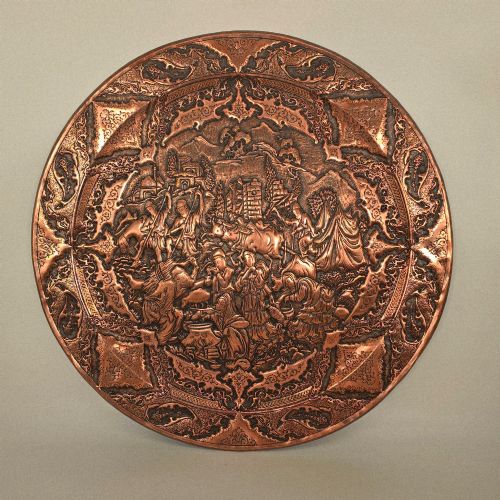
The examples gathered here span from the late nineteenth century into the early twentieth century. You are most likely to encounter Arts and Crafts pieces alongside Persian, Anglo-Indian and Art Nouveau interpretations.
Makers utilised patinated copper, beaten copper and occasionally enamel accents to create varied visual effects. These items serve equally well as wall-hung chargers or tabletop catchalls for daily use.
Materials and construction methods
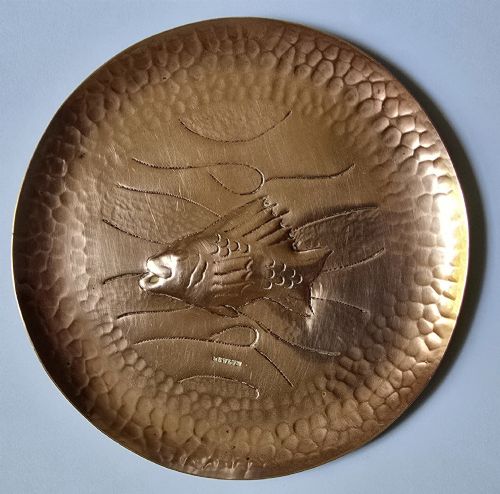
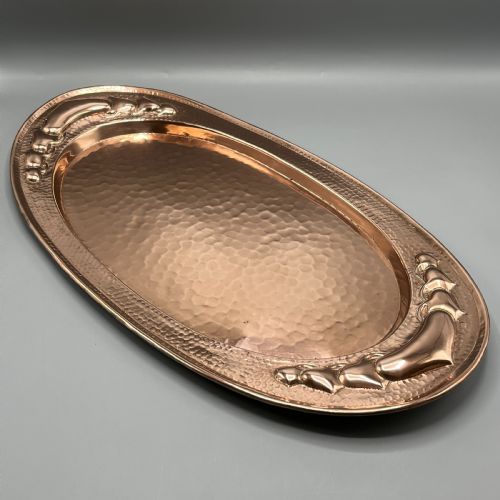
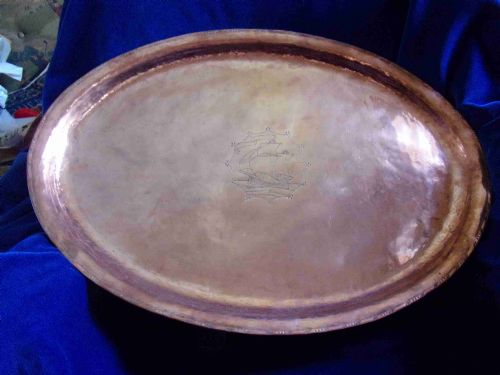
Artisans formed these objects from sheets of copper, shaping the metal entirely by hand using hammers and stakes. This labour-intensive process leaves distinctive rhythmic indentations across the surface of every piece.
Decoration relied heavily on repoussé work, where designs of foliage, pomegranates and abstract motifs were pushed out from the reverse side and chased from the front. Engraving and patination further enhanced the tonal depth of the metal.
Hand Hammered Copper Tray Retail Price Guide 2026
Typical asking prices for hand hammered copper tray among the pieces listed under this phrase on Sellingantiques today, from the lower quarter to the upper quarter. They describe what is for sale here now, not the wider market.
Judging quality in copper metalwork
Quality rests upon the crispness of the hand-hammered texture and the deliberate placement of repoussé details. Pieces with firm, intentional strikes and well-defined motifs display superior craftsmanship compared to softer, flatter surfaces.
Weight and structural rigidity also distinguish finer vessels, as heavier copper maintains its form without flexing under pressure. Furthermore, authenticated studio marks and clear signatures elevate the desirability of specific workshop productions.
Newlyn Copper·Hugh Wallis·Faulkner Bronze Company
The Hand Hammered Copper Tray Glossary
- Repoussé
- A metalworking technique where the artisan hammers the design from the reverse side to create a raised relief on the front. This method gives the ornamentation a tangible, three-dimensional quality.
- Patinated copper
- Copper that has developed a controlled surface coloration or tarnish over time, either naturally or through chemical treatment. This finish deepens the visual contrast of the metal.
- Charger
- A large ornamental platter used traditionally for presentation rather than direct food service. These items frequently feature intricate engraved or repoussé scenes.
- Arts and Crafts
- A design movement valuing handcraftsmanship, natural materials and medieval guild structures over mass production. Pieces from this era often incorporate stylised foliage and pomegranates.
Hand Hammered Copper Tray: Frequently Asked Questions
What is a hand hammered copper tray used for?
These pieces function as serving vessels, desk tidies and decorative wall chargers. Their robust construction allows for everyday utility while adding metallic texture to a room.
Historically, larger chargers were displayed upright on sideboards or hung on walls to catch the light. Smaller card trays sat in hallways to receive visiting calling cards.
How do I clean an antique copper tray?
Dust gently with a soft cloth and avoid abrasive polishes that strip the historic surface character. Many collectors prefer to leave the natural patination undisturbed.
Water and harsh chemicals should be kept away from enamel or patinated areas to prevent permanent damage to the original finish.
How can I tell Arts and Crafts copper apart?
Arts and Crafts examples typically display honest hammer marks and motifs inspired by nature, such as pomegranates and stylised foliage. They often bear workshop stamps or maker initials on the underside or rim.
By contrast, Persian or Anglo-Indian pieces lean towards dense, overall engraved patterns and geometric repoussé work rather than simple British vernacular plant forms.
Are these trays heavy to carry?
Many period pieces, particularly larger chargers and twin-handled serving trays, possess a substantial weight due to the thick gauge of copper used. This heavy construction ensures durability and stability when laden.
Smaller card trays remain light and portable, designed specifically for tabletop placement rather than heavy lifting.