
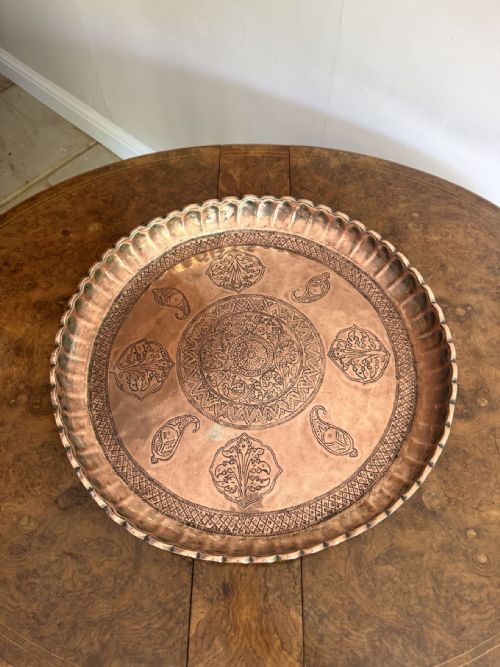


Decorative Copper Dish
These decorative copper dish selections bring together centuries of global metalwork, offering rich patinas and intricate hand-hammered designs that elevate any interior.
Decorative Copper Dish
When you search for a decorative copper dish, you encounter a vast geographic span encompassing Japanese Meiji period cloisonne chargers, Victorian Arts and Crafts hammered trays, and Middle Eastern Cairo ware.
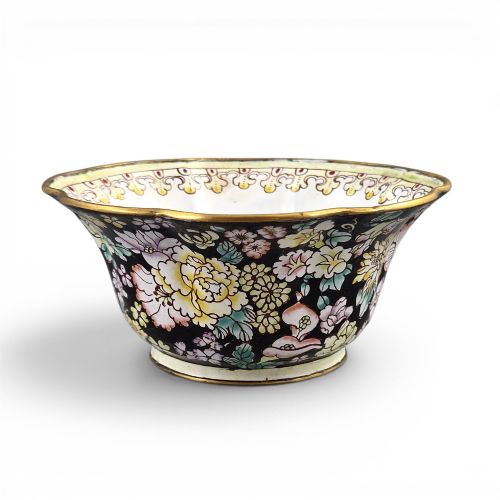
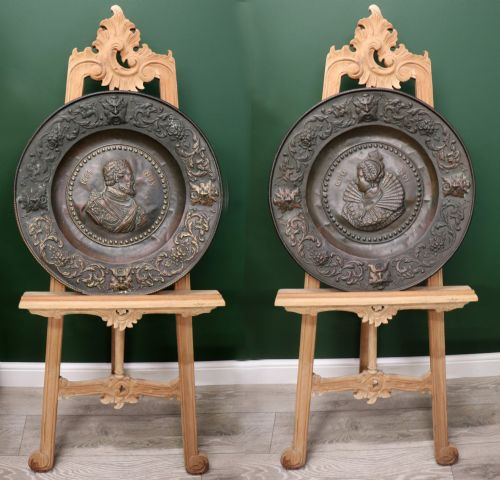
The objects on this page range from Chinese Canton painted enamel vessels and Indian Raj repousse chargers to European Gothic style wall plates and Art Nouveau floral trays.
You are most likely to meet large circular Japanese cloisonne enamel plates adorned with dragons, phoenixes, and flora alongside British beaten copper works from the late nineteenth century.
Materials and Techniques
Makers shaped these pieces primarily through hand-hammering, repousse work, and piercing on copper bases, frequently incorporating mixed metals, brass wire, and bronze.
Enamelling techniques define a significant portion of the selection, utilising cloisonne and painted enamel-on-copper methods originating from China and Japan.
Surface ornamentation often relies on silver inlay, gold leaf highlights, and engraved detailing to create contrast against patinated copper surfaces.
Listings feature items spanning the Victorian era, Meiji period, and Arts and Crafts movement, created from copper, brass, and cloisonne enamel.
Assessing Quality and Execution
The distinction between standard production and top-tier execution rests on the crispness of the hand-chasing, the complexity of the wirework in cloisonne pieces, and the depth of the repousse relief.
Superior examples demonstrate meticulous control over enamel firing without pitting, alongside harmonious integration of mixed-metal inlays that remain secure within the copper matrix.
The Decorative Copper Dish Glossary
- Cloisonne Enamel
- A technique where thin metal wires form raised cells on a copper base to contain coloured glass pastes fired in a kiln. This method allows for intricate pictorial designs such as birds and dragons.
- Repousse
- A metalworking method in which the artisan hammers copper from the reverse side to form a raised design in relief on the front. Fine details are then refined from the exterior.
- Cairo Ware
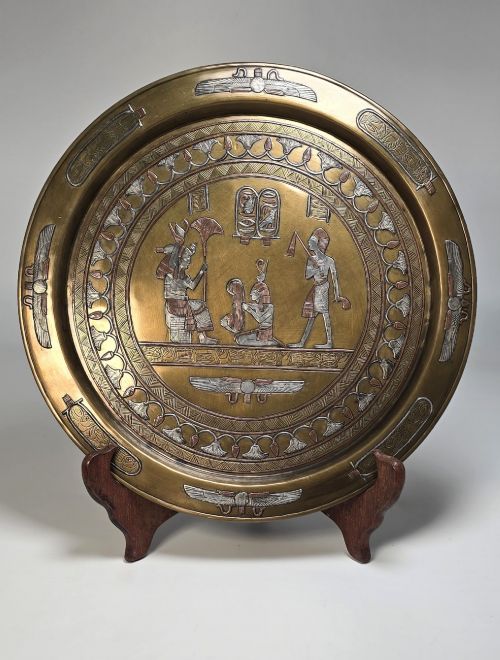
- Late nineteenth-century metalwork originating from Egypt, characterised by brass and silver inlay on copper or mixed-metal surfaces. These pieces typically display dense geometric and calligraphic patterns.
- Charger
- A large decorative plate or tray intended for display on a wall or sideboard rather than for serving food. These items often feature pictorial or highly ornamental central motifs.
- Meiji Period
- The era in Japanese history spanning from 1868 to 1912, noted globally for the exceptional refinement of its decorative arts, particularly cloisonne and mixed-metal dishes.
Decorative Copper Dish: Frequently Asked Questions
How do I hang a wall charger safely?
Most large chargers feature sturdy rims or borders that accommodate specialist spring-loaded brass wall hangers without damaging the copper body.
Ensure your wall fixing engages directly with masonry or studwork to support the considerable weight of heavy bronze-rimmed or cloisonne pieces.
Can I clean the patina off copper?
Removing the aged patina is generally discouraged because the oxidised surface preserves the historical character and depth of antique metalwork.
Gentle dusting with a dry microfiber cloth is sufficient for routine maintenance, avoiding abrasive commercial polishes that strip away original finishes.
How do I distinguish Japanese cloisonne from Chinese work?
Japanese Meiji period pieces frequently employ distinct silver or copper wire outlines alongside naturalistic imagery like Mt Fuji and leaping koi.
Chinese Canton enamels tend to utilise thicker brass wires with brighter turquoise grounds and dense floral borders distinct from Japanese aesthetics.
What is Cairo Ware?
Cairo Ware refers to nineteenth-century Middle Eastern metalwork created for the European Grand Tour market, combining brass, silver, and copper.
These dishes exhibit complex inlaid geometric bands and Arabic script medallions that reflect traditional Islamic design principles.