



Copper Decorative Tray
These copper decorative trays span global traditions from Arts and Crafts workshops to Meiji period Japanese studios, offering striking metalwork for any surface.
Copper Decorative Tray
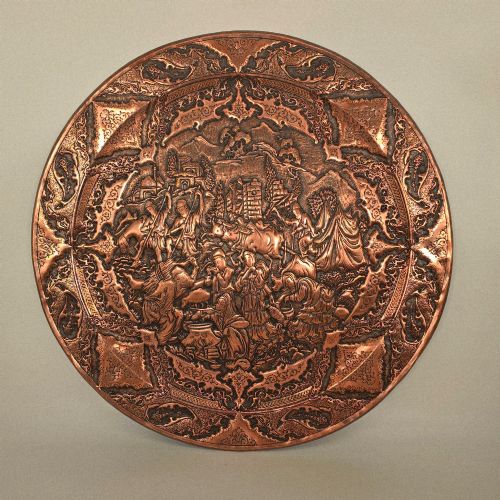
A copper decorative tray brings tactile warmth and intricate surface pattern into an interior, functioning as a wall charger or a centrepiece dish. You encounter substantial circular vessels and square plates spanning the Victorian and Edwardian eras, alongside Japanese cloisonne pieces and Middle Eastern inlaid works.
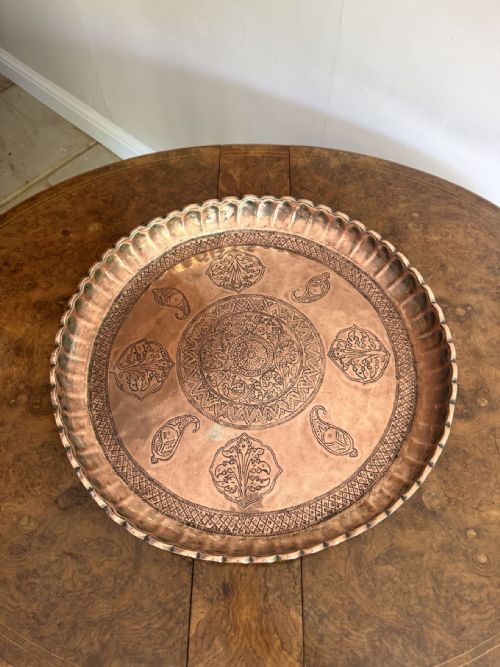
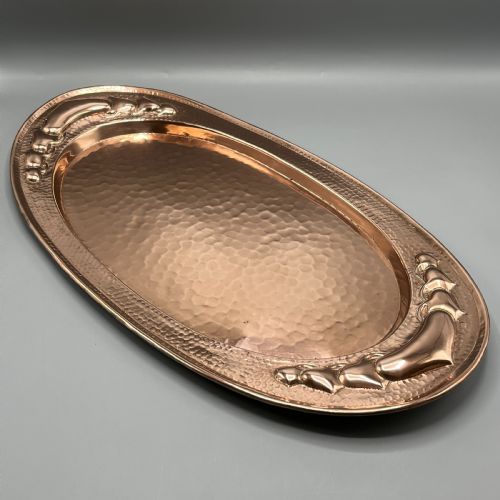
The selection ranges from beaten Arts and Crafts chargers decorated with foliage to heavy Persian and Syrian engraved examples. Pieces arrive in various scales, from intimate dishes to large presentation trays with pie crust edges.
Makers utilised diverse regional techniques, resulting in items that display either the raised motifs of European reform movements or the complex inlay and enamel work of Eastern traditions.
Materials and construction
Craftsmen shaped these items primarily from copper, brass, and bronze, often applying a patinated finish to deepen the tone of the metal. Artisans employed hammering and repousse techniques to raise floral and animal motifs from the reverse side of the sheet.
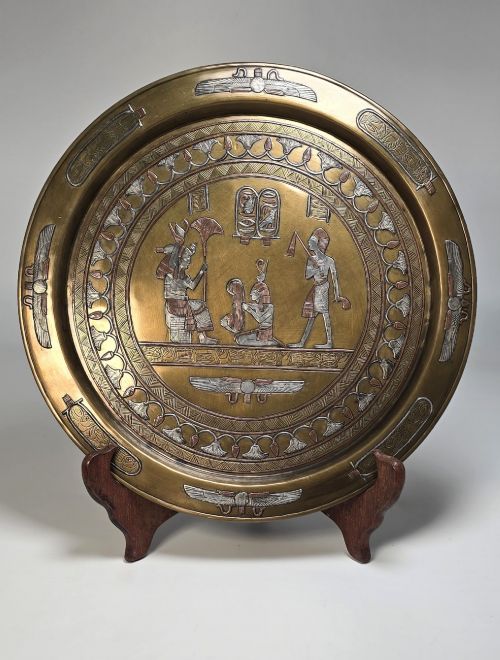
Many examples feature contrasting metals, incorporating silver inlay or mixed-metal elements into the copper surface. Enamel work, including cloisonne and Canton enamel, adds vibrant colour panels across Japanese and Chinese platters.
Several trays proudly display leaping koi fish and dragons, proving that antique metalworkers knew how to make dinnerware swim.
Factors of quality
Quality rests in the precision of the hand-working and the depth of the relief work, where crisp repousse details outshine shallow stampings. The handling of mixed-metal inlays and the complexity of engraved patterns distinguish workshop pieces from standard production items.
Weight and gauge of the metal dictate the structural integrity of the tray, with heavier chargers maintaining a rigid form. The preservation of original patination and the intact state of enamel or silver inlays further separate standard vessels from exceptional examples.
The Copper Decorative Tray Glossary
- Repousse
- A metalworking technique where the artisan hammers the metal from the reverse side to form a raised design on the front. This method creates tactile, three-dimensional surface decoration.
- Cloisonne
- An ancient technique for decorating metalwork objects with coloured glass paste placed within wire compartments. Artisans fire the piece to fuse the enamel permanently to the metal base.
- Charger
- A large decorative plate or dish historically used for ceremonial presentation or as a base beneath other courses. In metalwork, these items often feature pierced borders or elaborate central scenes for wall display.
- Cairo Ware
- Late nineteenth-century metalware produced in Egypt featuring heavy silver and copper inlay across brass or bronze bodies. These pieces often incorporate Islamic geometric patterns and calligraphy.
- Patination
- The natural or chemical alteration of a metal surface over time that creates a distinct coloured skin. This ageing process adds depth and character to copper and bronze objects.
Copper Decorative Tray: Frequently Asked Questions
How do I hang a heavy copper tray on the wall?
Large copper chargers require sturdy wall fixings that match the weight of the specific metal piece. Utilise adjustable brass plate hangers designed to distribute the load evenly across the rim without damaging the edge.
Ensure the mounting screw secures directly into a wall stud or uses an appropriate wall anchor. Check that the tension of the wire or springs remains secure over time to prevent accidental slips.
Can I polish my antique copper tray?
Aggressive chemical cleaning strips away the historic patination that collectors value on nineteenth-century metalwork. Gentle dusting with a soft cloth keeps the surface clear of grit without altering the finish.
If cleaning is necessary for hygiene on a functional dish, use a mild, non-abrasive metal cleaner formulated for copper. Avoid harsh abrasives that scratch repousse details and ruin hand-engraved lines.
What is the difference between Arts and Crafts copper and Middle Eastern metalwork?
Arts and Crafts copper trays typically display stylised plant motifs like pomegranates and foliage executed through hand-beating. These pieces reflect British and European reform movements focused on honest manual labour and simple forms.
Middle Eastern and Indian metalwork relies on dense engraved patterns, pierced decoration, and contrasting silver or brass inlays. These items showcase complex geometric or figural arrangements rooted in regional artisan traditions.
How do I identify Meiji period Japanese metal trays?
Meiji period trays often feature fine cloisonne enamel work depicting birds, dragons, or floral sprays on copper bases. You may also encounter mixed-metal dishes utilising the Komai style of damascene decoration.
These Japanese pieces demonstrate extreme precision in wirework and miniature detail, distinguishing them from European domestic metalware of the same era.